Artwork
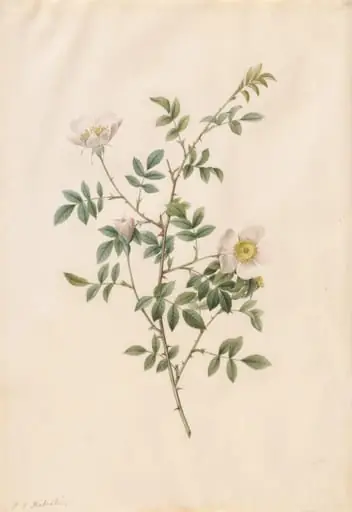
Two dog roses and a lackey moth caterpillar
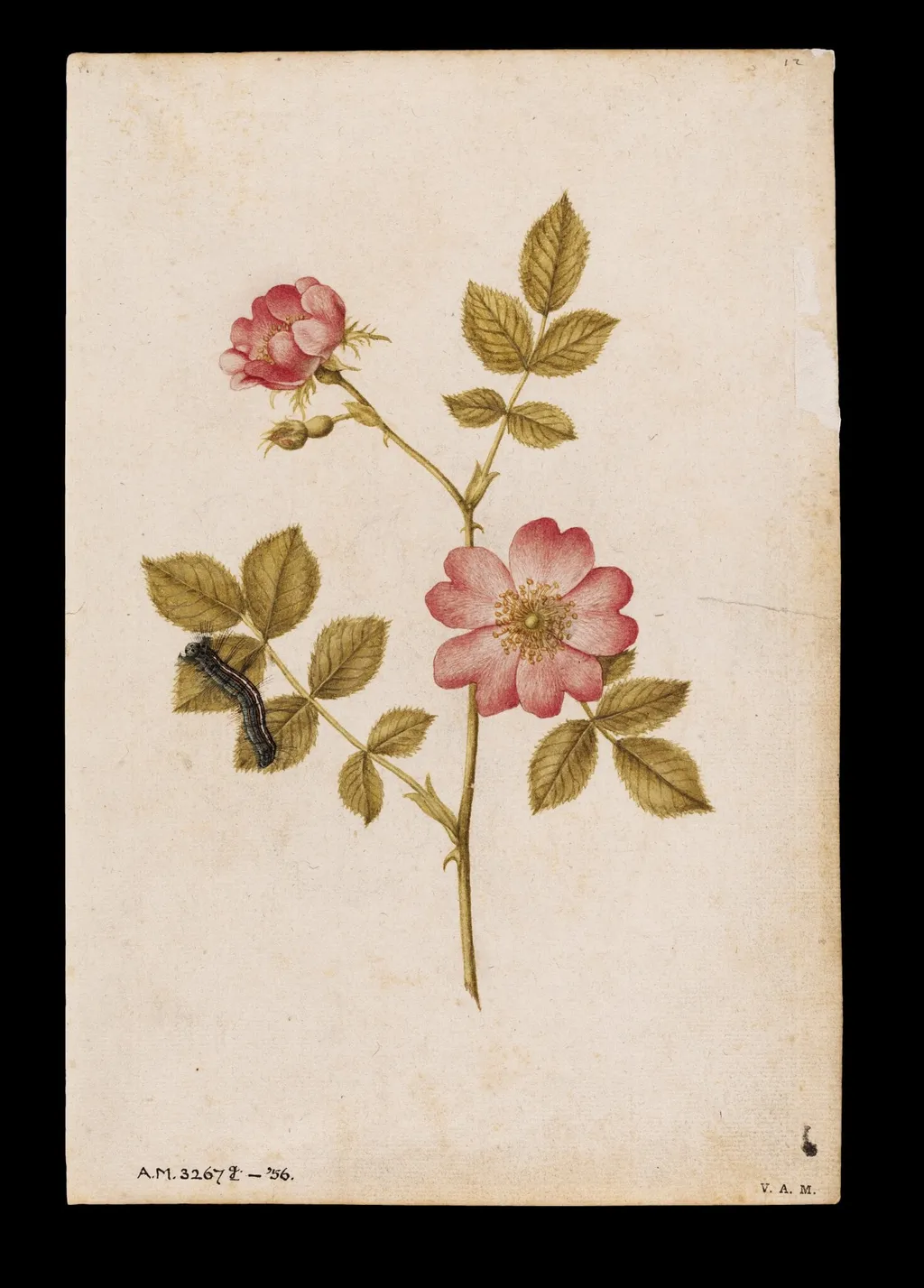
Two dog roses and a lackey moth caterpillar is a watercolor work on paper by the Early Baroque Italian artist Jacques Le Moyne de Morgues. It dates from 1568 and is held in the collection of the Victoria and Albert Museum.
About this work
Overview
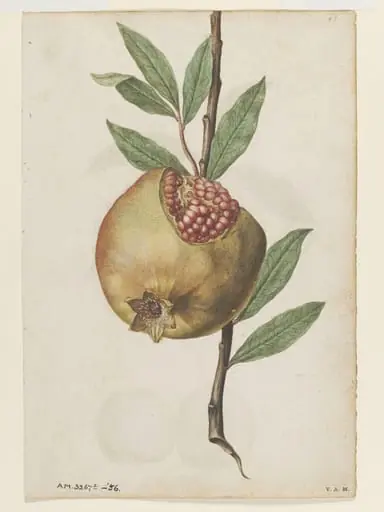
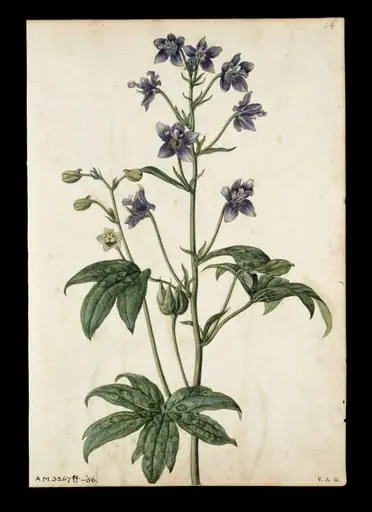
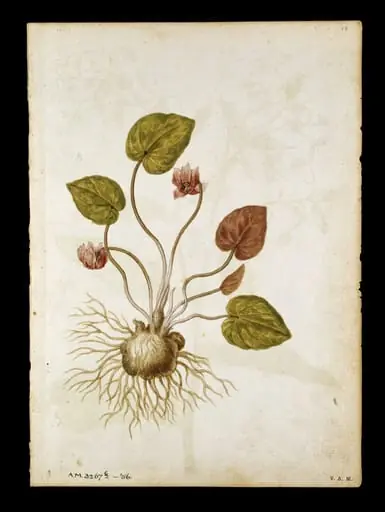
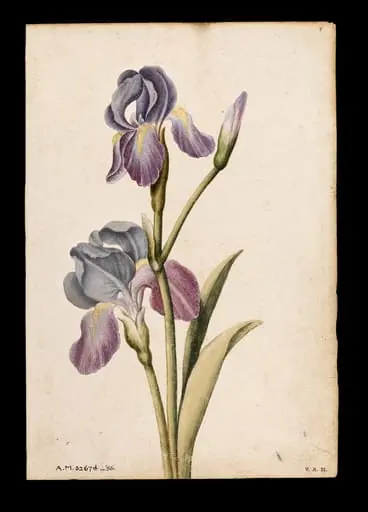
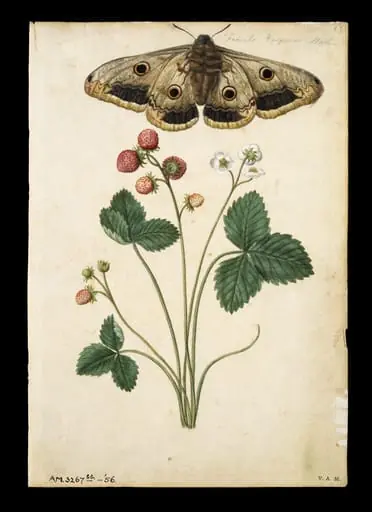
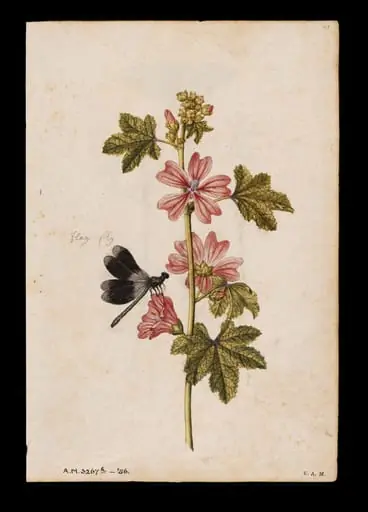
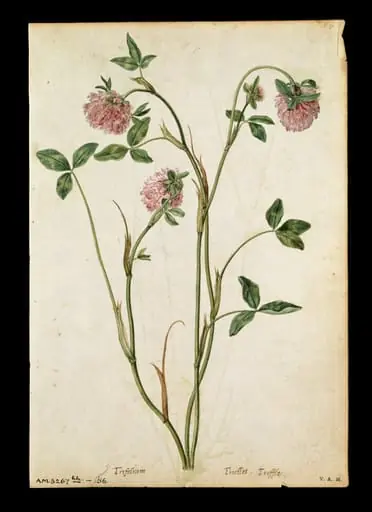
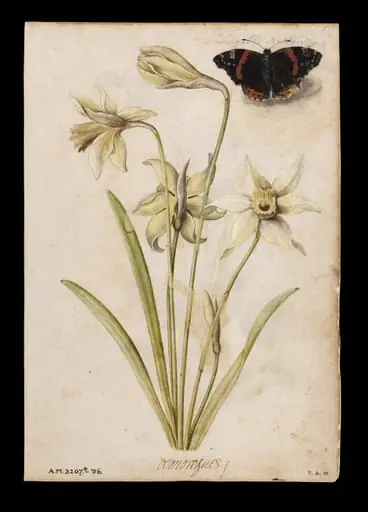
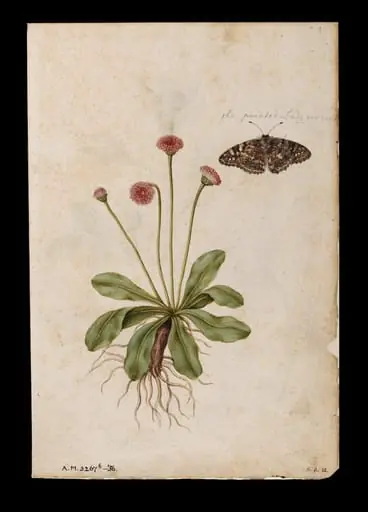
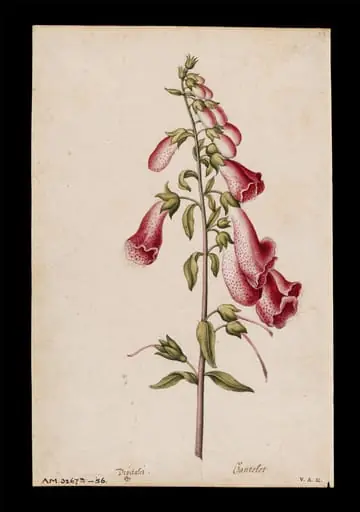
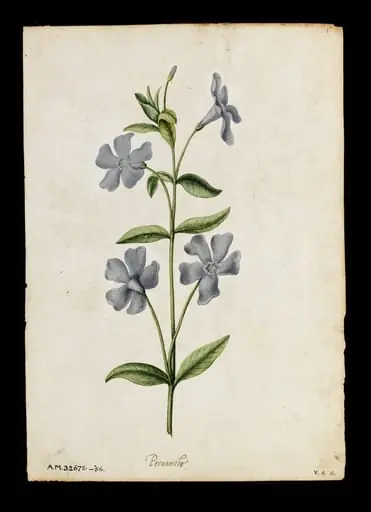
This watercolour is one of 59 botanical studies in an album attributed to Jacques Lemoyne de Morgues, a Huguenot artist active in the late 16th century.
This watercolour is one of 59 botanical studies in an album attributed to Jacques Lemoyne de Morgues, a Huguenot artist active in the late 16th century. Created around 1575, it depicts a single stem of dog roses with a lackey moth caterpillar resting on its leaves. Unlike some pages in the album, this sheet is single-sided. The work reflects a period when close observation of natural forms was gaining artistic and scientific value.
Subject & Meaning
The subject combines two elements of the natural world: the dog rose, a common wildflower, and the caterpillar of the lackey moth, a species that feeds on its leaves. The pairing suggests an interest in ecological relationships, not merely isolated specimens. Lemoyne’s inclusion of the insect implies a desire to document life cycles and plant-insect interactions, aligning with emerging Renaissance practices of empirical observation.
Technique & Style
Executed in watercolour on paper, the work displays fine, controlled brushwork and a restrained palette. Lemoyne renders the rose’s petals, thorns, and leaves with precision, while the caterpillar is rendered with delicate texture and anatomical accuracy. The absence of background or scale references focuses attention on the organisms themselves, reflecting a methodical, almost scientific approach to natural representation.
History & Provenance
The watercolour remained part of an unpublished album until its rediscovery in the early 20th century. Prior to this, Lemoyne was largely known for minor woodcut designs, and his botanical works were overlooked. Their reappearance revealed a body of highly detailed, early naturalist art, prompting reassessment of his role in the history of botanical illustration and elevating his status among early modern European artists.
Context
In the late 1500s, European artists and naturalists increasingly turned to direct observation of flora and fauna, driven by both scientific curiosity and the rise of herbaria. Lemoyne’s work aligns with this trend, predating the more systematic botanical atlases of the 17th century. His drawings, though small and intimate, contributed to a growing visual language for documenting nature outside of idealized or symbolic traditions.
Legacy
Lemoyne’s botanical watercolours are now recognized as significant early examples of naturalistic painting in Northern Europe. Their survival in a single album underscores their rarity. Scholars value them not only for their aesthetic care but for their role in the transition from decorative to empirical botanical art, influencing later generations of natural history illustrators.
Artist & collection
Artist
Jacques Le Moyne de Morgues (French pronunciation: ; c. 1533–1588) was a French artist and member of Jean Ribault's expedition to the New World. His depictions of Native American life and culture, colonial life, and…