Artwork
Temple at Derr, Nubia, Egypt
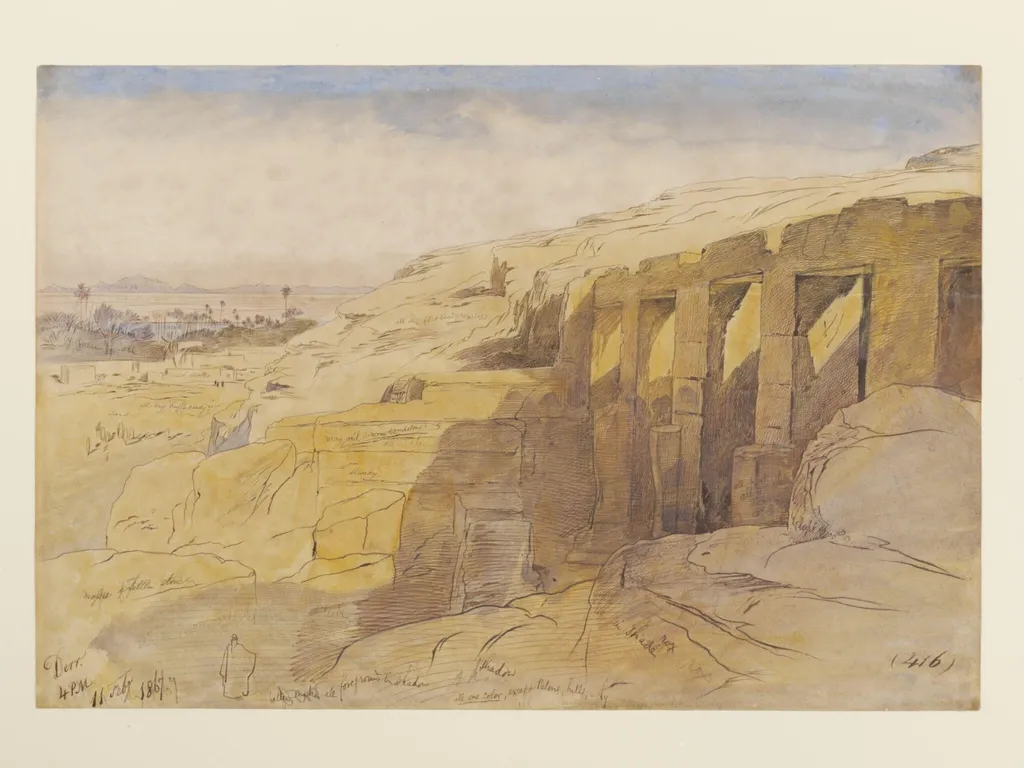
Temple at Derr, Nubia, Egypt is a watercolor work on paper by the Impressionist artist Edward Lear. It dates from 1867 and is held in the collection of the Victoria and Albert Museum.
About this work
Overview
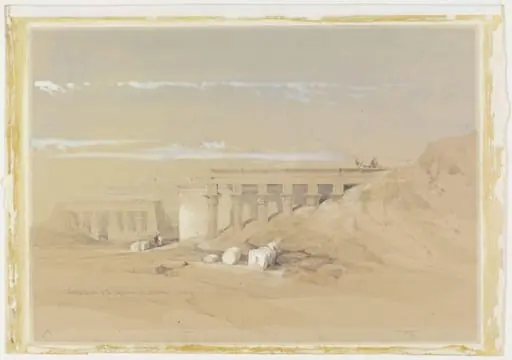
This watercolour painting depicts the rock-cut Temple of Derr in Nubia, Egypt, created by Edward Lear in 1867. The work is part of a series produced during Lear's travels in the region.
Subject & Meaning
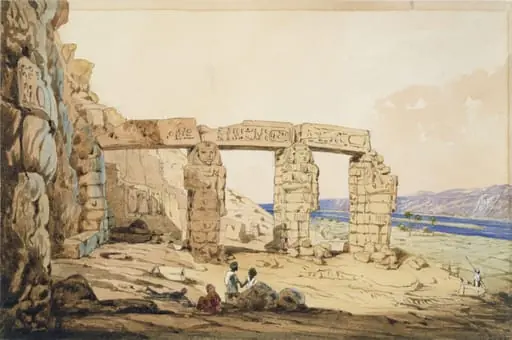
The temple, carved into a rocky cliff, is shown with tall doorways and a distant landscape of trees and hills. The scene conveys a sense of dryness and quiet, with a warm, worn quality to the stone.
Technique & Style
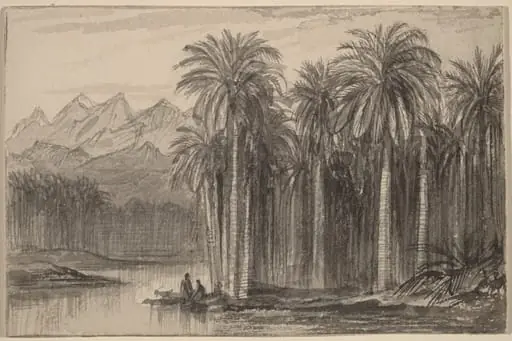
Lear's use of soft light and predominantly single-colour shading, with touches of green for the palms, creates a serene atmosphere. The artist's notes on the painting highlight their deliberate colour choices.
History & Provenance
The Temple of Derr was later relocated to Amadah to avoid flooding caused by the construction of Lake Nasser. Lear painted the temple during a journey up the Nile to the Second Cataract, returning via Derr in February 1867.
Artist & collection
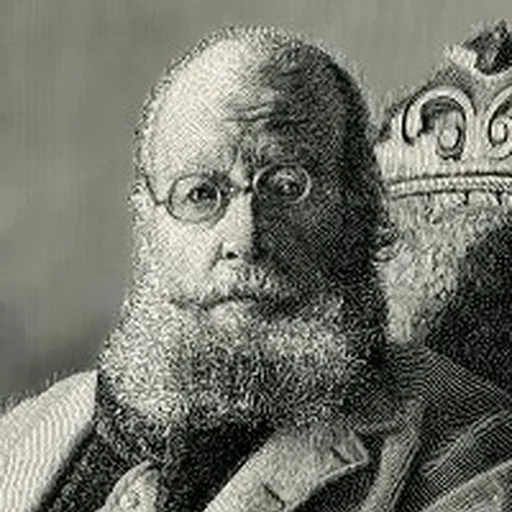
Artist
Edward Lear (12 May 1812 – 29 January 1888) was an English artist, illustrator, musician, author and poet, who is known mostly for his literary nonsense in poetry and prose and especially his limericks, a form he popularised but which term…