Artwork
Sketch in Portugal
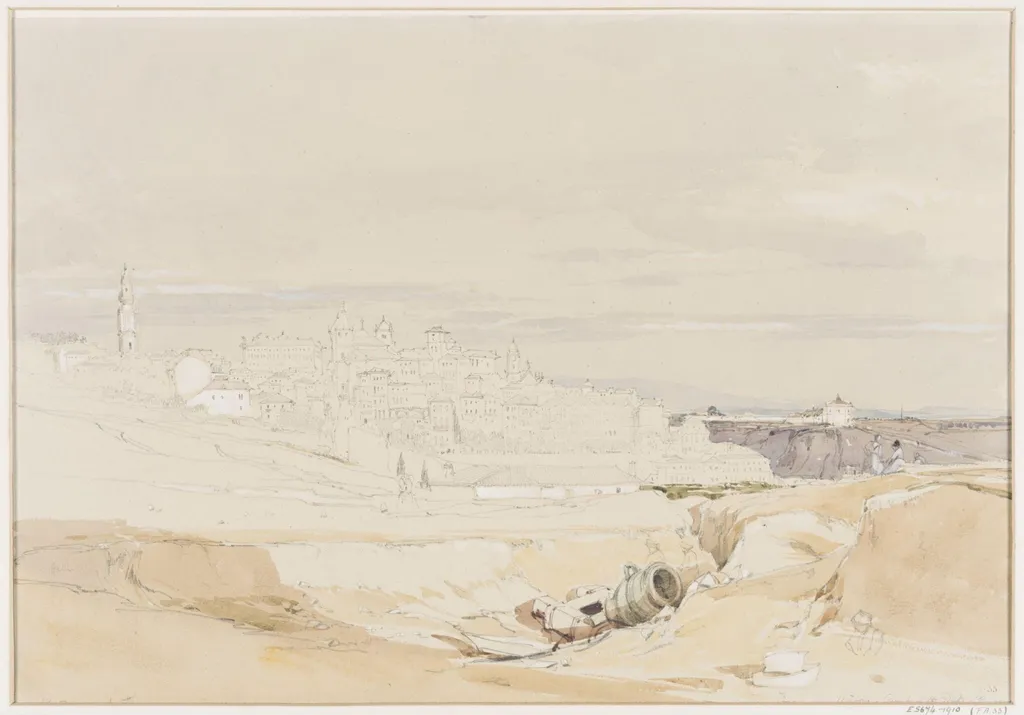
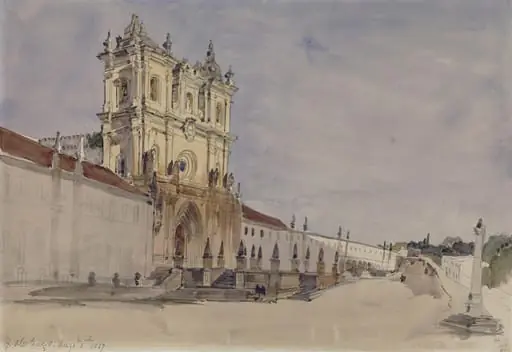
Sketch in Portugal is a watercolor work on paper by the Romanticist artist James Holland. It dates from 1837 and is held in the collection of the Victoria and Albert Museum.
About this work
Overview
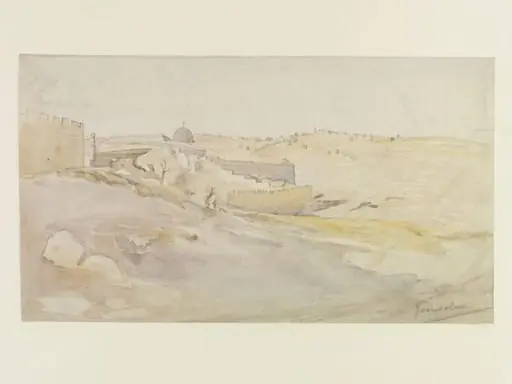
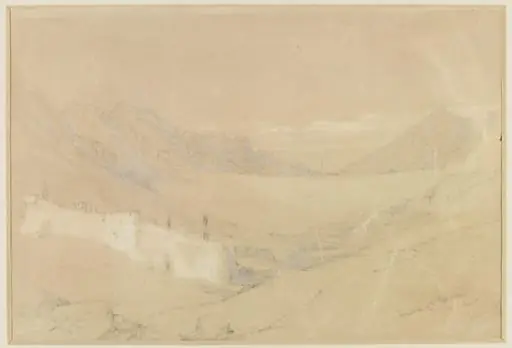
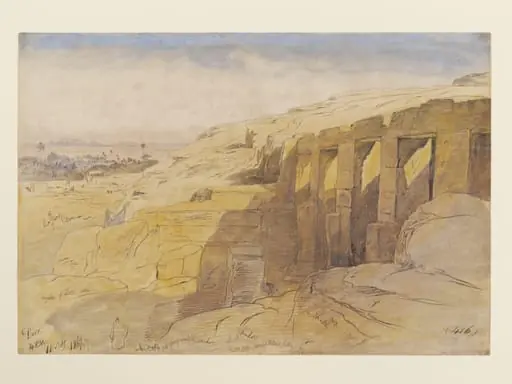
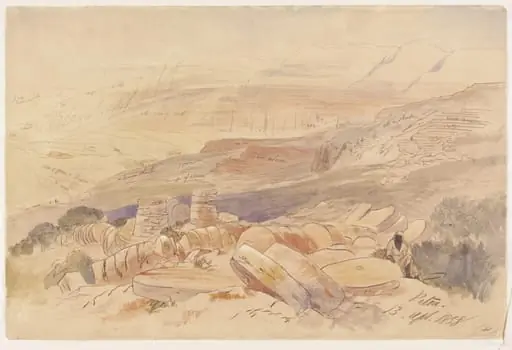
The work is an unfinished watercolour created in 1837 by the English landscape painter James Holland. Executed on paper, the sketch records a view of Vila Nova de Gaia on the north bank of the Douro River, capturing the distinctive silhouette of the Torre de Marca with the Clerigos church tower on the left and the Serra do Pilar monastery on the right.
Subject & Meaning
The composition presents a coastal tableau where sandy cliffs give way to a modest settlement. A partially buried cannon lies in the foreground, while a few figures linger at the water’s edge, suggesting a moment of quiet observation. The juxtaposition of natural shoreline and built landmarks underscores the Romantic interest in the interplay between humanity and landscape.
Technique & Style
Holland employed rapid, loose brushwork typical of on‑site sketching, allowing light and shadow to be suggested with soft washes of beige, gray and a pale sky blue. The limited palette and sketchy handling convey immediacy rather than finish, aligning the piece with the Romantic era’s emphasis on atmospheric effect over detailed realism.
History & Provenance
The watercolour was produced during Holland’s travels in Portugal, a period when many British artists sought inspiration abroad. Though never completed, the sketch entered a private collection before being acquired by a museum in the early 20th century, where it remains part of the institution’s holdings on 19th‑century travel art.
Artist & collection

Artist
James Holland (18 October 1799 – 12 February 1870) was an English painter of flowers, landscapes, architecture, marine subjects, and a book illustrator.