Artwork
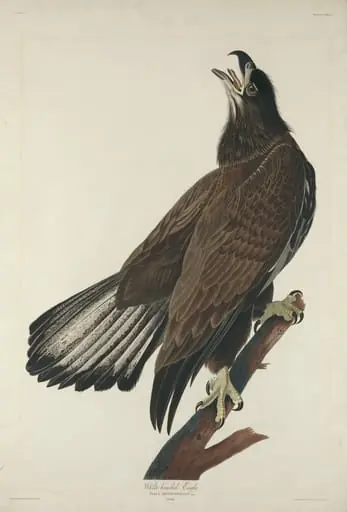
White Headed Eagle (Haliaetus leucocephalus)
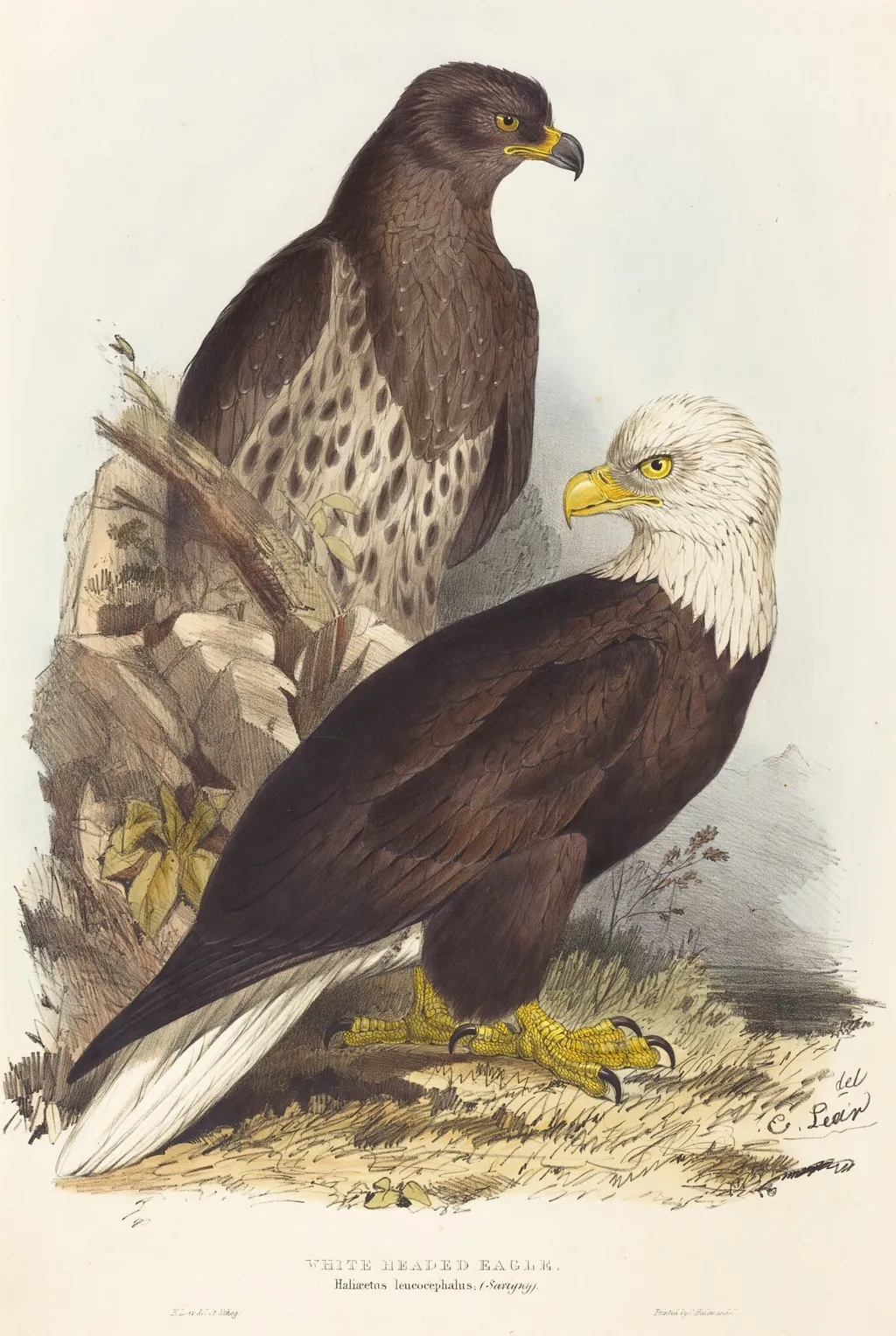
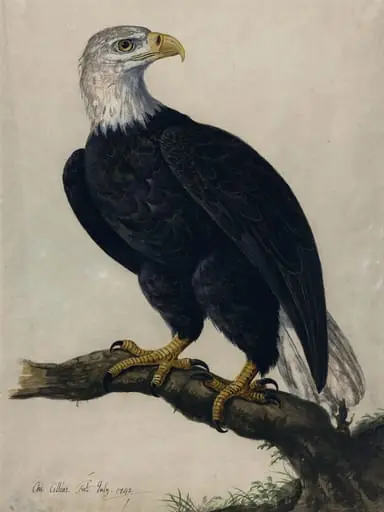
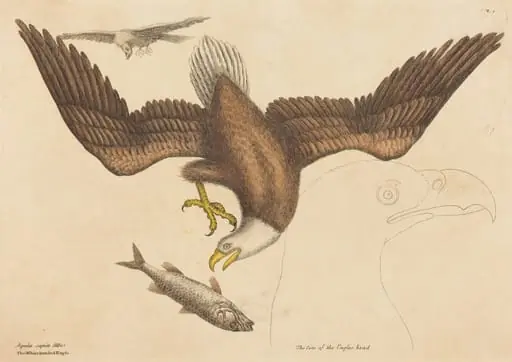
White Headed Eagle (Haliaetus leucocephalus) is an ink print by the Romanticist artist Edward Lear. It dates from 1834 and is held in the collection of the National Gallery of Art. Created in 1834, this hand‑colored lithograph presents two bald eagles in a natural setting.
About this work
Overview
Created in 1834, this hand‑colored lithograph presents two bald eagles in a natural setting. Rendered on wove paper, the image shows one bird with a dark brown body and white head, the other with a lighter brown body and darker head, both perched among branches against a muted beige background.
Subject & Meaning
The work functions as a study of the species Haliaetus leucocephalus, emphasizing the birds’ plumage, posture, and interaction with their environment. By portraying the eagles side by side, the image highlights variations in coloration and behavior within the species, offering a visual reference for naturalists.
Technique & Style
Lear employed lithographic printing, subsequently applying watercolor washes to achieve realistic coloration. The careful rendering of feathers and facial features reflects his meticulous draughtsmanship, while the overall composition maintains a naturalistic, observational tone typical of 19th‑century scientific illustration.
History & Provenance
Although best known for his literary nonsense, Edward Lear was an active illustrator of birds and other fauna. This print was produced for inclusion in travel and natural history publications of the period, illustrating his contribution to the visual documentation of wildlife during the early Victorian era.
Artist & collection
Artist
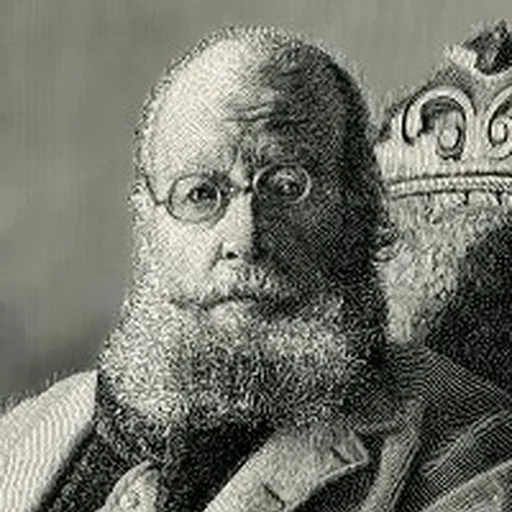
Edward Lear (12 May 1812 – 29 January 1888) was an English artist, illustrator, musician, author and poet, who is known mostly for his literary nonsense in poetry and prose and especially his limericks, a form he popularised but which term…