Artwork
The Bald Eagle (Falco leucocephalus)
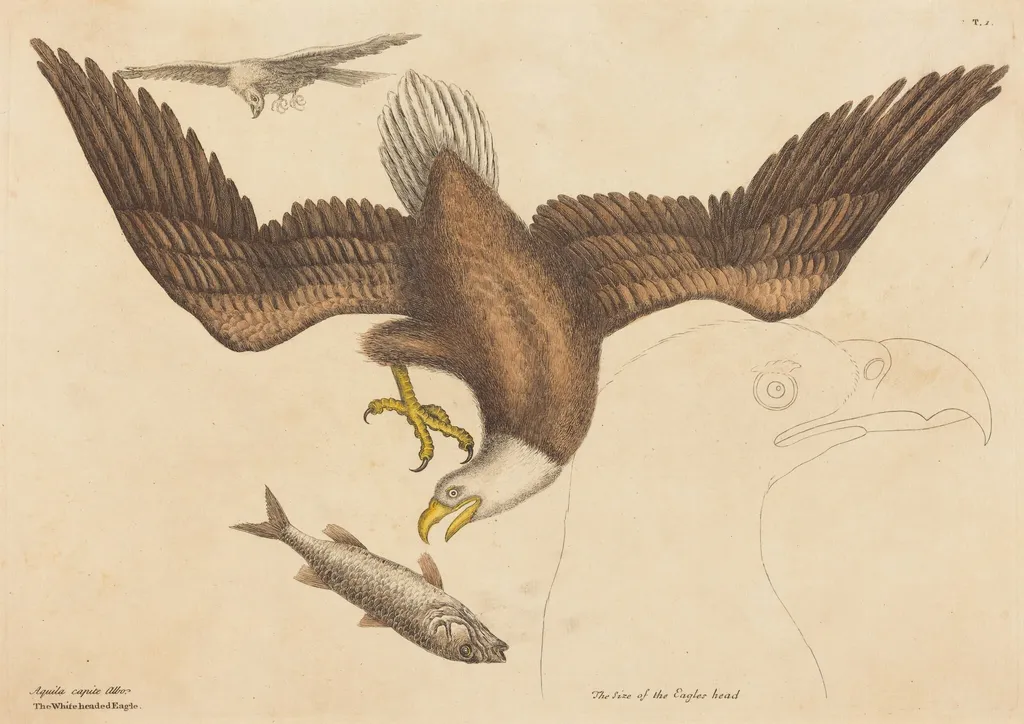
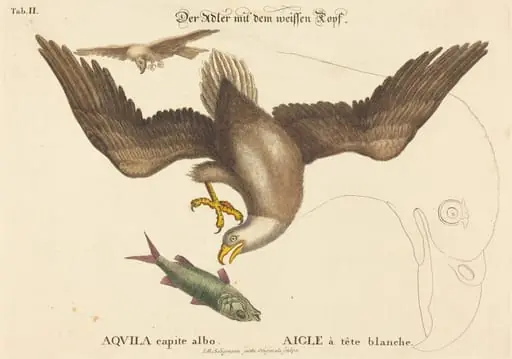
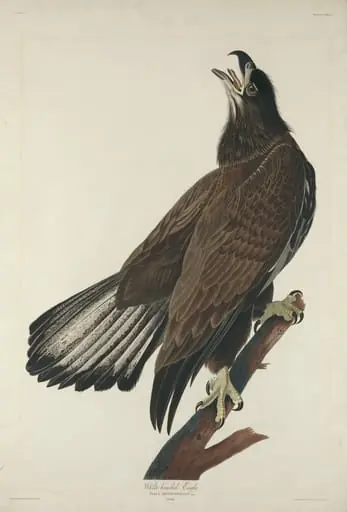
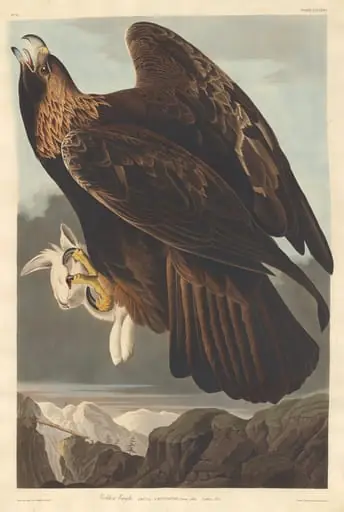
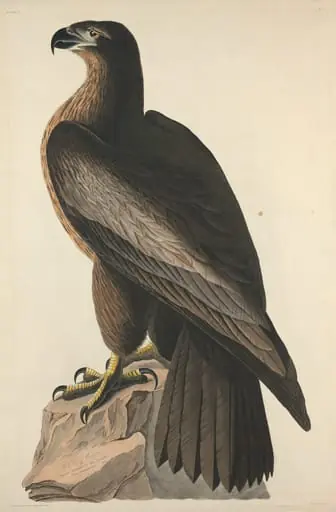
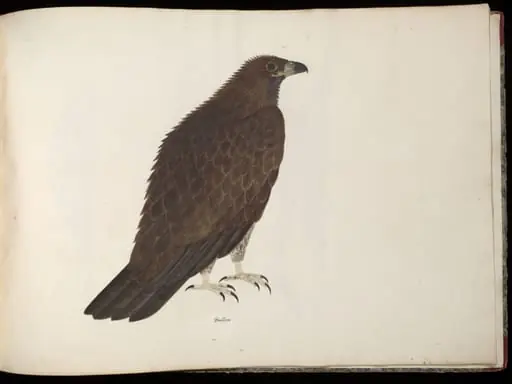
The Bald Eagle (Falco leucocephalus) is an ink print by the Baroque artist Mark Catesby. It dates from 1737 and is held in the collection of the National Gallery of Art.
About this work
Overview
Mark Catesby’s 1737 print, titled *The Bald Eagle (Falco leucocephalus)*, is a hand‑coloured etching and engraving on laid paper. It appears in his two‑volume *Natural History of Carolina, Florida and the Bahama Islands*, the earliest systematic illustration of North American fauna.
Subject & Meaning
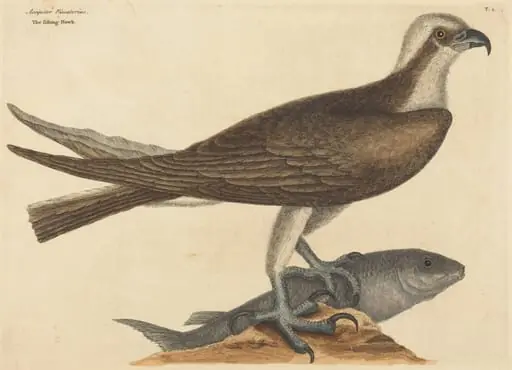
The plate depicts a bald eagle in mid‑flight, wings fully extended, clutching a fish in its talons. The bird’s white head, yellow bill and the freshly caught fish are rendered with attention to anatomical detail, while a smaller bird fleeing in the upper left adds a sense of natural interaction.
Technique & Style
Catesby employed copper‑plate etching to produce fine linear marks, then deepened outlines with engraving for sharper edges. Hand‑applied colour highlights the plumage and fish scales, and careful shading conveys the texture of feathers and water‑logged skin.
History & Provenance
Compiled by the English naturalist during his travels in the American colonies, the image was published between 1729 and 1747 as part of Catesby’s pioneering work documenting New World wildlife. The plate reflects his commitment to scientific accuracy combined with artistic observation.
Context
At the time of its creation, European audiences had limited visual knowledge of North American species. Catesby’s illustrations filled that gap, providing one of the first reliable visual references for the bald eagle, a bird that would later become a national emblem.
Artist & collection

Artist
Mark Catesby (24 March 1683 – 23 December 1749) was an English naturalist who studied the flora and fauna of the New World.