Artwork
Chailli Seen in a Storm (Chailli: Effet d'orage)
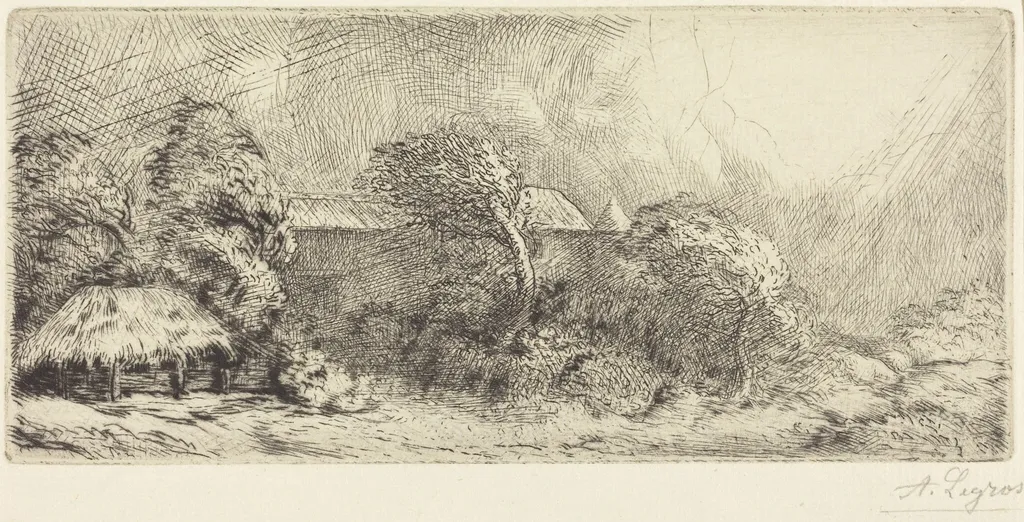
Chailli Seen in a Storm (Chailli: Effet d'orage) is an ink print by the Romanticist artist Alphonse Legros. It dates from 1874 and is held in the collection of the National Gallery of Art.
About this work
Overview
Executed in etching and drypoint on light green paper, the work reflects Legros’s engagement with the revival of printmaking in Victorian Britain.
Created in 1874, *Chailli Seen in a Storm* is an intaglio print by Alphonse Legros, a French artist who moved to London in 1863. Executed in etching and drypoint on light green paper, the work reflects Legros’s engagement with the revival of printmaking in Victorian Britain. The image captures a fleeting moment of natural turbulence, rendered with a tactile intensity that distinguishes it from more polished academic prints of the era.
Subject & Meaning
The print centers on a solitary figure, Chailli, positioned within a tumultuous landscape. Rather than emphasizing narrative, Legros focuses on atmosphere—conveying the vulnerability of human presence against overwhelming natural forces. The barely discernible house and tangled trees suggest a world in flux, where shelter is fragile and the elements dominate. The title’s reference to a specific person grounds the scene in personal experience, yet the mood remains universal.
Technique & Style
Legros employed drypoint to create dense, scratchy lines that bite deeply into the plate, producing rich, velvety blacks, while etching provided finer, controlled contours. The light green paper enhances the sense of atmospheric gloom, subtly reflecting ambient light. The chaotic, overlapping strokes mimic wind-driven motion, rejecting smooth finish in favor of raw, immediate expression. This approach aligns with the tactile, expressive potential of intaglio printmaking.
History & Provenance
The print emerged during Legros’s early years in London, a period when he was actively involved with the Society of Painter-Etchers. Though not widely exhibited at the time, it reflects his commitment to elevating printmaking as a serious artistic medium. Its survival in collections today underscores its significance within the broader 19th-century revival of etching, particularly in Britain where Legros influenced a generation of printmakers.
Context
In the 1870s, British art was increasingly drawn to the emotional power of nature, influenced by Romantic traditions and the rise of realism. Legros’s work resonated with this shift, offering a quiet counterpoint to grand historical paintings. His focus on intimate, weather-worn landscapes aligned with contemporary interest in direct observation and the sublime in everyday scenes, distinguishing his prints from more theatrical contemporaries.
Legacy
Legros’s *Chailli Seen in a Storm* exemplifies his role in redefining etching as a vehicle for personal expression rather than mere reproduction. Its emphasis on texture, mood, and spontaneous mark-making influenced later British printmakers, including those in the New English Art Club. The work remains a quiet but enduring testament to the capacity of print to convey emotional depth through minimal means.
Artist & collection

Artist
Alphonse Legros (French pronunciation: ; 8 May 1837 – 8 December 1911) was a French, later British, painter, etcher, sculptor, and medallist.

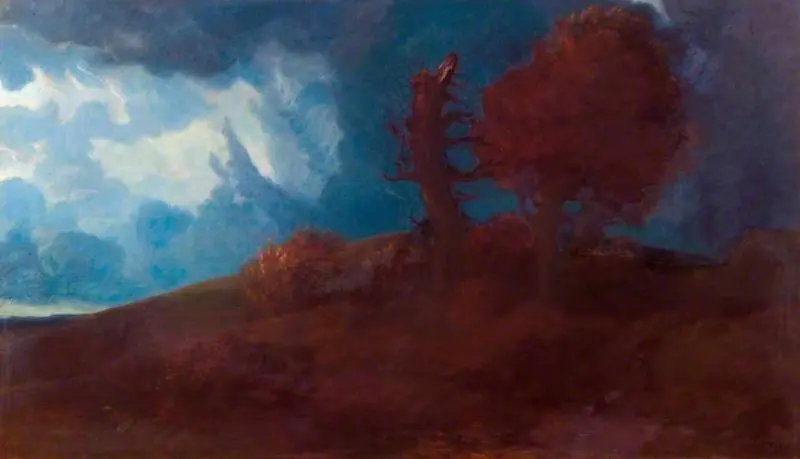
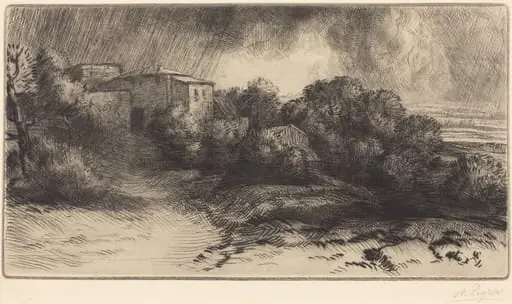 La Ferme de Brieux (Effect d'orage) (Farm at Brieux in a Storm)
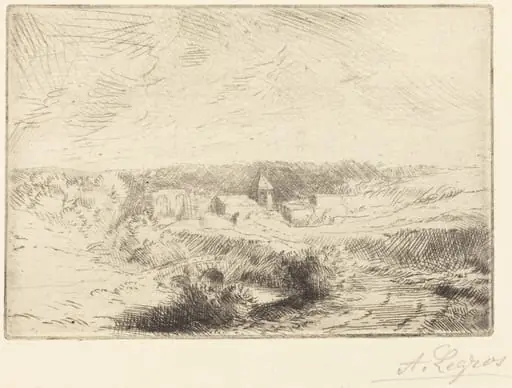 Village of Wimille, near Boulogne (Village de Wimille, pres Boulogne)
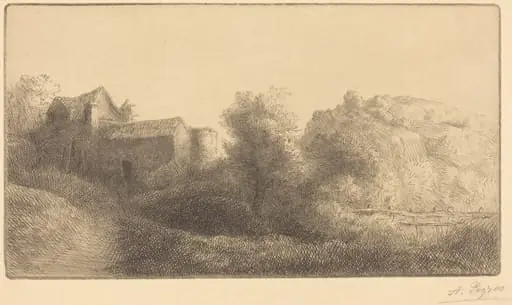 Bridge at the Mill (Le pont du moulin)
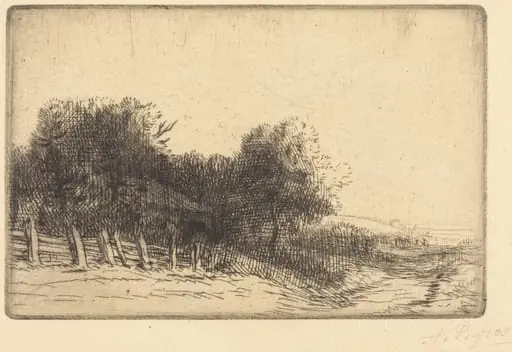 Landscape (Un paysage)
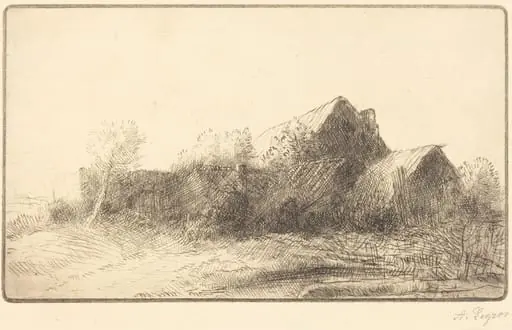 Farm (Une ferme)
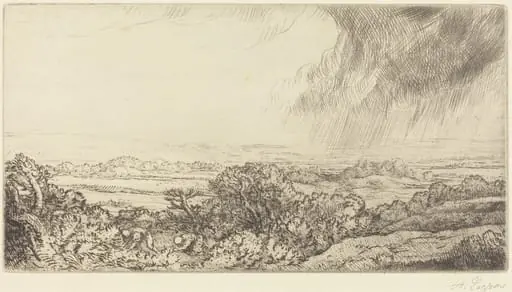 Mushroom Gatherers (Les ramasseurs de champignons)
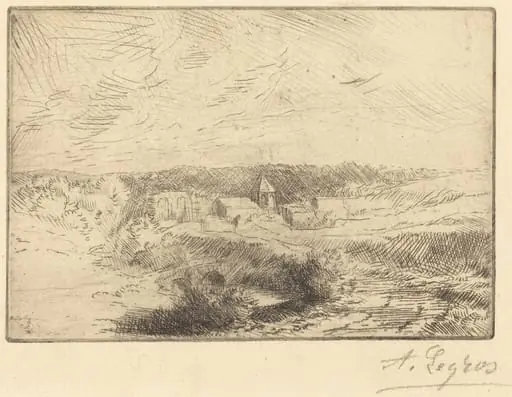 Village of Wimille, near Boulogne (Village de Wimille, pres Boulogne)