Artwork
Farm on a Hill (La ferme sur la colline)
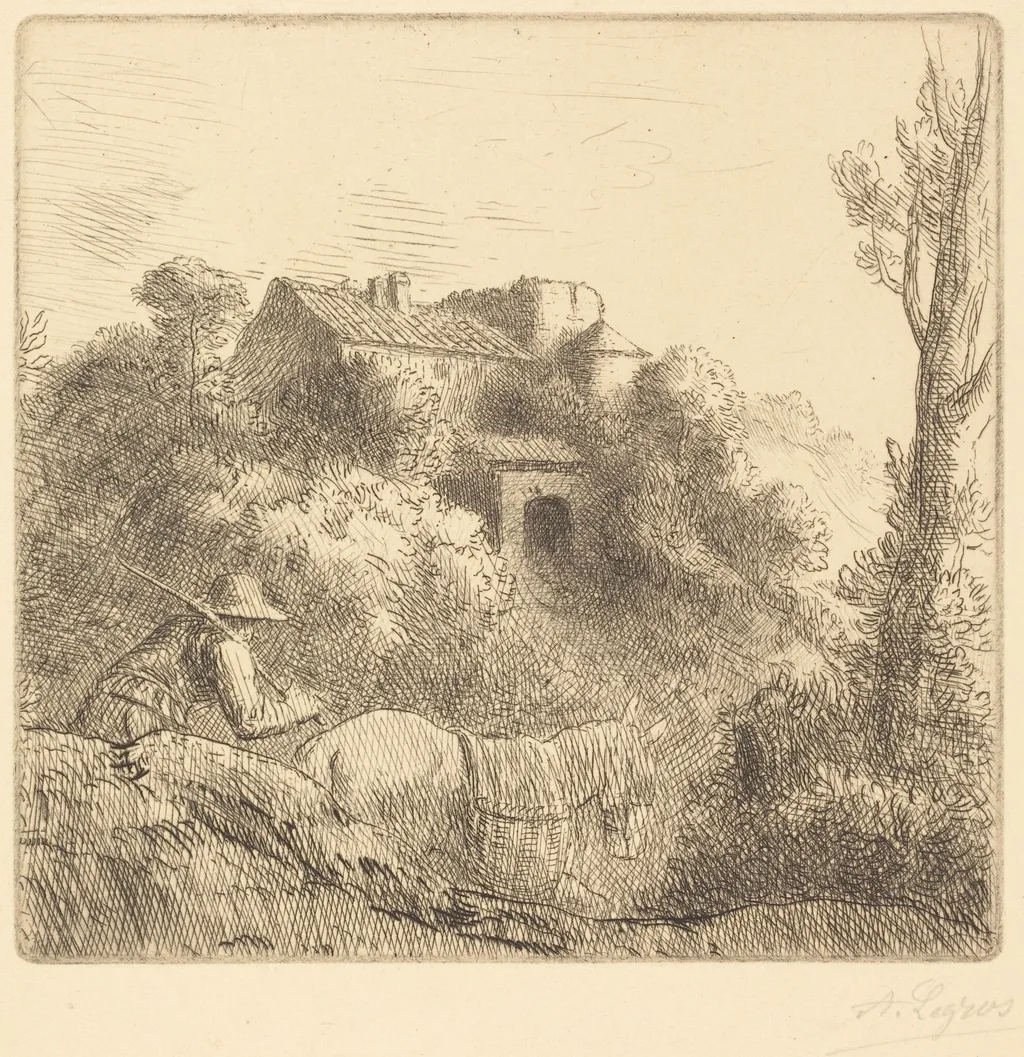
Farm on a Hill (La ferme sur la colline) is an ink print by the Romanticist artist Alphonse Legros. It dates from 1874 and is held in the collection of the National Gallery of Art.
About this work
Overview
Created in 1874, *Farm on a Hill (La ferme sur la colline)* is an etching by Alphonse Legros, a French artist who spent much of his career in Britain.
Created in 1874, *Farm on a Hill (La ferme sur la colline)* is an etching by Alphonse Legros, a French artist who spent much of his career in Britain. Known for his contributions to printmaking and education, Legros helped renew interest in etching as a serious artistic medium. This work exemplifies his quiet, observational approach to rural life, rendered with subtle tonal variations rather than sharp detail.
Subject & Meaning
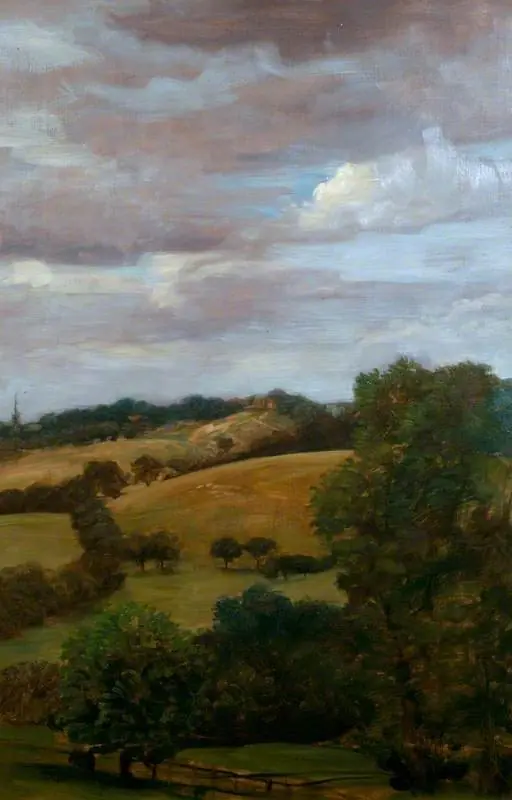
The scene portrays a modest farmhouse perched on a gentle slope, surrounded by scattered trees and undergrowth. A winding path ascends toward the dwelling, while livestock graze in the lower field. There is no human presence, and the composition conveys stillness rather than narrative. The isolation of the farm suggests a contemplative relationship between human habitation and the natural landscape.
Technique & Style
Legros employed loose, fluid etching lines that allow ink to bleed slightly, producing soft edges and hazy atmospheric effects. The technique avoids rigid definition, favoring tonal gradations to suggest depth and mood. This approach aligns with 19th-century Romantic sensibilities, where nature is rendered not as a precise record but as an evocative, almost poetic space.
History & Provenance
The print was made during Legros’s time in England, where he taught at the Slade School of Fine Art and influenced a generation of British printmakers. Though the specific early ownership of this impression is undocumented, it belongs to a broader body of work he produced in the 1870s, reflecting his commitment to etching as a medium of personal expression rather than commercial reproduction.
Context
In the 1870s, etching experienced a revival across Europe, partly as a reaction against industrialization and the dominance of academic painting. Legros, influenced by Dutch and French precedents, sought to restore the medium’s intimacy and expressive potential. His rural scenes, like this one, offered an alternative to urban or historical subjects favored by institutions.
Legacy
Legros’s etchings, including *Farm on a Hill*, helped reestablish etching as a legitimate fine art form in Britain. His emphasis on direct, spontaneous mark-making influenced later artists and contributed to the broader Arts and Crafts movement’s appreciation for handcrafted imagery. His teaching ensured that these techniques were passed on to future generations of printmakers.
Own this work as a print
Artist & collection

Artist
Alphonse Legros (French pronunciation: ; 8 May 1837 – 8 December 1911) was a French, later British, painter, etcher, sculptor, and medallist.

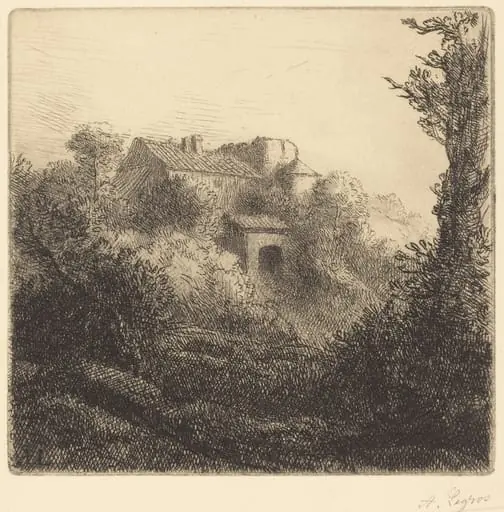 Farm on a Hill (La ferme sur la colline)
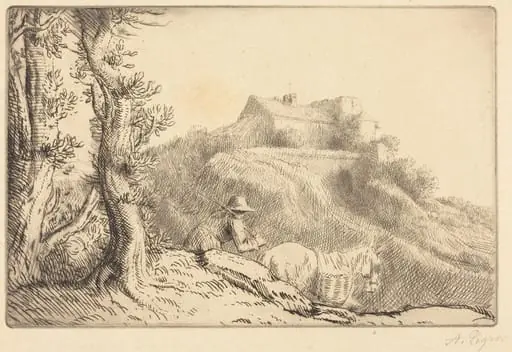 Farm on a Hill (La ferme sur la colline)
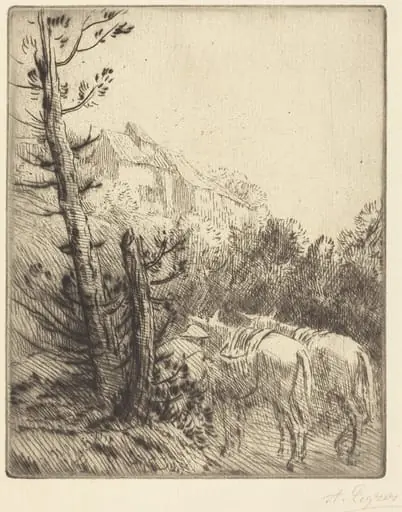 Farm on the Hillside (La ferme sur le coteau)
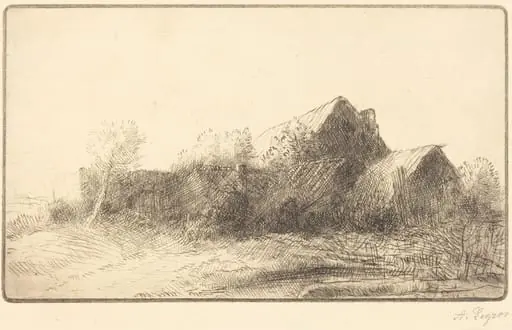 Farm (Une ferme)
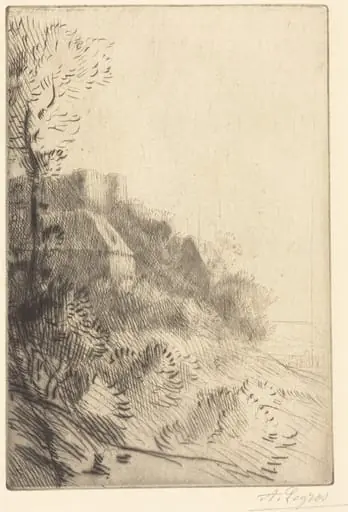 Farm on a Hillside in Sunlight (La ferme du coteau; Effet de soleil sur le coteau)
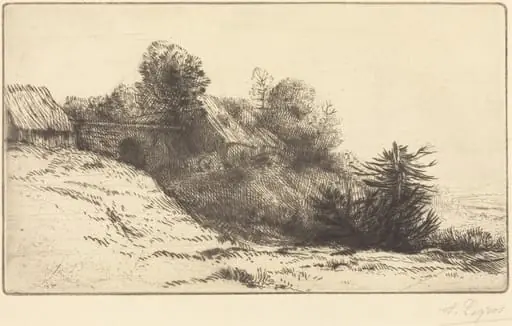 View of a Farm, 2nd plate (La ferme du Bienheureux)
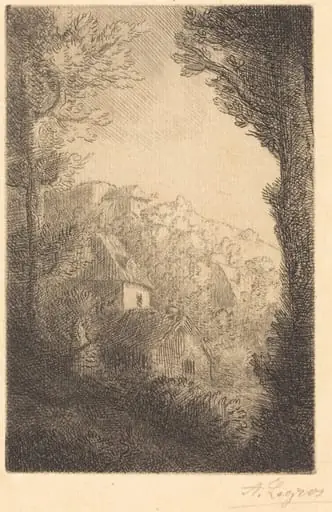 Farm on a Hillside in Sunlight (La ferme du coteau; Effet de soleil sur le coteau)
 Return to the Farm (Le retour a la ferme)
 My Farm (Ma ferme)