Artwork
Phrenology Course, 2nd plate (Le cours de phrenologie)
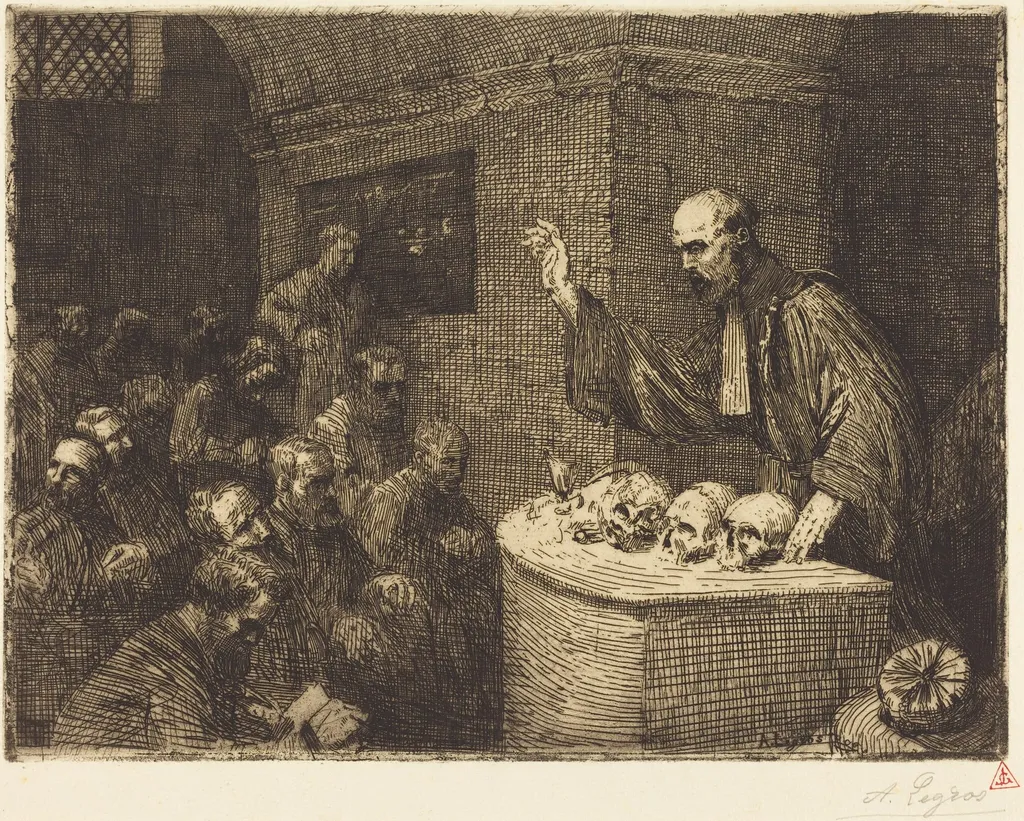
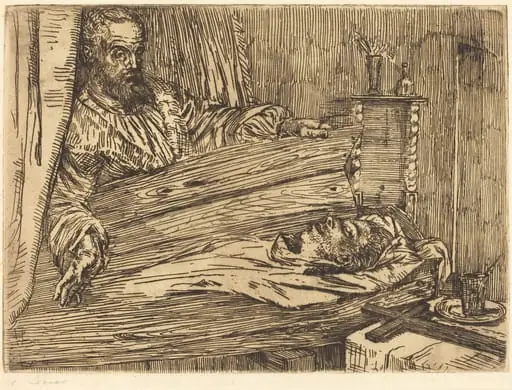
Phrenology Course, 2nd plate (Le cours de phrenologie) is an ink print by Alphonse Legros. It dates from 1906 and is held in the collection of the National Gallery of Art.
About this work
Overview
Legros, a French artist who spent much of his career in Britain, was instrumental in revitalizing etching as a fine art medium.
Created in 1906 by Alphonse Legros, this etching is the second plate in a series titled *Phrenology Course*. Legros, a French artist who spent much of his career in Britain, was instrumental in revitalizing etching as a fine art medium. The work belongs to a body of prints that critically engage with 19th-century scientific fads, using precise line work to capture a moment of pedagogical performance within a domestic setting.
Subject & Meaning
The image portrays an instructor in a dark robe gesturing toward a human skull placed on a table, surrounded by additional skulls and a few delicate flowers. The setting—a modest interior with a curtained window—suggests a private study or lecture space. The juxtaposition of scientific objects with organic elements hints at the tension between empirical claims and the fragility of human life, subtly questioning the validity of phrenology’s assertions.
Technique & Style
Executed in etching, the print demonstrates Legros’s mastery of fine, controlled lines to render texture and depth. The dark robe and shadowed walls contrast with the pale skulls and soft floral forms, creating a chiaroscuro effect. The precision of the etched lines captures the anatomical detail of the skulls while maintaining a quiet, almost somber atmosphere, reflecting Legros’s preference for restrained, observational realism over dramatic flourish.
History & Provenance
This etching was produced late in Legros’s career, after he had established himself in London as a professor at the Slade School of Fine Art. The *Phrenology Course* series was not widely exhibited during his lifetime but remained part of his private exploration of scientific and social themes. The work entered public collections after his death, valued for its historical insight and technical refinement rather than its popularity.
Context
In the late 19th and early 20th centuries, phrenology—though increasingly discredited—still held cultural sway as a popular framework for understanding character through skull morphology. Legros’s series reflects a broader European artistic interest in documenting the remnants of discredited scientific practices. His depiction avoids satire, instead presenting the scene with neutral observation, inviting viewers to consider the persistence of flawed belief systems.
Legacy
Legros’s *Phrenology Course* etchings are now recognized as quiet commentaries on the intersection of science, education, and superstition. They stand apart from overtly political or satirical works of the period, offering instead a contemplative record of a fading intellectual trend. The series contributes to the understanding of how artists engaged with the margins of scientific discourse, preserving its visual language without endorsing its claims.
Artist & collection

Artist
Alphonse Legros (French pronunciation: ; 8 May 1837 – 8 December 1911) was a French, later British, painter, etcher, sculptor, and medallist.

 Spanish Singers (Les chantres espagnols)
 Monk Playing the Organ in Church (Moine jouant de l'orgue a l'eglise)
 L'Avocat que se trouve mal
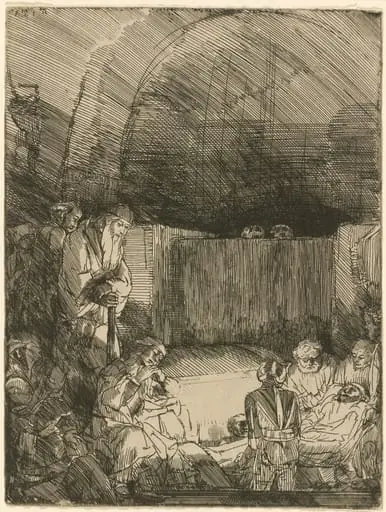 The Entombment
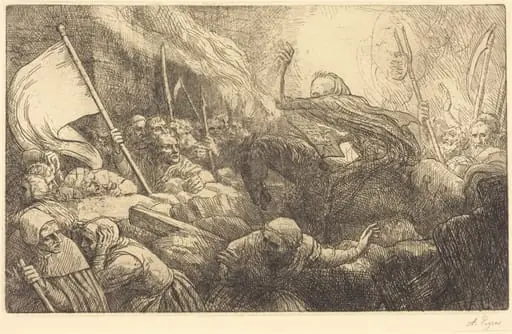 The Triumph of Death: Proclamation (Le triomphe de la mort: La proclamation)
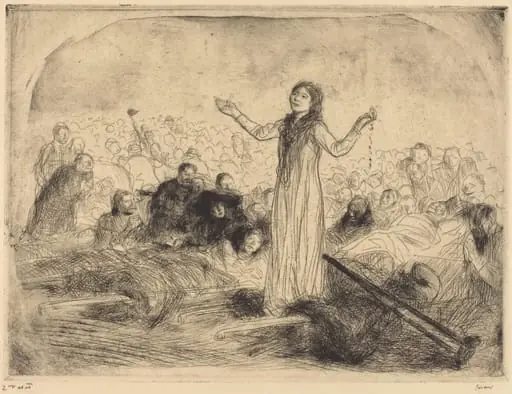 Lourdes, la miraculée (2e planche) (Lourdes, the Miracle) (second plate)
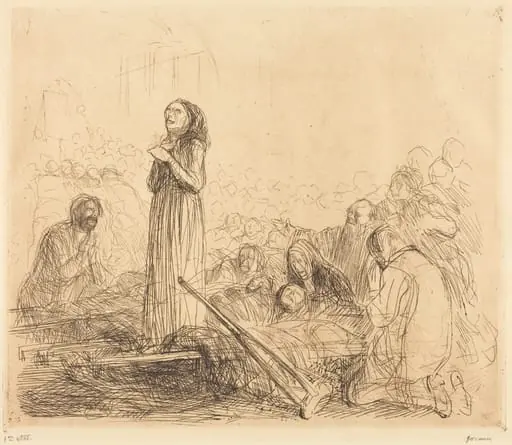 Lourdes, la miraculée (1ère planche) (Lourdes, the Miracle) (first plate)
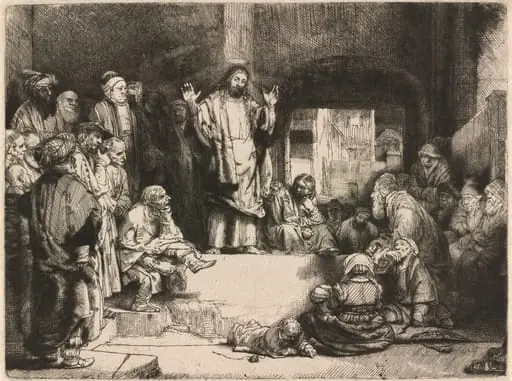 Christ Preaching (La petite Tombe)
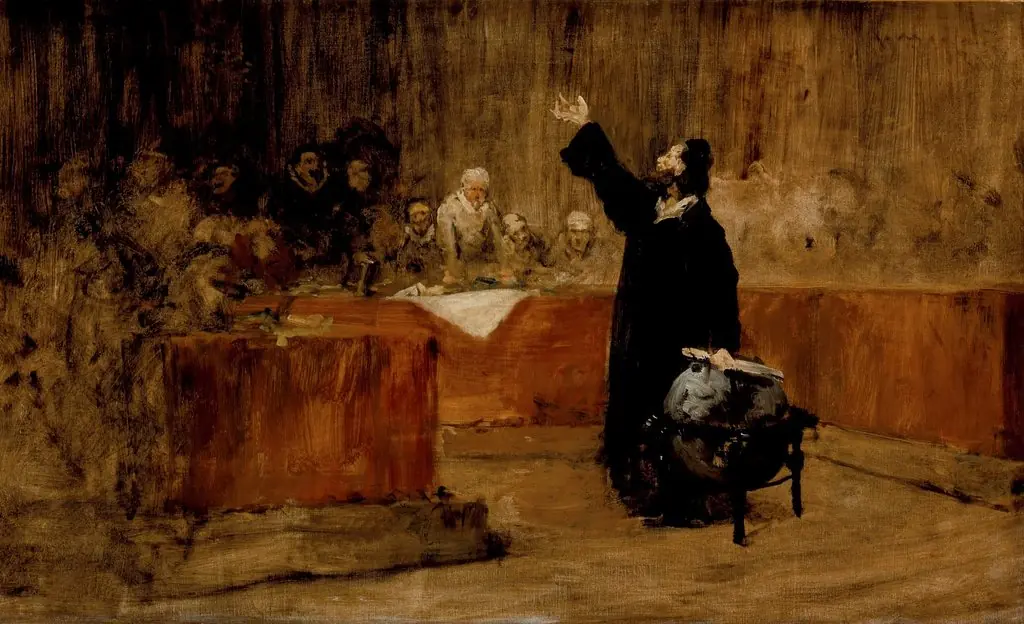 Sketch for a Picture--Columbus before the Council of Salamanca (A) (Christopher Columbus before the Council of Salamanca)
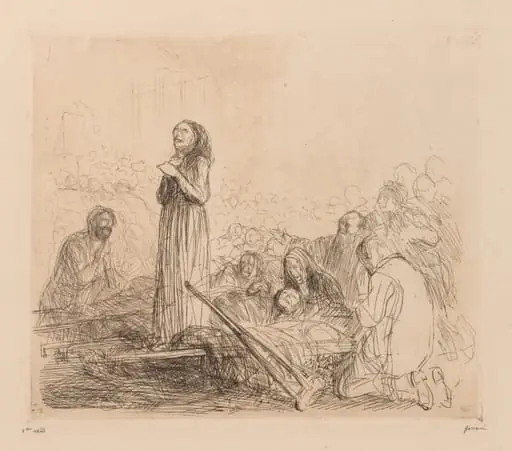 The Miracle at Lourdes
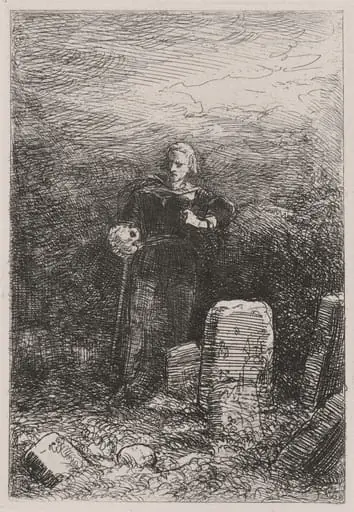 Hamlet with Yorick's Skull
 Berenice, 2nd plate