Artwork
Sleeping Beggar (Mendiant endormi)
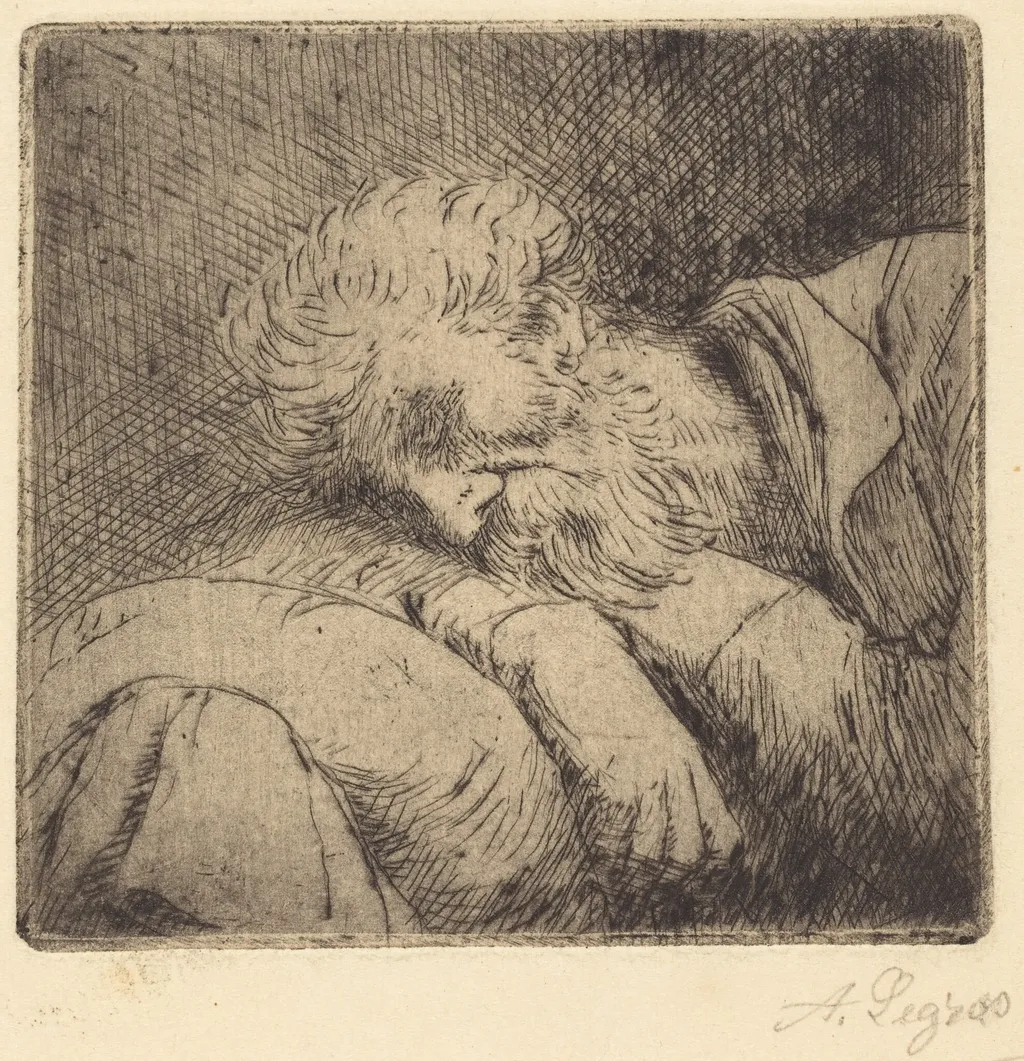
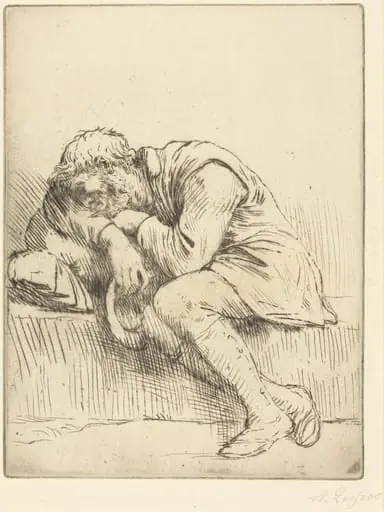
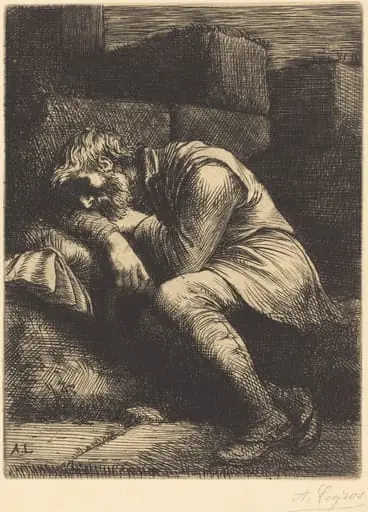
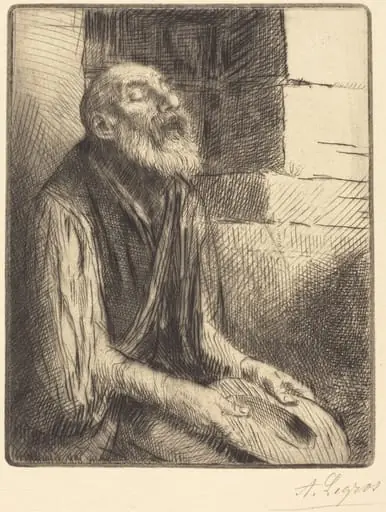
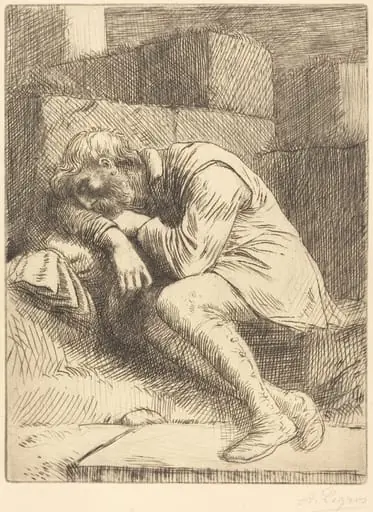
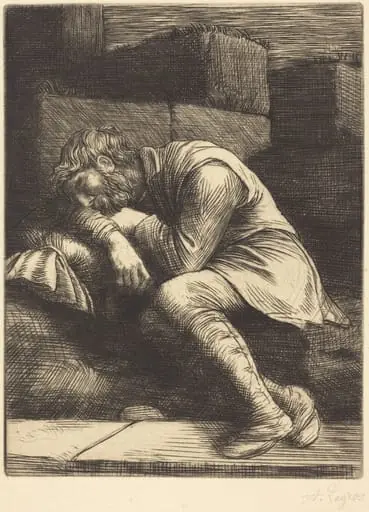
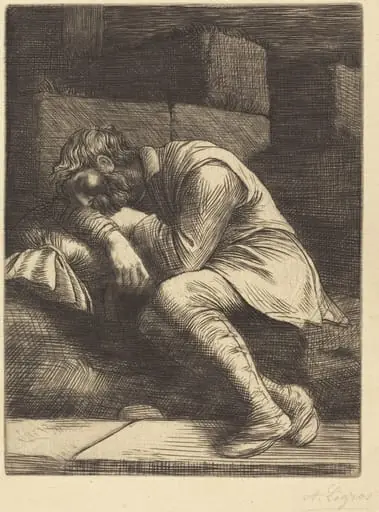
Sleeping Beggar (Mendiant endormi) is an ink print by the Romanticist artist Alphonse Legros. It dates from 1874 and is held in the collection of the National Gallery of Art.
About this work
Overview
Though French by birth, Legros spent much of his career in Britain after moving to London in 1863, where he became influential in the revival of printmaking.
Created in 1874 by Alphonse Legros, *Sleeping Beggar* is an intaglio print combining etching and drypoint. Though French by birth, Legros spent much of his career in Britain after moving to London in 1863, where he became influential in the revival of printmaking. This work exemplifies his commitment to the expressive potential of black-and-white graphic techniques, focusing on quiet human presence rather than narrative drama.
Subject & Meaning
The print portrays a homeless figure curled in sleep, wrapped tightly in a blanket with one arm exposed. There is no indication of identity or circumstance—only the physical weight of exhaustion. Legros avoids sentimentality, presenting the figure with dignity through stillness. The subject reflects the quiet realities of urban poverty in late 19th-century Europe, observed without judgment or theatricality.
Technique & Style
Legros employed drypoint to carve fine, burr-rich lines into the plate, creating dense, velvety textures in the blanket and hair. Etching provided sharper contours for the face and limbs. The crisscrossing strokes mimic woven fabric and coarse hair, building depth through line alone. No tone or color is used; the entire image relies on the contrast of inked recesses and bare paper to suggest form and volume.
History & Provenance
The print was made during Legros’s early years in London, a period when he was actively teaching and promoting etching as a serious artistic medium. It was likely produced in small editions for collectors and fellow artists. While specific early ownership records are sparse, the work entered institutional collections in the 20th century, reflecting its recognition within the British printmaking revival.
Context
In the 1870s, European artists increasingly turned to everyday subjects as industrialization reshaped society. Legros’s focus on a sleeping beggar aligns with broader realist tendencies, yet his choice of printmaking—often associated with reproduction—elevated it to fine art. His work stood apart from academic traditions, emphasizing direct observation and tactile technique over idealized form.
Legacy
Legros’s *Sleeping Beggar* contributed to the redefinition of etching as a vehicle for personal expression rather than mere illustration. His technical rigor influenced a generation of British printmakers, including those in the Etching Revival movement. The work remains a quiet but enduring example of how modest subjects, rendered with precision, can convey profound humanity.
Artist & collection

Artist
Alphonse Legros (French pronunciation: ; 8 May 1837 – 8 December 1911) was a French, later British, painter, etcher, sculptor, and medallist.