Artwork
Study of a Nude Figure (Etude de figure nue)
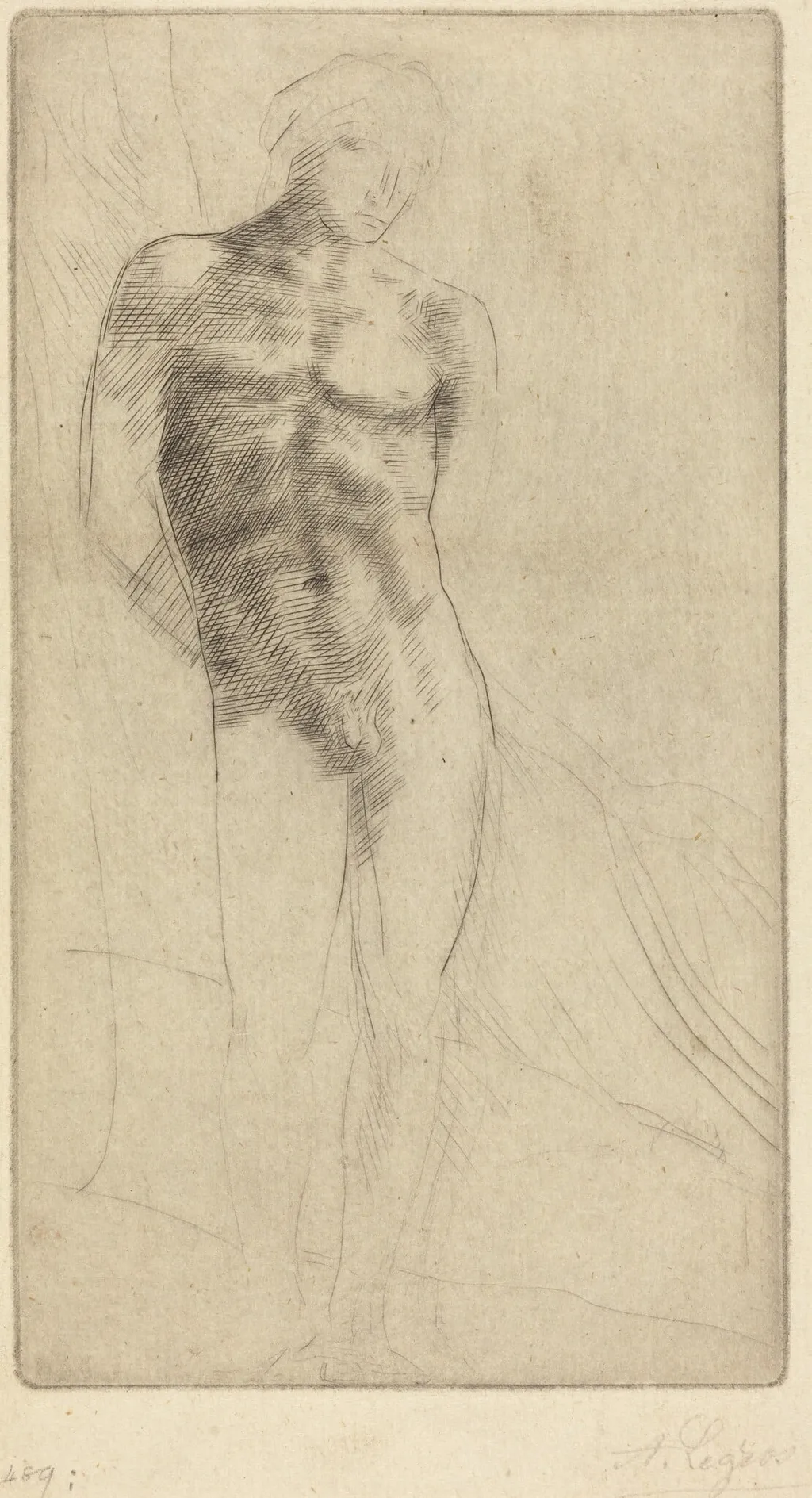
Study of a Nude Figure (Etude de figure nue) is an ink print by the Romanticist artist Alphonse Legros. It dates from 1874 and is held in the collection of the National Gallery of Art.
About this work
Overview
Unlike finished compositions, it prioritizes observation over polish, reflecting Legros’s commitment to direct anatomical study through printmaking.
Created in 1874, *Study of a Nude Figure* is an etching by Alphonse Legros, a French artist who settled in London in 1863 and became a key figure in the British printmaking revival. The work is a preparatory study, executed with rapid, expressive lines to explore form and light. Unlike finished compositions, it prioritizes observation over polish, reflecting Legros’s commitment to direct anatomical study through printmaking.
Subject & Meaning
The figure is depicted from behind, standing in a relaxed, sideways pose with one arm raised behind the head. The pose suggests a moment of natural stillness, possibly captured during a life drawing session. There is no narrative or symbolic intent; the focus is purely on the physical presence of the body, emphasizing volume, posture, and the interplay of light across musculature.
Technique & Style
Legros employed etching to achieve a range of tonal effects through varied line density and hatching. The back and shoulders are rendered with dense, cross-hatched strokes that suggest shadow and form, while lighter, sketchier lines define contours. The contrast between the dark ink and pale paper enhances the figure’s emergence from the ground, capturing the immediacy of a quick observational sketch.
History & Provenance
The etching was produced during Legros’s early years in London, a period when he was deeply engaged in teaching and printmaking at the Slade School of Art. It reflects his influence on British artists seeking to revive etching as a serious medium. While the exact provenance of this specific print is undocumented, it aligns with his known body of academic studies from the 1870s.
Context
In the 1870s, European art academies emphasized life drawing as foundational training. Legros, trained in Paris and active in London, upheld this tradition while embracing the spontaneity of etching over more formal engraving. His studies like this one were part of a broader movement to renew printmaking through direct, expressive techniques rooted in observation rather than idealization.
Legacy
Legros’s etchings, including this study, helped shift perceptions of printmaking from reproductive craft to a legitimate medium for artistic exploration. His emphasis on direct observation influenced generations of British artists at the Slade. Though not widely exhibited, such works remain important examples of 19th-century academic practice in print form.
Artist & collection

Artist
Alphonse Legros (French pronunciation: ; 8 May 1837 – 8 December 1911) was a French, later British, painter, etcher, sculptor, and medallist.

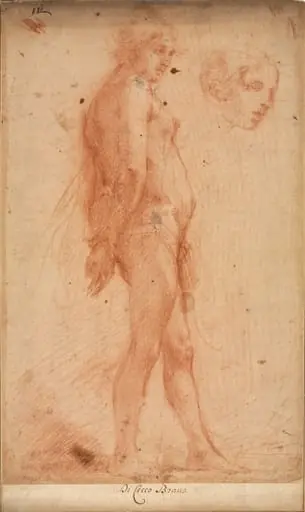 Study of a Standing Male Nude, with a Study of Head in Three-Quarter Profile
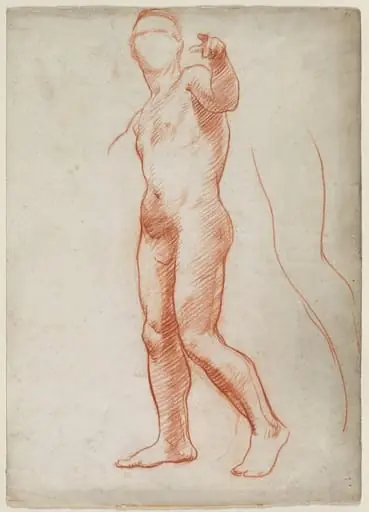 Standing Male Nude
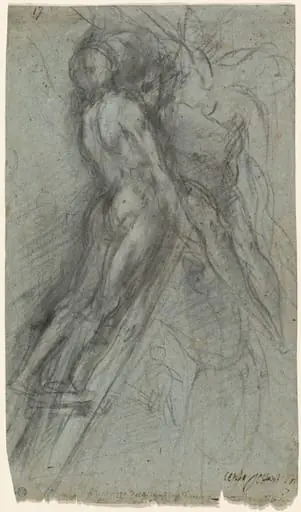 The Descent from the Cross
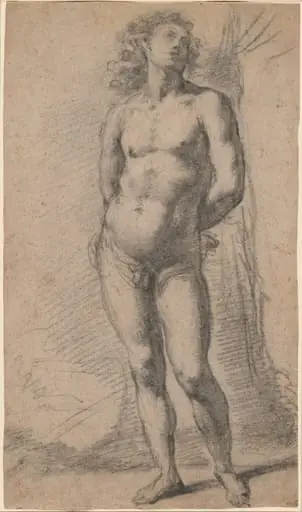 Study of a Standing Male Nude: Saint Sebastian
![Male Nude [recto], by Michelangelo](https://artifactworldgallery.com/img/michelangelo--male-nude-recto--8c3354d89884753a-w320.webp) Male Nude [recto]
Male Nude [recto]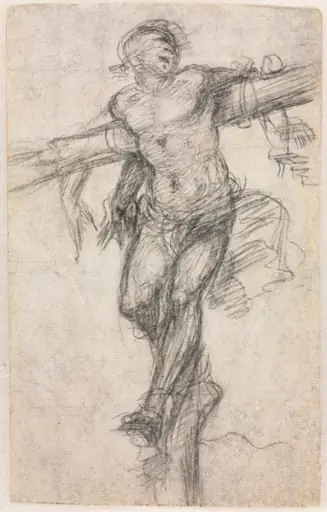 The Unrepentant Thief
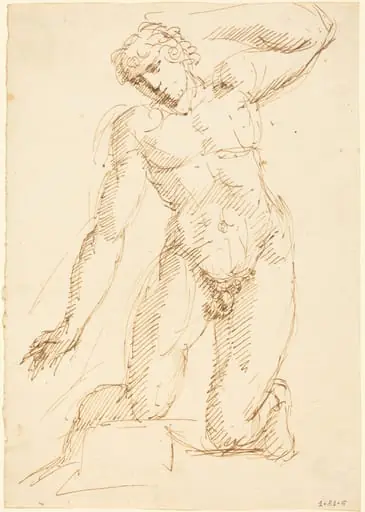 A Male Nude Kneeling
![Nude Man Seen from Behind [verso], by Jacopo Palma il Giovane](https://artifactworldgallery.com/img/jacopo-palma-il-giovane--nude-man-seen-from-behind-verso--2de266ff199c839b-w320.webp) Nude Man Seen from Behind [verso]
Nude Man Seen from Behind [verso]![Male Nude [verso], by Michelangelo](https://artifactworldgallery.com/img/michelangelo--male-nude-verso--d48a81b2ad2bdbb8-w320.webp) Male Nude [verso]
Male Nude [verso]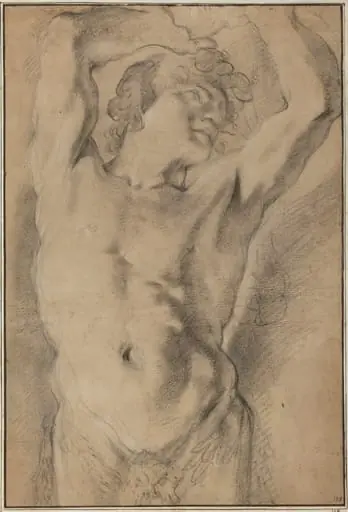 A Male Herm
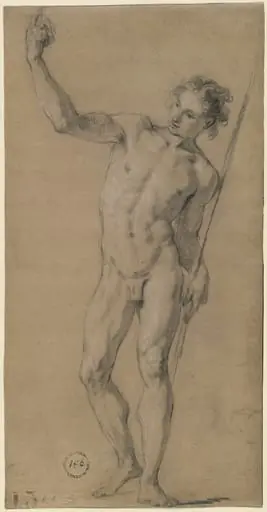 Saint John the Baptist
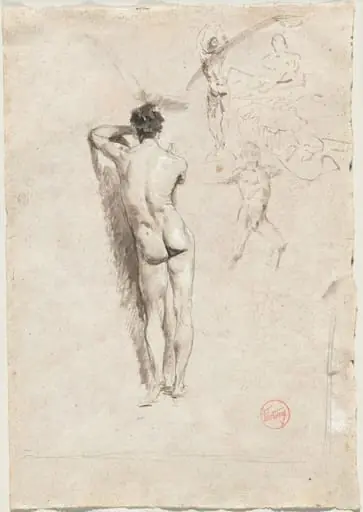 Study of a Male Nude and Other Studies