Artwork
Sinbad the Sailor (Sinbad le marin)
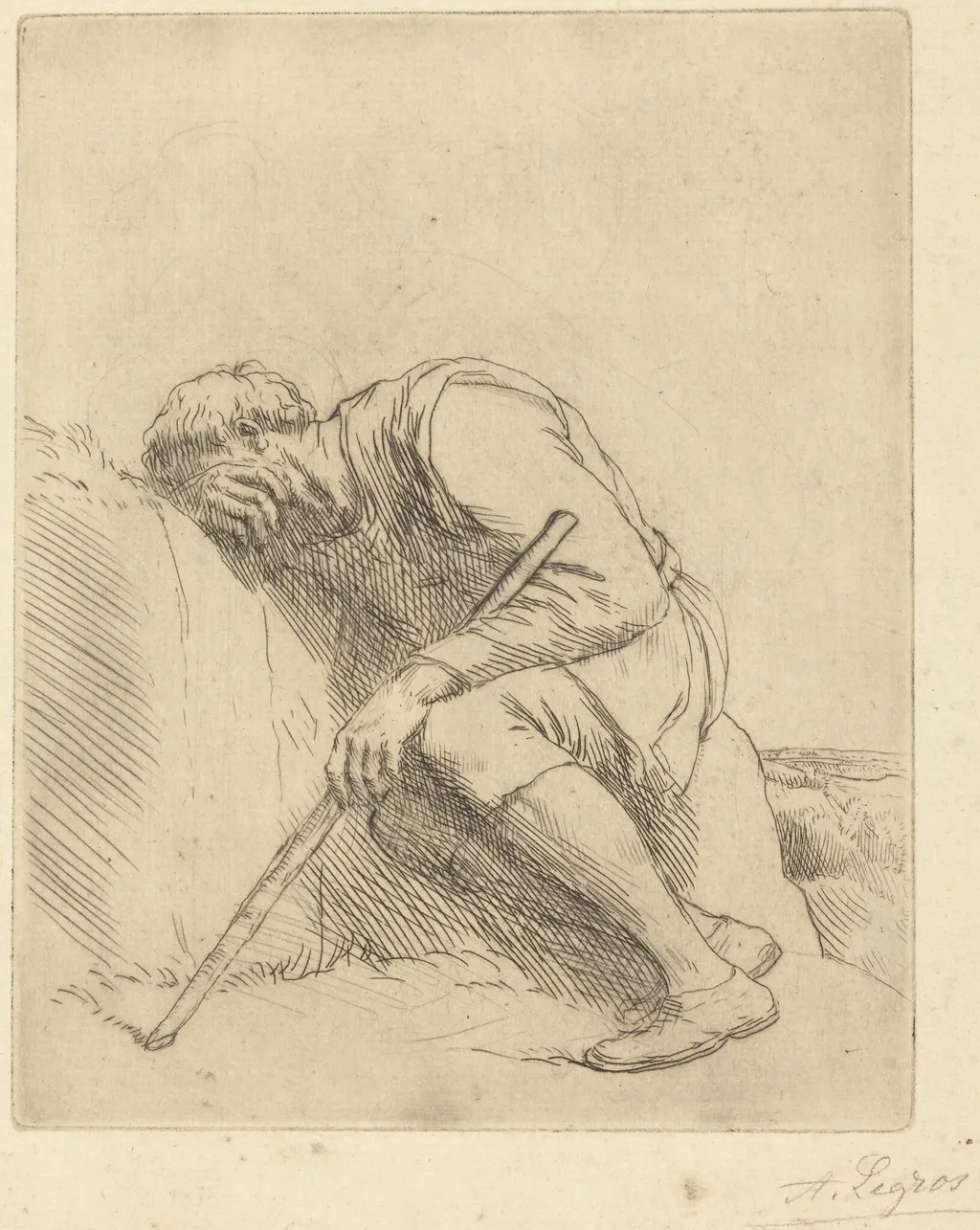
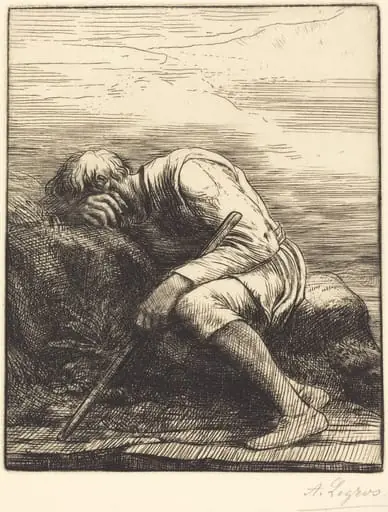
Sinbad the Sailor (Sinbad le marin) is an ink print by the Romanticist artist Alphonse Legros. It dates from 1874 and is held in the collection of the National Gallery of Art.
About this work
Overview
Alphonse Legros, a French artist who moved to London in 1863 and became a British citizen, produced *Sinbad the Sailor* in 1874 as an etching and drypoint.
Alphonse Legros, a French artist who moved to London in 1863 and became a British citizen, produced *Sinbad the Sailor* in 1874 as an etching and drypoint. Known for his engagement with multiple media, Legros was instrumental in reinvigorating the practice of etching in Britain through his teaching and artistic example. This print reflects his commitment to the expressive potential of graphic techniques during a period of renewed interest in printmaking.
Subject & Meaning
The image portrays Sinbad, the legendary mariner from Arabic folklore, captured mid-motion as he kneels with a long pole gripped in both hands. His bowed head and sideways posture suggest exhaustion or contemplation, evoking the physical and psychological toll of his voyages. Rather than depicting a moment of triumph, Legros emphasizes vulnerability, aligning the figure with Romantic ideals of human struggle against elemental forces.
Technique & Style
Legros employed etching and drypoint to generate dense, textured surfaces, using rapid, incised lines to suggest the roughness of fabric and tangled hair. The scratchy, energetic marks convey motion and urgency, avoiding smooth finishes in favor of tactile immediacy. This approach reflects his preference for direct, hand-driven methods that prioritize emotional resonance over polished detail, characteristic of his broader printmaking philosophy.
History & Provenance
Created during Legros’s tenure at the Slade School of Fine Art in London, the print emerged from a period when he was actively shaping British print culture. Though not widely exhibited at the time, it was part of a body of work that influenced a generation of British etchers. Its production coincided with a revival of interest in narrative and literary subjects within graphic art, positioning it within a broader European trend.
Context
In the 1870s, British artists were re-engaging with literary and mythological themes, often drawn from Eastern tales and medieval legends. Legros’s choice of Sinbad reflects this fascination with exotic narratives, filtered through a Romantic sensibility that valued emotional intensity over literal representation. His technique echoed contemporary European printmakers who sought to revive the expressive power of line over tonal gradation.
Legacy
Legros’s *Sinbad the Sailor* exemplifies his role in elevating etching as a serious artistic medium in Britain. His emphasis on handcrafted mark-making and psychological depth influenced students and peers, contributing to the late 19th-century resurgence of original printmaking. Though less known today, the work remains a quiet testament to his commitment to the expressive potential of the graphic arts.
Artist & collection

Artist
Alphonse Legros (French pronunciation: ; 8 May 1837 – 8 December 1911) was a French, later British, painter, etcher, sculptor, and medallist.

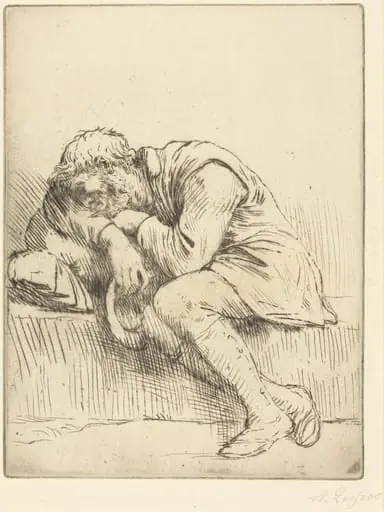 Sleeping Beggar (Mendiant endormi)
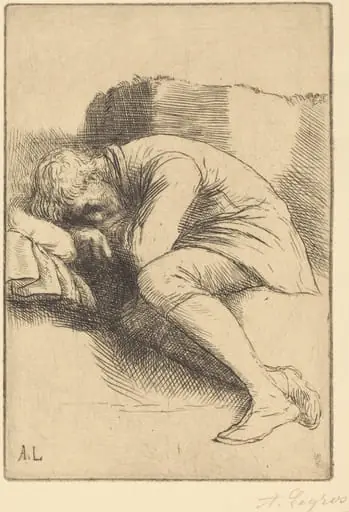 Sleeper (Un dormeur)
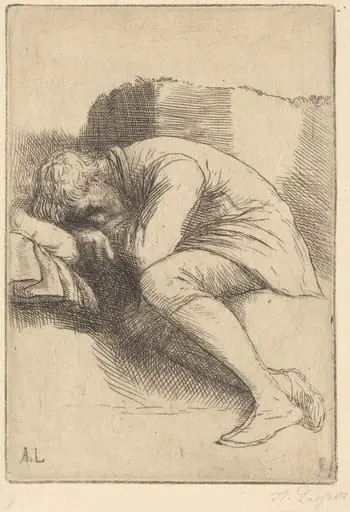 Sleeper (Un dormeur)
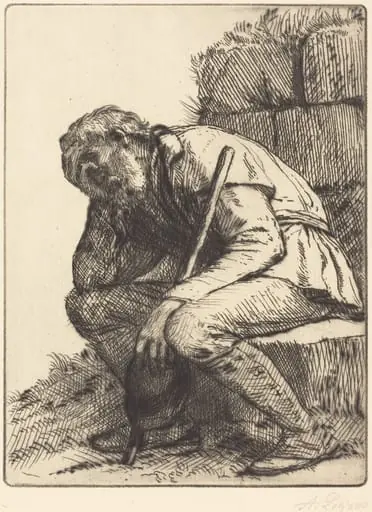 Desperate Man (Le desespere)
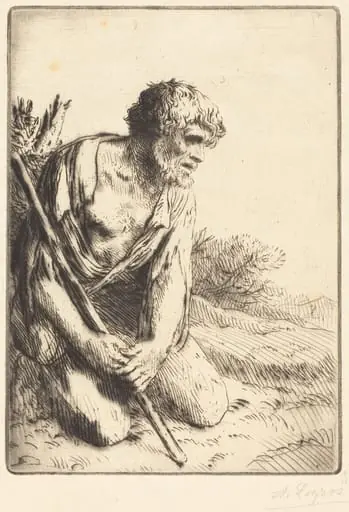 The Prodigal Son, 3rd plate (L'enfant prodigue)
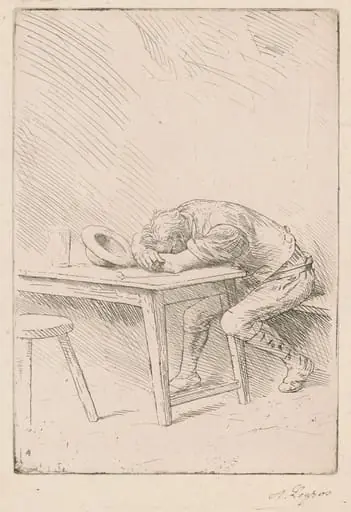 Siesta of a Laborer (Sieste d'un Ouvrier)
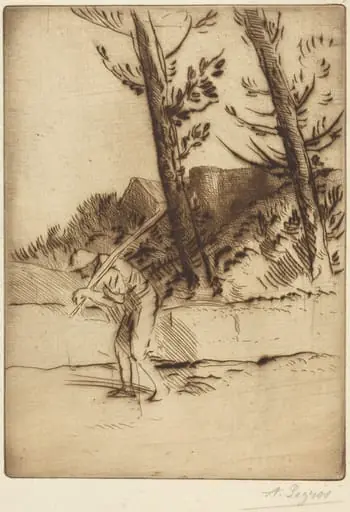 View of a Farm (La ferme des Bordes)
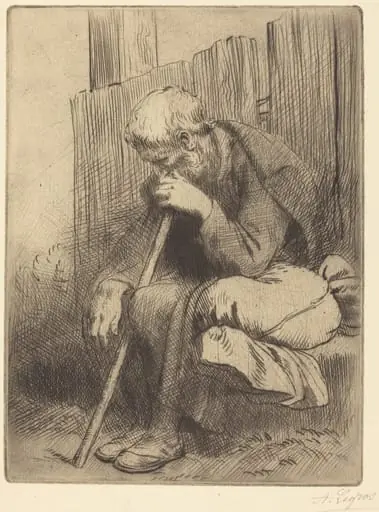 Thinker (Le penseur)
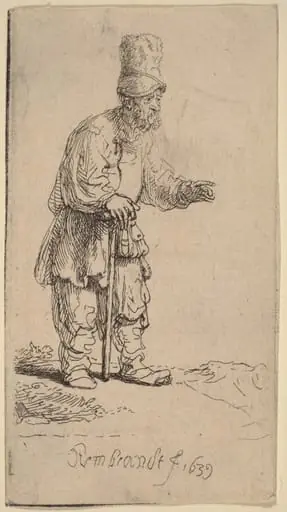 A Peasant in a High Cap, Standing Leaning on a Stick
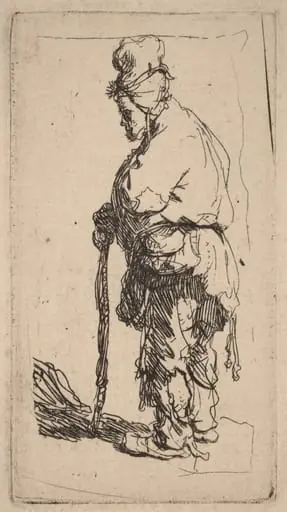 Beggar Leaning on a Stick, Facing Left
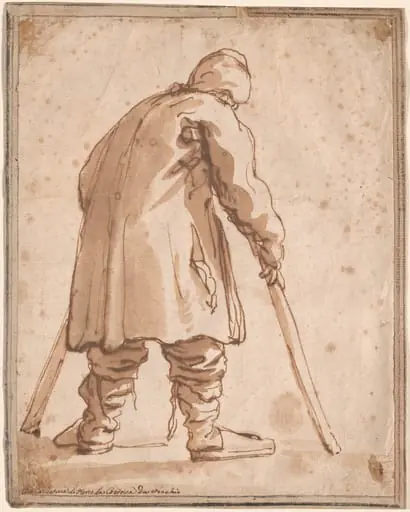 Caricature of a Man, Said to Be Pietro da Cortona
 Sinbad the Sailor (Sinbad le marin)