Artwork
Battle of the Amazons
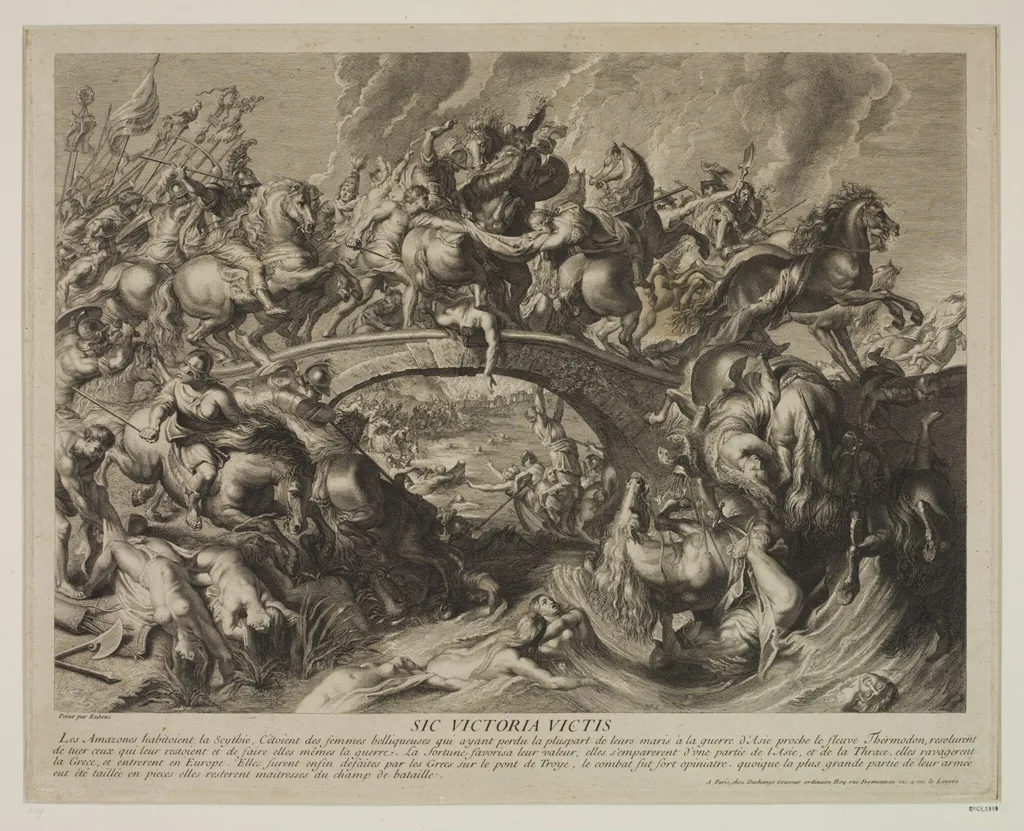
Battle of the Amazons is a print by Peter Paul Rubens. It dates from 1550 and is held in the collection of the Victoria and Albert Museum.
About this work
Overview
The image is rendered in fine lines on paper, preserving the dynamism of the original while adapting it for wider dissemination.
This print is a reproductive engraving of Peter Paul Rubens’s painted composition depicting the Battle of the Amazons. It was produced under the supervision of Gaspard Duchange, using a prior engraving by Lucas Vorsterman as a basis. The image is rendered in fine lines on paper, preserving the dynamism of the original while adapting it for wider dissemination. A Latin inscription at the base, *Sic Victoria Victis*, adds a layer of ambiguous meaning to the scene.
Subject & Meaning
The scene portrays a violent clash between Greek warriors and Amazon warriors, a mythological subject often used to symbolize the triumph of order over chaos. Yet the inscription *Sic Victoria Victis*—'Thus victory to the vanquished'—subverts this narrative, suggesting a moral ambiguity or ironic reversal. The chaotic interweaving of figures, some falling, others struggling, implies that victory may be hollow or shared, challenging conventional heroic tropes.
Technique & Style
The engraving employs fine, precise lines to capture the turbulence of the battle, with dense cross-hatching defining musculature, armor, and the tangled limbs of horses and warriors. Movement is conveyed through overlapping forms and diagonal thrusts, echoing Rubens’s Baroque energy. The absence of color emphasizes tonal contrast and linear rhythm, allowing the complexity of the composition to emerge through detail alone.
History & Provenance
The print was made in the early 17th century as part of a broader effort to circulate Rubens’s works through reproductive prints. Lucas Vorsterman, a skilled engraver in Rubens’s circle, created the initial plate, later reworked by Gaspard Duchange for French audiences. The print’s survival in collections like the Victoria and Albert Museum reflects its role in disseminating Flemish art across Europe during the Baroque period.
Context
During this period, prints of historical and mythological battles were popular among collectors and scholars, serving both decorative and intellectual purposes. The Amazon theme, rooted in classical literature, resonated with contemporary ideas about gender, power, and civilization. The inclusion of a Latin motto aligns the image with humanist traditions, inviting viewers to interpret the scene beyond mere spectacle.
Legacy
This engraving contributed to the enduring visibility of Rubens’s compositions beyond the confines of painting. It exemplifies the collaborative nature of print production in the 17th century, where painters, engravers, and publishers worked in tandem. Though not original, the print preserved and amplified the emotional intensity of the source, influencing how later generations perceived Baroque narrative art.
Artist & collection
Artist
Flemish Baroque painter Peter Paul Rubens filled canvases with dramatic, muscular figures in swirling robes and golden light.

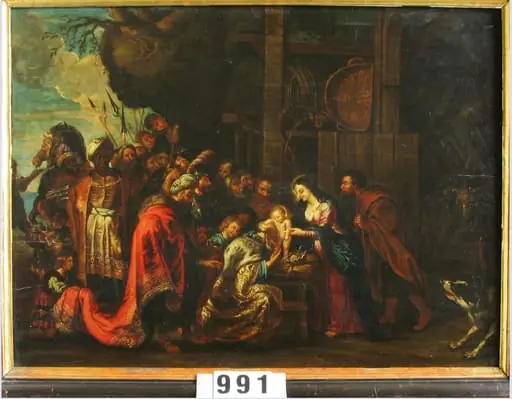
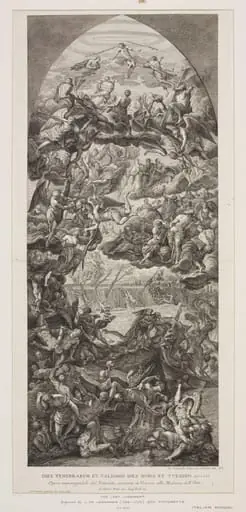 The Last Judgment
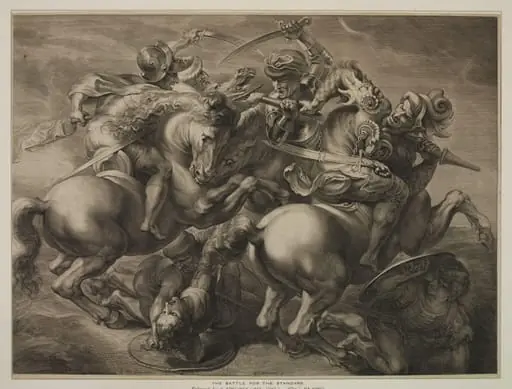 Battle for the Standard
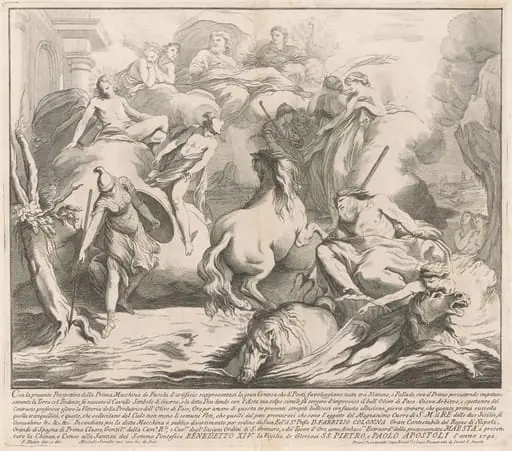 The Prima Macchina for the Chinea of 1742: The Contest of Neptune and Minerva
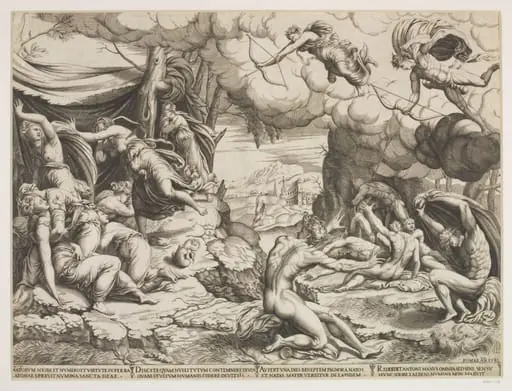 The Daughters of Niobe
![The Temptation of Saint Anthony [second version], by Jacques Callot](https://artifactworldgallery.com/img/jacques-callot--the-temptation-of-saint-anthony-second-version--9cf852748ad4d6b5-w320.webp) The Temptation of Saint Anthony [second version]
The Temptation of Saint Anthony [second version]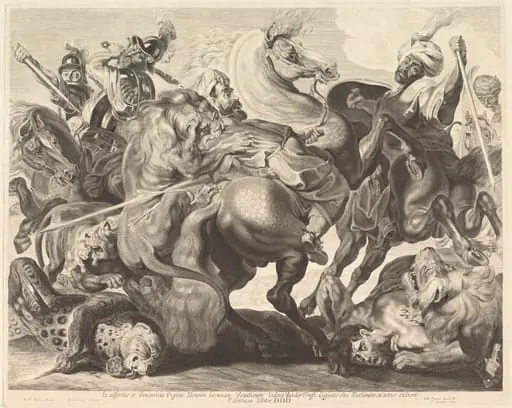 A Lion Hunt
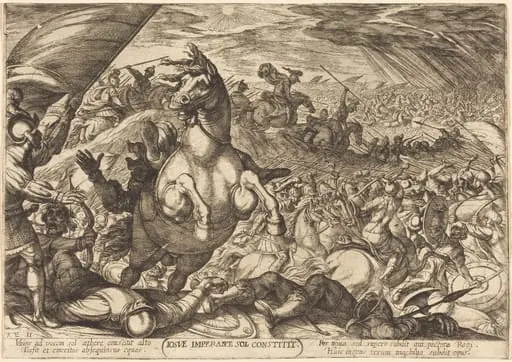 Joshua Ordering the Sun to Stop
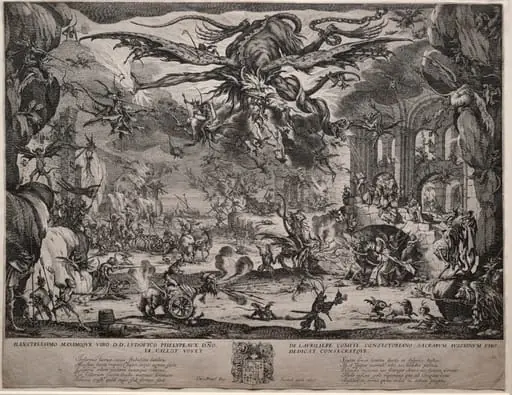 The Temptation of Saint Anthony (second version)
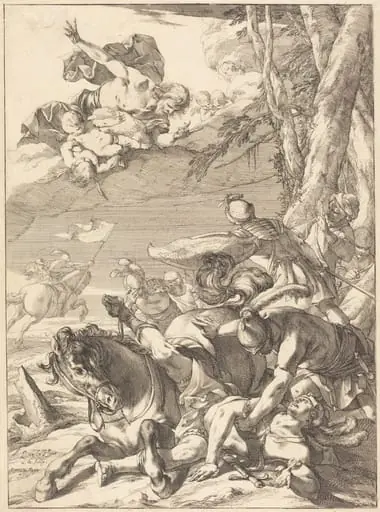 The Conversion of Saint Paul
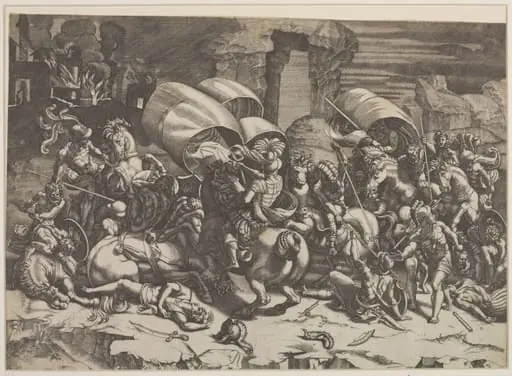 La bataille au coutelas
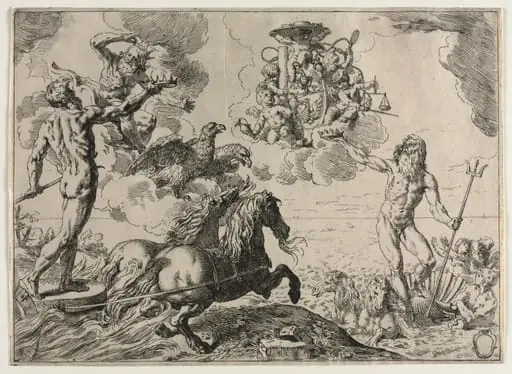 The "Quos Ego"
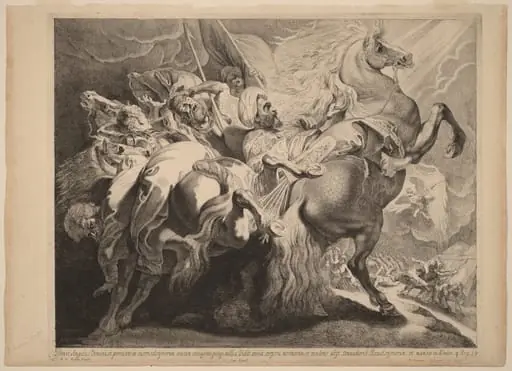 The Defeat of Sennacherib