Artwork
The Fall of the Rebellious Angels
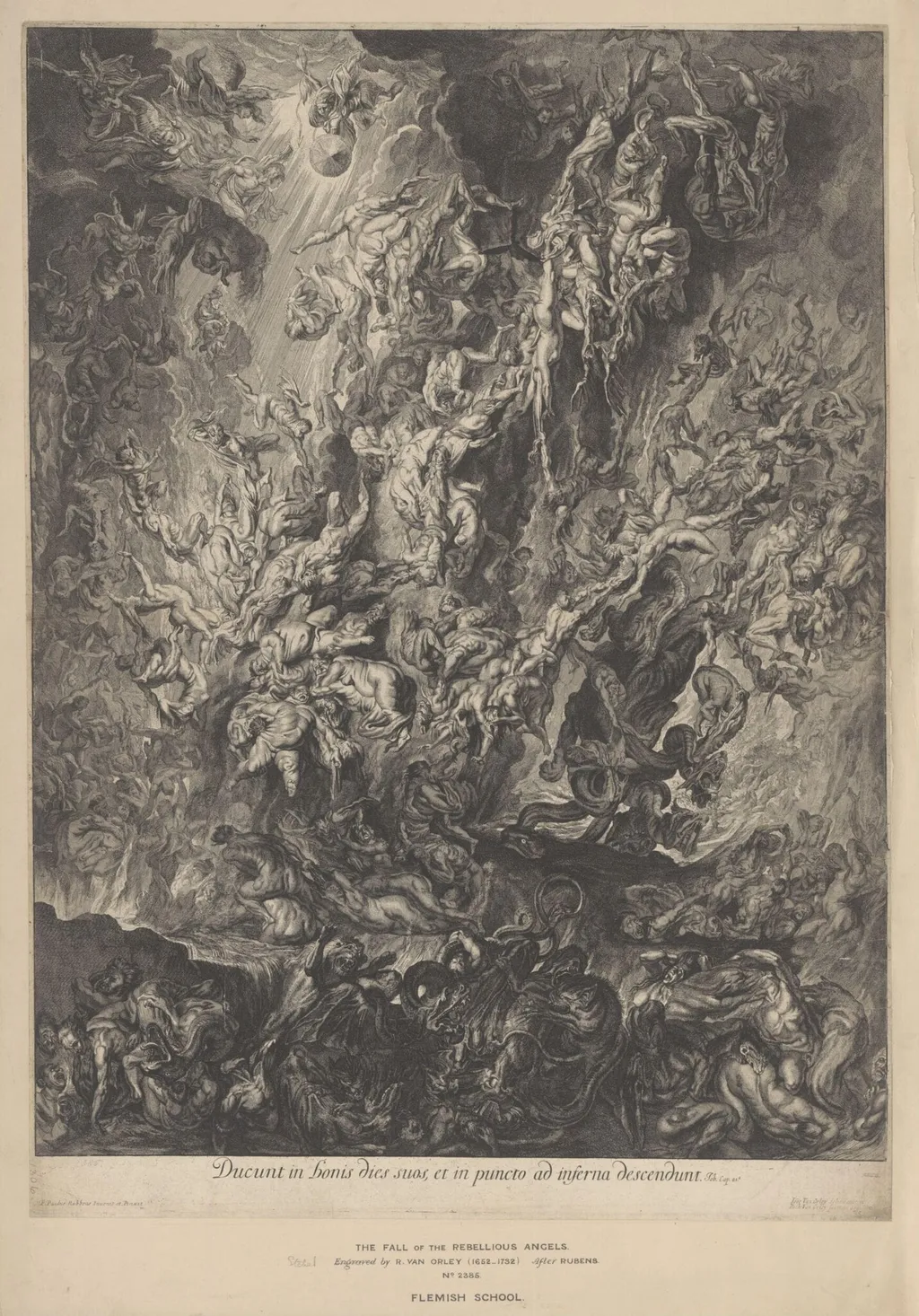
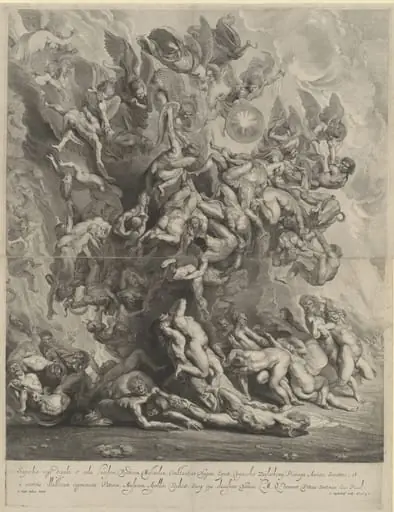
The Fall of the Rebellious Angels is a print by Richard van Orley. It is held in the collection of the Victoria and Albert Museum.
About this work
Overview
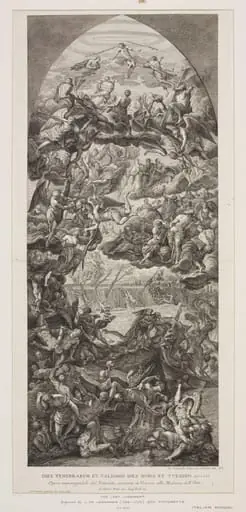
The image captures a turbulent celestial collapse, rendered with dense, energetic lines that prioritize motion over detail.
Created in 1750 by Richard van Orley, this print is a reproductive work based on Peter Paul Rubens’s earlier composition. Executed in ink on paper, it translates a dynamic Baroque painting into the medium of printmaking. The image captures a turbulent celestial collapse, rendered with dense, energetic lines that prioritize motion over detail. Its rough texture and lack of refined finish suggest a focus on expressive energy rather than polished finish.
Subject & Meaning
The scene illustrates the biblical expulsion of rebellious angels from heaven, a traditional subject in Christian iconography. Van Orley’s version avoids individualized figures, instead presenting a mass of entangled limbs, wings, and torsos in freefall. The absence of facial features and the overwhelming density of forms emphasize collective punishment and divine disorder, conveying the chaos of spiritual defeat rather than narrative clarity.
Technique & Style
Van Orley employed a vigorous, linear approach, using rapid, overlapping strokes to simulate motion and depth. The upper portion of the composition is lighter and more open, suggesting celestial space, while the lower half is densely packed with shadowed forms, creating a visual weight that pulls the eye downward. The inkwork is deliberately rough, favoring expressive immediacy over precision, aligning with late Baroque tendencies toward emotional intensity.
History & Provenance
The print derives from Rubens’s original painting, likely produced as part of a broader tradition of reproductive prints that disseminated major works to wider audiences in the 18th century. Van Orley, known for his engraving and printmaking, adapted Rubens’s composition with minimal alteration, preserving its dramatic structure while adapting it to the constraints of the print medium. Its survival suggests continued interest in Baroque religious imagery well into the Enlightenment.
Context
In mid-18th-century Europe, reproductive prints served as accessible conduits for canonical artworks, especially among collectors and institutions without access to original paintings. Van Orley’s interpretation reflects a period when artistic authority still rested with established masters like Rubens, even as new aesthetic ideals began to emerge. The print’s roughness may indicate either a deliberate stylistic choice or the limitations of workshop production.
Legacy
Though not widely exhibited today, the print remains a testament to the enduring influence of Rubens’s compositional power and the role of printmaking in preserving and transmitting Baroque visual language. Its energetic, almost sketch-like quality distinguishes it from more refined reproductive engravings of the era, offering insight into how artists interpreted and reimagined earlier masterworks through the lens of their own time.
Artist & collection
Artist
Richard van Orley or Richard van Orley II (16 July 1663, in Brussels – 20 June 1732, in Brussels) was a Flemish painter, draughtsman, printmaker.