Artwork
Giovanni Baglione
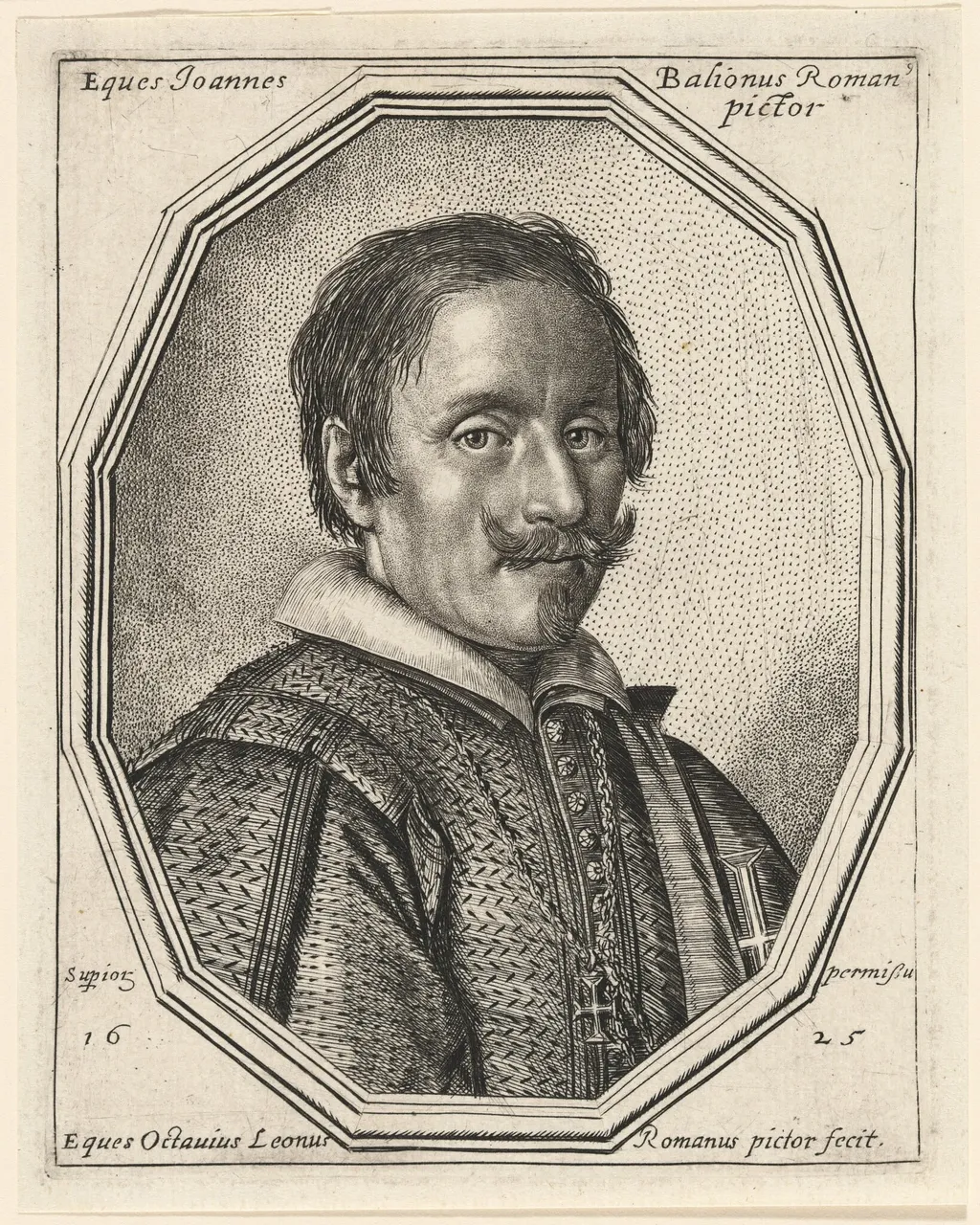
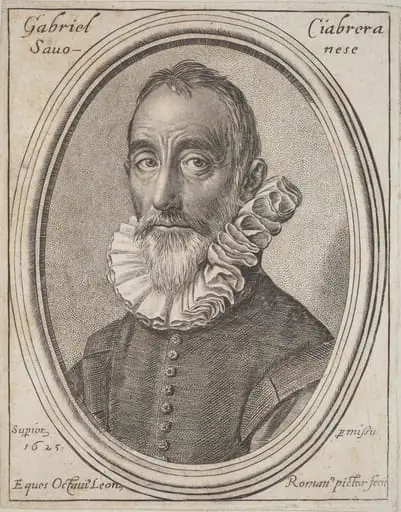
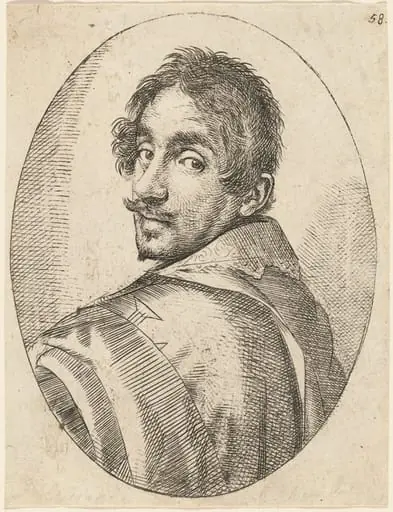
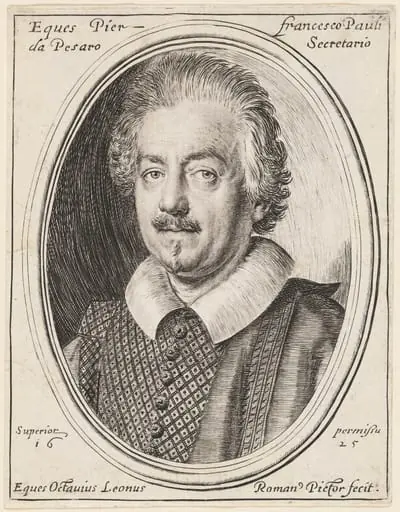
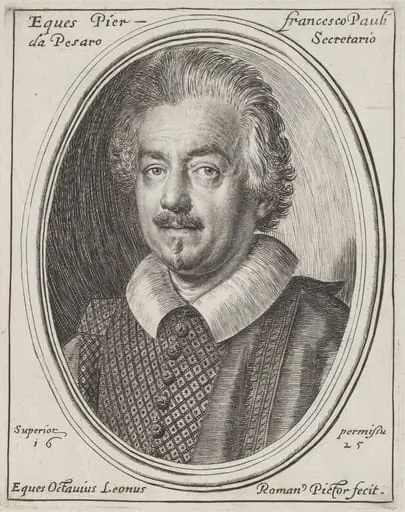
Giovanni Baglione is an ink print by the Baroque artist Ottavio Leoni. It dates from 1625 and is held in the collection of the National Gallery of Art.
About this work
The artist's use of cross-hatching creates a sense of volume and dimensionality, drawing the viewer's eye to the subject's face and clothing.
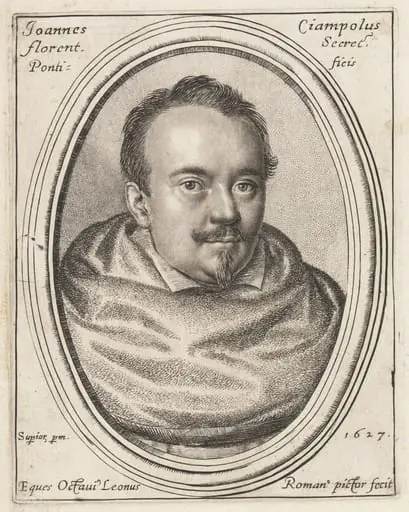
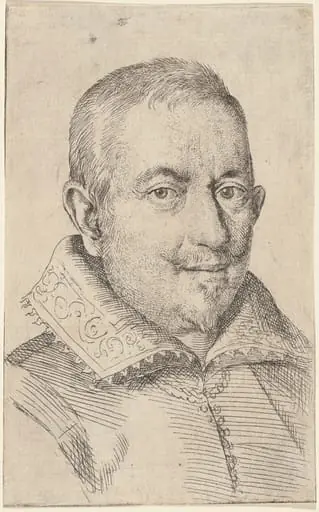
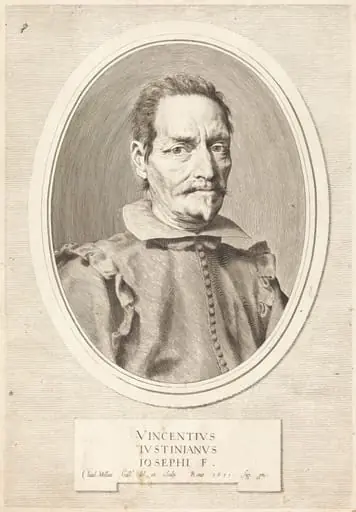
This engraving depicts a man with a mustache, wearing a dark jacket and a white collar. The man's face is turned to the right, and his hair is cut short. The background of the engraving is a light color, with a pattern of small dots.
The engraving is done in a detailed style, with intricate lines and shading that give the image depth and texture. The artist's use of cross-hatching creates a sense of volume and dimensionality, drawing the viewer's eye to the subject's face and clothing.
The engraving is a portrait of Giovanni Baglione, created by Ottavio Leoni in 1625. It is held at the National Gallery of Art, Washington, and is an example of Baroque art. If you're interested in learning more about the artist who created this engraving, you might want to look up Ottavio Leoni.
Overview
This 1625 engraving, executed by Ottavio Leoni, presents a portrait of the Roman artist and writer Giovanni Baglione. Rendered in fine line work on a light‑toned background, the image captures Baglione in a dark jacket with a white collar, his face turned to the right. The piece resides in the collection of the National Gallery of Art in Washington, D.C., and exemplifies early‑Baroque printmaking.
Subject & Meaning
The sitter, Giovanni Baglione (1566–1643), was a contemporary painter, engraver, and chronicler of Roman art. Leoni’s depiction emphasizes Baglione’s scholarly demeanor through the crisp collar and composed expression, suggesting his role as a learned practitioner within the vibrant artistic community of early‑17th‑century Rome.
Technique & Style
Leoni employs intricate cross‑hatching and fine stippling to model the figure’s features, creating a sense of volume in the face, hair, and fabric. The subtle gradations of tone, achieved through dense line work, contrast with the lightly dotted background, a hallmark of Baroque portrait engravings that aim for realism and depth.
History & Provenance
Created in 1625, the print reflects Leoni’s active period as a portraitist in Roman circles. It entered the National Gallery of Art’s collection through acquisition in the 20th century, where it has been catalogued as a representative example of Baroque portraiture in print form.
Context
During the early Baroque, Rome’s artistic scene was marked by a flourishing of both painting and printmaking. Leoni, known for his portraits of notable figures, contributed to this milieu by documenting peers such as Baglione, whose own writings provide valuable contemporary accounts of the period’s art.
Legacy
The engraving remains a key visual source for scholars studying Baglione’s appearance and the network of artists in 17th‑century Rome. Its preservation in a major museum underscores the continued interest in Baroque portraiture as a window onto the era’s cultural and professional relationships.
Artist & collection
Artist
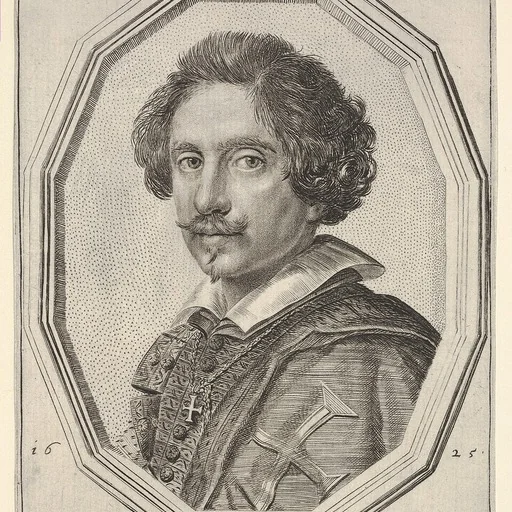
Ottavio Leoni (1578 – 4 September 1630) was an Italian painter and printmaker of the early-Baroque, active mainly in Rome.