Artwork
Giuseppe Cesari
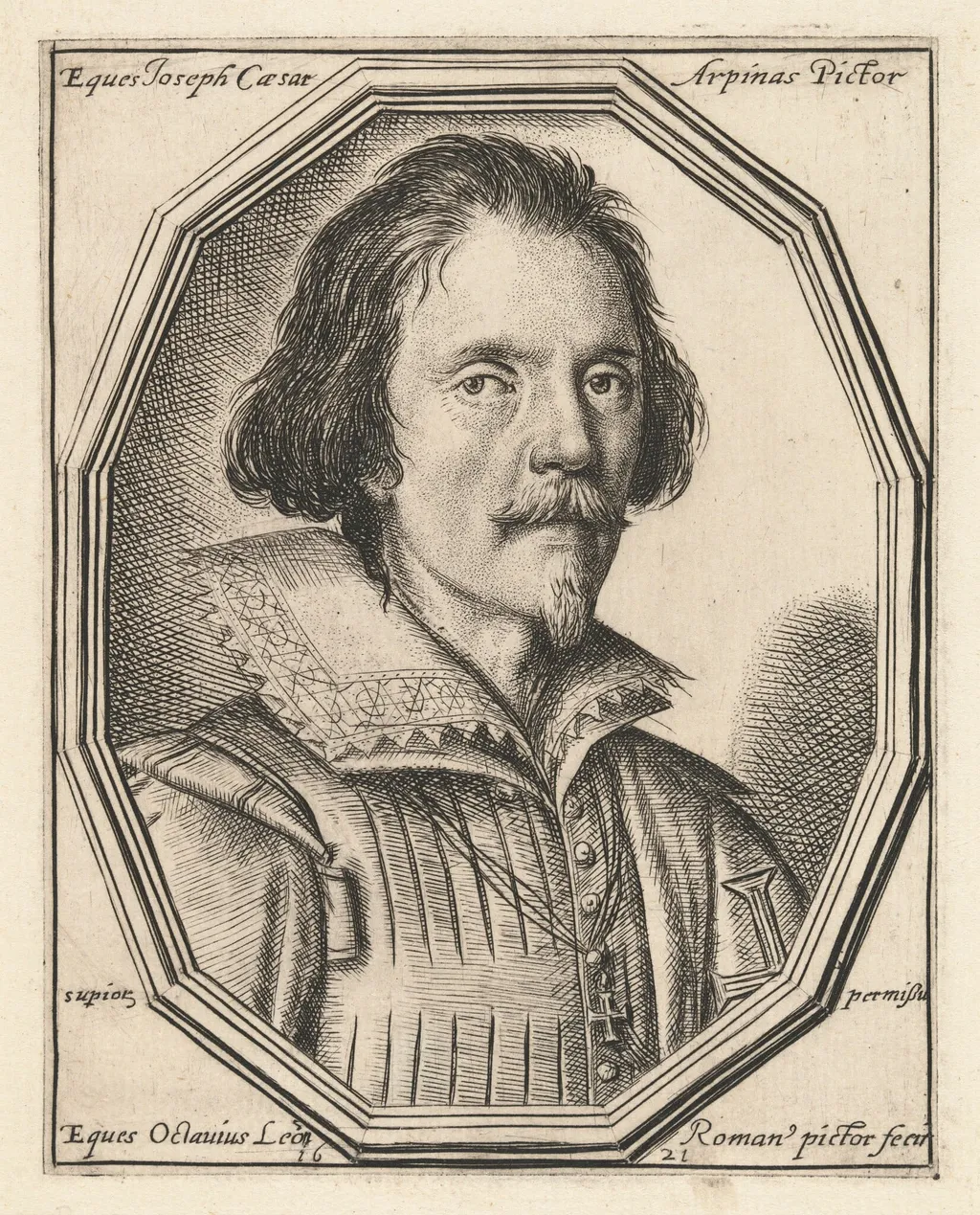
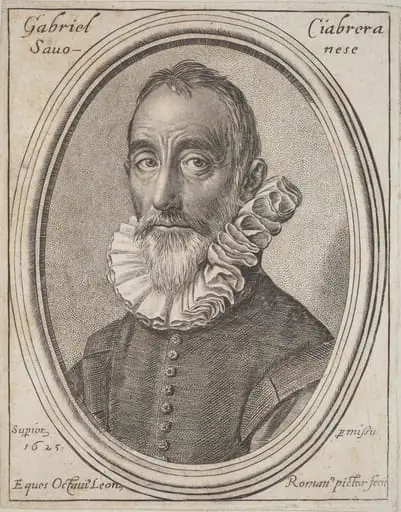
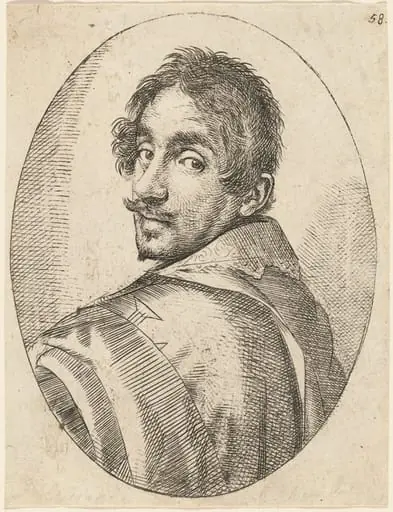
Giuseppe Cesari is an ink print by the Baroque artist Ottavio Leoni. It dates from 1621 and is held in the collection of the National Gallery of Art.
About this work
Overview
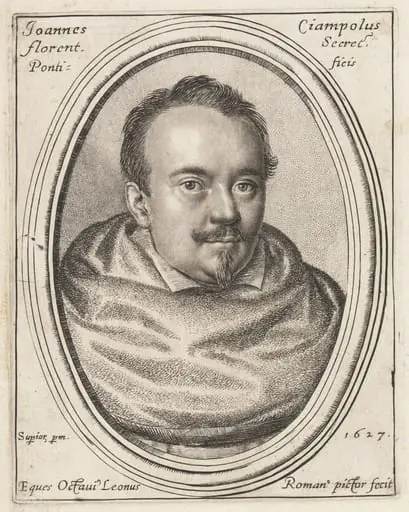
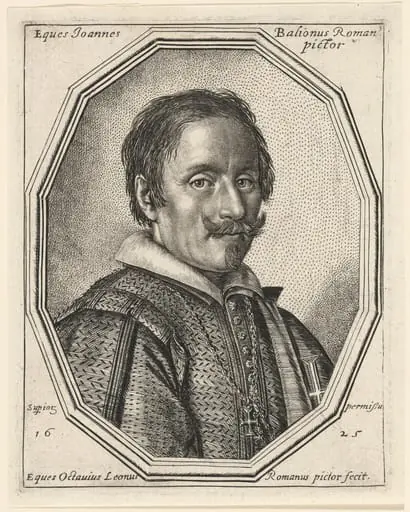
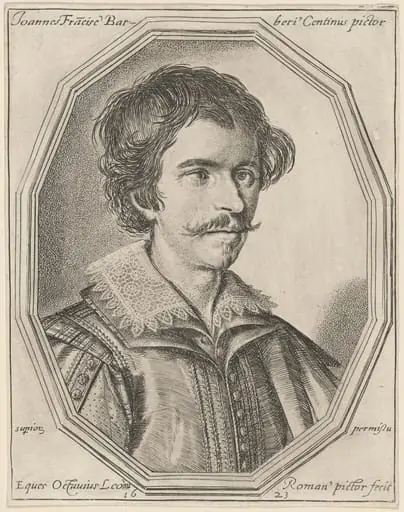
Ottavio Leoni’s 1621 engraving presents a monochrome portrait of the Roman painter Giuseppe Cesari. Executed in the early‑Baroque period, the print captures the sitter’s likeness with a focus on facial features and attire, set against an unadorned background within an octagonal frame.
Subject & Meaning
The work depicts Giuseppe Cesari, a prominent figure in Rome’s early‑Baroque artistic scene. By portraying him in a formal pose with a ruffled collar and chain, Leoni emphasizes Cesari’s status as a respected artist and member of the city’s cultural elite.
Technique & Style
Leoni employs fine cross‑hatching to render shadows and texture, allowing subtle gradations of tone without color. The intricate network of intersecting lines defines the curls of hair, the beard, and the folds of the dark jacket, creating a sense of depth within the flat medium.
History & Provenance
Created in 1621, the engraving was likely intended for circulation among patrons and fellow artists in Rome, serving both as a visual record of Cesari’s appearance and as a demonstration of Leoni’s skill in portrait printmaking. Its octagonal border suggests it may have been printed as a standalone portrait rather than as part of a larger series.
Context
During the early Baroque, portrait prints functioned as a means of disseminating the images of notable individuals. Leoni, active in the same artistic circles as Cesari, contributed to this practice, reinforcing the network of artists who shaped Rome’s visual culture in the early seventeenth century.
Artist & collection
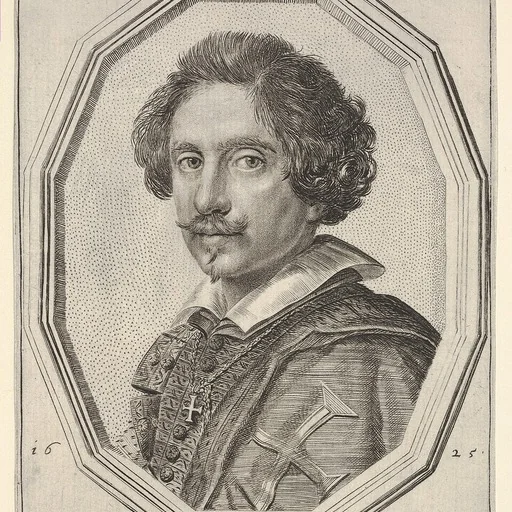
Artist
Ottavio Leoni (1578 – 4 September 1630) was an Italian painter and printmaker of the early-Baroque, active mainly in Rome.