Artwork
14 Juillet. Illumination de la Place de la République
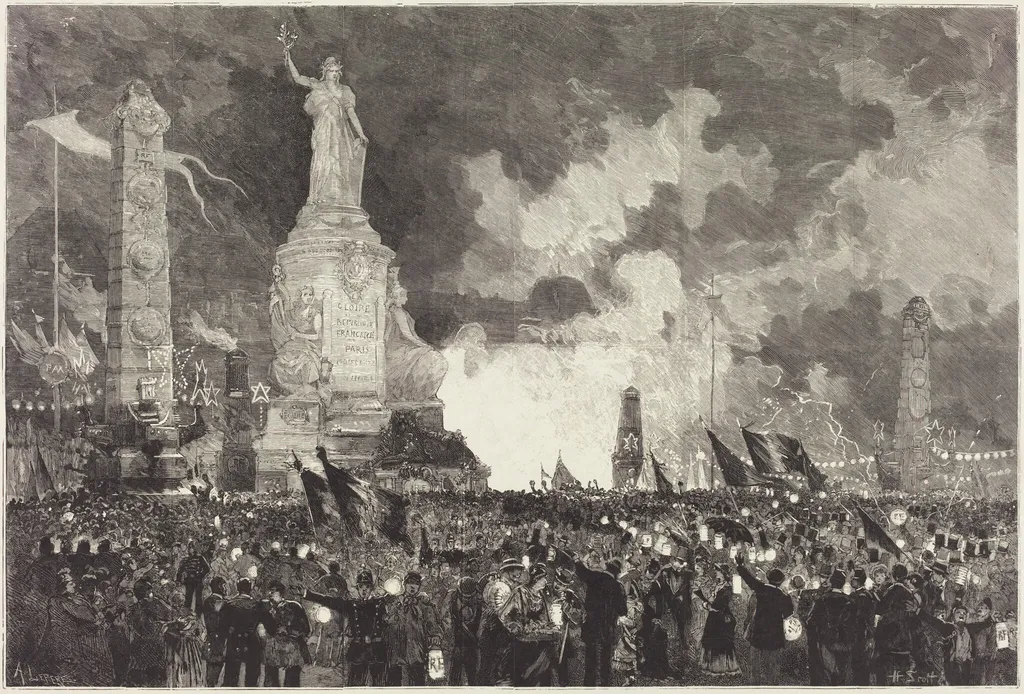
14 Juillet. Illumination de la Place de la République is an ink print by the Impressionist artist Auguste Lepère. It dates from 1883 and is held in the collection of the National Gallery of Art. 14 Juillet.
About this work
Overview
14 Juillet. Illumination de la Place de la République is a wood engraving created by Louis-Auguste Lepère in 1883, commemorating Bastille Day celebrations at Place de la République.
Subject & Meaning
The print captures the nocturnal festivities of Bastille Day, focusing on the illuminated monument at Place de la République, adorned with a torch-bearing statue, surrounded by a jubilant crowd, flags, lanterns, and musicians, conveying the spirit of national celebration.
Technique & Style
Lepère employed wood engraving, a medium he helped revive in 19th-century Europe, utilizing fine lines to achieve depth and texture, notably in the monument's carvings, against a backdrop of dark, swirling clouds.
History & Provenance
Created in 1883 by Louis-Auguste Lepère, a pivotal figure in the European wood engraving revival, the work's provenance details are not specified in available information.
Context
The piece reflects late 19th-century French patriotic spirit and the artistic resurgence of wood engraving as a viable printmaking technique during this period.
Legacy
As part of Lepère's oeuvre, it contributes to the legacy of revived wood engraving in Europe, though its individual impact within his body of work is not distinctly outlined in provided sources.
Artist & collection
Artist
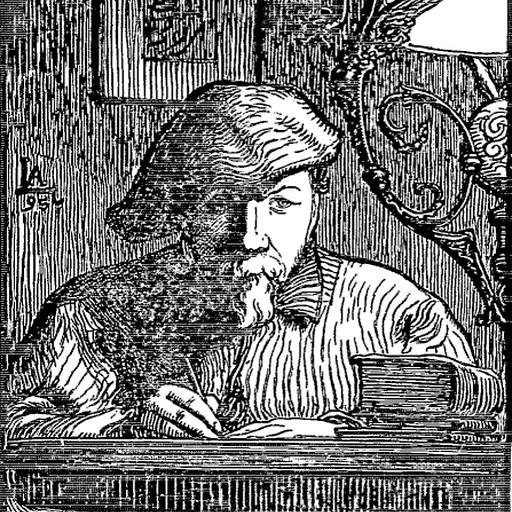
Louis-Auguste Lepère (30 November 1849 – 20 November 1918) was a French painter and etcher. Lepère is also considered a leader in the creative revival of wood engraving in Europe.

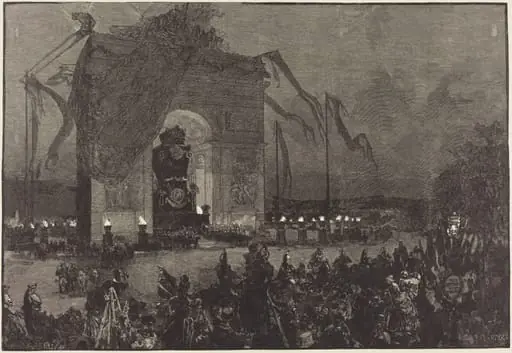 Funérailles de Victor Hugo. La Veillée
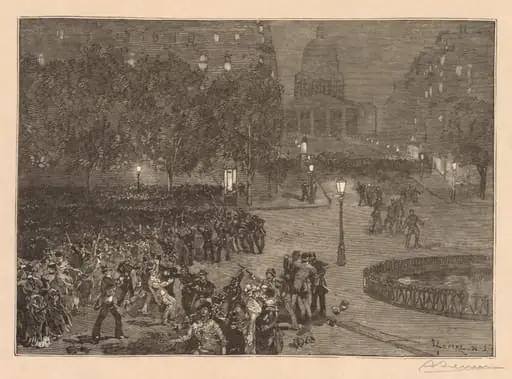 Bois du Monde: Les troubles du quartier Latin
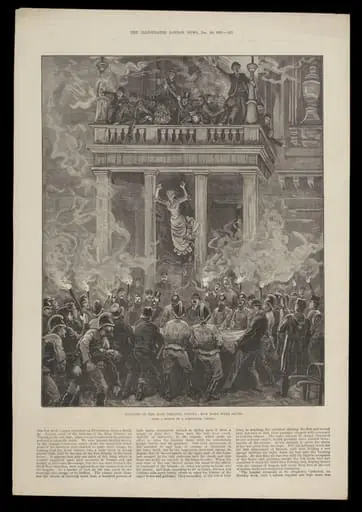 H Beard Print Collection
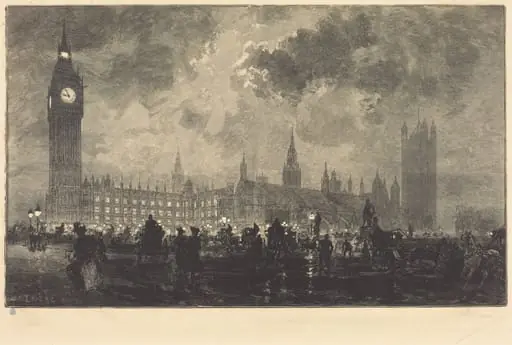 Parliament at 9 o'Clock in the Evening - London (Le parlement a 9 heures du soir - Londres)
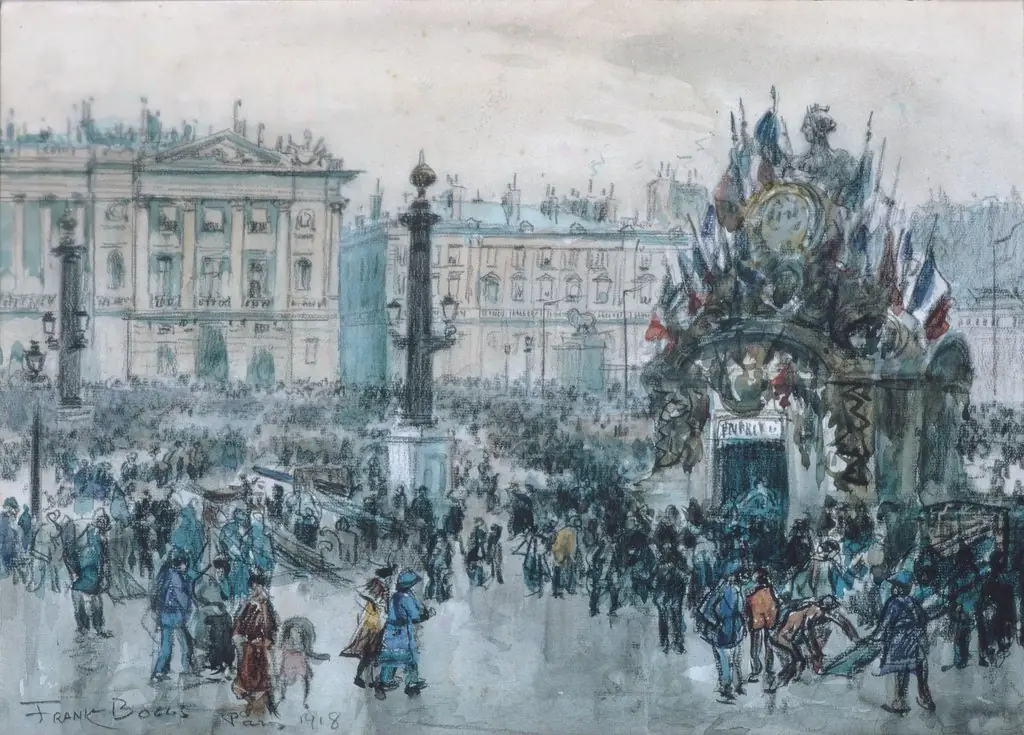 Armistice Day, Paris
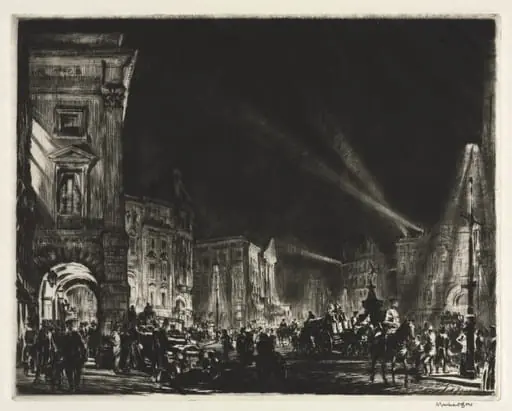 Picadilly Circus
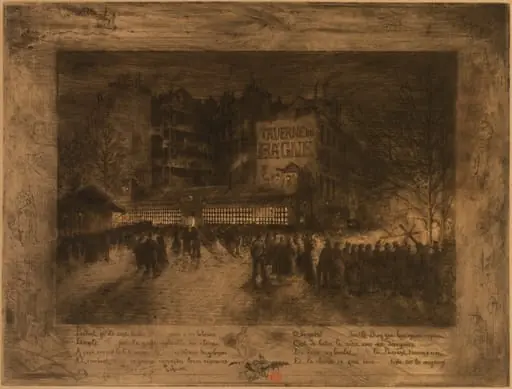 La Place des Martyrs et la Taverne du Bagne
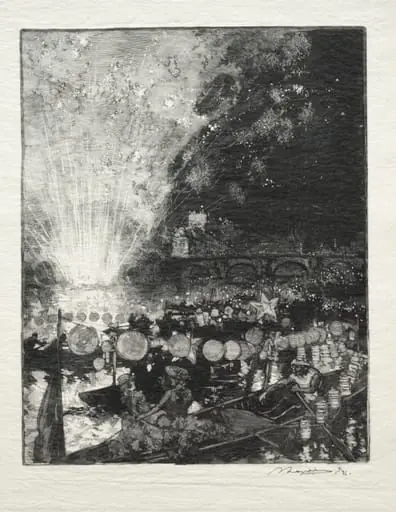 Fête Venitienne
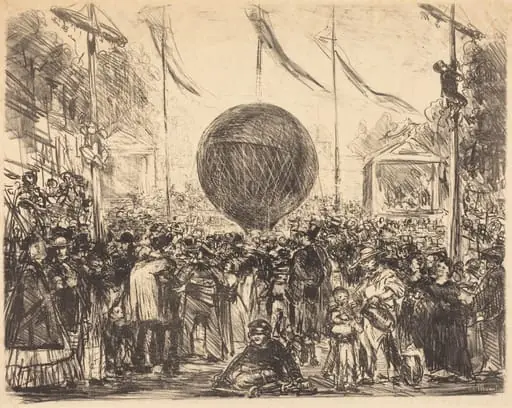 The Balloon
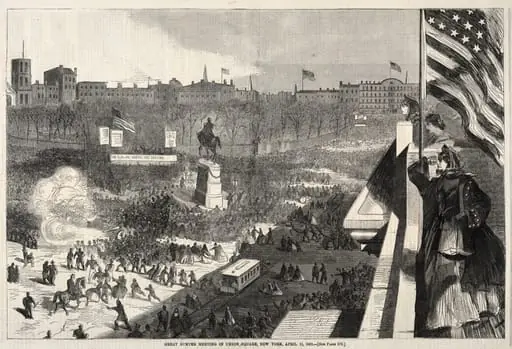 Great Sumter Meeting in Union Square, New York, April 11, 1863