Artwork
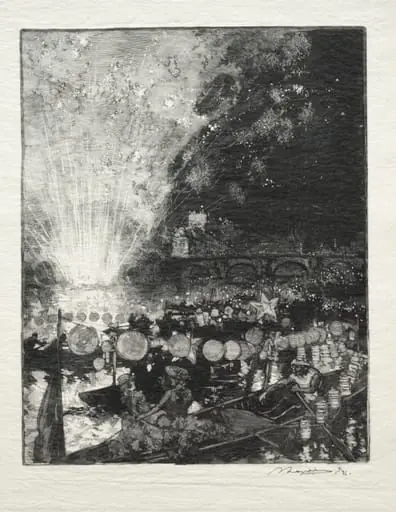
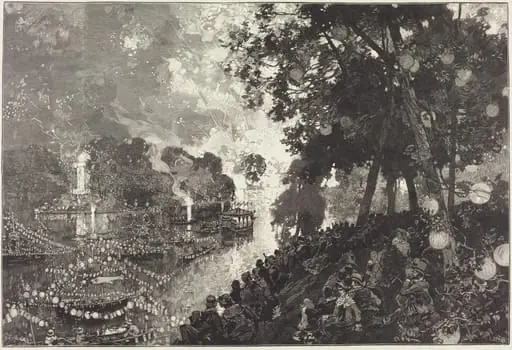
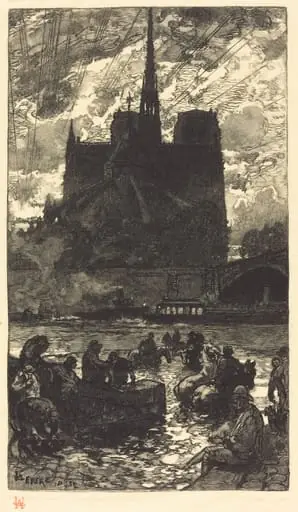
Fete Venetienne sur la Seine
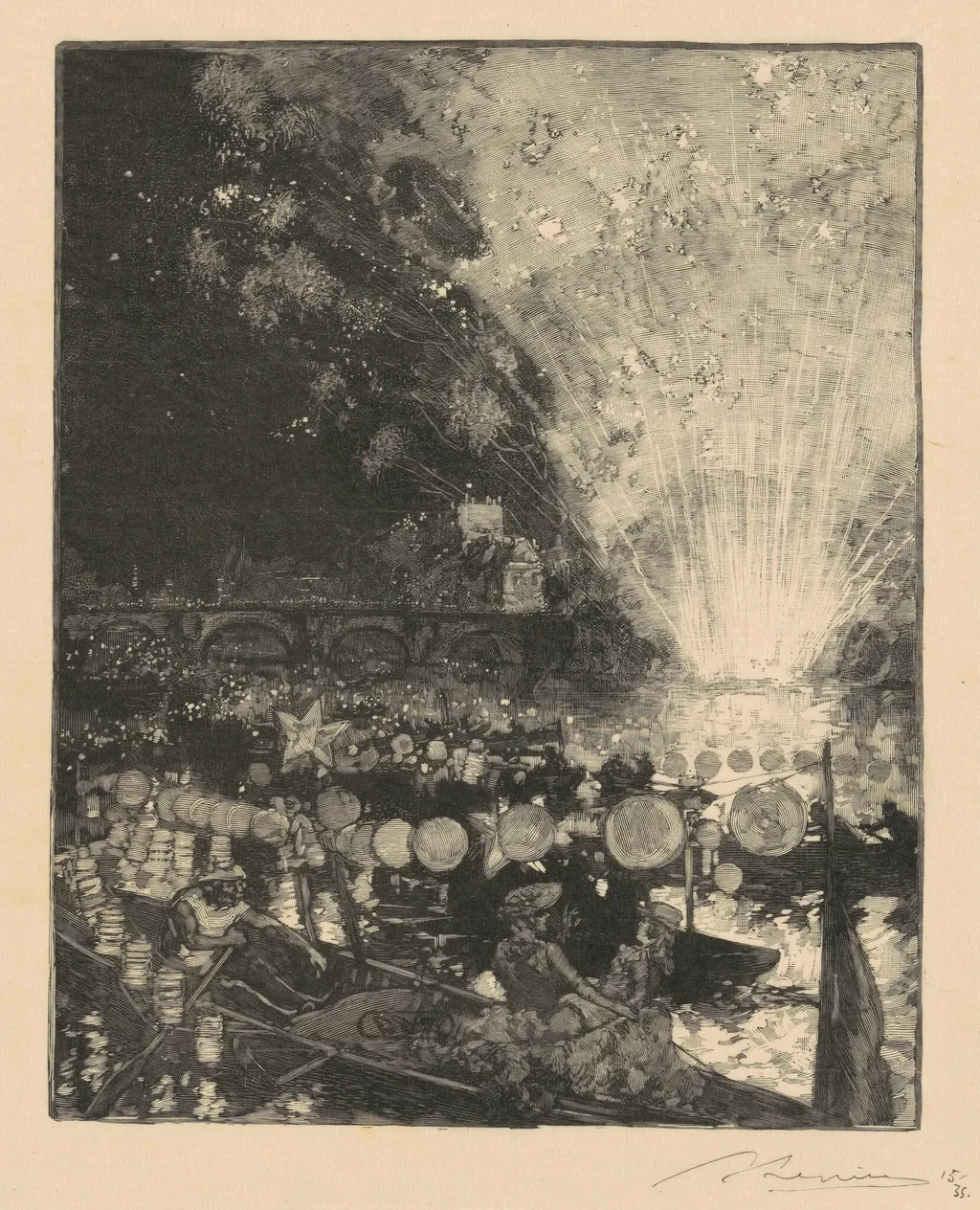
Fete Venetienne sur la Seine is an ink print by Auguste Lepère. It dates from 1893 and is held in the collection of the National Gallery of Art.
About this work
Overview
Auguste Lepère, a French artist active in the late 19th century, played a key role in revitalizing wood engraving as a fine art medium.
Auguste Lepère, a French artist active in the late 19th century, played a key role in revitalizing wood engraving as a fine art medium. Around 1893, he produced *Fête Vénitienne sur la Seine*, a detailed print now in the National Gallery of Art, Washington. The work exemplifies his commitment to elevating printmaking beyond reproductive functions, aligning with broader European efforts to restore craftsmanship in graphic arts during a time of industrial change.
Subject & Meaning
The scene depicts a nocturnal celebration along the Seine, with figures on a bridge and boats illuminated by lanterns. The atmosphere suggests a festive gathering, possibly inspired by Venetian canal culture, though set in Paris. Lepère captures communal joy through motion and light, yet the hazy glow and soft edges introduce a contemplative tone, blurring the line between celebration and quiet reverie.
Technique & Style
Lepère employed fine, precise wood engraving with dense cross-hatching to render light, shadow, and texture. The shimmering water and glowing windows emerge from layered lines, creating depth without color. The technique yields a dreamlike clarity—detailed yet atmospheric—where individual strokes dissolve into a unified glow, emphasizing mood over literal representation.
History & Provenance
Created circa 1893, the print entered the collection of the National Gallery of Art in Washington, D.C., where it remains part of its holdings in 19th-century graphic arts. Lepère’s prints were widely exhibited in Europe during the 1890s, and this work reflects his growing reputation among collectors and artists interested in the revival of handcrafted printmaking techniques.
Context
In the 1890s, European artists sought to reclaim printmaking from commercial reproduction, embracing wood engraving for its tactile precision. Lepère’s work emerged alongside the Arts and Crafts movement and Japanese print influences, both of which valued craftsmanship and subtle tonal variation. His scenes of urban leisure mirrored broader cultural interests in modern life and nocturnal experience.
Legacy
Lepère’s *Fête Vénitienne sur la Seine* stands as a testament to the artistic potential of wood engraving in the modern era. Though less widely known today, his technical rigor and poetic vision influenced subsequent generations of printmakers who valued hand-made imagery over mechanical reproduction, preserving the medium’s expressive capacity into the 20th century.
Artist & collection

Artist
Louis-Auguste Lepère (30 November 1849 – 20 November 1918) was a French painter and etcher. Lepère is also considered a leader in the creative revival of wood engraving in Europe.

 Fête Venitienne
 Men Watching a Fire
 Le bouquet
 H Beard Print Collection
 Untitled (Launching a Dory/To the Rescue/Shipwreck)
 City Fire
 La Neige À Paris
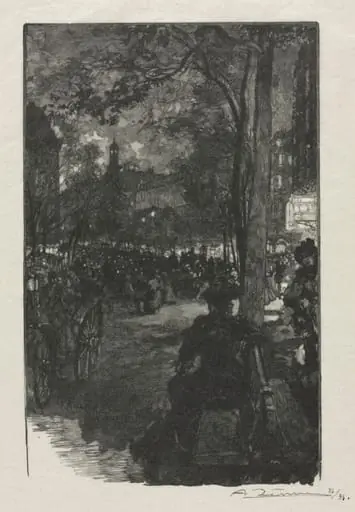 Boulevard Montmartre, Evening
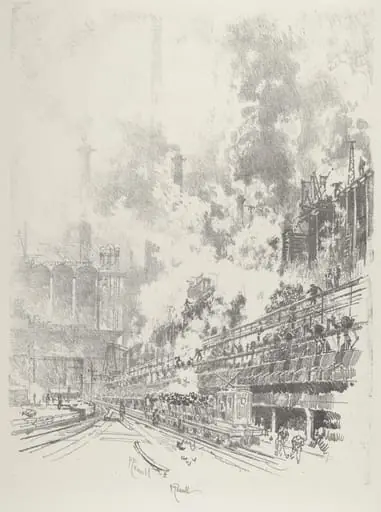 By-Products
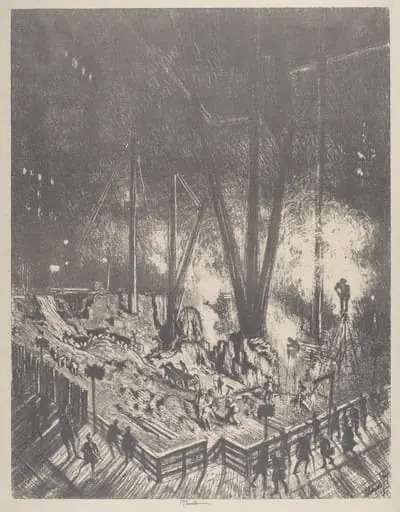 The Foundations, Building a Skyscraper
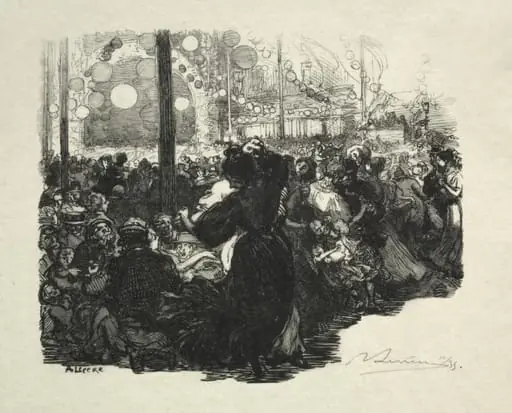 14 Juillet, Rue de Belleville, 10 heures
 Watering-place behind Notre-Dame (L'abreuvoirderriere Notre-Dame)