Artwork
Boulevard Montmartre, Evening
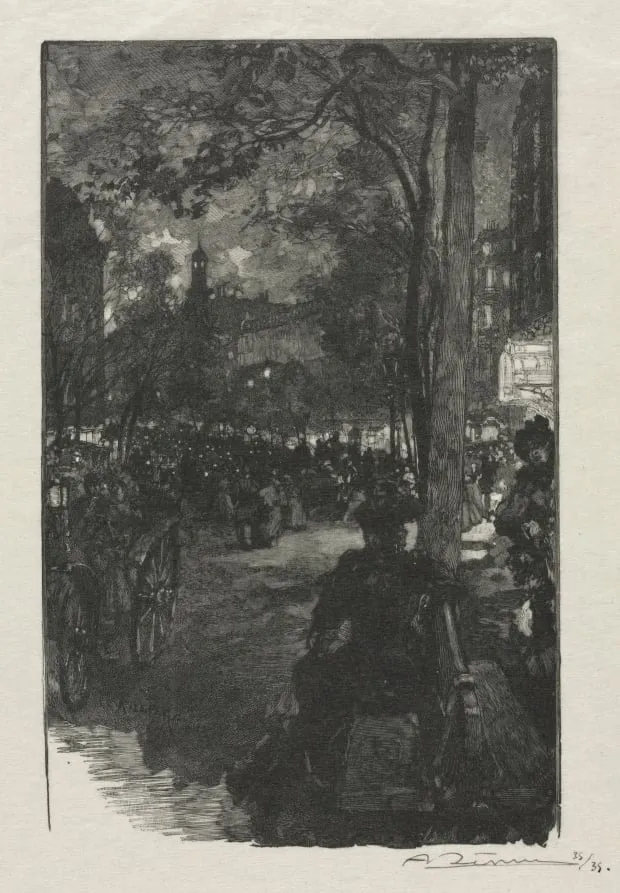
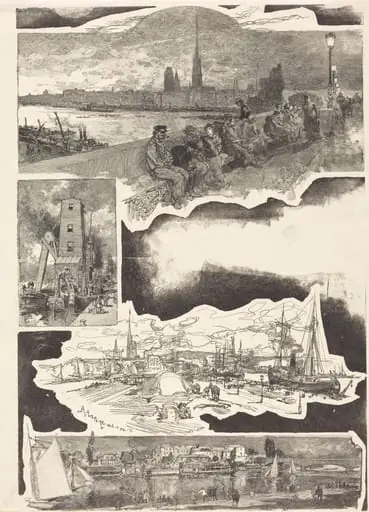
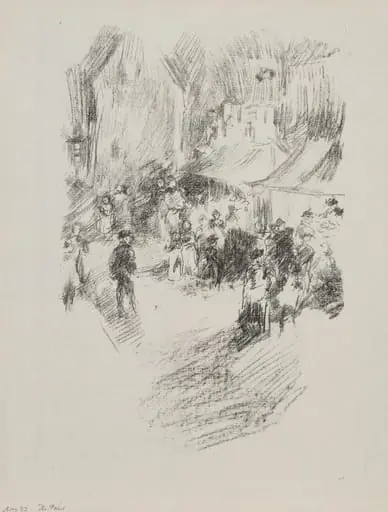
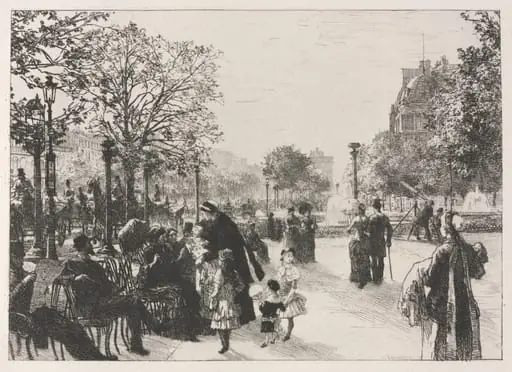
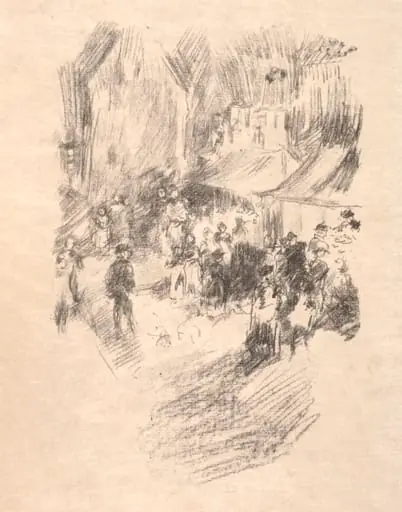
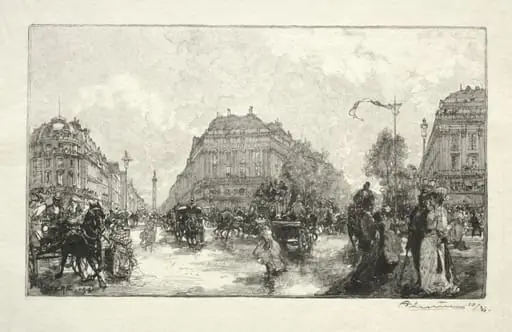
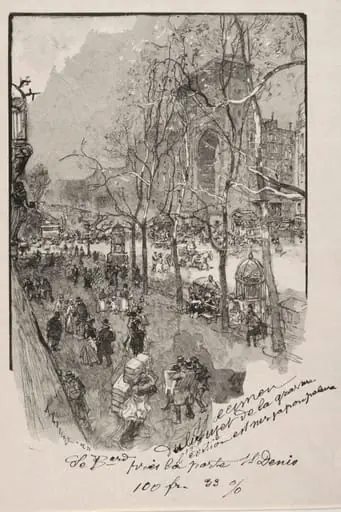
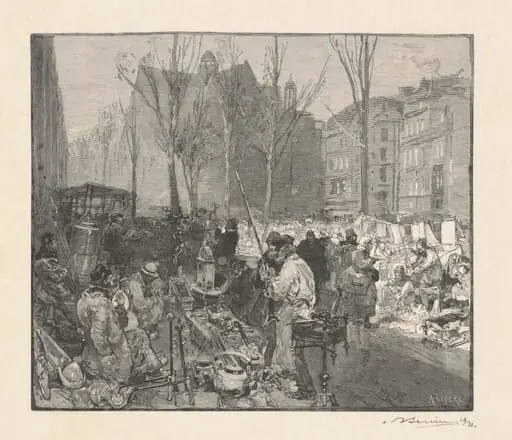
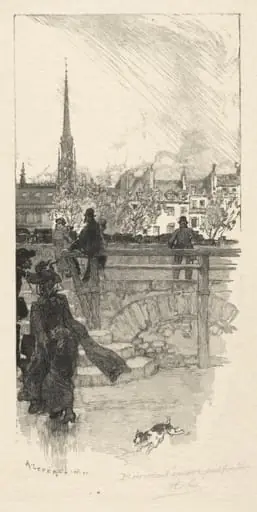
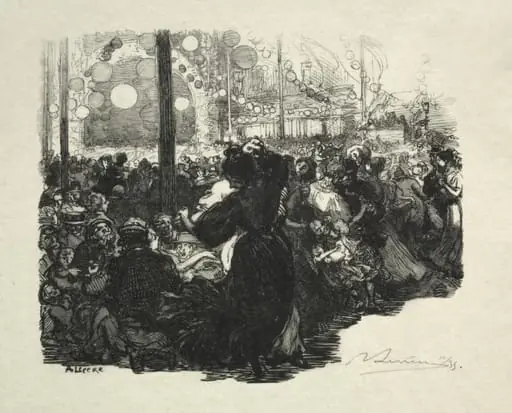
Boulevard Montmartre, Evening is a print by the Impressionist artist Auguste Lepère. It dates from 1890 and is held in the collection of the Cleveland Museum of Art.
About this work
Overview
Lepère, instrumental in the revival of wood engraving as a fine art medium, used this technique to achieve subtle tonal gradations.
Created in 1890 by French artist Auguste Louis Lepère, *Boulevard Montmartre, Evening* is a wood engraving that captures a quiet yet bustling urban scene at twilight. Lepère, instrumental in the revival of wood engraving as a fine art medium, used this technique to achieve subtle tonal gradations. The print is part of the Cleveland Museum of Art’s collection, reflecting its significance in late 19th-century printmaking.
Subject & Meaning
The scene depicts a quiet moment on a Parisian boulevard after dark, where pedestrians move in blurred motion beneath gas lamps. A solitary woman sits on a bench, her form merging with the shadows, suggesting introspection amid urban anonymity. The composition conveys the rhythm of city life without narrative clarity, emphasizing atmosphere over action—offering a contemplative glimpse into the private experiences of strangers in public space.
Technique & Style
Lepère employed wood engraving to render deep blacks and delicate grays, exploiting the medium’s capacity for fine line work and tonal contrast. Light from streetlamps cuts through the darkness, illuminating fragments of figures and architecture while leaving much in obscurity. The fading details and soft edges create a sense of fleeting time, aligning the work with emerging modernist interests in transient urban experiences and the psychological weight of shadow.
History & Provenance
The print was produced during a period when French artists were re-examining traditional print techniques as alternatives to mass-produced imagery. Lepère’s commitment to wood engraving helped elevate it beyond illustration into fine art. The work entered the Cleveland Museum of Art’s collection in the 20th century, where it remains as an example of the revival of handcrafted printmaking in the face of industrial reproduction.
Context
In the 1890s, Paris was undergoing rapid modernization, and artists increasingly turned to everyday street life as subject matter. Lepère’s print aligns with the broader interest in nocturnal scenes by contemporaries like Degas and Toulouse-Lautrec, though his focus on quietude rather than spectacle distinguishes it. The work reflects a shift toward intimate, atmospheric depictions of urban environments, away from grand historical or romanticized themes.
Legacy
Lepère’s *Boulevard Montmartre, Evening* stands as a testament to the expressive potential of wood engraving in the modern era. Its restrained palette and emphasis on mood influenced later printmakers seeking emotional depth through tonal nuance rather than detail. The work continues to be studied for its technical precision and its quiet commentary on the solitude embedded within urban collectivity.
Artist & collection
Artist
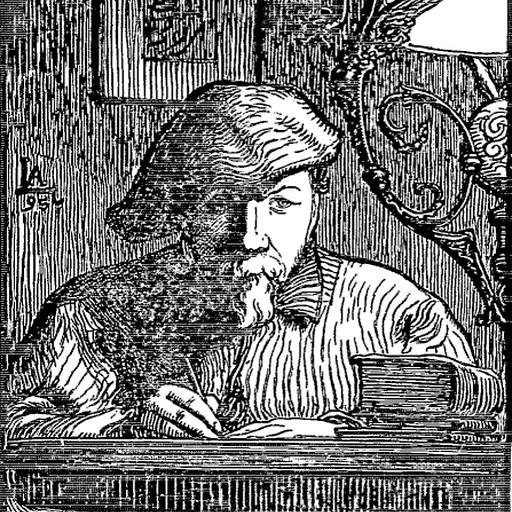
Louis-Auguste Lepère (30 November 1849 – 20 November 1918) was a French painter and etcher. Lepère is also considered a leader in the creative revival of wood engraving in Europe.