Artwork
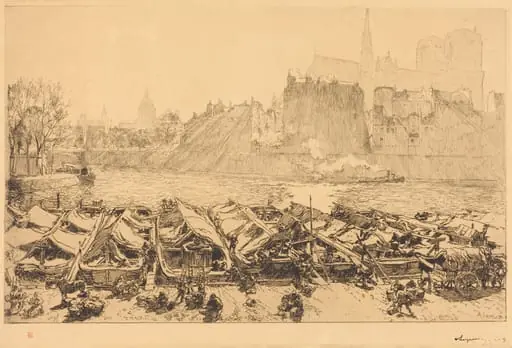
Unloading, Canal St. Martin (Les dechargeurs de platre, Canal Saint-Martin)
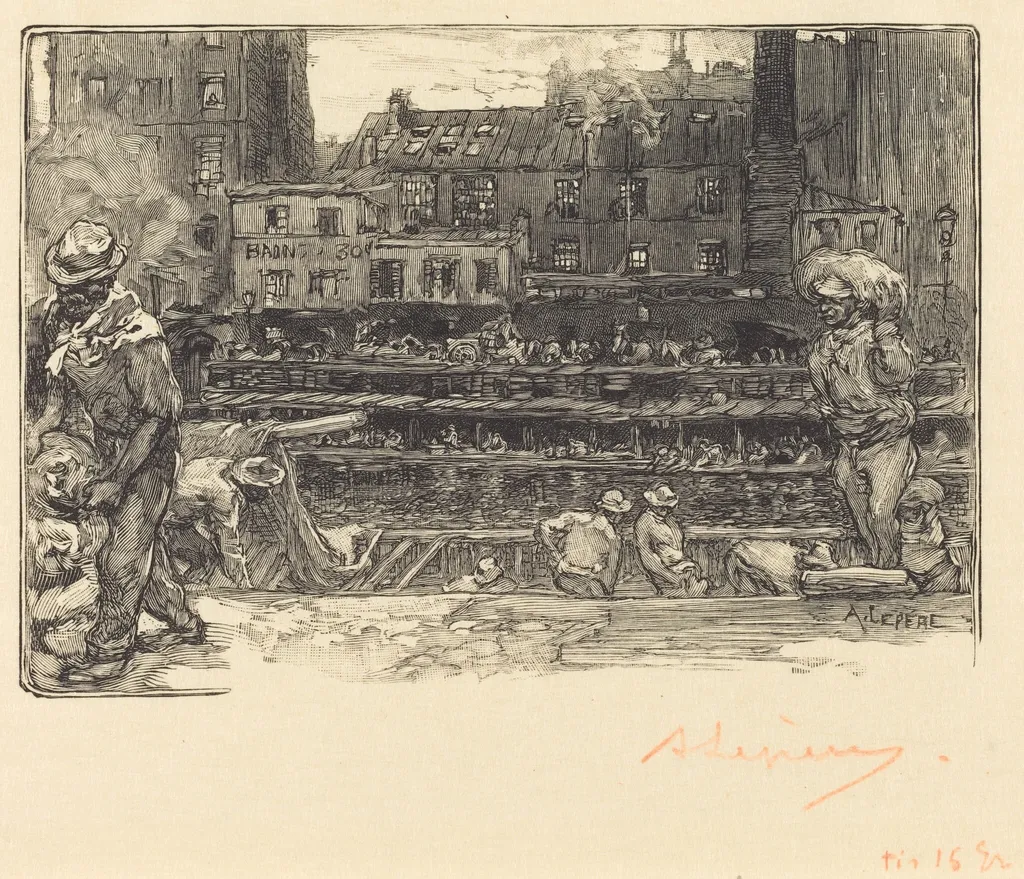
Unloading, Canal St. Martin (Les dechargeurs de platre, Canal Saint-Martin) is an ink print by the Impressionist artist Auguste Lepère. It dates from 1890 and is held in the collection of the National Gallery of Art.
About this work
Overview
The print’s monochrome palette and intricate line work reflect the precision required in relief printing, emphasizing texture and movement over color or drama.
Created in 1890 by Auguste Lepère, this wood engraving captures a moment of daily labor along Paris’s Canal Saint-Martin. Lepère, known for his dedication to reviving the wood engraving technique in Europe, chose a working-class scene over idealized subjects. The print’s monochrome palette and intricate line work reflect the precision required in relief printing, emphasizing texture and movement over color or drama.
Subject & Meaning
The scene portrays laborers unloading sacks of plaster from a barge onto the canal’s edge, their postures suggesting physical strain and routine. Figures in the background walk along the quay, and buildings line the water, grounding the image in a specific urban context. The focus on manual labor reflects a broader 19th-century interest in documenting the lives of working people, without overt sentimentality or heroism.
Technique & Style
Lepère employed fine, controlled lines to render textures: the ripple of water, the creases in fabric, the roughness of stone walls. The contrast between dense shadow and open space guides the eye across the composition. Wood engraving allowed for sharp detail, and Lepère’s mastery of the medium enabled him to convey both the weight of the sacks and the stillness of the canal’s surface with equal clarity.
History & Provenance
The work is signed by Lepère and labeled with its location, indicating its intent as a documentary record rather than a decorative piece. It emerged during a period when artists and printmakers sought to elevate wood engraving beyond commercial illustration. Lepère’s prints were often circulated in journals and collections, contributing to a renewed appreciation for the technique among European artists and collectors.
Context
In late 19th-century Paris, the Canal Saint-Martin was a vital artery for transporting building materials like plaster, lime, and coal. Manual labor dominated this work, before mechanization transformed urban logistics. Lepère’s choice of subject aligns with contemporaries who turned to realist depictions of industrial and dockside life, capturing the rhythm of a city still reliant on human effort.
Legacy
Lepère’s prints, including this one, helped reestablish wood engraving as a legitimate fine art form in Europe. His technical rigor influenced later generations of printmakers who valued craftsmanship and observational detail. While not widely known today, his work remains a quiet testament to the dignity of labor and the expressive potential of traditional print media.
Artist & collection
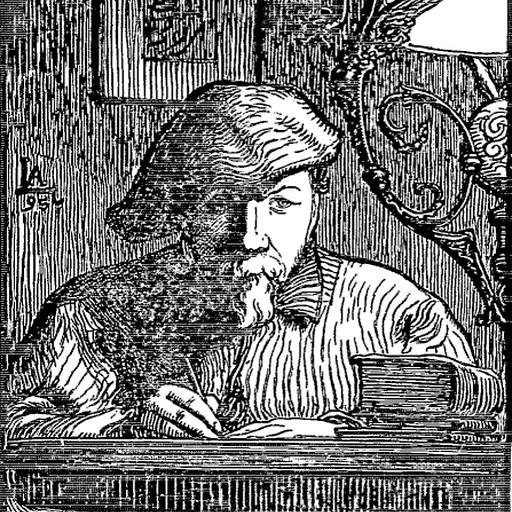
Artist
Louis-Auguste Lepère (30 November 1849 – 20 November 1918) was a French painter and etcher. Lepère is also considered a leader in the creative revival of wood engraving in Europe.

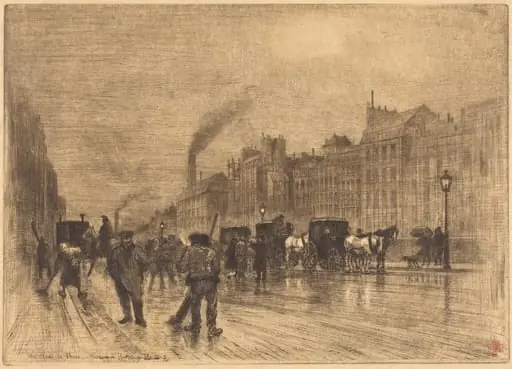 Matinée d'Hiver sur les Quais
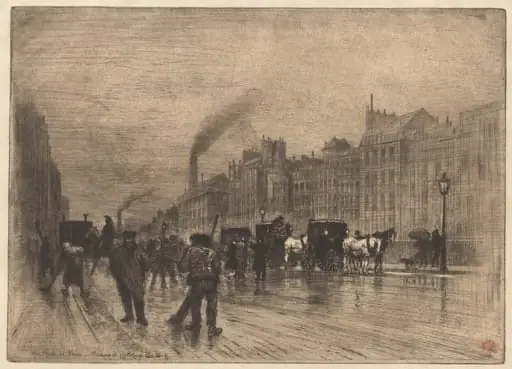 Matinée d'Hiver sur les Quais (Winter Morning on the Quays)
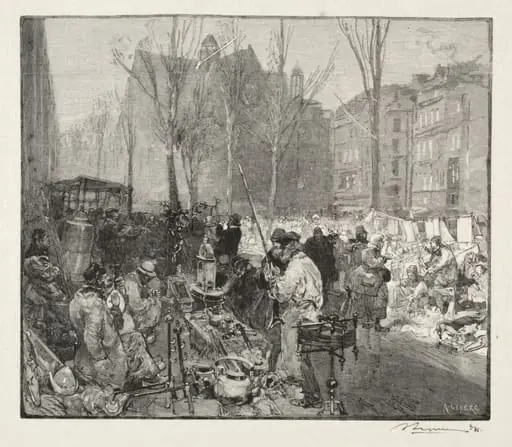 Marché à la Ferraille
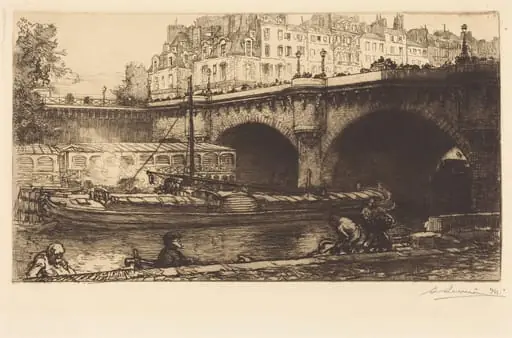 Pont Neuf
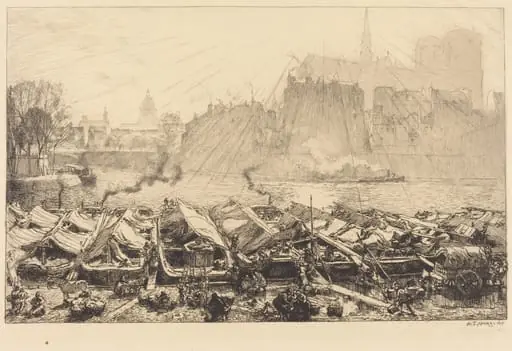 The Great Apple Market (Le grand marche aux pommes)
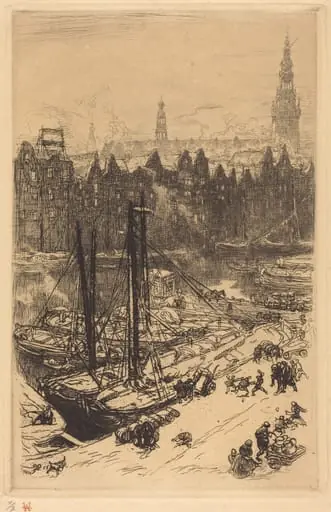 Amsterdam Seen from Victoria Hotel (Amsterdamvue de Victoria Hotel)
 The Great Apple Market (Le grand marche aux pommes)
 Street Scene in London