Artwork
The Barracuda (Esox barracuda)
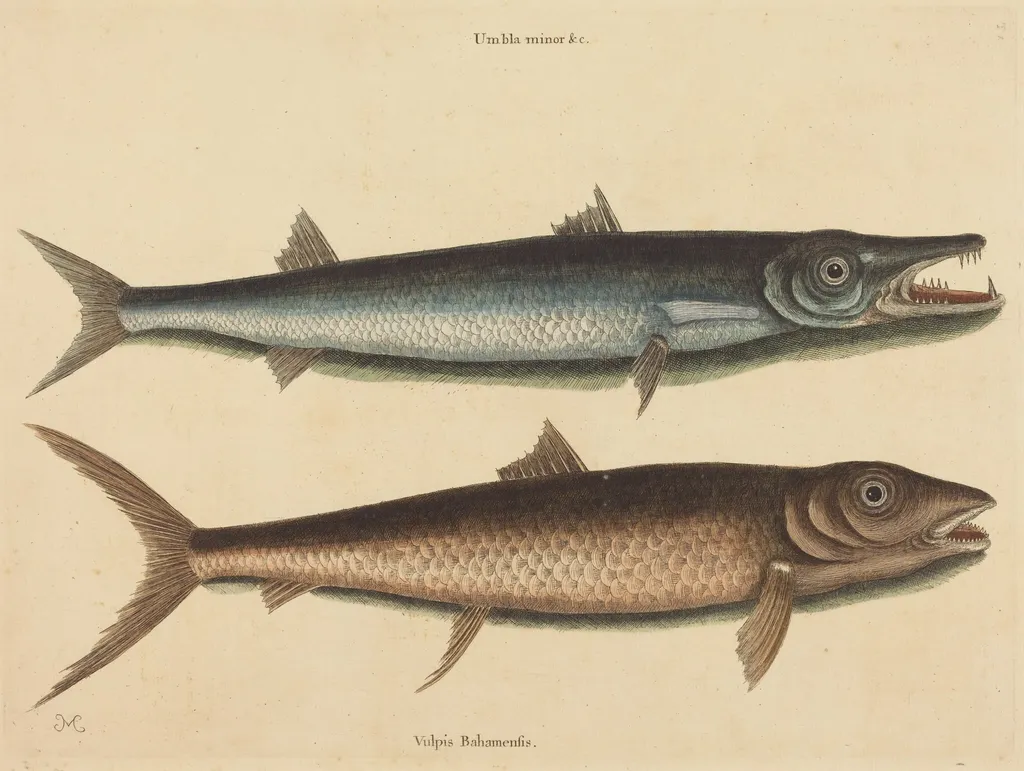
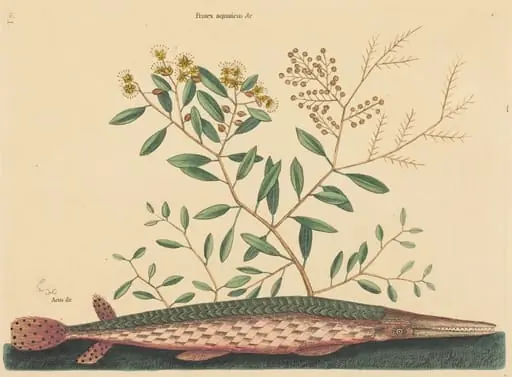
The Barracuda (Esox barracuda) is an ink print by the Romanticist artist Mark Catesby. It is held in the collection of the National Gallery of Art.
About this work
Overview
The work belongs to a broader scientific effort to classify and illustrate the region’s biodiversity, combining accuracy with aesthetic presentation.
Created in 1754 by English naturalist Mark Catesby, this print is one of 220 plates in his multi-volume *Natural History of Carolina, Florida and the Bahama Islands*. Executed in etching and engraving with hand coloring on laid paper, it documents a species observed during his fieldwork in the southeastern Atlantic coast and Caribbean. The work belongs to a broader scientific effort to classify and illustrate the region’s biodiversity, combining accuracy with aesthetic presentation.
Subject & Meaning
The image depicts two barracudas, a predatory fish native to coastal waters of the American Southeast and the Caribbean. One fish is shown above the other, both rendered with anatomical precision to emphasize their physical traits: sharp teeth, elongated bodies, and scaled skin. The arrangement suggests comparative study, possibly indicating sex or age variation. The plain background eliminates distraction, reinforcing the image’s purpose as a scientific record rather than a decorative piece.
Technique & Style
Catesby employed fine etching and engraving lines to define the fish’s contours, then applied watercolor by hand to replicate natural hues—dark gray with pale bellies, brown tones with subtle gradations. The rendering of scales, fin rays, and jaw structure reflects close observation. The composition avoids background elements, focusing attention on form and texture. This method aligns with 18th-century natural history illustration, prioritizing clarity and fidelity over artistic flourish.
History & Provenance
The print originated from Catesby’s expeditions between 1722 and 1726, with publication occurring in London between 1729 and 1747, and a second volume completed in 1754. The plates were hand-colored under his supervision, often by skilled artisans. Copies were distributed to European scientific institutions and collectors, contributing to transatlantic knowledge of New World species. This specific impression likely dates to the second volume’s release.
Context
Catesby’s work emerged during a period of expanding European interest in colonial natural resources. His illustrations were among the first systematic visual records of North American wildlife, predating Linnaean taxonomy’s widespread adoption. Unlike earlier exoticized depictions, his approach emphasized direct observation, though still filtered through European scientific conventions. His publications influenced later naturalists, including Linnaeus and Buffon.
Legacy
Catesby’s *Natural History* established a model for scientific illustration in the Americas. His detailed renderings of fish, birds, and plants became reference points for subsequent taxonomic studies. Though later works incorporated more standardized classification systems, Catesby’s integration of field observation with artistic precision remained influential. His prints are now held in major institutional collections as foundational documents in the history of American natural science.
Artist & collection

Artist
Mark Catesby (24 March 1683 – 23 December 1749) was an English naturalist who studied the flora and fauna of the New World.

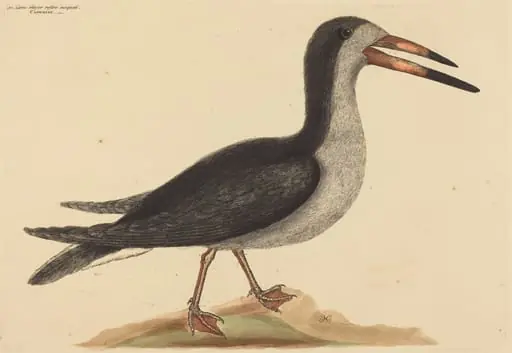
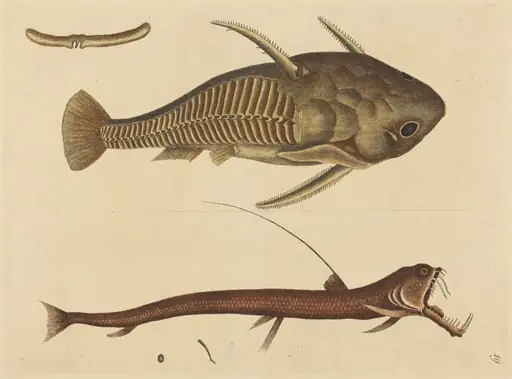 The Viper-mouth (Silurus cataphractus)
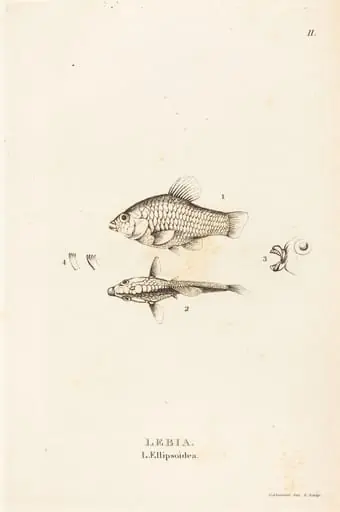 Lebia (L'Ellipsoidea)
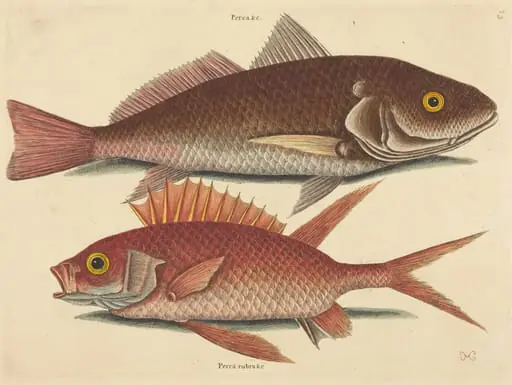 The Croker (Perca undulata)
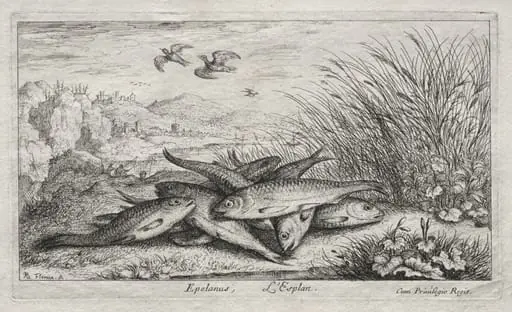 Seconde Partie de Poissons d'eau douce (Several Fresh Water Fish Species. Part II): Epelanus, L' Esplan (The Smelt)
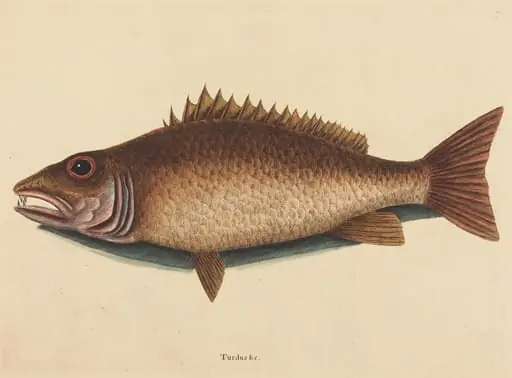 The Mangrove Snapper (Labrus griseus)
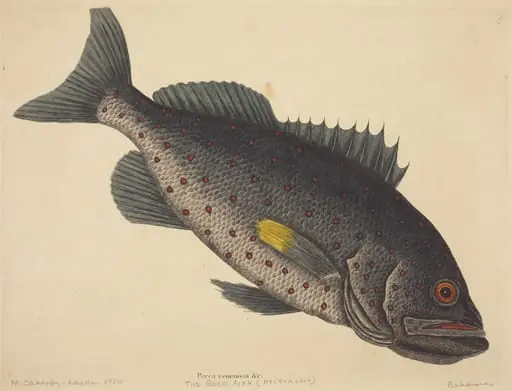 The Rock Fish (Perca venenosa)
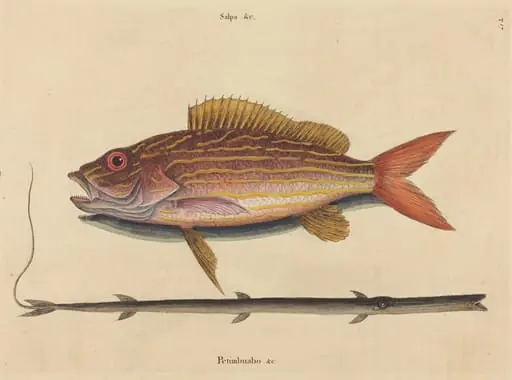 The Lane-snapper (Sparus synagris)
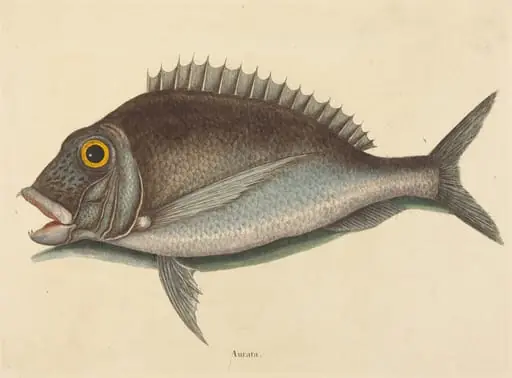 The Porgy (Sparus chrysops)
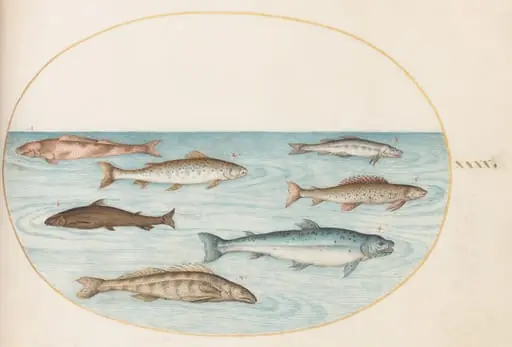 Plate 40: Salmon, Trout, and Freshwater(?) Fish
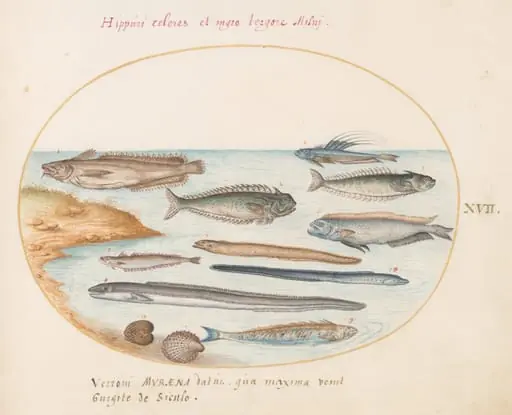 Plate 17: A Cod, Weever Fish, Eels, and Other Fish
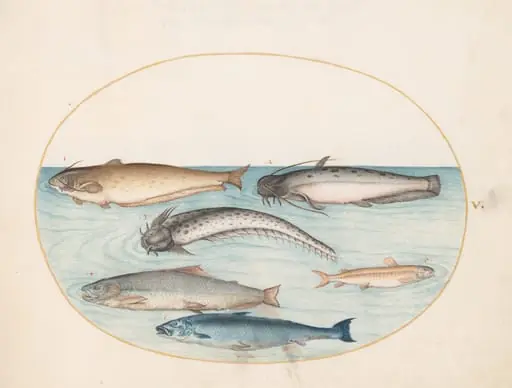 Plate 5: Three Catfish, a Salmon, and Two Other Fish
 The Green Gar Fish (Esox osseus)