Artwork
Louise de Lorraine
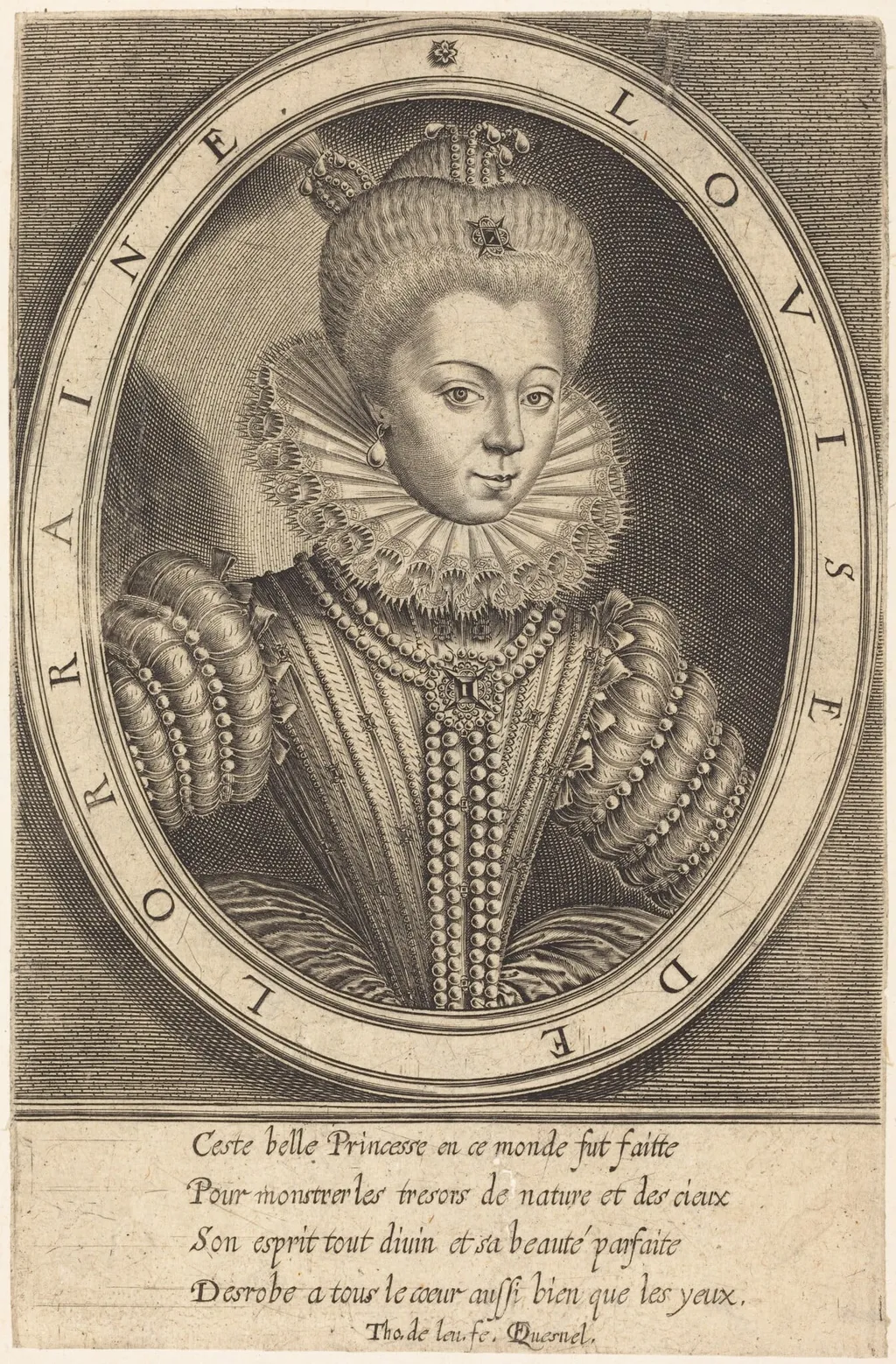
Louise de Lorraine is an ink print by the Renaissance artist Thomas de Leu. It dates from 1590 and is held in the collection of the National Gallery of Art.
About this work
Overview
De Leu, a Flemish artist active in France, produced the work as part of a broader practice of reproducing elite portraits for public circulation.
Created in 1590 by Thomas de Leu, this engraving on laid paper depicts Louise de Lorraine, Duchess of Guise. De Leu, a Flemish artist active in France, produced the work as part of a broader practice of reproducing elite portraits for public circulation. The image is rendered in fine linear detail, characteristic of Renaissance printmaking, and was likely intended for distribution among educated audiences interested in noble lineage and courtly culture.
Subject & Meaning
Louise de Lorraine, widow of King Henry III, is portrayed with restrained dignity, reflecting her status as a royal widow and a figure of political significance. Her attire—high lace collar, ruffled sleeves, and pearl necklace—signals aristocratic refinement. The circular frame and French inscription beneath emphasize her moral and aesthetic virtues, aligning the portrait with contemporary ideals of noble femininity and piety in the aftermath of the French Wars of Religion.
Technique & Style
De Leu employed the engraving technique, incising fine lines into a copper plate to transfer ink onto paper. The result is a sharply defined image with controlled tonal gradations, achieved through cross-hatching and delicate contouring. The plain background focuses attention on the sitter’s facial expression and costume. The circular border and surrounding text reflect a compositional convention common in portrait prints of the period, blending visual and textual tribute.
History & Provenance
The print was produced during a period when de Leu operated as both engraver and publisher in Paris, contributing to the growth of the print market in France. While specific early ownership records are sparse, similar portraits by de Leu circulated among aristocratic and intellectual circles. The work survives as an example of late 16th-century French print culture, where portraiture served both commemorative and propagandistic functions.
Context
In the wake of Henry III’s assassination in 1589, Louise de Lorraine became a symbol of stability and mourning within the French court. Her portrait, like others of the era, was part of a visual strategy to reinforce dynastic continuity. Engravings such as this allowed noble identities to be reproduced and shared beyond the palace, extending influence through the printed word and image during a time of political fragmentation.
Legacy
Thomas de Leu’s engraving of Louise de Lorraine exemplifies the role of print in shaping public perception of royalty during the late Renaissance. Though not widely known today, such works were instrumental in standardizing the visual representation of nobility across Europe. The precision of the technique and the formalized symbolism reflect broader trends in printmaking that laid groundwork for later portraiture and media dissemination.
Artist & collection
Artist
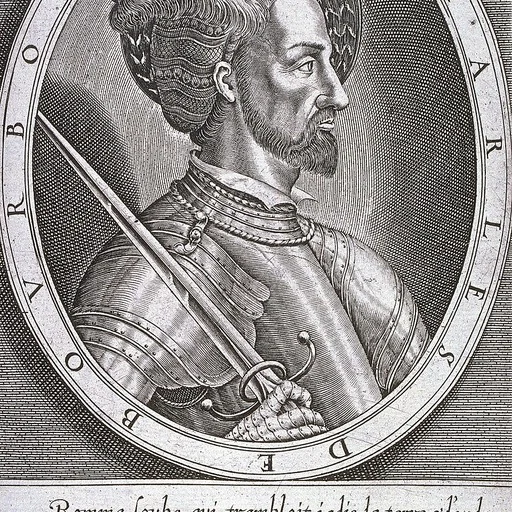
Thomas de Leu or Leeuw or Le Leup or Deleu (1560–1612) was a French engraver, publisher, and print dealer of Flemish origin.

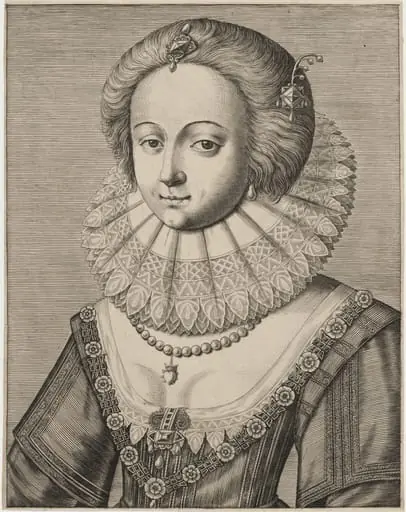 Elizabeth, Queen of Bohemia (?)
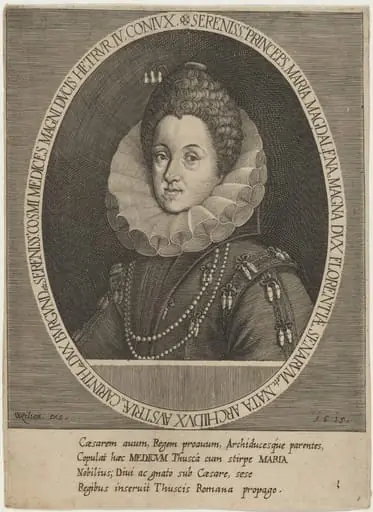 Princess Maria Magdalen
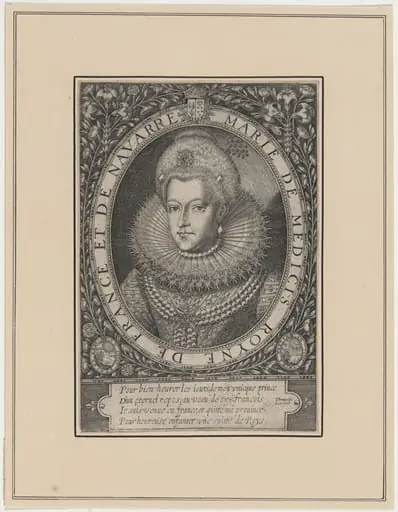
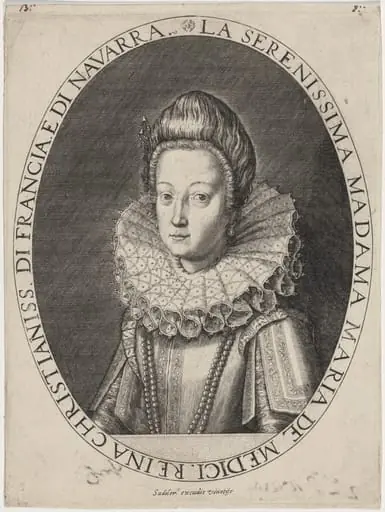 Marie de Medici, Wife of Henry IV of France
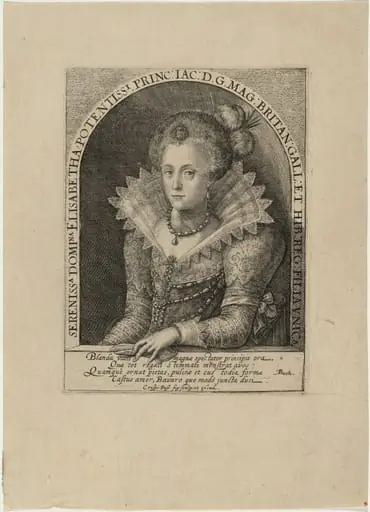 Elizabeth, Princess, Wife of the Elector Palatine Frederick V, King of Bohemia
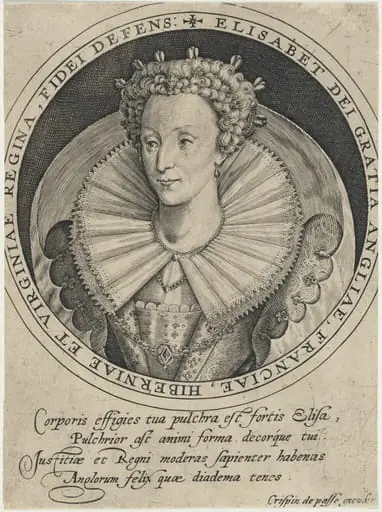 Elizabeth, Queen of England
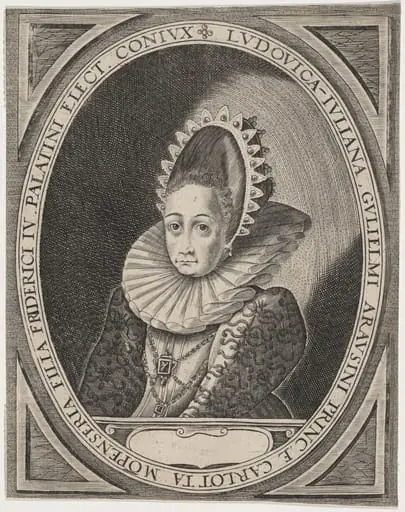 Louise Juliana, Wife of Frederick IV
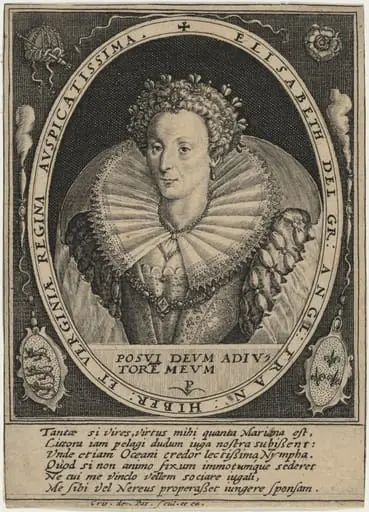 Elizabeth, Queen of England
![Maria of Austria, Infanta of Spain [top half], by Simon van de Passe](https://artifactworldgallery.com/img/simon-van-de-passe--maria-of-austria-infanta-of-spain-top-half--b728f947eb0b34d7-w320.webp) Maria of Austria, Infanta of Spain [top half]
Maria of Austria, Infanta of Spain [top half]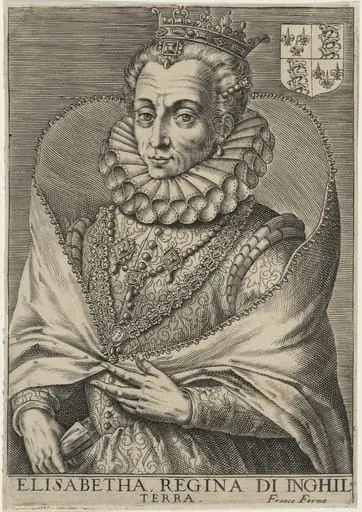 Queen Elizabeth
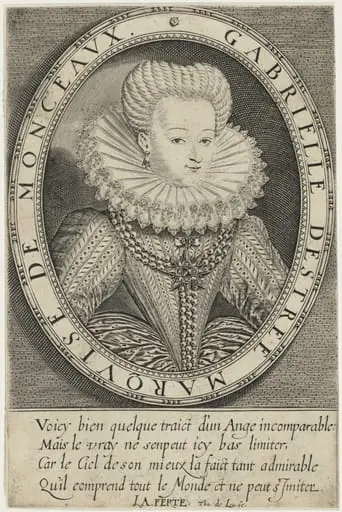 Gabrielle D'Estrees, Marquise de Monceaux
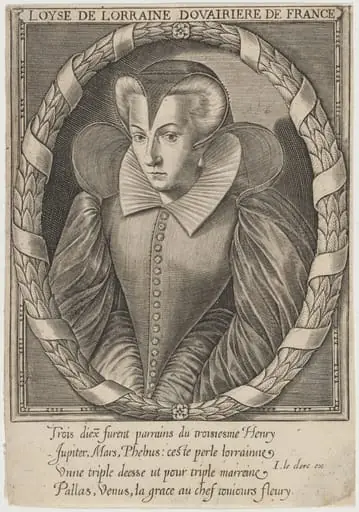 Louise de Lorraine, Wife of Henry III