Artwork
Catherine de Medici, Queen of France
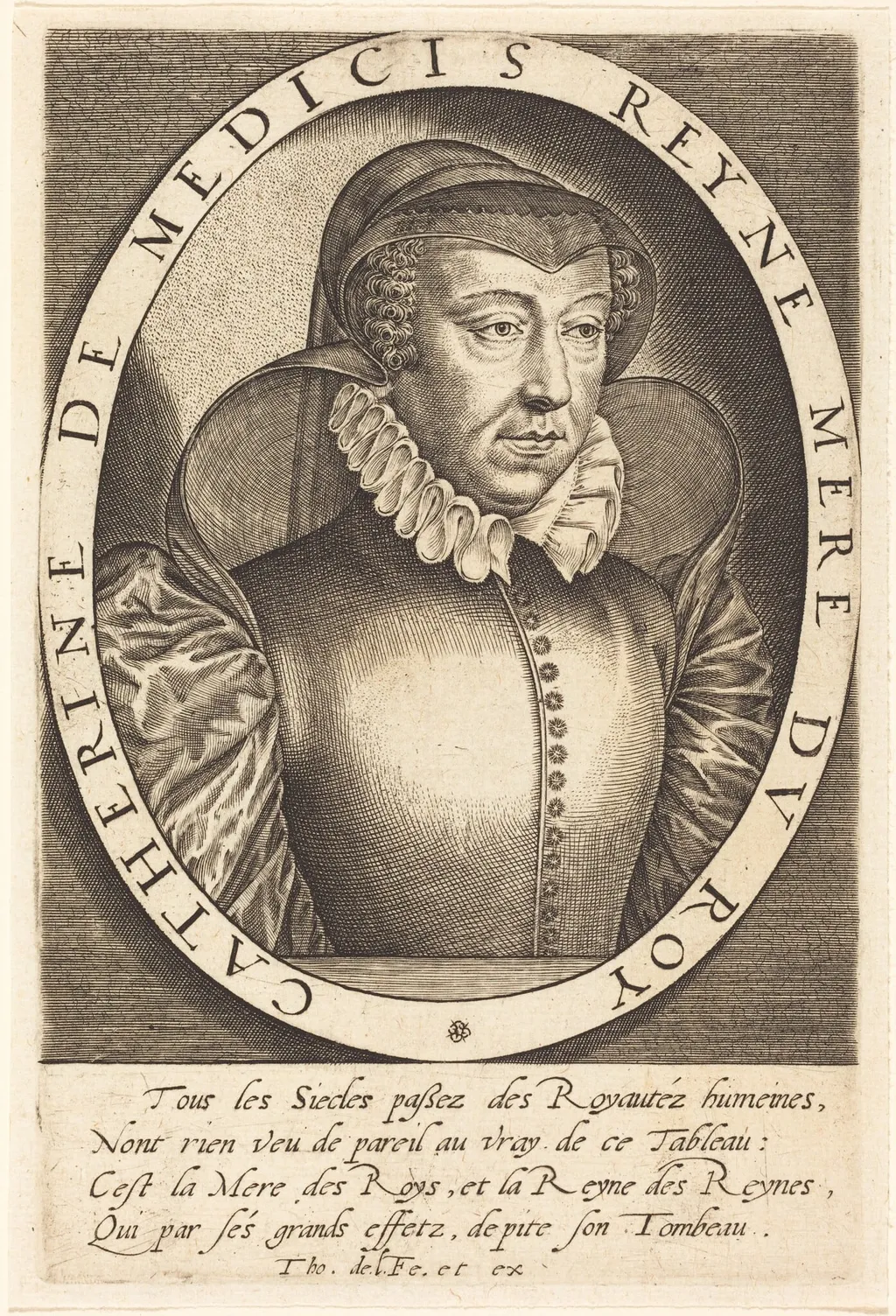
Catherine de Medici, Queen of France is an ink print by the Renaissance artist Thomas de Leu. It dates from 1590 and is held in the collection of the National Gallery of Art.
About this work
Overview
Around 1590, Thomas de Leu, a French engraver of Flemish origin, produced an engraved portrait of Catherine de Medici on laid paper. The print presents the former queen consort and later queen mother in a formal, frontal pose, characteristic of late‑Renaissance portraiture. The composition is uncluttered, focusing attention on the sitter’s attire and expression.
Subject & Meaning
The portrait depicts Catherine de Medici, a central figure in French politics during the turbulent Wars of Religion. Her serene demeanor, subtle smile, and slightly lowered gaze convey a sense of measured authority and introspection, reflecting the cultivated image of a monarch who navigated both courtly power and personal tragedy.
Technique & Style
De Leu employed fine cross‑hatching to render texture and volume, achieving delicate shading on the ruffled collar, hat, and facial features. The engraving’s linear precision and restrained tonal range exemplify the Renaissance emphasis on realistic detail and controlled composition, while the plain background reinforces the sitter’s prominence.
History & Provenance
Thomas de Leu was active as an engraver, publisher, and dealer in Paris during the late 16th and early 17th centuries. This print, likely issued for a courtly audience, circulated as a printed likeness of the queen mother, contributing to her visual legacy. Its survival on laid paper indicates typical paper stock for high‑quality prints of the period.
Artist & collection

Artist
Thomas de Leu or Leeuw or Le Leup or Deleu (1560–1612) was a French engraver, publisher, and print dealer of Flemish origin.

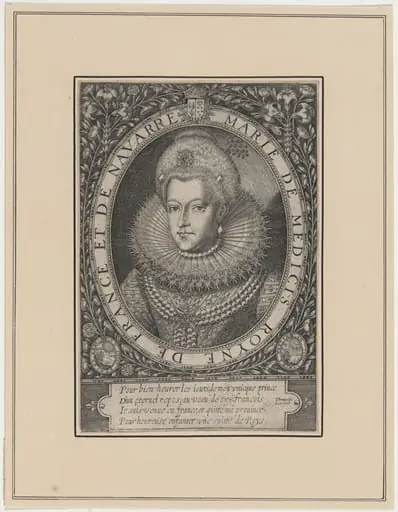
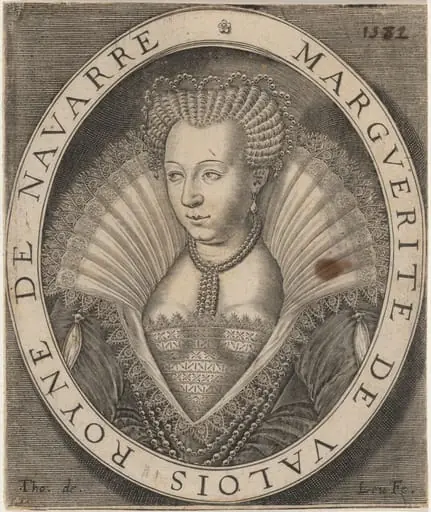
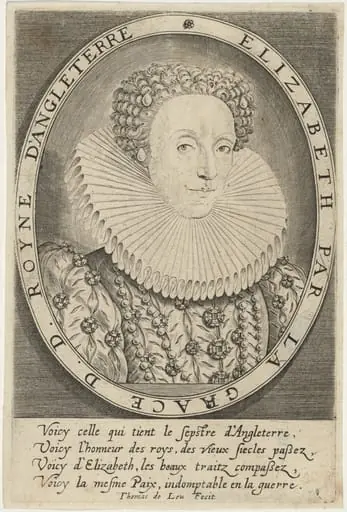
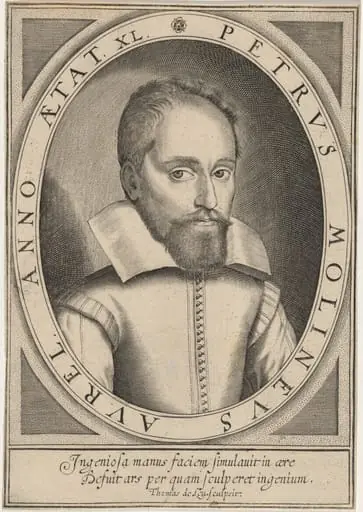
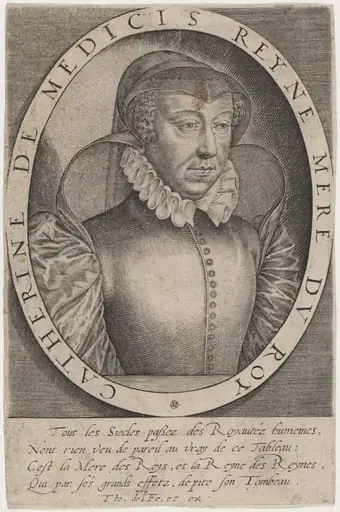 Catherine de Medici, Wife of Henry II of France
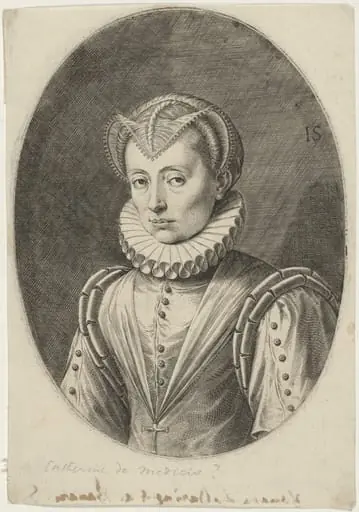 Catherine de Medici (?)
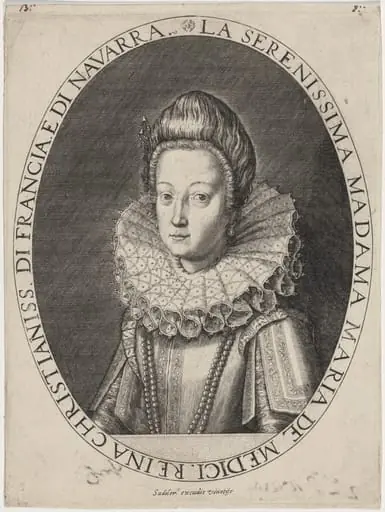 Marie de Medici, Wife of Henry IV of France
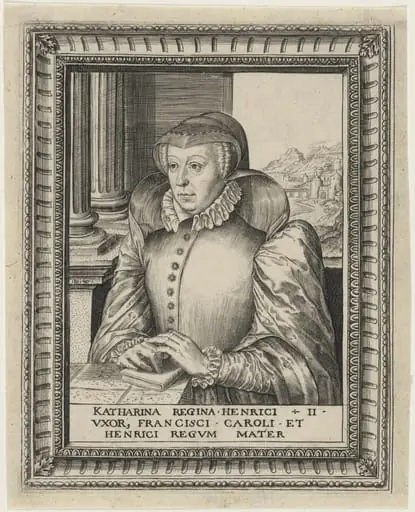 Catherine de Medici, Wife of Henry II of France
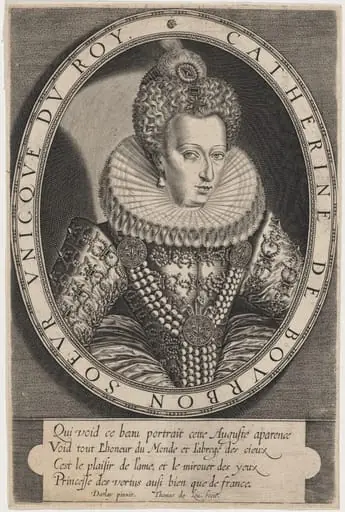 Catherine de Bourbon
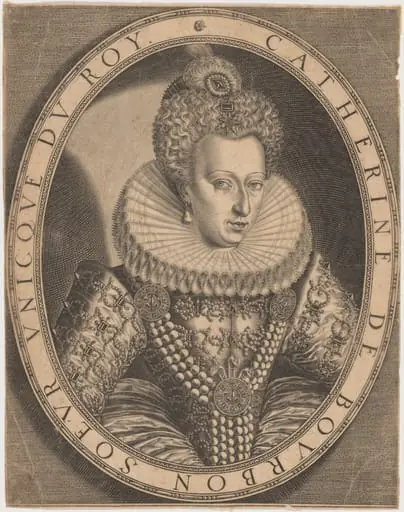 Catherine de Bourbon
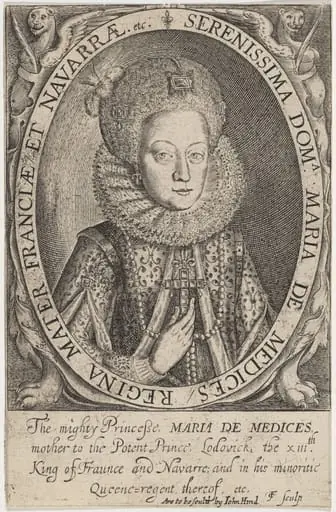 Marie de Medici, Wife of Henry IV of France
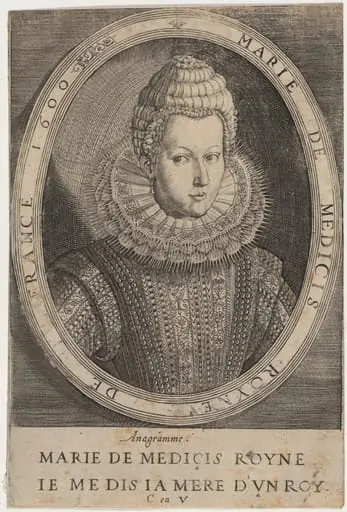 Marie de Medici, Wife of Henry IV of France
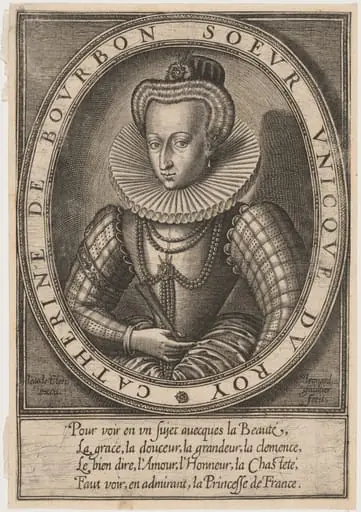 Catherine de Bourbon