Artwork
New York—Street Scene
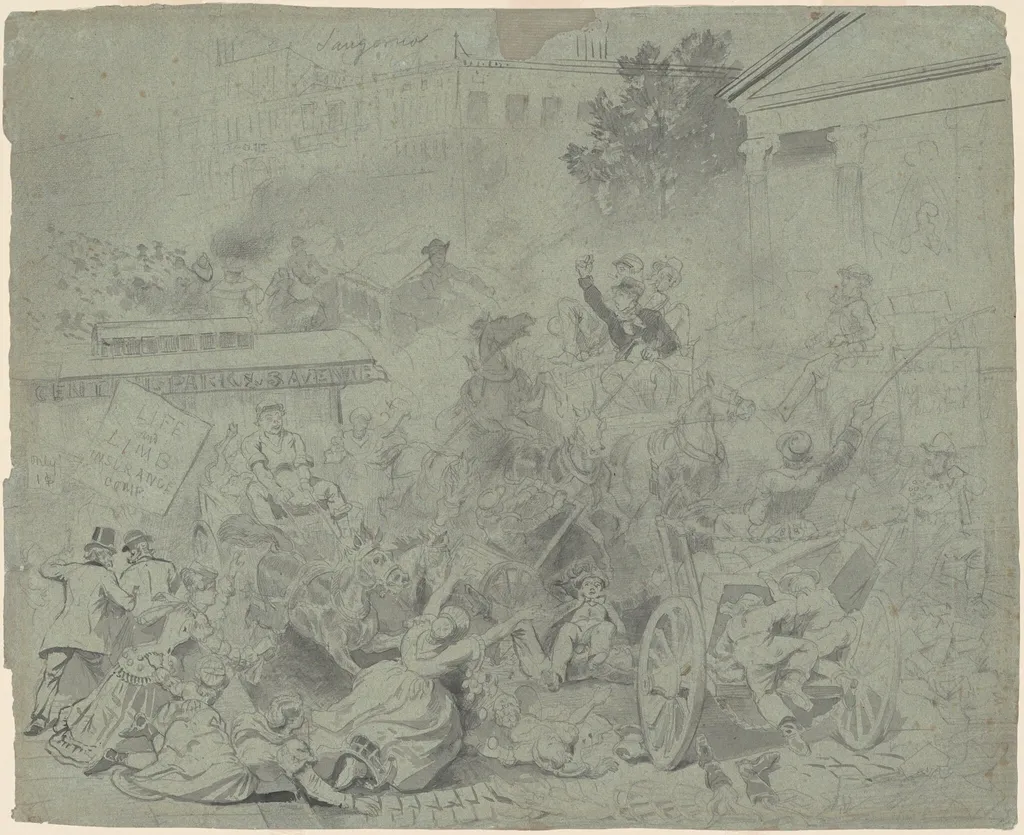
New York—Street Scene is a graphite drawing by the Impressionist artist Emanuel Leutze. It dates from 1864 and is held in the collection of the National Gallery of Art.
About this work
Overview
Emanuel Gottlieb Leutze, a German‑born artist who worked in the United States, produced the drawing New York—Street Scene in 1864. Executed with graphite and a wash on a blue‑gray laid paper support, the work records a bustling, disorderly New York street populated by pedestrians and horses.
Subject & Meaning
The composition captures a moment of urban chaos: a fallen horse lies in the foreground while other horses rear or bolt, and figures scramble to control them or flee. The scene conveys the kinetic energy and occasional disorder of mid‑nineteenth‑century city life.
Technique & Style
Leutze applied graphite for line work and employed a diluted wash to model forms and suggest atmosphere. The blue‑gray paper provides a muted ground that enhances the contrast of darker washes, directing attention to the central figures and reinforcing a sense of depth through chiaroscuro modeling.
History & Provenance
Created during the Civil War era, the drawing reflects Leutze’s broader practice of juxtaposing historical narrative with contemporary observation. Although primarily known for large historical canvases, this work demonstrates his interest in everyday urban subjects, though its ownership history after its 1864 completion remains undocumented in the available record.
Artist & collection

Artist
Emanuel Leutze grew up in America but moved to Germany as a teen, where he studied art in Düsseldorf.

![Study of Half-Length Figure with Pole [verso], by Emanuel Leutze](https://artifactworldgallery.com/img/emanuel-leutze--study-of-half-length-figure-with-pole-verso--13a43a492f70c459-w320.webp)
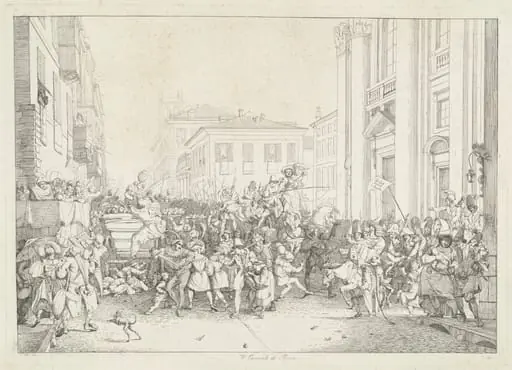 Il Carnevale di Roma (Carnival in Rome)
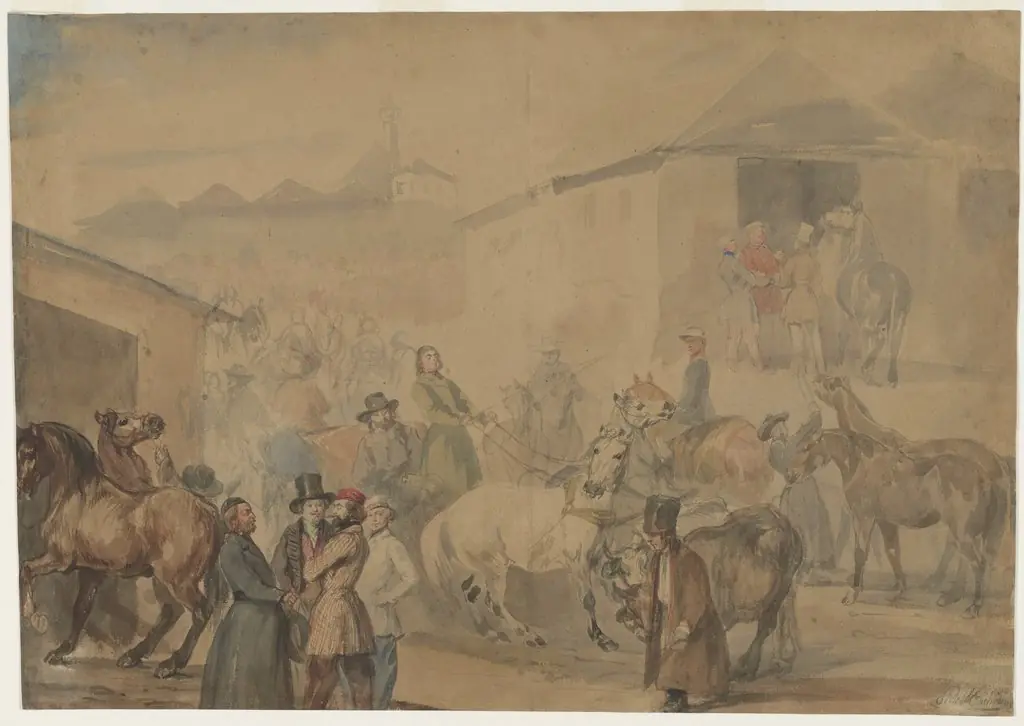 Fair in Mościska
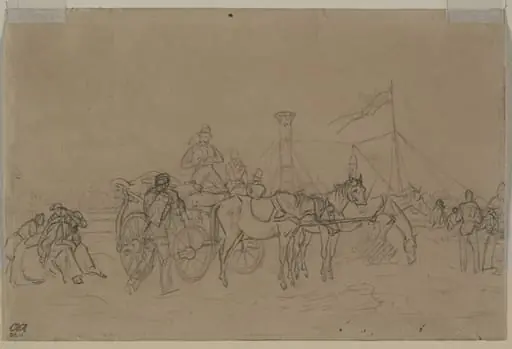 Passengers for Rhine Steamer (verso)
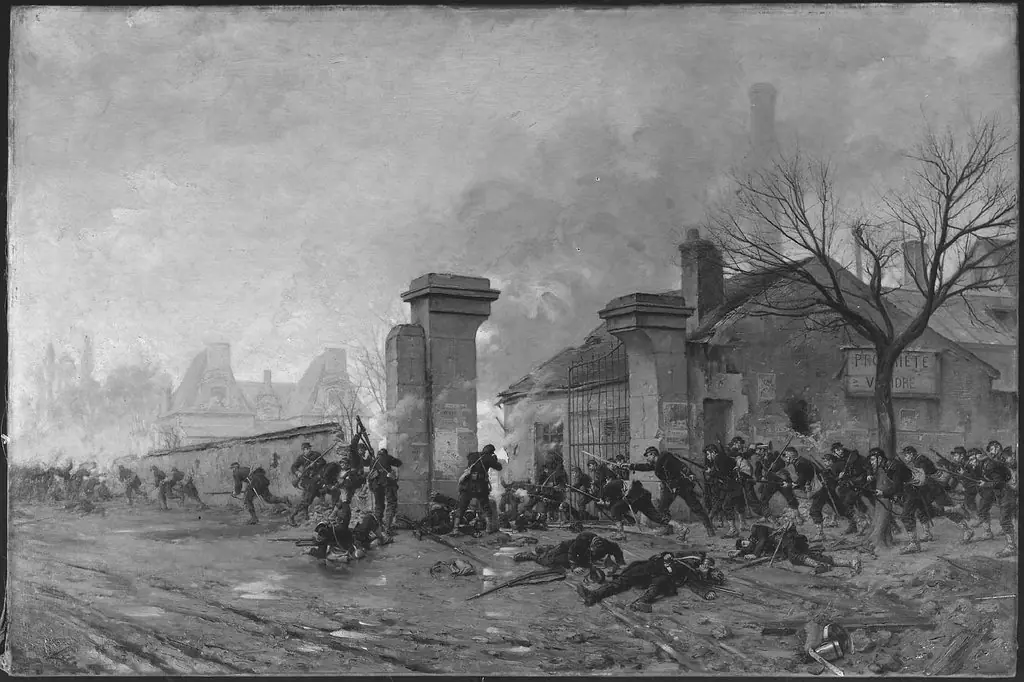 Skirmish on the Outskirts of Paris during Franco-Prussian War
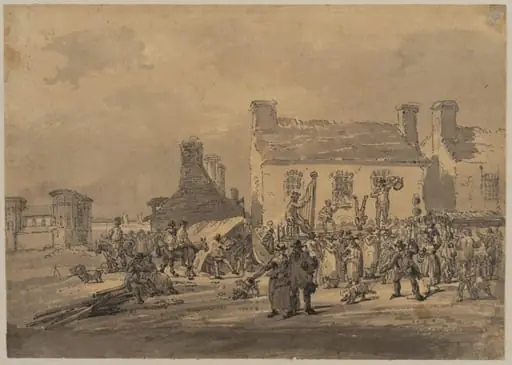 Village Fair, with mountebanks
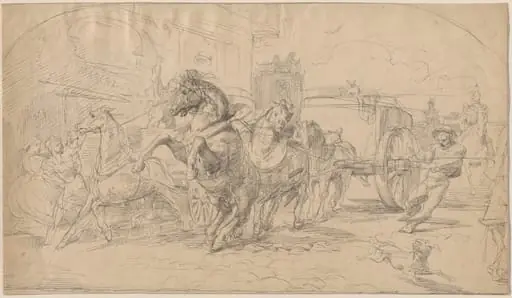 The Runaway Carriage
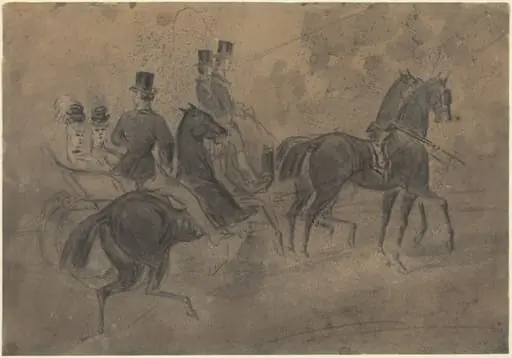 An Open Carriage
![The Affair near Konigstein (L'Affaire pres d e Koenigstein) [verso], by Gerhardus Emaus de Micault](https://artifactworldgallery.com/img/gerhardus-emaus-de-micault--the-affair-near-konigstein-l-affaire-pres-d-e-koenigstein-ve--8a75200d7cdf56c0-w320.webp) The Affair near Konigstein (L'Affaire pres d e Koenigstein) [verso]
The Affair near Konigstein (L'Affaire pres d e Koenigstein) [verso]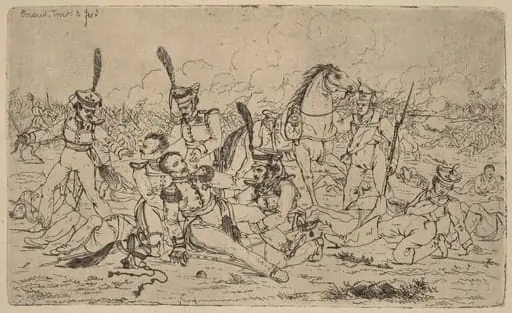 Death of a Russian General (Le Mort d'un general russe)
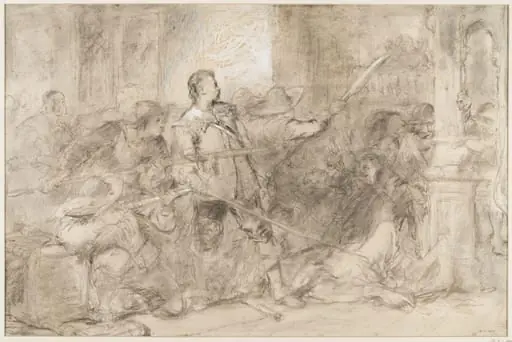 A fight between Cavaliers and Puritans
![Caravan with Covered Wagons Resting [recto], by Winslow Homer](https://artifactworldgallery.com/img/winslow-homer--caravan-with-covered-wagons-resting-recto--5a827c4a7f560cf2-w320.webp) Caravan with Covered Wagons Resting [recto]
Caravan with Covered Wagons Resting [recto]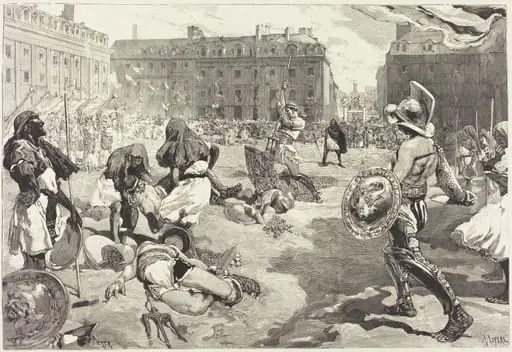 Les Fêtes de Rennes. La grande Cavalcade Romaine