Artwork
Two Cavaliers [recto]
![Two Cavaliers [recto], by Emanuel Leutze, graphite, 1854](https://artifactworldgallery.com/img/emanuel-leutze--two-cavaliers-recto--2cc3924dab387409-w1024.webp)
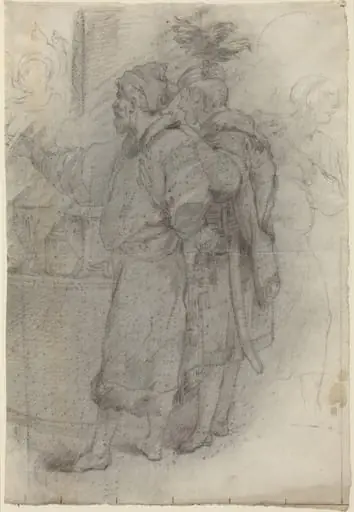
Two Cavaliers [recto] is a graphite drawing by the Romanticist artist Emanuel Leutze. It dates from 1854 and is held in the collection of the National Gallery of Art. Two Cavaliers is a graphite drawing on wove paper executed circa 1854 by Emanuel Gottlieb Leutze.
About this work
Overview
Two Cavaliers is a graphite drawing on wove paper executed circa 1854 by Emanuel Gottlieb Leutze. The work measures a modest sheet size and presents a pair of horsemen captured in motion. Though modest in scale, the drawing reflects Leutze’s interest in historic and martial subjects that characterized his broader oeuvre.
Subject & Meaning
The composition features two riders poised on horseback, their bodies angled as if caught in the midst of a charge or a ceremonial ride. The dynamic arrangement suggests a narrative moment drawn from military or equestrian tradition, inviting viewers to imagine the broader context of a battle, parade, or diplomatic encounter.
Technique & Style
Leutze employed graphite to render the figures with fine tonal gradations, emphasizing the musculature of the horses and the tension in the riders’ postures. The use of wove paper provides a smooth surface that supports delicate shading, while the drawing’s linear clarity aligns with the Düsseldorf school’s emphasis on precise draftsmanship.
History & Provenance
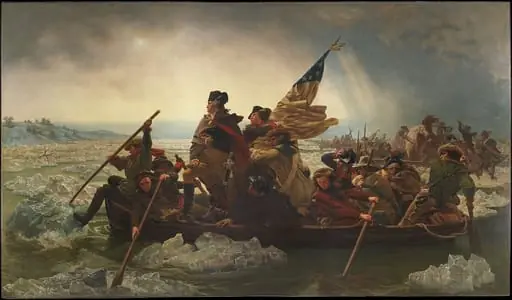
Born in Germany and later active in the United States, Leutze is best known for large-scale historical canvases such as Washington Crossing the Delaware (1851). This drawing, created during the same productive period, illustrates his practice of preparatory studies and smaller works that explored similar themes of transatlantic history.
Artist & collection

Artist
Emanuel Leutze grew up in America but moved to Germany as a teen, where he studied art in Düsseldorf.

![Study of Half-Length Figure with Pole [verso], by Emanuel Leutze](https://artifactworldgallery.com/img/emanuel-leutze--study-of-half-length-figure-with-pole-verso--13a43a492f70c459-w320.webp)
 Two Standing Courtiers
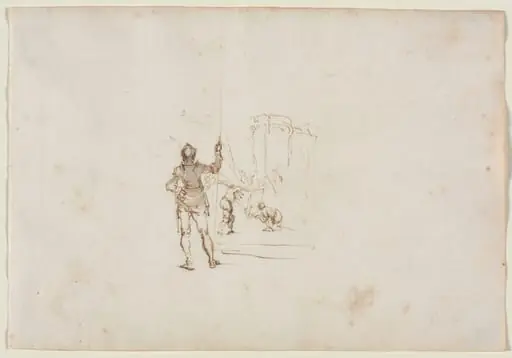 Detail of Martyrdom of Saint John the Evangelist, after Callot
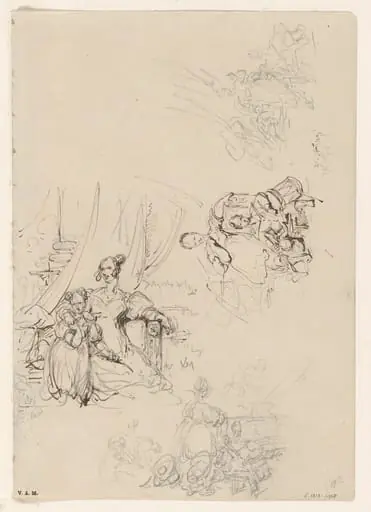 A Western woman with her children in Macau
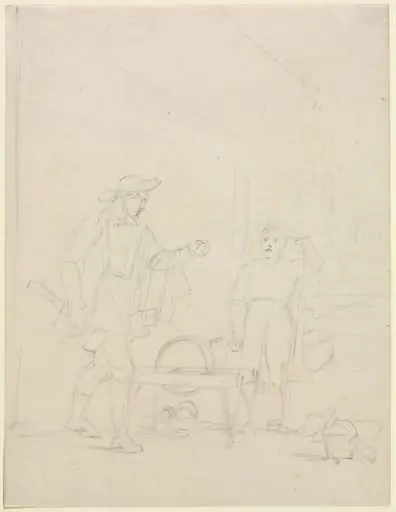 Who'll Turn the Grindstone?
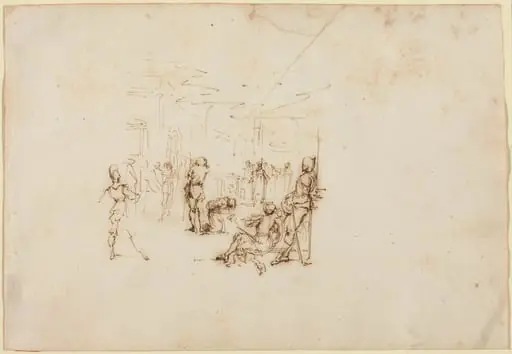 Saint Matthew
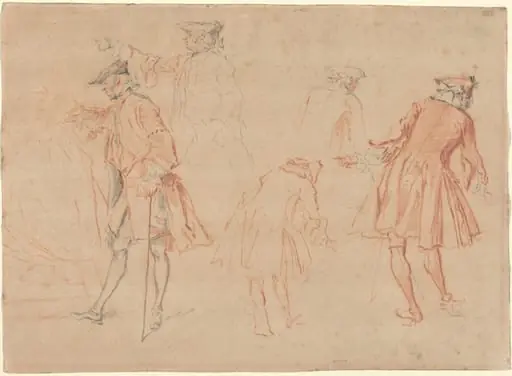 Sketches of a Gentleman
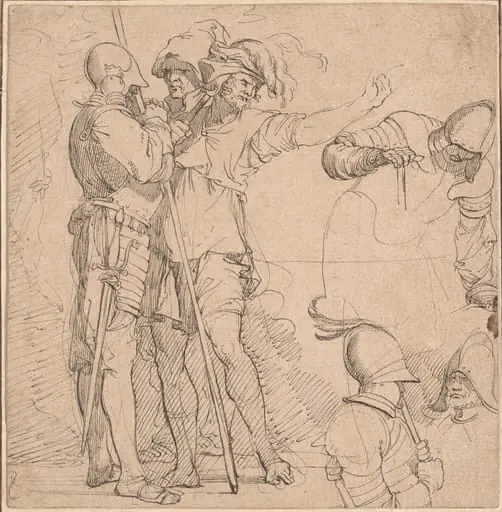 Capriccio Derived from Salvator Rosa's "Figurine"
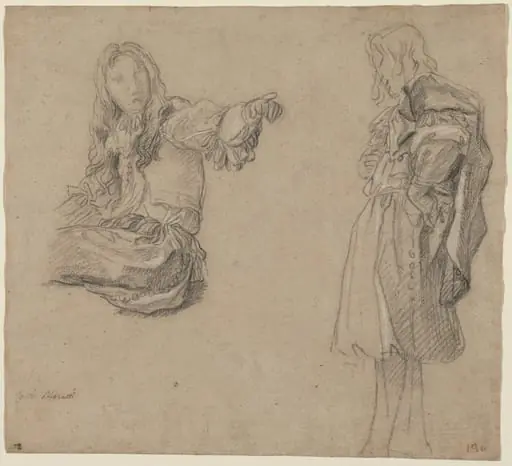 Two Men in Elaborate Costumes
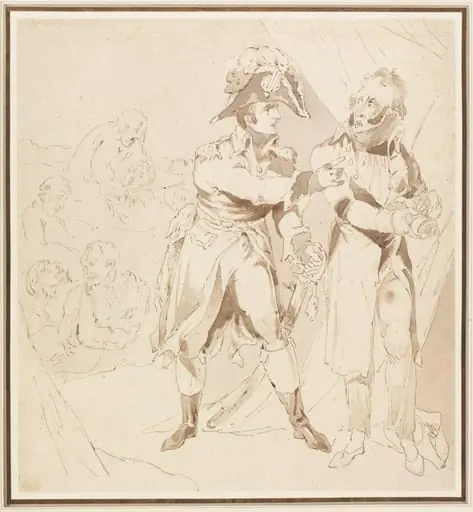 Buonaparte Ordering Five Hundred & Eighty of his wounded Soldiers to be poisoned at Jaffa
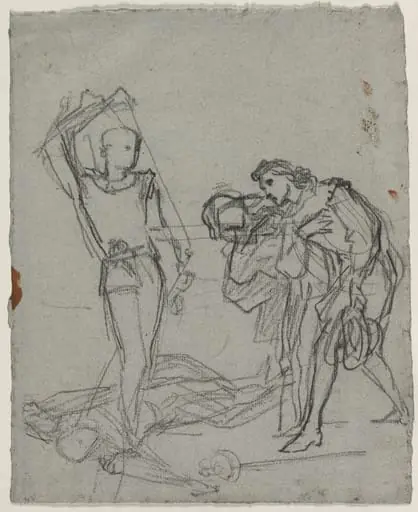 Duel after the Masked Ball (recto)
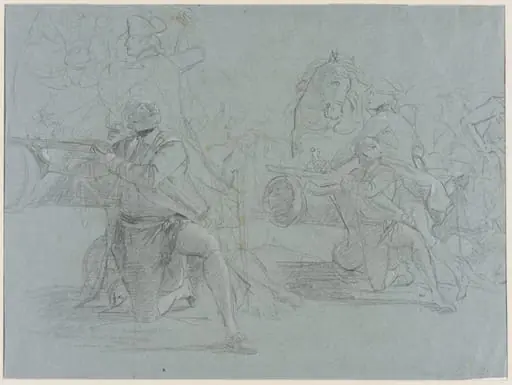 Study for 'The Siege of Gibraltar'
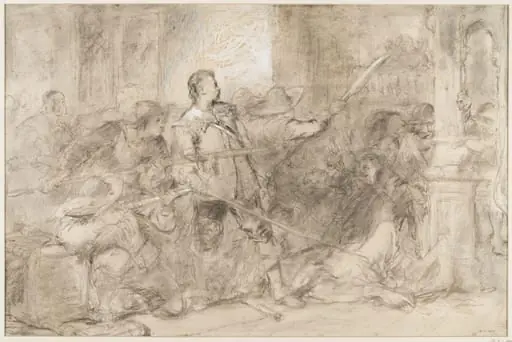 A fight between Cavaliers and Puritans