Artwork
Skeleton of a Man with Bow and Arrow
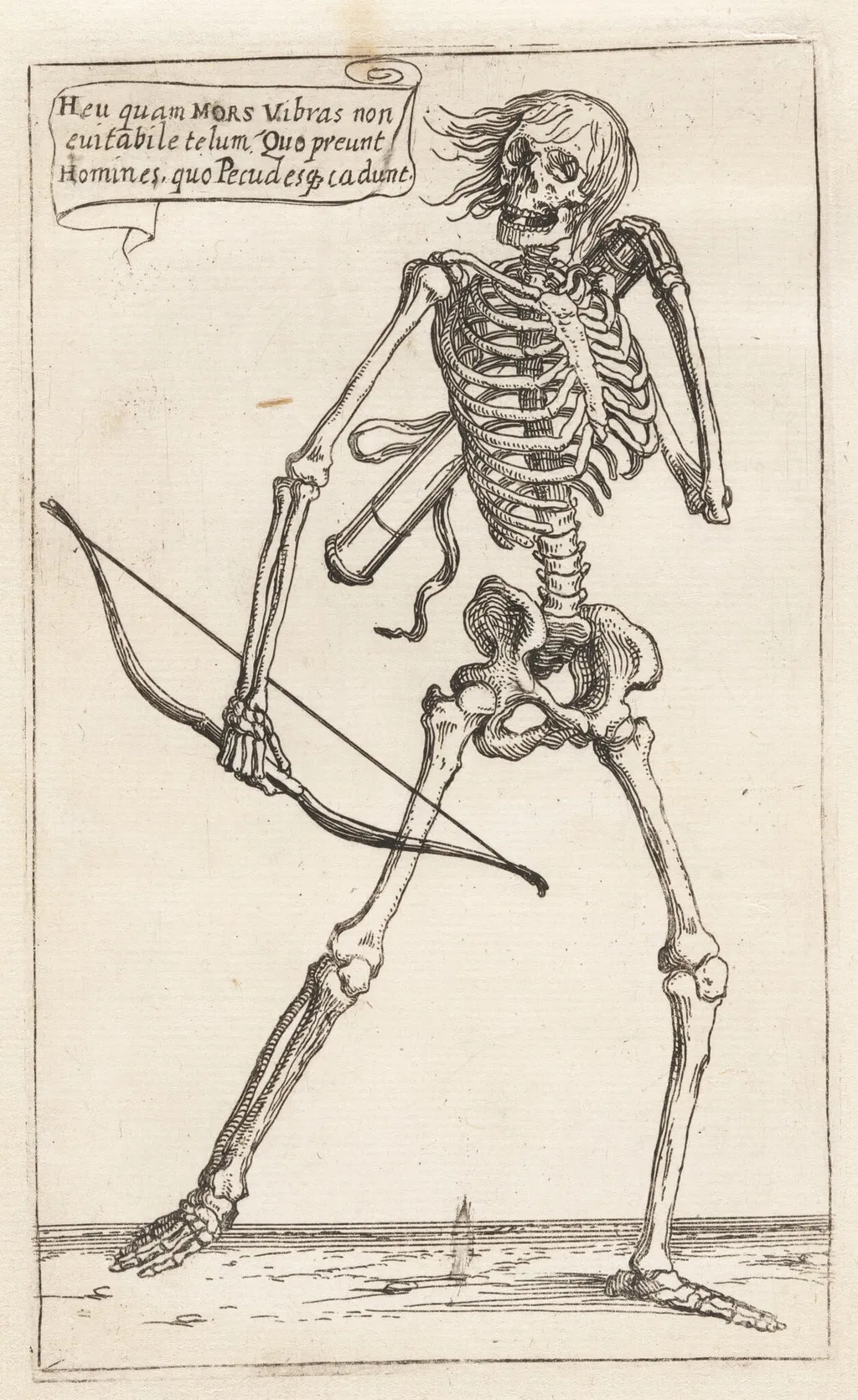
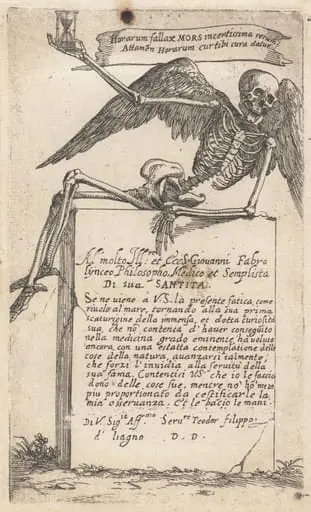
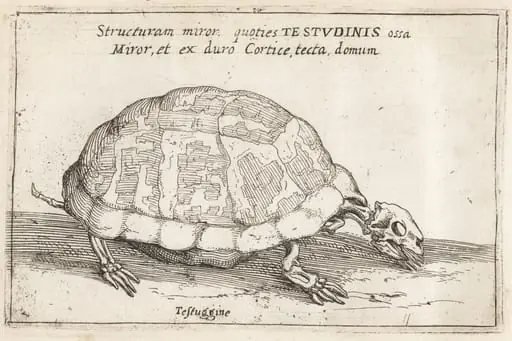
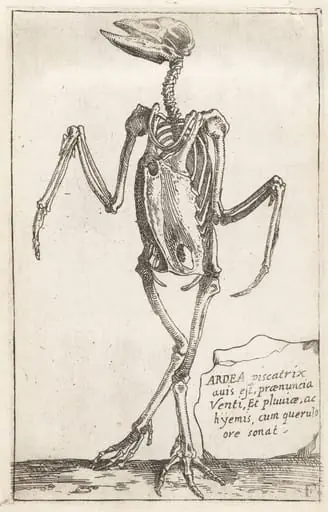
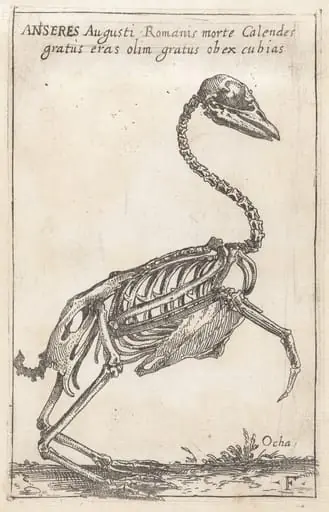
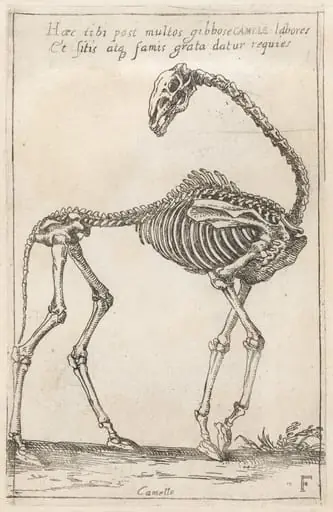
Skeleton of a Man with Bow and Arrow is an ink print by the Baroque artist Teodoro Filippo di Liagno. It dates from 1620 and is held in the collection of the National Gallery of Art.
About this work
Overview
Teodoro Filippo di Liagno’s etching, dated 1620, depicts a human skeleton grasping a bow and arrow. Rendered in stark black ink on laid paper, the image presents a fully articulated skeletal figure, its ribs, vertebrae and joints rendered with meticulous detail, while a Latin inscription arches above the scene.
Subject & Meaning
The composition juxtaposes the lifelessness of the skeleton with the weapon of hunting, suggesting the inevitability of death and the futility of human endeavors. The skull’s slight grin and the empty eye sockets reinforce a memento mori theme, a common reminder in early‑17th‑century visual culture that mortality is unpredictable and universal.
Technique & Style
Di Liagno employed the etching process, incising the design into a copper plate with acid to achieve fine, controlled lines. The artist’s hand is evident in the crisp delineation of bone structure and the delicate cross‑hatching that creates tonal variation, while the laid‑paper surface adds a subtle texture to the monochrome image.
History & Provenance
The work entered the collection of the National Gallery of Art in Washington, where it is currently conserved. Its provenance prior to acquisition is not extensively documented, but the piece is recognized as a representative example of early Baroque printmaking in Italy, reflecting the period’s fascination with anatomical study and moralizing themes.
Artist & collection