Artwork
Skeleton of a Tortoise
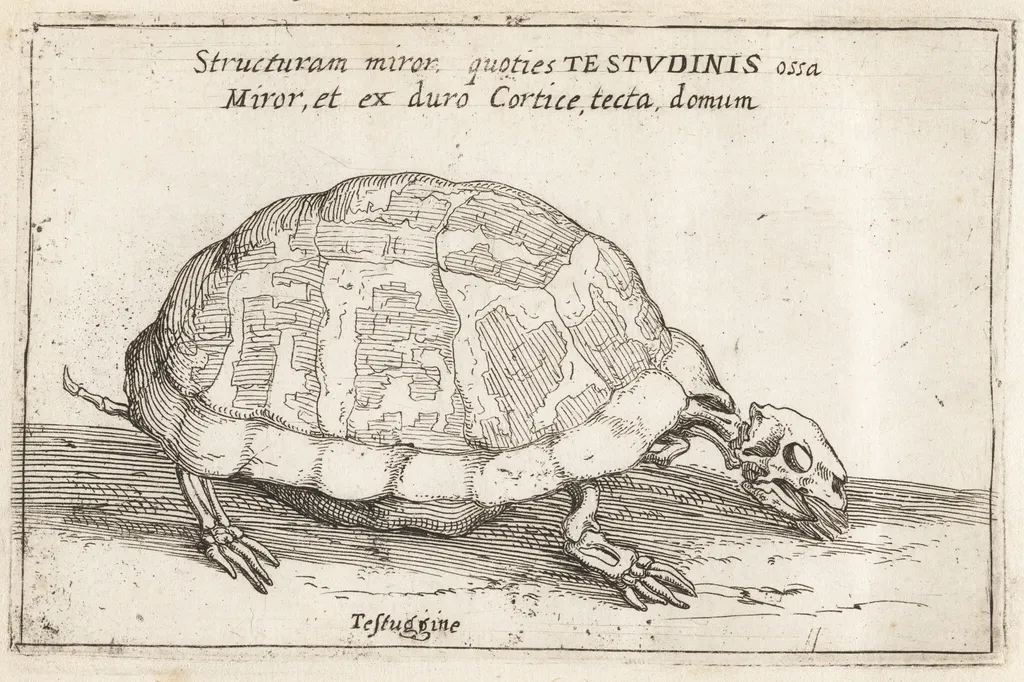
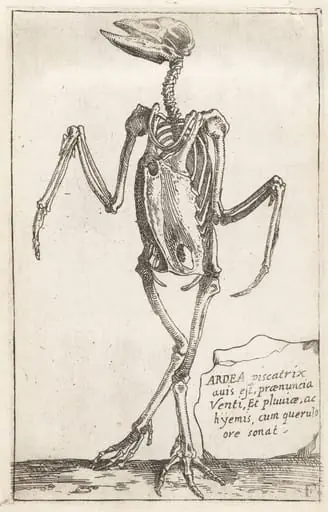
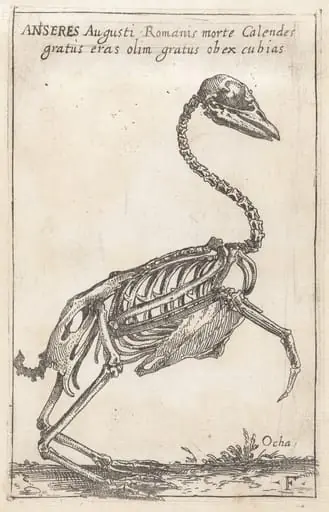
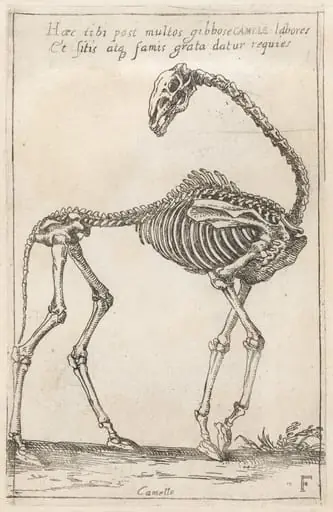
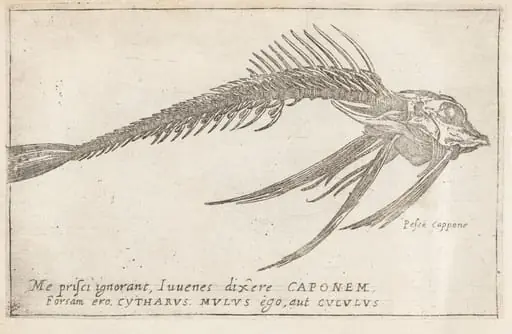
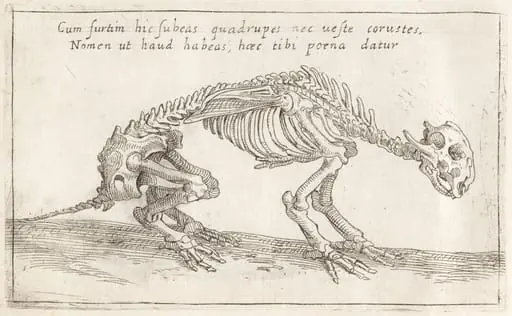
Skeleton of a Tortoise is an ink print by the Baroque artist Teodoro Filippo di Liagno. It dates from 1620 and is held in the collection of the National Gallery of Art.
About this work
Overview
Created in 1620 by Teodoro Filippo di Liagno, this etching depicts the skeletal remains of a tortoise in a tightly coiled position. Rendered on laid paper, the work is part of the National Gallery of Art’s collection in Washington, D.C. The composition focuses on anatomical precision, with the animal’s bones arranged to suggest both stillness and the natural posture of a resting creature.
Subject & Meaning
The Latin inscription at the top, though difficult to decipher, likely serves as a formal title or scholarly label, reinforcing the work’s scientific intent.
The tortoise skeleton, with its head withdrawn into the shell and limbs extended forward, reflects a quiet contemplation of mortality and natural form. The detailed rendering of the carapace, with its intricate, grid-like patterning, may allude to the structure of the natural world. The Latin inscription at the top, though difficult to decipher, likely serves as a formal title or scholarly label, reinforcing the work’s scientific intent.
Technique & Style
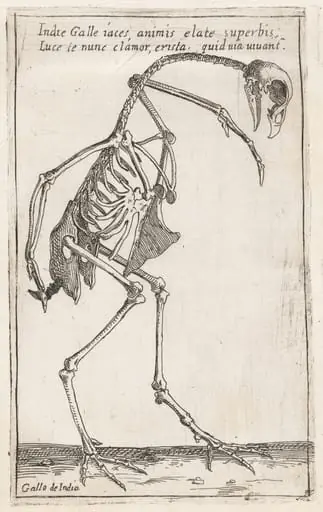
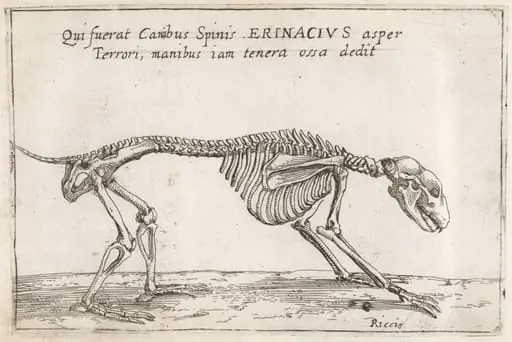
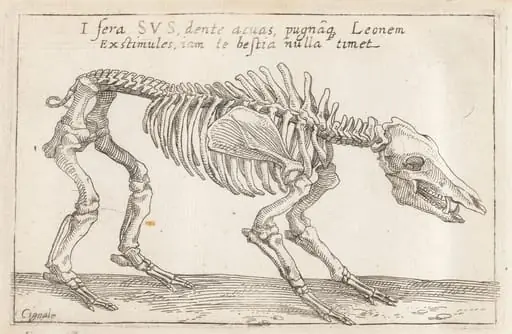
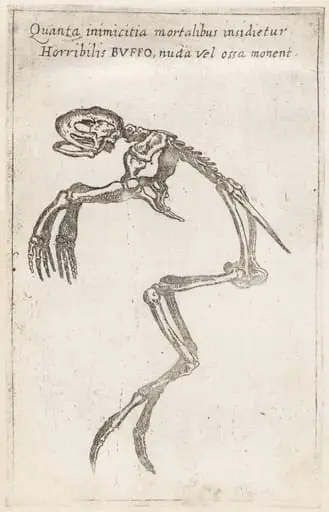
Using etching, Liagno incised fine lines into a metal plate to create delicate tonal variations. The bones are modeled with subtle hatching and crosshatching to suggest volume and texture, while the ground beneath is rendered with rough, uneven strokes. The shell’s surface is defined by a network of fine, parallel lines resembling cartographic detail, emphasizing both its organic complexity and the artist’s technical control.
History & Provenance
The etching entered the National Gallery of Art’s collection as part of its broader holdings in early modern European prints. Its origin traces to Liagno’s activity in early 17th-century Italy, where scientific illustration and artistic practice often intersected. The work’s survival and preservation suggest it was valued within scholarly or collector circles for its anatomical accuracy and refined execution.
Context
In the early 1600s, interest in natural history and dissection grew among artists and intellectuals in Italy. Liagno’s etching aligns with this trend, reflecting a broader movement toward documenting the natural world with precision. Unlike purely decorative prints, this work functions as a study—bridging art and science through careful observation and technical skill.
Legacy
Though not widely reproduced, the etching remains a quiet example of how Renaissance and Baroque artists engaged with natural forms beyond idealization. Its presence in a major public collection underscores its role as a document of early scientific visual culture. The work continues to be studied for its fusion of anatomical detail and artistic restraint.
Artist & collection