Artwork
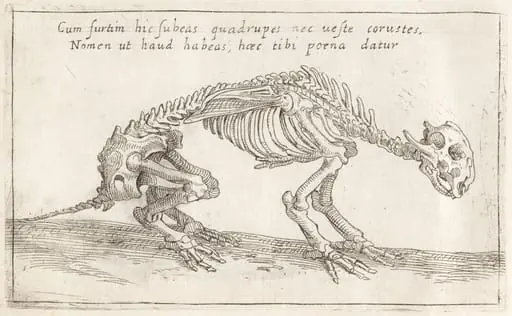
Skeleton of a Boar
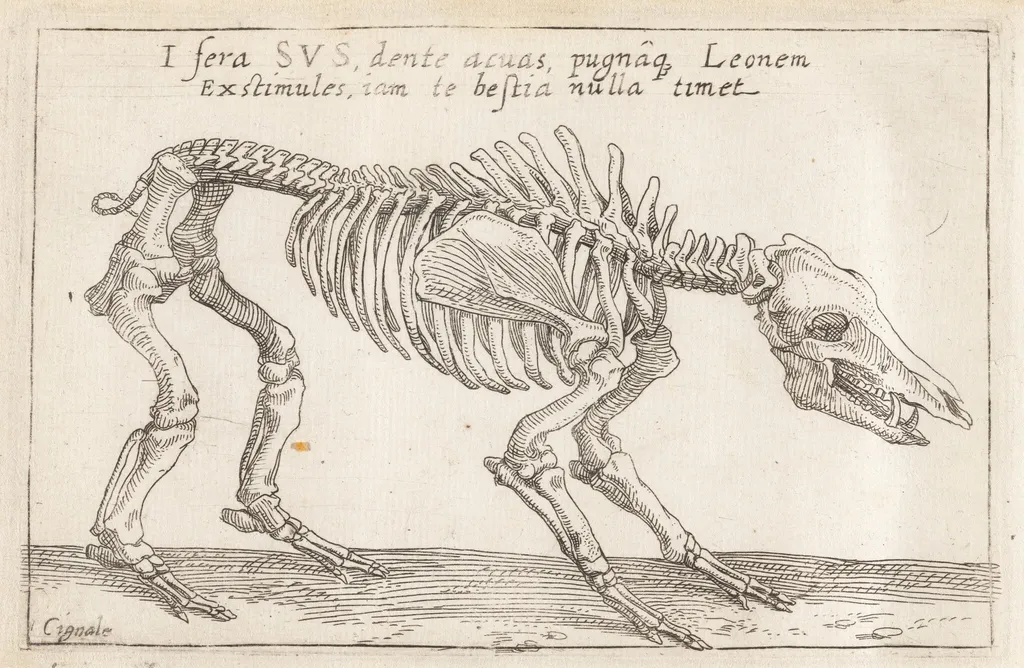
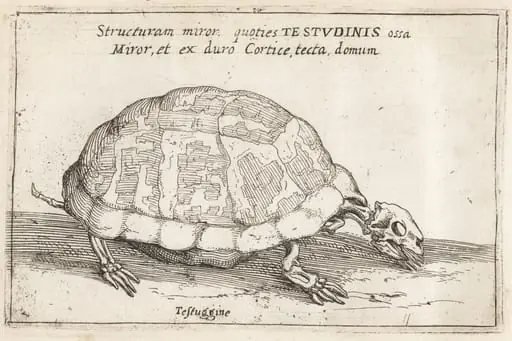
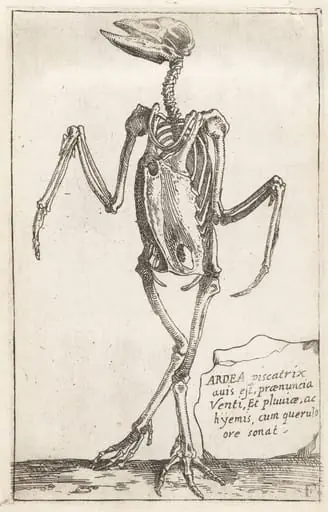
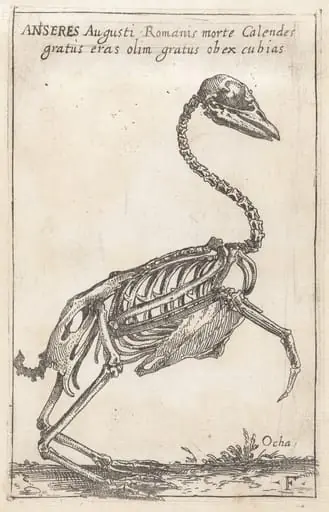
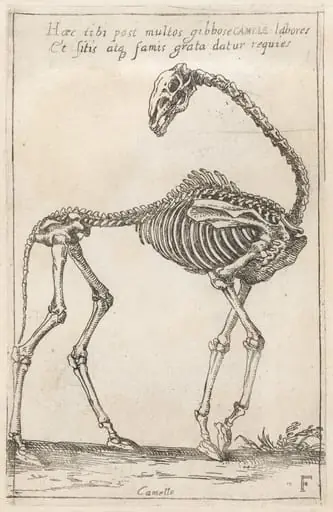
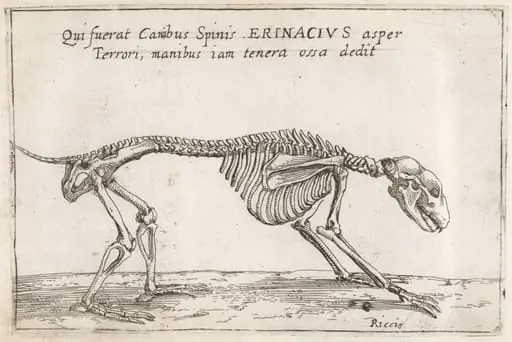
Skeleton of a Boar is an ink print by the Baroque artist Teodoro Filippo di Liagno. It dates from 1620 and is held in the collection of the National Gallery of Art.
About this work
Overview
An etching on laid paper from 1620, this work by Teodoro Filippo di Liagno depicts the skeletal remains of a boar in motion.
An etching on laid paper from 1620, this work by Teodoro Filippo di Liagno depicts the skeletal remains of a boar in motion. Rendered in fine, precise lines, the image captures the animal mid-stride with its head turned sideways. The composition is monochromatic and grounded in observational detail, reflecting a blend of natural study and artistic technique common in early 17th-century printmaking.
Subject & Meaning
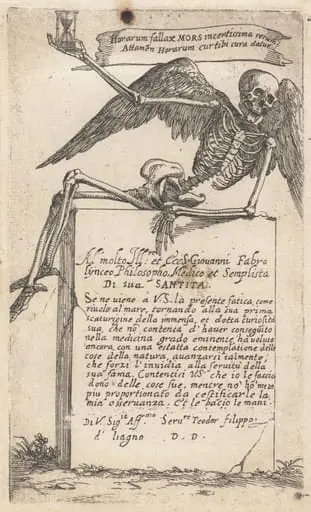
The boar’s skeleton, rendered in dynamic posture, suggests movement despite its lifeless state. The Latin inscription above the image likely serves as a label or scholarly annotation, pointing to a scientific or anatomical intent. Rather than a symbolic or mythological representation, the image functions as a study of biological structure, possibly intended for educational or curatorial use within natural philosophy circles.
Technique & Style
The artist employed etching to achieve fine, controlled lines that trace each bone with clinical clarity. The rough, textured ground beneath the animal is rendered with loose, irregular strokes, contrasting with the sharp definition of the skeleton. The overall aesthetic is sketchlike yet deliberate, emphasizing precision over ornamentation and aligning with the era’s growing interest in empirical observation.
History & Provenance
Created in 1620, the print entered the collection of the National Gallery of Art in Washington, D.C., where it remains today. Its survival as a single-sheet print suggests it was likely produced in a small run, possibly for academic or private circulation. No documented exhibition history exists prior to its acquisition, but its technical quality indicates it was valued by collectors of scientific imagery.
Context
In early 17th-century Europe, detailed anatomical studies were gaining traction among artists and naturalists. This etching reflects a broader trend of translating biological observation into visual form, often informed by dissection and manuscript illustration. While not part of a major published treatise, it aligns with the period’s intellectual shift toward empirical documentation in both art and science.
Legacy
The print endures as a quiet example of how artists contributed to the visualization of natural science before the advent of photography. Its modest scale and lack of overt drama distinguish it from more theatrical anatomical works, offering instead a restrained, methodical record of form. It remains a reference point for understanding the intersection of art and early scientific inquiry in print culture.
Artist & collection