Artwork
H Beard Print Collection
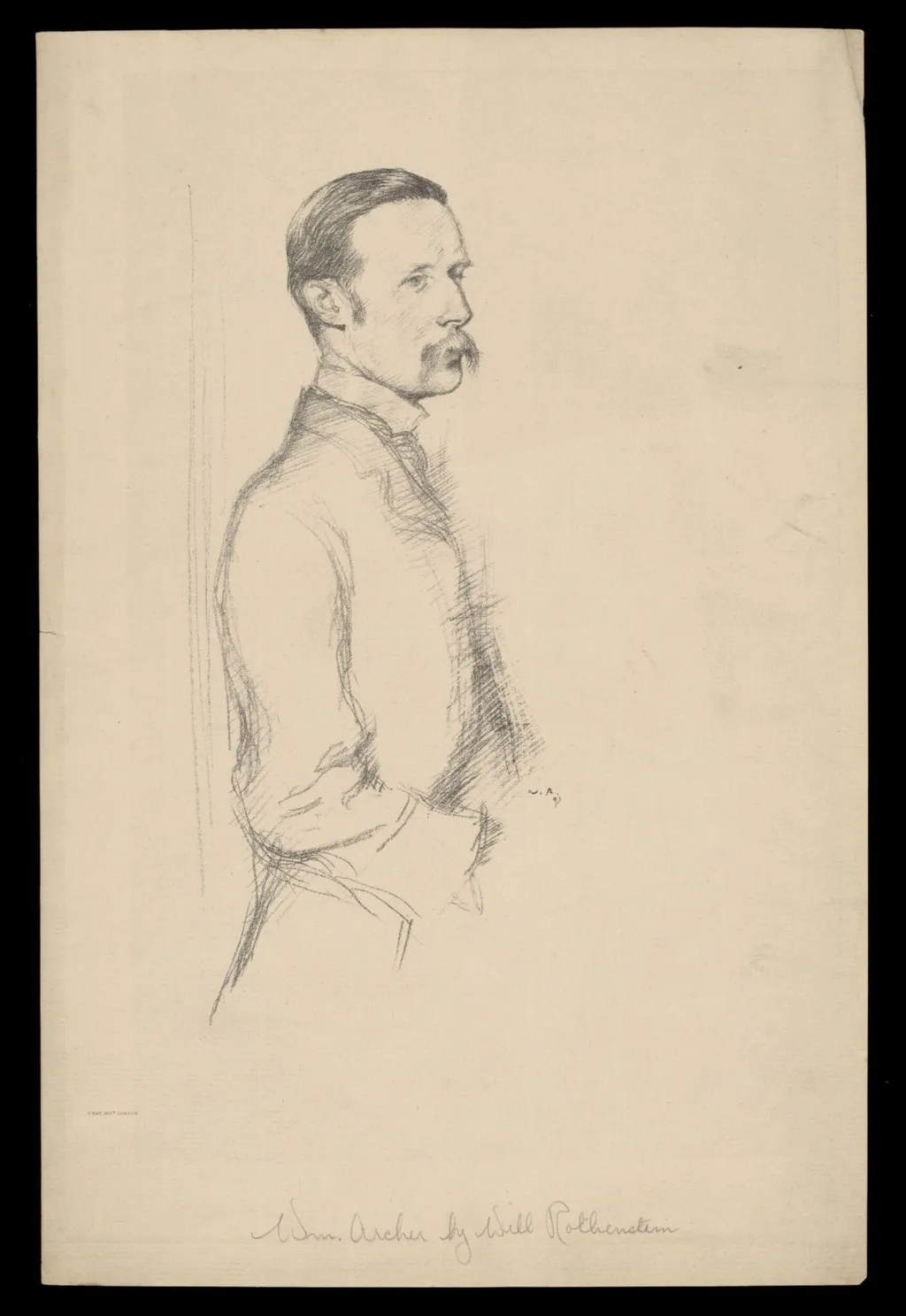
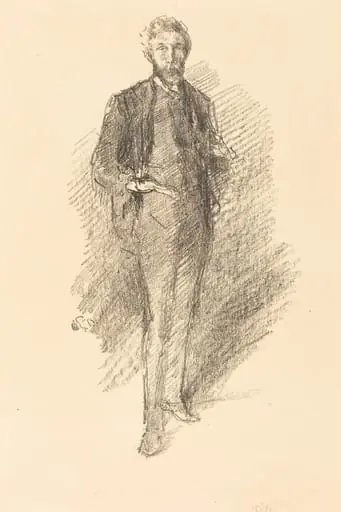
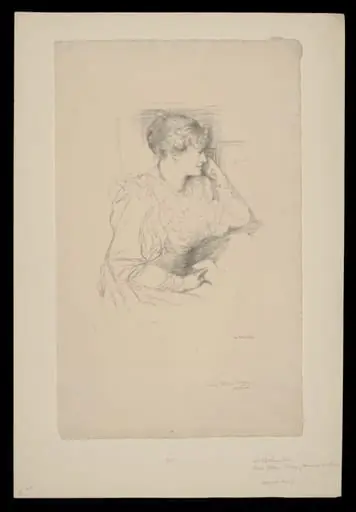
H Beard Print Collection is a print by the Impressionist artist William Rothenstein. It dates from 1897 and is held in the collection of the Victoria and Albert Museum. A black-and-white print from 1897 portrays William Archer, a British critic and dramatist.
About this work
Overview
A black-and-white print from 1897 portrays William Archer, a British critic and dramatist. The image is part of the H. Beard Print Collection, a curated assemblage of 19th-century theatrical portraits. The composition is formal, emphasizing Archer’s scholarly demeanor through restrained lighting and clear lines, typical of journalistic portraiture of the era.
Subject & Meaning
William Archer was a prominent voice in late-Victorian theatre, known for championing Ibsen and advocating for realism on stage. This print captures him in middle age, likely for publication in a periodical or theatrical journal. The portrait serves as a visual record of his influence, aligning his image with intellectual authority rather than performative flair.
Technique & Style
The print is executed in a line-based engraving or photogravure technique, common for reproducing photographs in newspapers and books before halftone became widespread. Details are rendered with precision but without embellishment, favoring clarity over artistic flourish. The tonal range is limited to grayscale, enhancing the print’s documentary function.
History & Provenance
The print originates from the collection assembled by H. Beard, a 19th-century publisher and theatre enthusiast who documented actors, playwrights, and critics. Its inclusion suggests Archer’s significance in theatrical circles. The print likely circulated in London’s literary and theatrical communities, possibly as a supplement to reviews or biographical features.
Context
In 1897, theatre criticism was gaining institutional weight, and figures like Archer helped shape public taste. This portrait emerged amid growing interest in documenting cultural figures beyond the stage. The medium reflects the era’s reliance on print to disseminate images of intellectuals, bridging journalism and visual culture.
Legacy
The print endures as a historical artifact of Victorian cultural documentation. While Archer’s public prominence has faded, the image remains a tangible link to the era’s critical discourse. It contributes to archives that trace the evolution of theatre as a subject of serious intellectual engagement.
Artist & collection
Artist
William Rothenstein made prints and portraits around the turn of the 20th century.

![GW. [Sir John Gardner Wilkinson], by Godfrey Thomas Vigne](https://artifactworldgallery.com/img/godfrey-thomas-vigne--gw-sir-john-gardner-wilkinson--64a60946dbe35509-w320.webp)