Artwork
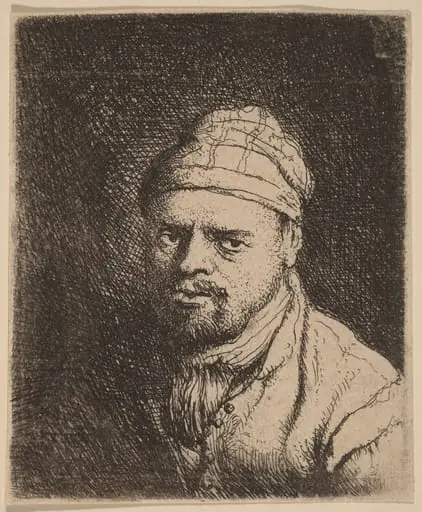
Bust of a Man with Thick Lips
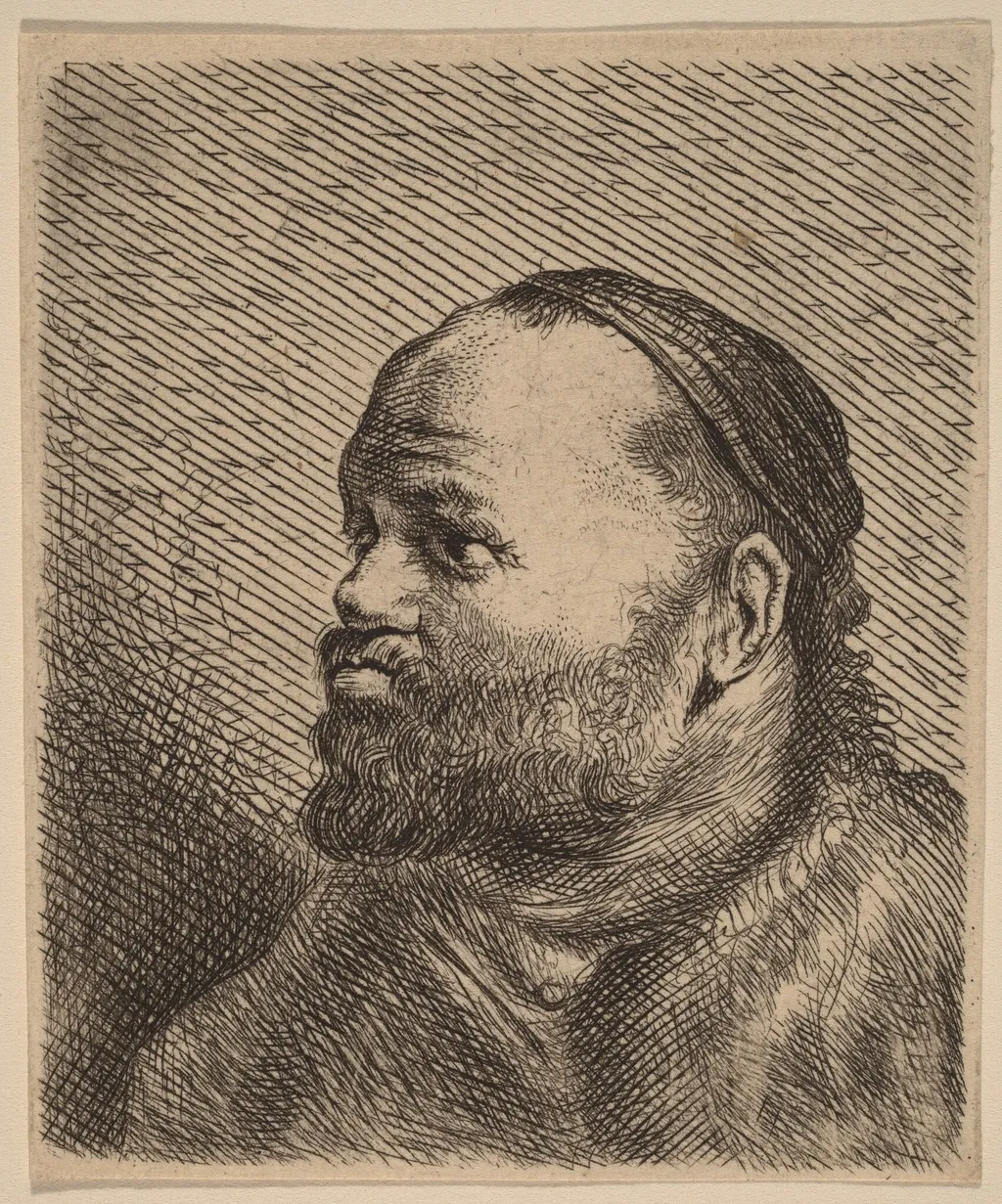
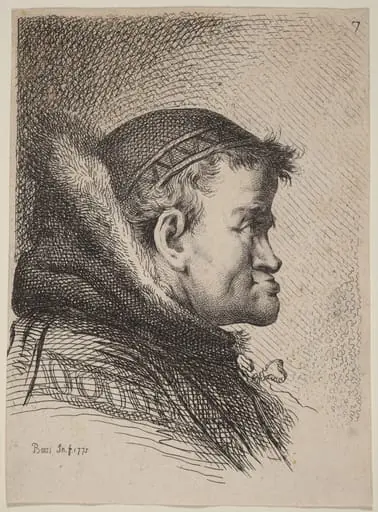
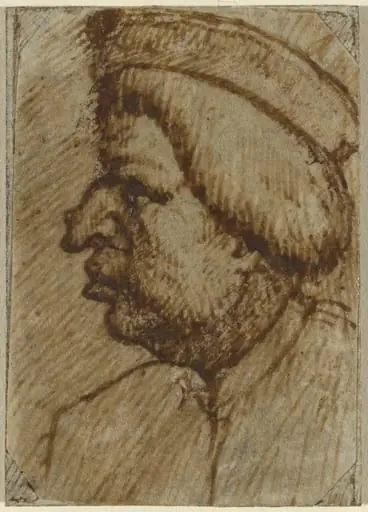
Bust of a Man with Thick Lips is an ink print by the Baroque artist Jan Lievens. It dates from 1640 and is held in the collection of the National Gallery of Art.
About this work
Overview
Lievens, trained in Amsterdam alongside Rembrandt, used etching to explore character and texture with immediacy, favoring directness over polish.
Created in 1640, this etching by Jan Lievens depicts a male figure with pronounced facial features, rendered in fine, incised lines on metal. As a print, it belongs to a tradition of intimate portraiture common in the Dutch Golden Age. Lievens, trained in Amsterdam alongside Rembrandt, used etching to explore character and texture with immediacy, favoring directness over polish. The work exemplifies his skill in translating human presence into monochrome ink.
Subject & Meaning
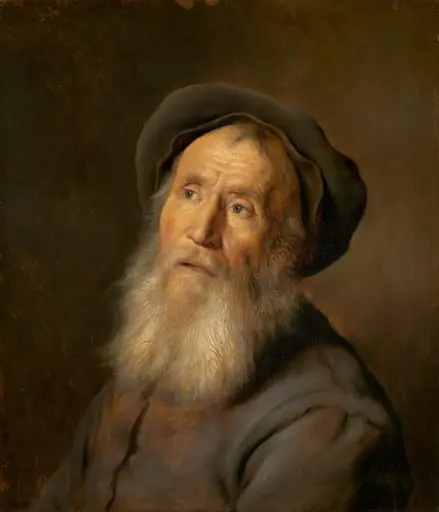
The subject is an older man, identified only by his physicality: thick lips, a full beard, and closely cropped, wavy hair. His gaze is directed slightly off-center, suggesting quiet introspection rather than formal presentation. No attributes or symbols are present, emphasizing the rawness of the individual. Lievens focuses on the dignity of ordinary features, avoiding idealization in favor of observational truth.
Technique & Style
Lievens employed etching, using acid to bite lines into a metal plate after drawing through a wax ground. The texture of the beard and hair emerges from dense, overlapping strokes and varied line weights, creating a tactile sense of volume. Rough, uneven contours and deliberate ink pooling give the image a gritty, almost sculptural quality, distinguishing it from smoother contemporary portraits.
History & Provenance
Produced during Lievens’ time in Amsterdam, this etching reflects his active engagement with printmaking before his later travels to London, Antwerp, and other European courts. While few of his prints survive in large numbers, this work is among the more recognized examples of his graphic output. Its provenance traces through private collections and institutional holdings focused on Dutch 17th-century prints.
Context
In 1640s Amsterdam, etching was a favored medium for artists seeking to explore likeness and expression beyond oil painting. Lievens, alongside Rembrandt, helped elevate printmaking as a serious artistic pursuit. This bust aligns with a broader trend of psychological portraiture, where individuality and texture replaced ceremonial formality, reflecting the era’s growing interest in the human condition.
Legacy
Though Lievens’ reputation later waned compared to Rembrandt’s, this etching remains a testament to his technical fluency and sensitivity to facial expression. It influenced later generations of printmakers who valued directness and emotional resonance over decorative finish. Today, it is studied as a key example of how etching could convey character with minimal means.
Own this work as a print
Artist & collection
Artist
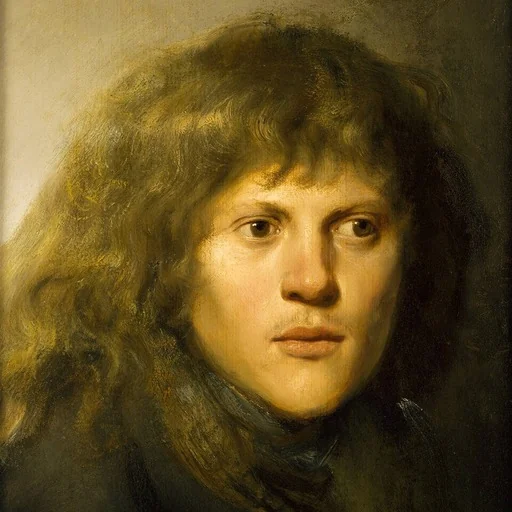
Jan Lievens (24 October 1607 – 4 June 1674) was a Dutch Golden Age painter who was associated with his close contemporary Rembrandt, a year older, in the early parts of their careers.