Artwork
Il Colosseo e l'Arco di Costantino from "Prospectus Locurum Urbis Romae Insign[ium]"
![Il Colosseo e l'Arco di Costantino from "Prospectus Locurum Urbis Romae Insign[ium]", by Lievin Cruyl, 1666](https://artifactworldgallery.com/img/lievin-cruyl--il-colosseo-e-l-arco-di-costantino-from-prospectus-locurum-u--58cf837a9205c4ff-w1024.webp)
Il Colosseo e l'Arco di Costantino from "Prospectus Locurum Urbis Romae Insign[ium]" is a print by the Baroque artist Lievin Cruyl. It dates from 1666 and is held in the collection of the Cleveland Museum of Art.
About this work
Overview
This 1666 etching by Lievin Cruyl depicts two monumental Roman structures—the Colosseum and the Arch of Constantine—viewed from a slight distance.
This 1666 etching by Lievin Cruyl depicts two monumental Roman structures—the Colosseum and the Arch of Constantine—viewed from a slight distance. Part of a series documenting Rome’s ancient landmarks, the print captures the city’s layered history through precise architectural rendering. The composition balances foreground details with distant ruins, emphasizing scale and spatial depth through careful linear perspective.
Subject & Meaning
The scene centers on Rome’s enduring imperial architecture, juxtaposing the Colosseum’s grand arcades with the triumphal Arch of Constantine. Figures scattered along the paths suggest daily life amid ancient remains, reinforcing the continuity between antiquity and the 17th-century city. The print functions as both topographical record and quiet meditation on time’s passage over monumental ruins.
Technique & Style
Cruyl employed fine-line etching to render intricate textures—stone weathering, clothing folds, and architectural ornamentation—with meticulous control. Monochromatic tones of gray, brown, and sepia create subtle gradations of light and shadow, enhancing three-dimensionality. The composition avoids dramatic flair, favoring clarity and observational accuracy typical of topographical draftsmanship of the period.
History & Provenance
Created during Cruyl’s travels in Italy, this print was published in the 1666 collection 'Prospectus Locurum Urbis Romae Insignium,' a series of views commissioned to document Rome’s antiquities. The work entered the Cleveland Museum of Art’s collection through established European print acquisitions, reflecting early modern interest in classical archaeology and urban documentation.
Context
In mid-17th-century Europe, detailed architectural views of Rome were sought by scholars, travelers, and collectors drawn to classical antiquity. Cruyl’s work aligns with a broader trend of topographical prints produced by Flemish and Dutch artists, who combined artistic skill with cartographic precision to satisfy intellectual curiosity about the ancient world.
Legacy
Cruyl’s prints contributed to the visual record of Rome’s ruins during a period of renewed scholarly interest in antiquity. While not widely known today, his precise renderings influenced later topographers and provided reference material for architects and historians. The work remains a valuable artifact of early modern documentation practices in art and urban studies.
Artist & collection

Artist
Lievin Cruyl or Lieven Cruyl was a Flemish priest and a draughtsman and etcher of landscapes, seascapes, and architectural views.

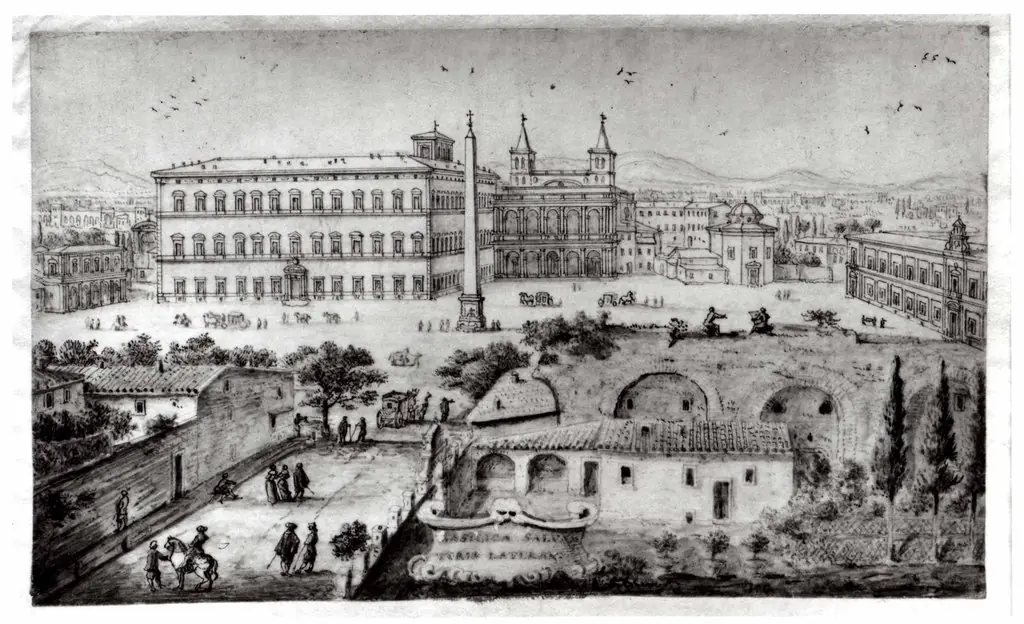 View of Lateran, Rome
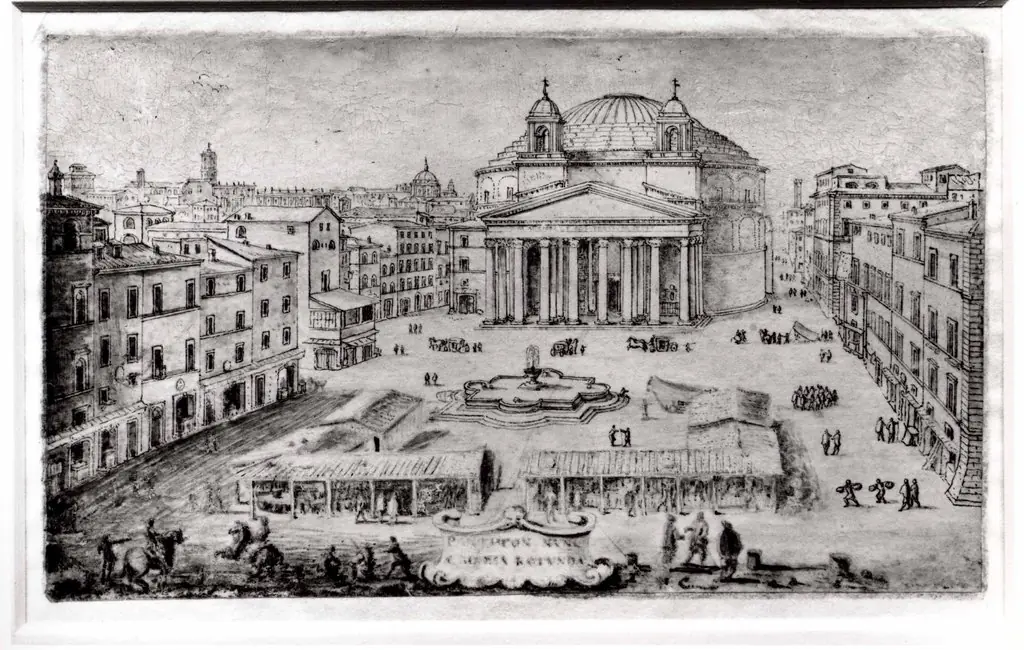 View of the Pantheon, Rome
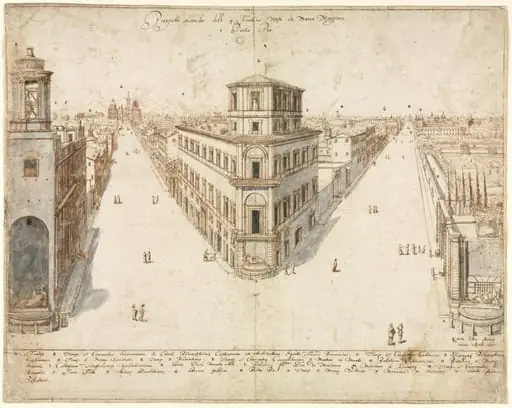 Eighteen Views of Rome: The Quattro Fontane Looking Toward Santa Maria Maggiore
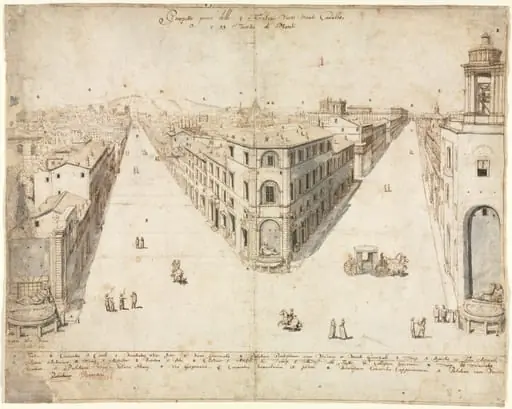 Eighteen Views of Rome: The Quattro Fontane Looking Toward Monte Cavallo
 Sketch for San Giovanni in Laterano (verso)
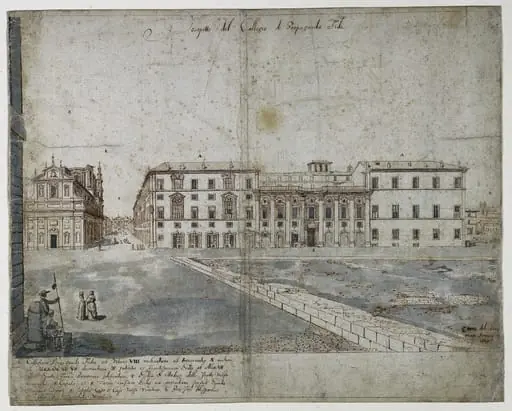 Eighteen Views of Rome: The Collegio di Propaganda Fide (recto)
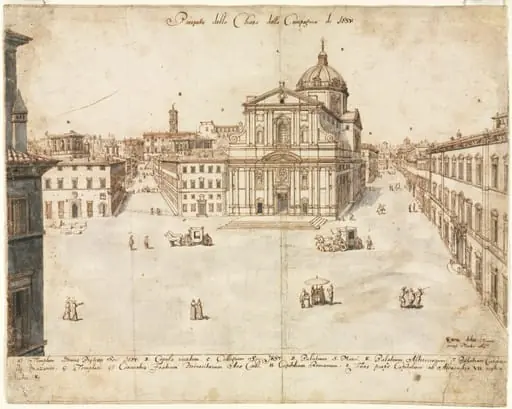 Eighteen Views of Rome: The Church of the Gesù
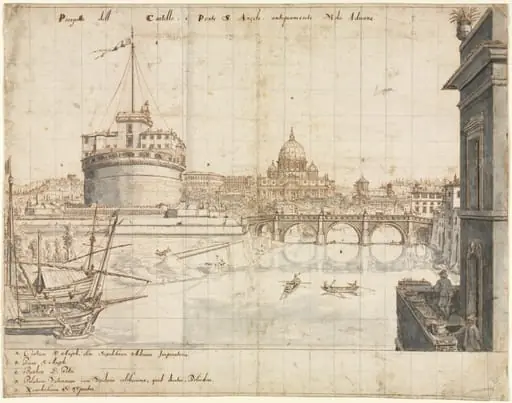 Eighteen Views of Rome: The Castel Sant'Angelo
![Trajan's Column from "Prospectus Locurum Urbis Romae Insign[ium], by Lievin Cruyl](https://artifactworldgallery.com/img/lievin-cruyl--trajan-s-column-from-prospectus-locurum-urbis-romae-insign-i--c73234b8c33c621b-w320.webp) Trajan's Column from "Prospectus Locurum Urbis Romae Insign[ium]
Trajan's Column from "Prospectus Locurum Urbis Romae Insign[ium]![S. Giovanni in Laterano from "Prospectus Locurum Urbis Romae Insign[ium]", by Lievin Cruyl](https://artifactworldgallery.com/img/lievin-cruyl--s-giovanni-in-laterano-from-prospectus-locurum-urbis-romae-i--f90e4b21a3cc4a52-w320.webp) S. Giovanni in Laterano from "Prospectus Locurum Urbis Romae Insign[ium]"
S. Giovanni in Laterano from "Prospectus Locurum Urbis Romae Insign[ium]"![St. Angelo from "Prospectus Locurum Urbis Romae Insign[ium], by Lievin Cruyl](https://artifactworldgallery.com/img/lievin-cruyl--st-angelo-from-prospectus-locurum-urbis-romae-insign-ium--b52698c9c51ea586-w320.webp) St. Angelo from "Prospectus Locurum Urbis Romae Insign[ium]
St. Angelo from "Prospectus Locurum Urbis Romae Insign[ium]![Foro Romano from "Prospectus Locurum Urbis Romae Insign[ium]", by Lievin Cruyl](https://artifactworldgallery.com/img/lievin-cruyl--foro-romano-from-prospectus-locurum-urbis-romae-insign-ium--30ee5e2aeedd53b6-w320.webp) Foro Romano from "Prospectus Locurum Urbis Romae Insign[ium]"
Foro Romano from "Prospectus Locurum Urbis Romae Insign[ium]"![Piazza Navona from "Prospectus Locurum Urbis Romae Insign[ium], by Lievin Cruyl](https://artifactworldgallery.com/img/lievin-cruyl--piazza-navona-from-prospectus-locurum-urbis-romae-insign-ium--d113d99e439c18eb-w320.webp) Piazza Navona from "Prospectus Locurum Urbis Romae Insign[ium]
Piazza Navona from "Prospectus Locurum Urbis Romae Insign[ium]!["Prospectus Locurum Urbis Romae Insign[ium]", by Lievin Cruyl](https://artifactworldgallery.com/img/lievin-cruyl--prospectus-locurum-urbis-romae-insign-ium--6578cced479e149d-w320.webp) "Prospectus Locurum Urbis Romae Insign[ium]"
"Prospectus Locurum Urbis Romae Insign[ium]"![Piazza del Popolo from "Prospectus Locurum Urbis Romae Insign[ium]", by Lievin Cruyl](https://artifactworldgallery.com/img/lievin-cruyl--piazza-del-popolo-from-prospectus-locurum-urbis-romae-insign--f9ac7057c7d8e5e8-w320.webp) Piazza del Popolo from "Prospectus Locurum Urbis Romae Insign[ium]"
Piazza del Popolo from "Prospectus Locurum Urbis Romae Insign[ium]"![St. Peter's Basilica from "Prospectus Locurum Urbis Romae Insign[ium]", by Lievin Cruyl](https://artifactworldgallery.com/img/lievin-cruyl--st-peter-s-basilica-from-prospectus-locurum-urbis-romae-insi--8f0dc2c2d6e2a83e-w320.webp) St. Peter's Basilica from "Prospectus Locurum Urbis Romae Insign[ium]"
St. Peter's Basilica from "Prospectus Locurum Urbis Romae Insign[ium]"![Piazza Colonna from "Prospectus Locurum Urbis Romae Insign[ium]", by Lievin Cruyl](https://artifactworldgallery.com/img/lievin-cruyl--piazza-colonna-from-prospectus-locurum-urbis-romae-insign-iu--4b674f0f1b994d08-w320.webp) Piazza Colonna from "Prospectus Locurum Urbis Romae Insign[ium]"
Piazza Colonna from "Prospectus Locurum Urbis Romae Insign[ium]"![Santa Maria Maggiore from "Prospectus Locurum Urbis Romae Insign[ium]", by Lievin Cruyl](https://artifactworldgallery.com/img/lievin-cruyl--santa-maria-maggiore-from-prospectus-locurum-urbis-romae-ins--552492caf03c6a55-w320.webp) Santa Maria Maggiore from "Prospectus Locurum Urbis Romae Insign[ium]"
Santa Maria Maggiore from "Prospectus Locurum Urbis Romae Insign[ium]"