Artwork
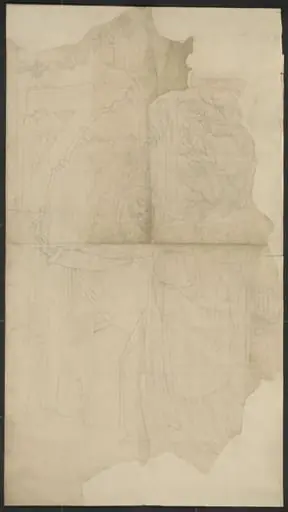
Sketch for San Giovanni in Laterano (verso)
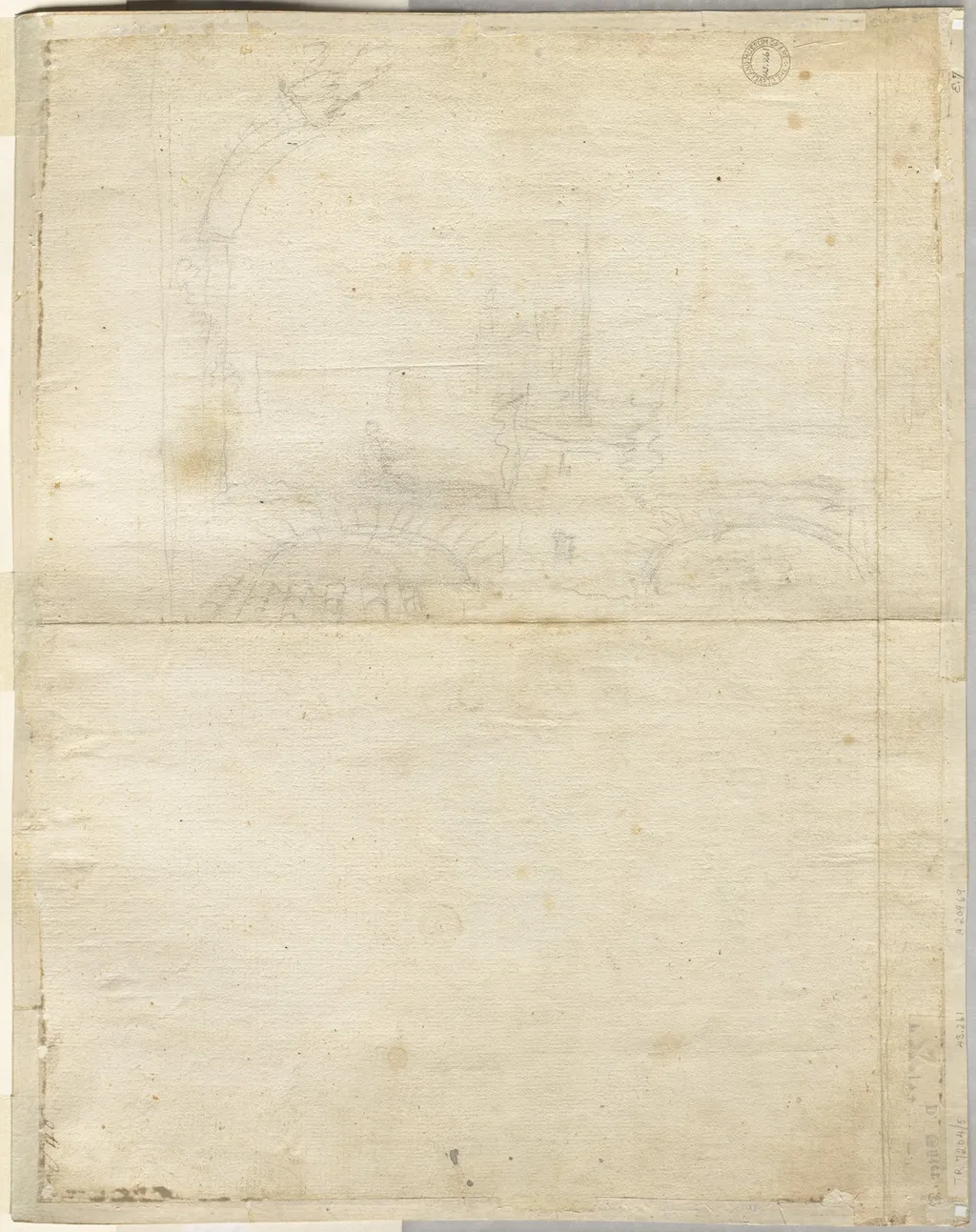
Sketch for San Giovanni in Laterano (verso) is a drawing by the Baroque artist Lievin Cruyl. It dates from 1664 and is held in the collection of the Cleveland Museum of Art.
About this work
Overview
Executed in pencil on paper, it presents a faint, partially erased composition that suggests an early architectural study.
This drawing, dated 1664, is attributed to Lievin Cruyl and resides in The Cleveland Museum of Art. Executed in pencil on paper, it presents a faint, partially erased composition that suggests an early architectural study. The verso side of a reused sheet, it bears signs of age—brown staining, minor tears, and a small institutional stamp in the upper right corner—indicating its long history as a working document rather than a finished piece.
Subject & Meaning
The faint pencil marks outline architectural forms likely related to San Giovanni in Laterano, Rome’s cathedral and a frequent subject of Cruyl’s studies. The sketch appears to capture structural elements—arches, columns, or vaults—in a provisional manner, indicating it served as a preliminary note for a larger project. Its incompleteness reflects the artist’s process: not a final image, but a moment of observation and planning.
Technique & Style
Cruyl employed light, loose pencil strokes, applying minimal pressure and later erasing much of the initial work. The remaining traces suggest rapid, observational drawing rather than detailed rendering. This method aligns with 17th-century architectural draftsmen who prioritized spatial understanding over finish. The sketch’s transparency and fragility emphasize its function as a tool, not a display object.
History & Provenance
The drawing was likely created during Cruyl’s time in Rome, where he documented buildings for European patrons. Its reuse as a verso implies practical resourcefulness common among artists of the period. The stamp and physical wear point to institutional handling over centuries, eventually leading to its acquisition by the Cleveland Museum of Art, where it survives as evidence of a working artist’s process.
Context
In mid-17th-century Rome, architects and draftsmen routinely made quick studies of ancient and contemporary structures. Cruyl’s sketch reflects this tradition, where drawings served as records for later commissions or publications. The practice of using the reverse side of older sheets was economical and common, especially among travelers who carried limited materials while documenting the city’s monuments.
Legacy
This drawing offers insight into the iterative nature of architectural design before the age of standardized plans. Its survival underscores the value placed on process over polish in early modern draftsmanship. Though unassuming, it remains a tangible link to how artists engaged with space, form, and memory—capturing fleeting ideas that might otherwise have been lost.
Artist & collection

Artist
Lievin Cruyl or Lieven Cruyl was a Flemish priest and a draughtsman and etcher of landscapes, seascapes, and architectural views.

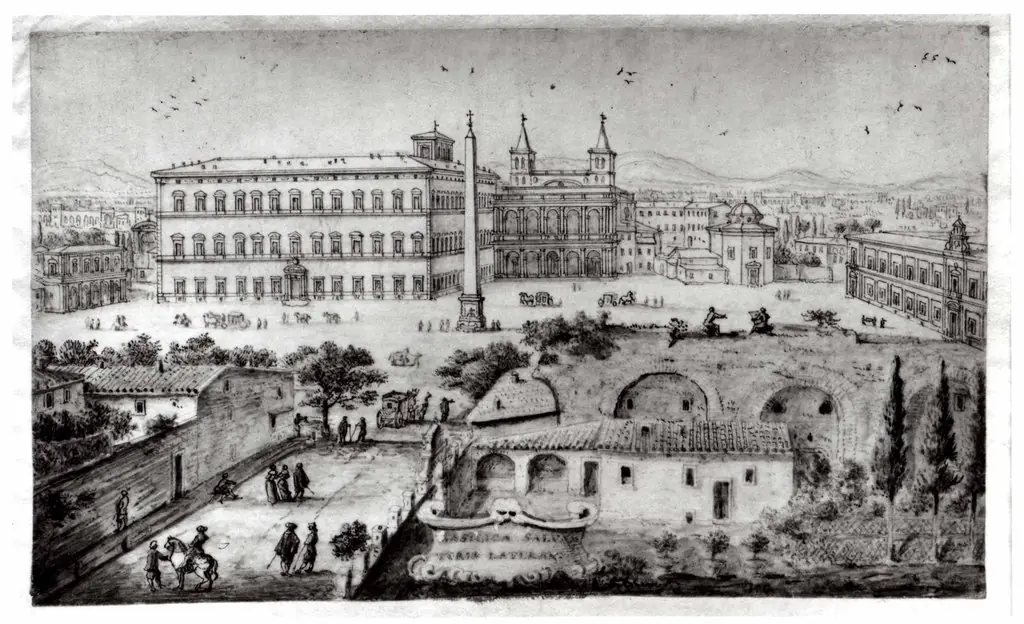 View of Lateran, Rome
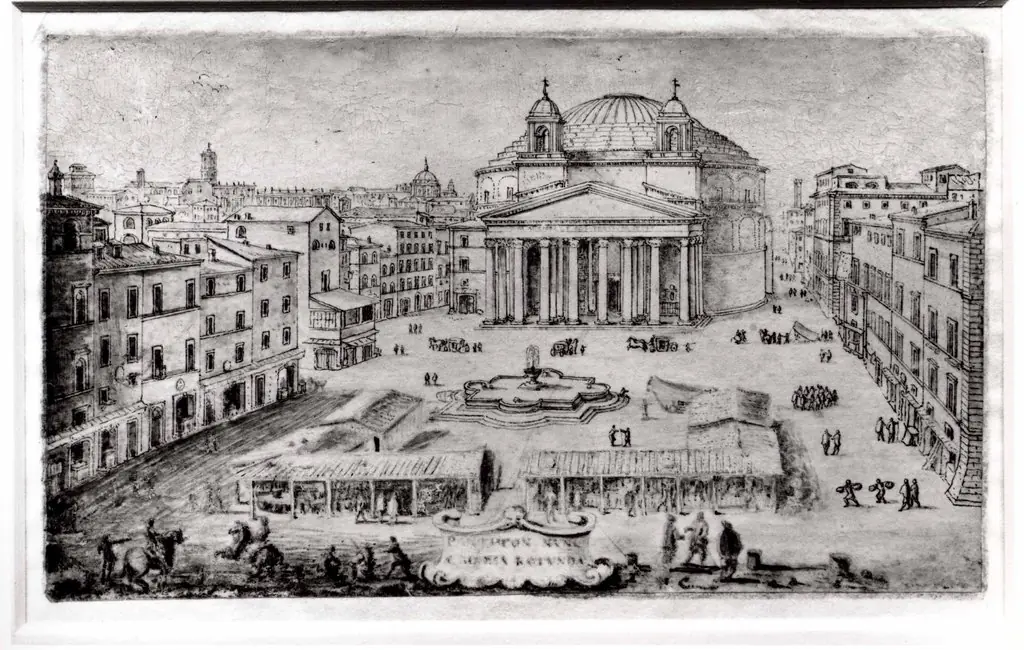 View of the Pantheon, Rome
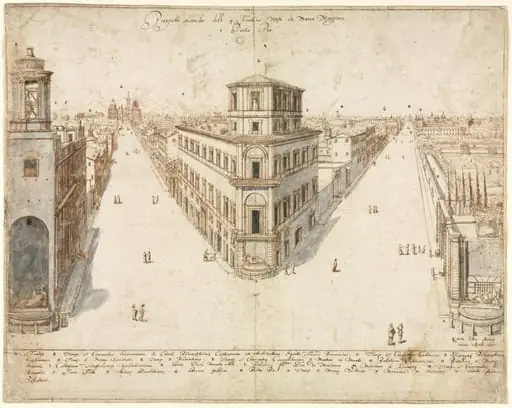 Eighteen Views of Rome: The Quattro Fontane Looking Toward Santa Maria Maggiore
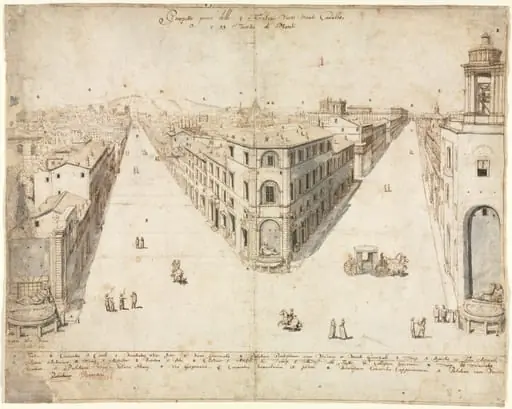 Eighteen Views of Rome: The Quattro Fontane Looking Toward Monte Cavallo
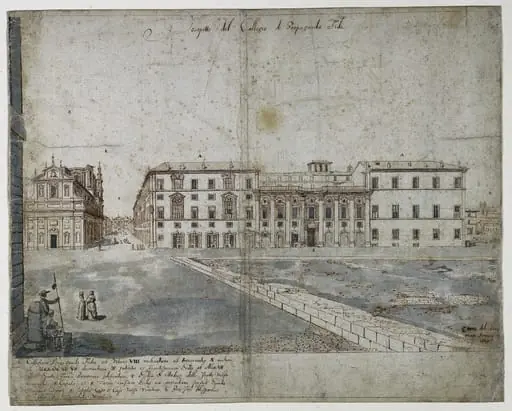 Eighteen Views of Rome: The Collegio di Propaganda Fide (recto)
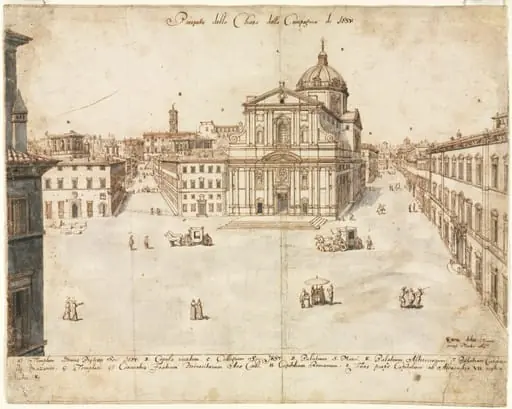 Eighteen Views of Rome: The Church of the Gesù
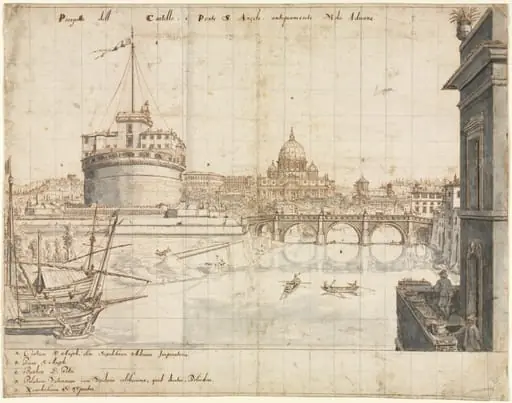 Eighteen Views of Rome: The Castel Sant'Angelo
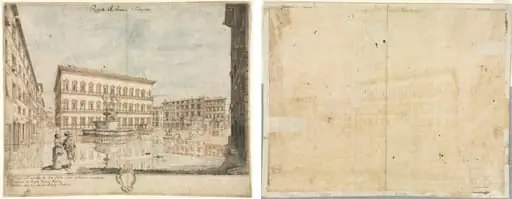 Eighteen Views of Rome: The Piazza Farnese (recto); Cartouche (verso)
 Sketch of a Child's Head (verso)
 The Head of Saint George and Architectural Plans (verso)
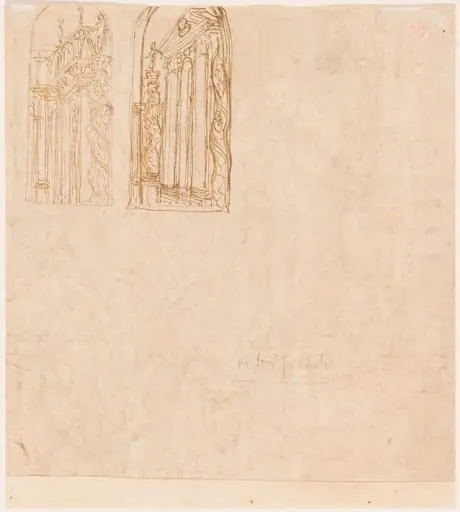 Two Architectural Studies
 Plan of the Farm House at the East End of Bishop's Hall
 Cartouche (verso)
 Classical Buildings above a Wall
 Architectural Fantasy on a Round Temple Enclosed with an Ambulatory (verso)
 Original cartoon for the decoration of panels in the Grill Room of the Victoria and Albert Museum; "January."