Artwork
St. Angelo from "Prospectus Locurum Urbis Romae Insign[ium]
![St. Angelo from "Prospectus Locurum Urbis Romae Insign[ium], by Lievin Cruyl, 1666](https://artifactworldgallery.com/img/lievin-cruyl--st-angelo-from-prospectus-locurum-urbis-romae-insign-ium--b52698c9c51ea586-w1024.webp)
St. Angelo from "Prospectus Locurum Urbis Romae Insign[ium] is a print by the Baroque artist Lievin Cruyl. It dates from 1666 and is held in the collection of the Cleveland Museum of Art.
About this work
Overview
Created in 1666 by Lievin Cruyl, this print is part of a series documenting notable sites in Rome. Executed as a detailed etching, it captures the Castel Sant’Angelo and its surrounding riverscape with precision. The work belongs to the collection of The Cleveland Museum of Art and reflects the topographical interest of 17th-century Flemish artists traveling through Italy.
Subject & Meaning
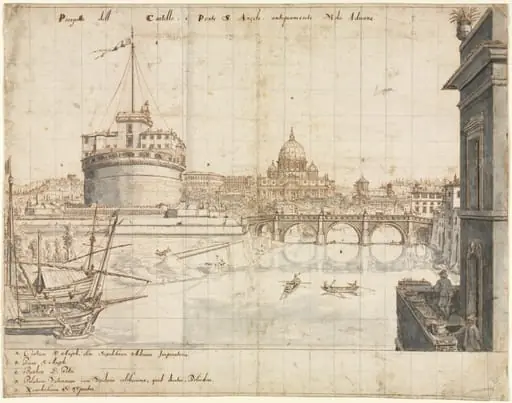
The composition emphasizes daily activity: pedestrians crossing a three-arched bridge, boats navigating the water, and figures engaged in fishing or rowing.
The scene centers on Castel Sant’Angelo, a Roman fortress with a commanding tower, positioned along the Tiber River. The composition emphasizes daily activity: pedestrians crossing a three-arched bridge, boats navigating the water, and figures engaged in fishing or rowing. These elements suggest a record of urban life rather than a purely ceremonial view, grounding the monument in its functional environment.
Technique & Style
Cruyl employed fine-line etching to render architectural detail and atmospheric depth. The sky is softly graded with subtle cloud forms, while the river and structures are defined by crisp, controlled strokes. Small figures are rendered with minimal detail yet clearly distinguishable, enhancing the sense of scale and movement without overwhelming the architectural focus.
History & Provenance
The print originates from Cruyl’s series Prospectus Locurum Urbis Romae Insignium, produced during his time in Rome in the 1660s. Likely intended for scholarly or aristocratic audiences, the series served as a visual guide to Rome’s landmarks. The Cleveland Museum of Art acquired the work as part of its broader collection of European prints from the early modern period.
Context
Cruyl’s work aligns with the Baroque era’s interest in spatial depth and observational detail. While not overtly dramatic, the print reflects the period’s shift toward documenting real places with accuracy. Similar views by contemporaries like van Heemskerck and Piranesi reveal a broader trend among Northern artists to record Roman antiquities with topographical rigor.
Legacy
Cruyl’s prints contributed to the visual documentation of Rome during a period of renewed scholarly interest in its architecture. Though less widely known than later engravers, his work provided a reference for travelers and antiquarians. The series remains a valuable record of Rome’s urban fabric before extensive 18th-century transformations.
Artist & collection

Artist
Lievin Cruyl or Lieven Cruyl was a Flemish priest and a draughtsman and etcher of landscapes, seascapes, and architectural views.

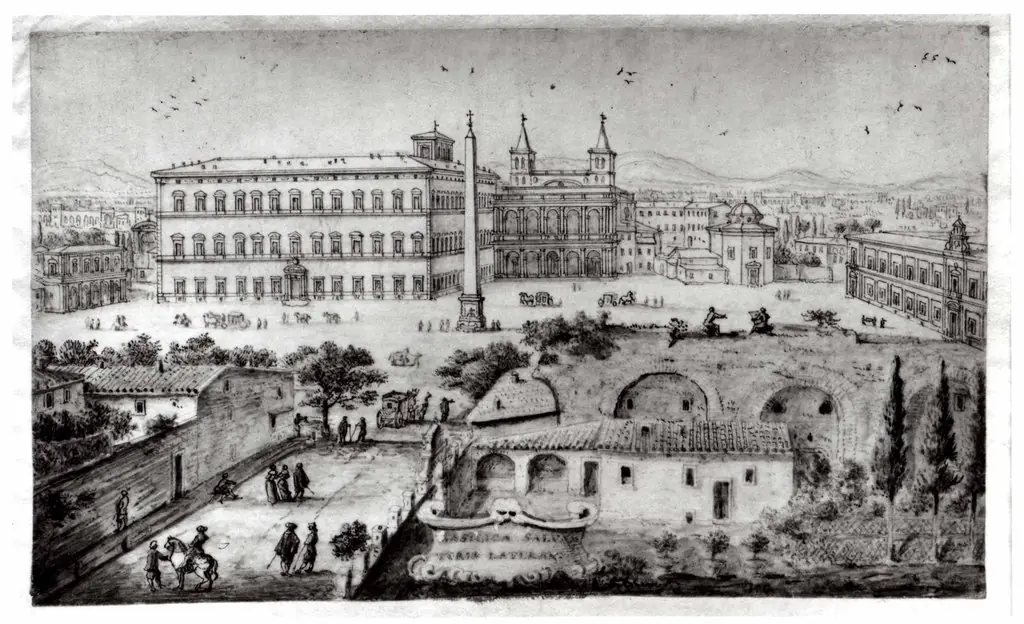 View of Lateran, Rome
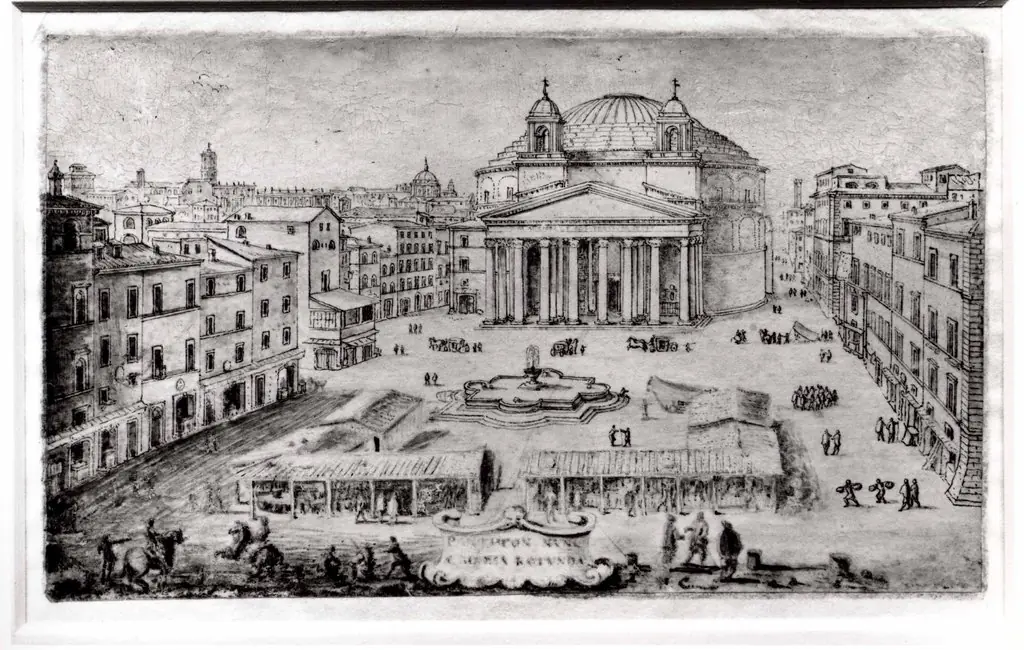 View of the Pantheon, Rome
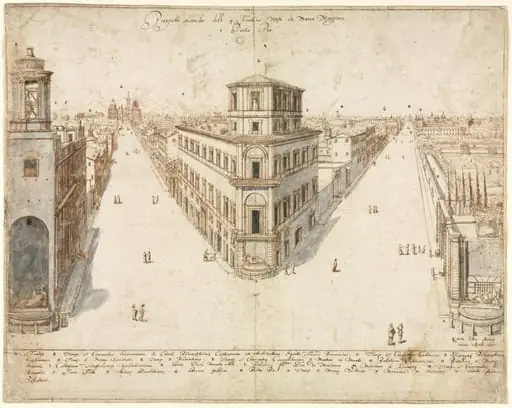 Eighteen Views of Rome: The Quattro Fontane Looking Toward Santa Maria Maggiore
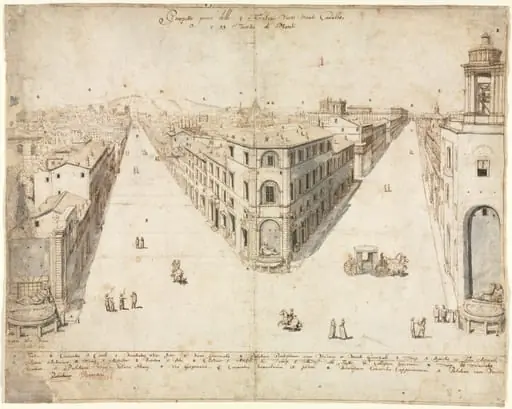 Eighteen Views of Rome: The Quattro Fontane Looking Toward Monte Cavallo
 Sketch for San Giovanni in Laterano (verso)
 Eighteen Views of Rome: The Collegio di Propaganda Fide (recto)
 Eighteen Views of Rome: The Church of the Gesù
 Eighteen Views of Rome: The Castel Sant'Angelo
![Piazza Navona from "Prospectus Locurum Urbis Romae Insign[ium], by Lievin Cruyl](https://artifactworldgallery.com/img/lievin-cruyl--piazza-navona-from-prospectus-locurum-urbis-romae-insign-ium--d113d99e439c18eb-w320.webp) Piazza Navona from "Prospectus Locurum Urbis Romae Insign[ium]
Piazza Navona from "Prospectus Locurum Urbis Romae Insign[ium]!["Prospectus Locurum Urbis Romae Insign[ium]", by Lievin Cruyl](https://artifactworldgallery.com/img/lievin-cruyl--prospectus-locurum-urbis-romae-insign-ium--6578cced479e149d-w320.webp) "Prospectus Locurum Urbis Romae Insign[ium]"
"Prospectus Locurum Urbis Romae Insign[ium]"![Piazza del Popolo from "Prospectus Locurum Urbis Romae Insign[ium]", by Lievin Cruyl](https://artifactworldgallery.com/img/lievin-cruyl--piazza-del-popolo-from-prospectus-locurum-urbis-romae-insign--f9ac7057c7d8e5e8-w320.webp) Piazza del Popolo from "Prospectus Locurum Urbis Romae Insign[ium]"
Piazza del Popolo from "Prospectus Locurum Urbis Romae Insign[ium]"![Foro Romano from "Prospectus Locurum Urbis Romae Insign[ium]", by Lievin Cruyl](https://artifactworldgallery.com/img/lievin-cruyl--foro-romano-from-prospectus-locurum-urbis-romae-insign-ium--30ee5e2aeedd53b6-w320.webp) Foro Romano from "Prospectus Locurum Urbis Romae Insign[ium]"
Foro Romano from "Prospectus Locurum Urbis Romae Insign[ium]"![Santa Maria Maggiore from "Prospectus Locurum Urbis Romae Insign[ium]", by Lievin Cruyl](https://artifactworldgallery.com/img/lievin-cruyl--santa-maria-maggiore-from-prospectus-locurum-urbis-romae-ins--552492caf03c6a55-w320.webp) Santa Maria Maggiore from "Prospectus Locurum Urbis Romae Insign[ium]"
Santa Maria Maggiore from "Prospectus Locurum Urbis Romae Insign[ium]"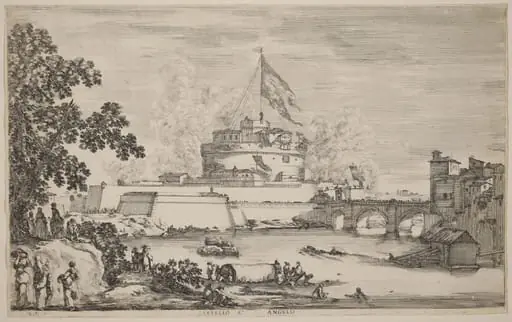 Castel Sant'Angelo, Rome
![Trajan's Column from "Prospectus Locurum Urbis Romae Insign[ium], by Lievin Cruyl](https://artifactworldgallery.com/img/lievin-cruyl--trajan-s-column-from-prospectus-locurum-urbis-romae-insign-i--c73234b8c33c621b-w320.webp) Trajan's Column from "Prospectus Locurum Urbis Romae Insign[ium]
Trajan's Column from "Prospectus Locurum Urbis Romae Insign[ium]![St. Peter's Basilica from "Prospectus Locurum Urbis Romae Insign[ium]", by Lievin Cruyl](https://artifactworldgallery.com/img/lievin-cruyl--st-peter-s-basilica-from-prospectus-locurum-urbis-romae-insi--8f0dc2c2d6e2a83e-w320.webp) St. Peter's Basilica from "Prospectus Locurum Urbis Romae Insign[ium]"
St. Peter's Basilica from "Prospectus Locurum Urbis Romae Insign[ium]"![Il Colosseo e l'Arco di Costantino from "Prospectus Locurum Urbis Romae Insign[ium]", by Lievin Cruyl](https://artifactworldgallery.com/img/lievin-cruyl--il-colosseo-e-l-arco-di-costantino-from-prospectus-locurum-u--58cf837a9205c4ff-w320.webp) Il Colosseo e l'Arco di Costantino from "Prospectus Locurum Urbis Romae Insign[ium]"
Il Colosseo e l'Arco di Costantino from "Prospectus Locurum Urbis Romae Insign[ium]"![Piazza Colonna from "Prospectus Locurum Urbis Romae Insign[ium]", by Lievin Cruyl](https://artifactworldgallery.com/img/lievin-cruyl--piazza-colonna-from-prospectus-locurum-urbis-romae-insign-iu--4b674f0f1b994d08-w320.webp) Piazza Colonna from "Prospectus Locurum Urbis Romae Insign[ium]"
Piazza Colonna from "Prospectus Locurum Urbis Romae Insign[ium]" View of the Castel Sant'Angelo in Rome