Artwork
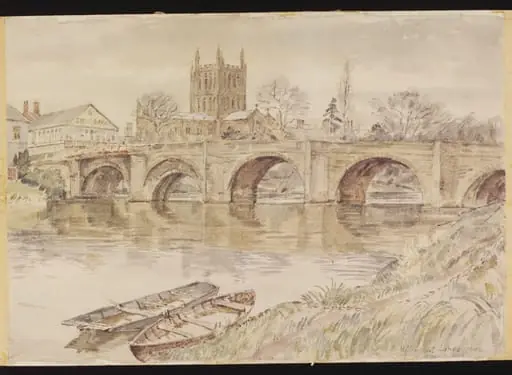
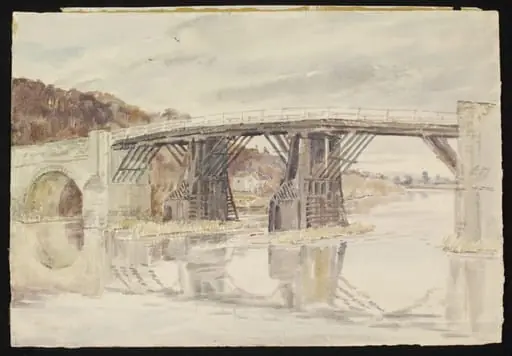
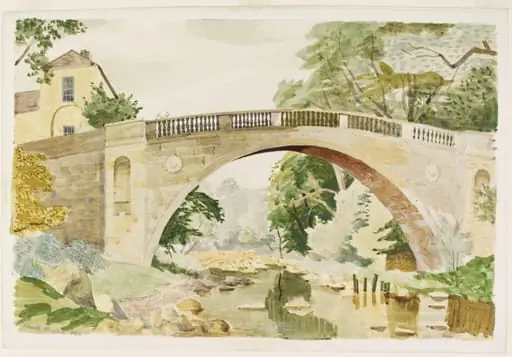
Lady Bridge over the Kennett and Avon Canal, Wilcot
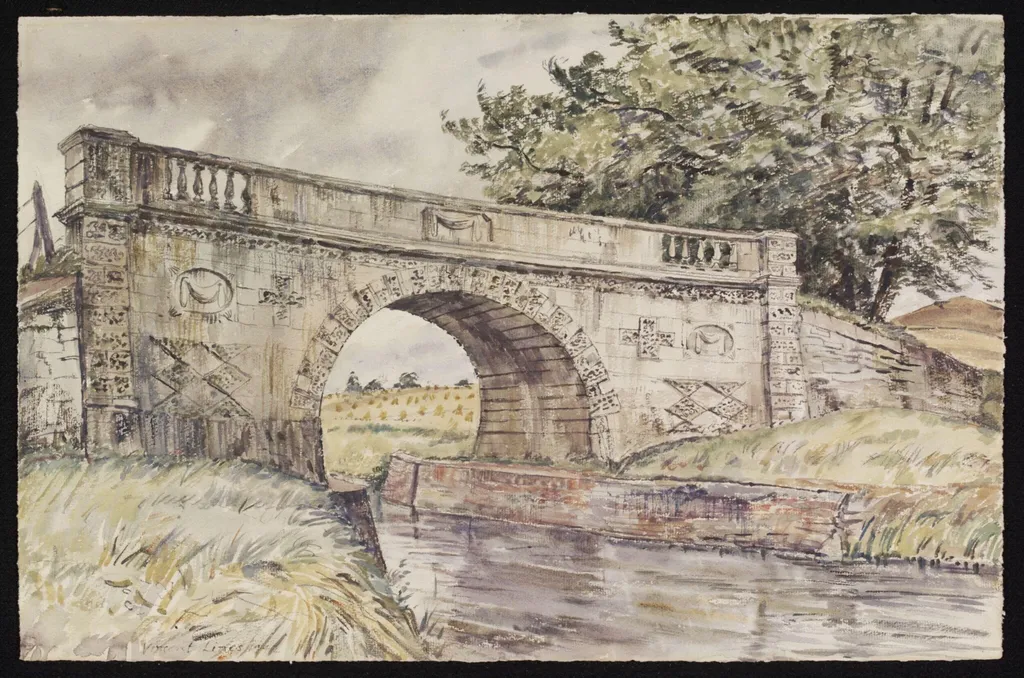
Lady Bridge over the Kennett and Avon Canal, Wilcot is a watercolor work on paper by Lines. It dates from 1942 and is held in the collection of the Victoria and Albert Museum.
About this work
Overview
Funded by the Pilgrim Trust under a Ministry of Labour scheme, it supported artists while preserving visual records of landscapes deemed vulnerable to change.
Painted in 1942 by artist John Lines, this watercolour captures Lady Bridge spanning the Kennett and Avon Canal near Wilcot. Created as part of the Recording Britain initiative, the work was commissioned to document rural English scenery during wartime. Funded by the Pilgrim Trust under a Ministry of Labour scheme, it supported artists while preserving visual records of landscapes deemed vulnerable to change.
Subject & Meaning
The bridge, a stone structure with a central arch and ornamental carvings of foliage, stands as a quiet emblem of enduring craftsmanship. Surrounded by calm water, trees, and a field of yellow blooms, the scene evokes a tranquil, unspoiled countryside. Its selection for the project reflects a broader effort to memorialize rural England’s quiet corners, perceived as threatened by modernization and wartime disruption.
Technique & Style
Lines employed soft, muted tones of green, brown, and grey to convey a subdued, overcast atmosphere. The watercolour technique allows for delicate washes that mirror the stillness of the canal’s surface and the diffused light of the sky. Fine detailing in the bridge’s carvings contrasts with the loose, atmospheric rendering of the background, balancing precision with lyrical tone.
History & Provenance
The painting was produced under the Recording Britain project, initiated by Sir Kenneth Clark to create a visual archive of the nation’s landscape during wartime. Commissioned works like this one were collected by the Victoria and Albert Museum, where the piece remains in the national collection. The project’s records were preserved as both cultural documentation and a form of artistic relief during national crisis.
Context
Created during the Second World War, the work emerged amid fears of landscape erosion from urban growth, agricultural change, and potential bombing. The Recording Britain initiative sought to capture scenes of everyday rural life—villages, bridges, churches—that were seen as culturally significant yet increasingly fragile. This painting is one of over 1,500 works produced under the scheme.
Legacy
The painting contributes to a broader historical archive of British topography from the early 20th century. As part of the Recording Britain collection, it continues to inform studies of wartime cultural policy and the role of art in preserving national identity. Its quiet realism offers a measured counterpoint to the upheavals of its time.
Artist & collection