Artwork
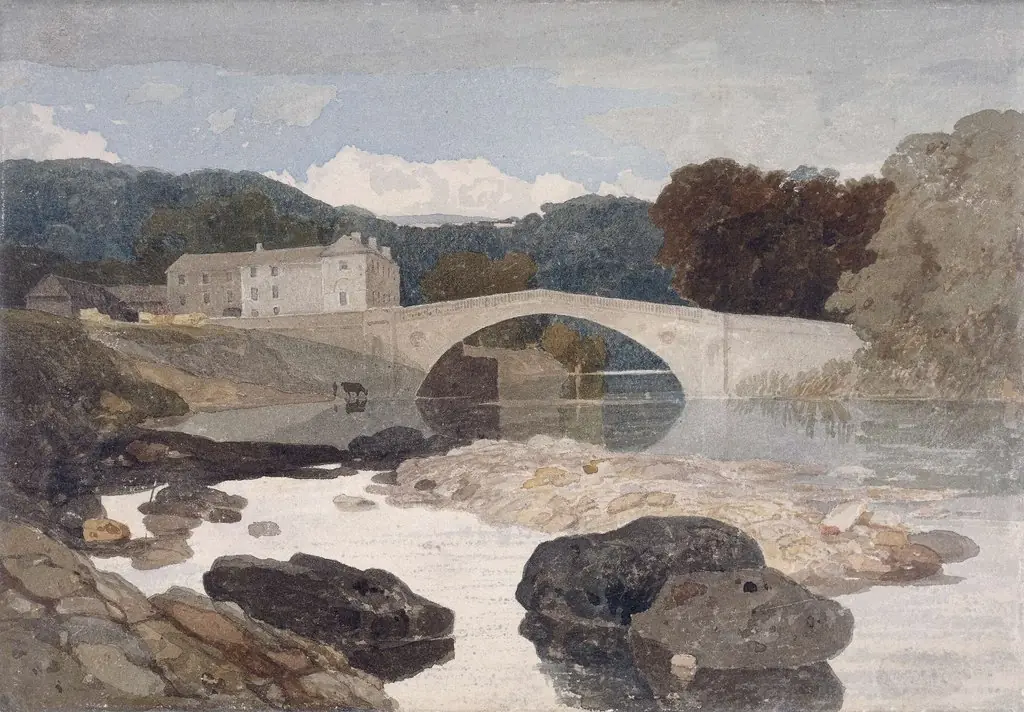
Greta Bridge
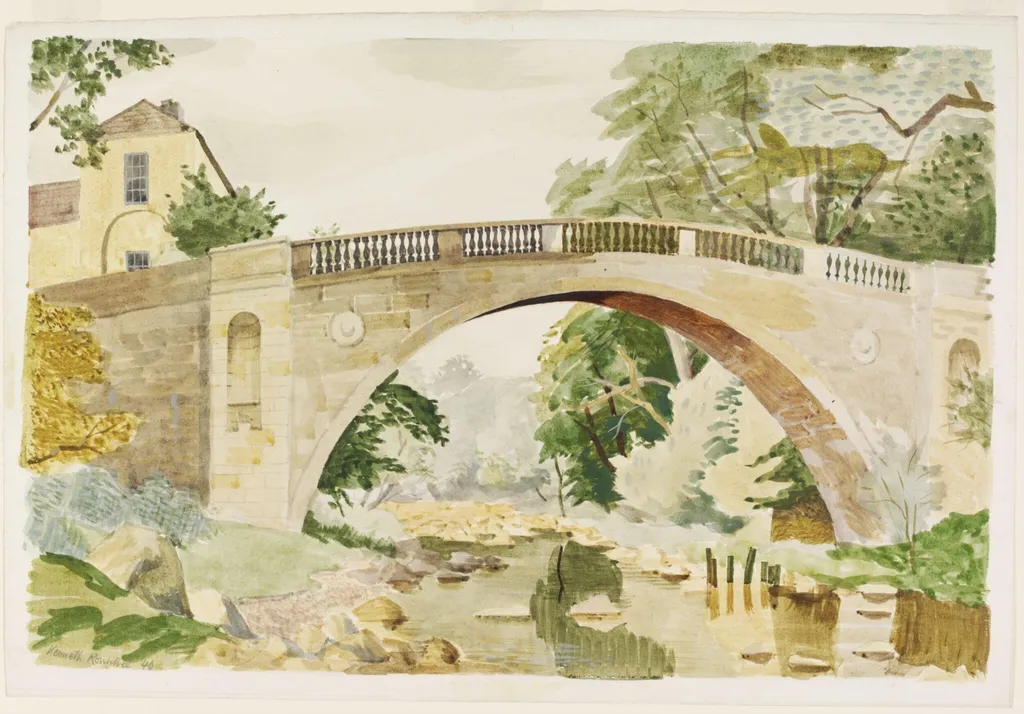
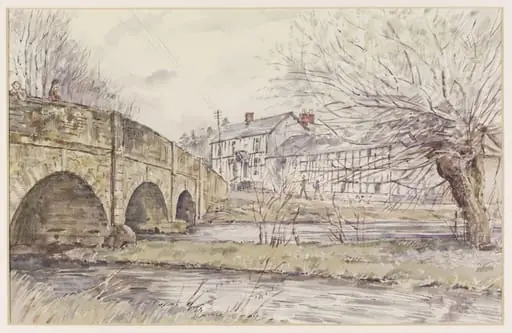
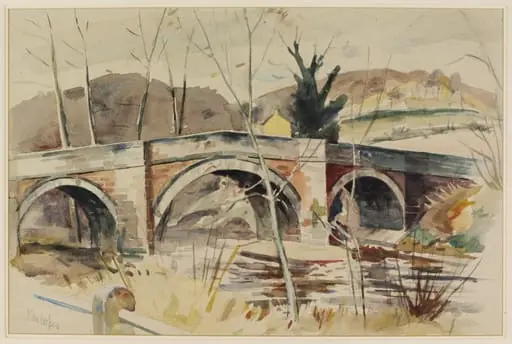
Greta Bridge is a watercolor work on paper by the Social Realist artist Rowntree. It dates from 1940 and is held in the collection of the Victoria and Albert Museum.
About this work
Overview
Created in 1940 by artist Rowntree, this watercolour is one of over 1,500 works produced for the Recording Britain project during the Second World War.
Created in 1940 by artist Rowntree, this watercolour is one of over 1,500 works produced for the Recording Britain project during the Second World War. Commissioned by the Pilgrim Trust and overseen by Sir Kenneth Clark, the initiative sought to preserve visual records of the British countryside amid threats from wartime destruction and modernization. Rowntree’s depiction of Greta Bridge contributes to a broader effort to capture quiet, everyday landscapes before they disappeared.
Subject & Meaning
The painting portrays a modest stone bridge spanning a shallow stream, flanked by trees and a small, unadorned building with a flat roof. The bridge’s arch acts as a framing device, obscuring the landscape beyond and directing attention to the immediate scene. This composition reflects the project’s emphasis on unassuming, locally significant sites—places that embodied continuity and regional character during a time of national uncertainty.
Technique & Style
Rowntree employed light, transparent watercolor washes to suggest the texture of weathered stone, foliage, and water. Brushwork is loose and economical, using quick strokes to imply form rather than define it precisely. The palette is restrained—soft greens, earthy browns, and pale yellows—enhancing the quiet, contemplative mood. The absence of sharp detail invites the viewer to perceive the scene as a fleeting, observed moment rather than a polished rendering.
History & Provenance
The painting was produced as part of the Recording Britain project, which operated between 1940 and 1943. It was collected alongside works by 97 other artists documenting rural and small-town England. The series was intended for public preservation, and many works, including this one, were later acquired by the Victoria and Albert Museum. Its survival reflects the project’s success in safeguarding visual records of a vanishing landscape.
Context
During the war, Britain faced widespread disruption, and the Recording Britain project emerged as a cultural response to impending loss. Artists were sent to record scenes deemed vulnerable to bombing, industrial encroachment, or rural decline. Greta Bridge, though unremarkable in scale, represented the ordinary English topography the project sought to preserve—offering a quiet counterpoint to wartime propaganda and destruction.
Legacy
The Recording Britain collection remains a vital archive of mid-20th-century English landscapes. Rowntree’s watercolour, like others in the series, provides insight into how artists responded to national crisis through observation rather than grandeur. Today, these works serve as historical documents, preserving the visual character of places that have since changed or vanished, offering a sober record of resilience through attention to the mundane.
Artist & collection

 Aymestry
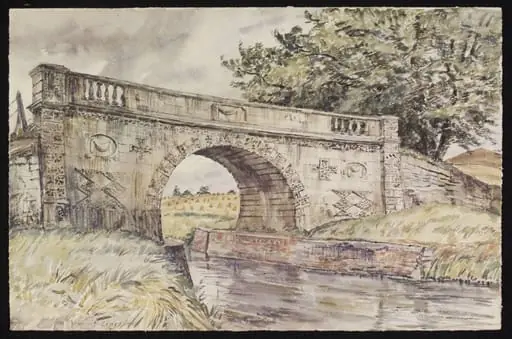 Lady Bridge over the Kennett and Avon Canal, Wilcot
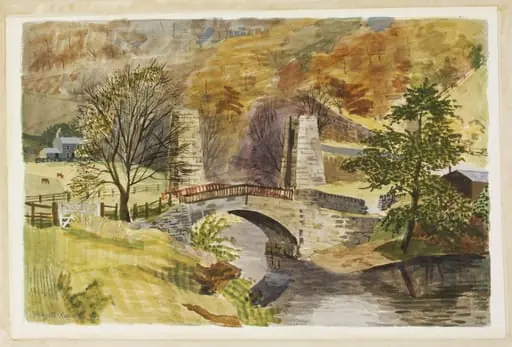 Bridge to Cox's Farm, Ashopton
 Ashberry Bridge (North side), Rievaulx
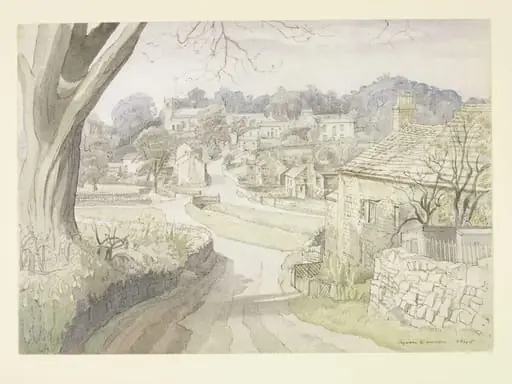 Downham Village, near Clitheroe, Lancashire
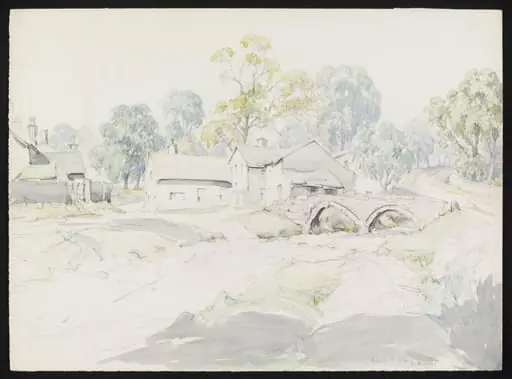 Wycoller Village
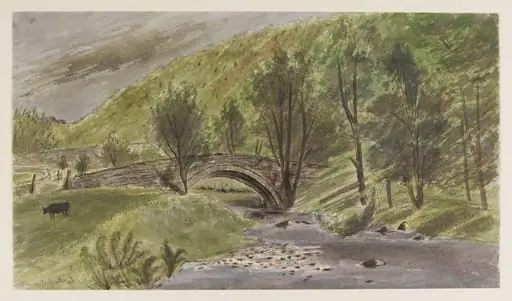 Dol-y-moch Bridge in the Maentwrog Valley, Merionethshire
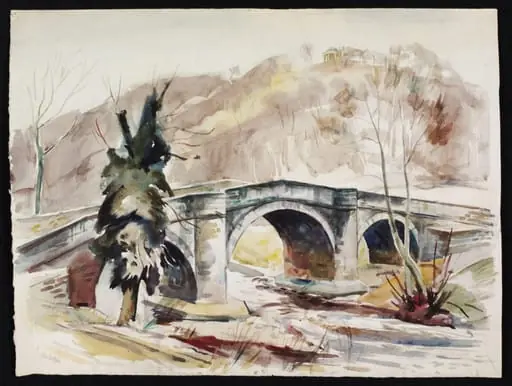 Ashberry Bridge (South side), Rievaulx
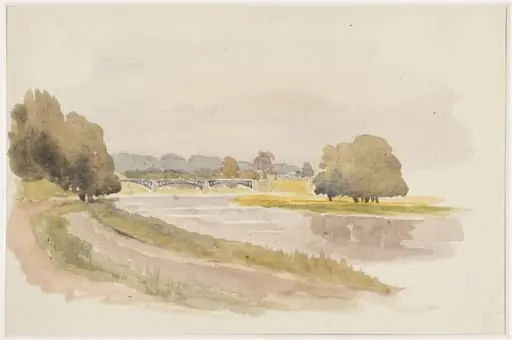 View of the bend of a river
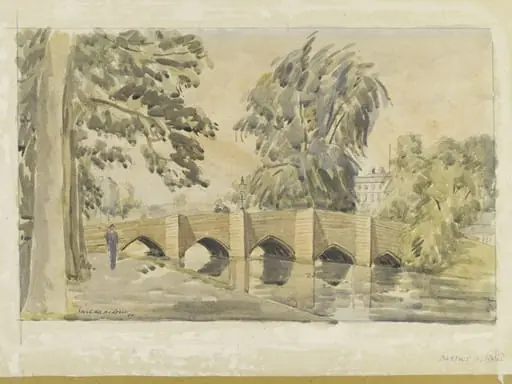 Bridge, Bakewell
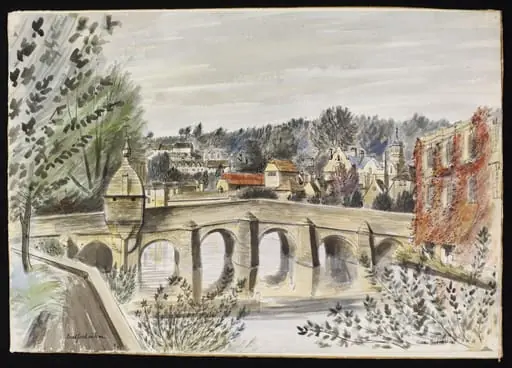 View of Bradford-on-Avon, with the bridge in the foreground
 Greta Bridge