Artwork
Charles Pierre Colardeau
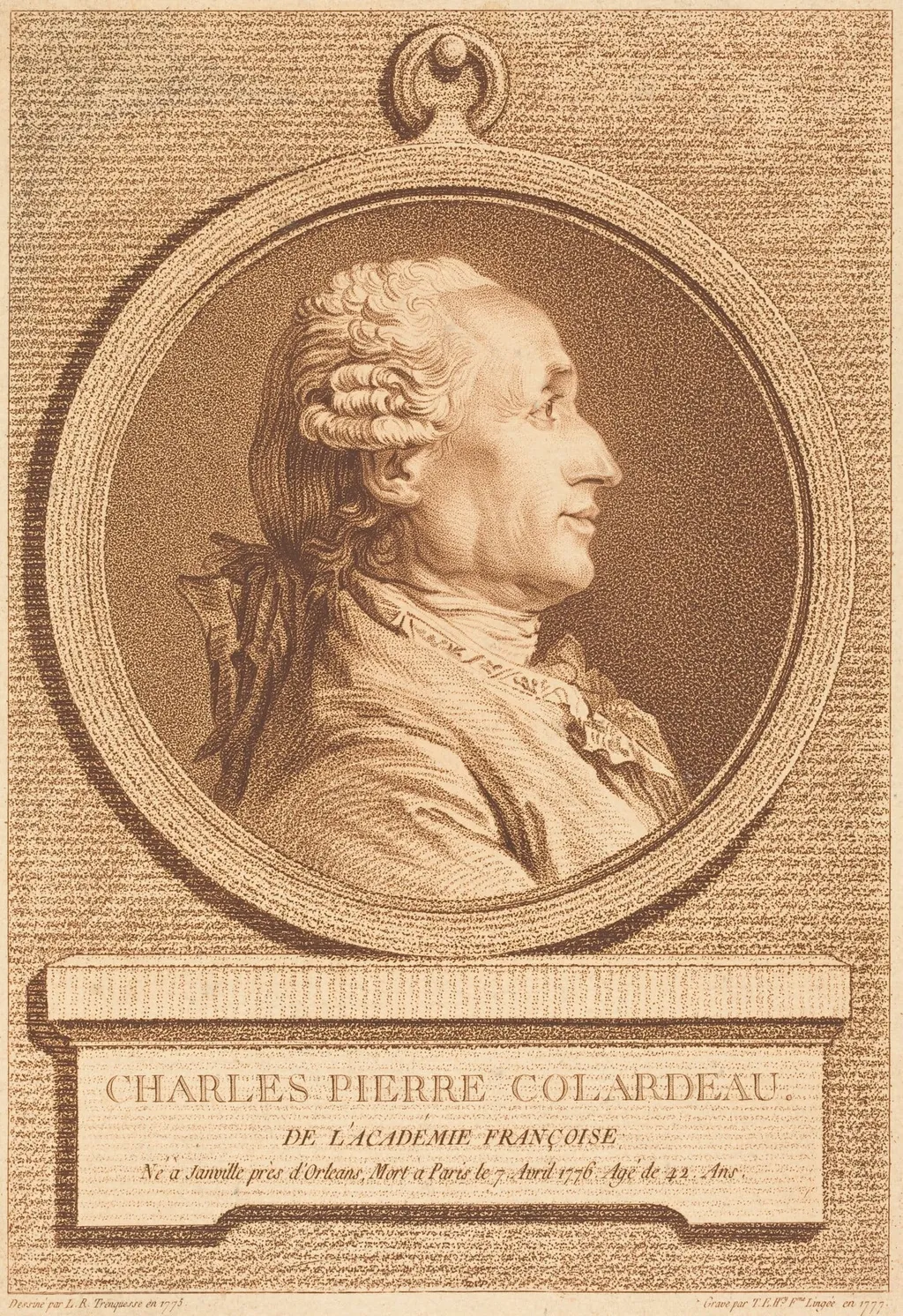
Charles Pierre Colardeau is a chalk print by the Romanticist artist Thérèse-Éléonore Lingée. It dates from 1777 and is held in the collection of the National Gallery of Art.
About this work
Overview
This 1777 print depicts Charles Pierre Colardeau, a French poet and translator, rendered in red chalk on laid paper by Thérèse-Éléonore Lingée.
This 1777 print depicts Charles Pierre Colardeau, a French poet and translator, rendered in red chalk on laid paper by Thérèse-Éléonore Lingée. The work is a portrait study, executed with a delicate, sketch-like quality that emphasizes subtle gradations of tone. Its restrained palette and intimate scale reflect the conventions of late 18th-century graphic portraiture, intended for private circulation rather than public display.
Subject & Meaning
Colardeau, known for his literary translations and engagement with Enlightenment thought, is portrayed with quiet dignity. His turned head and high collar suggest formality, while the soft rendering avoids overt heroism. The inclusion of his name and lifespan beneath the image functions as a biographical marker, aligning the portrait with the era’s practice of commemorating cultural figures through intimate graphic media.
Technique & Style
Lingée employed red chalk to achieve a warm, layered tonality, mimicking the spontaneity of a preparatory sketch. The soft blending and fine hatching create depth without sharp contours, characteristic of the chalk manner popular among French draftsmen. The plain background and oval frame focus attention on the face, reinforcing the portrait’s introspective character and technical restraint.
History & Provenance
Created in 1777, the print likely originated as a personal or scholarly tribute, given Colardeau’s literary standing and Lingée’s connections to Parisian intellectual circles. No public exhibition history is documented, suggesting it remained in private hands. Its survival reflects the value placed on such portraits as records of cultural identity during the pre-Revolutionary period.
Context
In the decades before the French Revolution, portrait prints in chalk were a favored medium for capturing intellectuals and artists. Lingée, one of the few documented female printmakers of her time, contributed to this tradition, often portraying literary figures. The format bridged the gap between fine art and printed ephemera, serving both commemorative and documentary purposes.
Legacy
Though Lingée’s oeuvre remains limited in public recognition, this work exemplifies the quiet precision of female draftsmen in 18th-century France. The portrait endures as a material trace of Colardeau’s cultural presence and a testament to the role of graphic art in preserving the likenesses of lesser-known literary figures beyond formal painting traditions.
Artist & collection