Artwork
Sir Robert Stapylton, Dramatic Poet and Translator
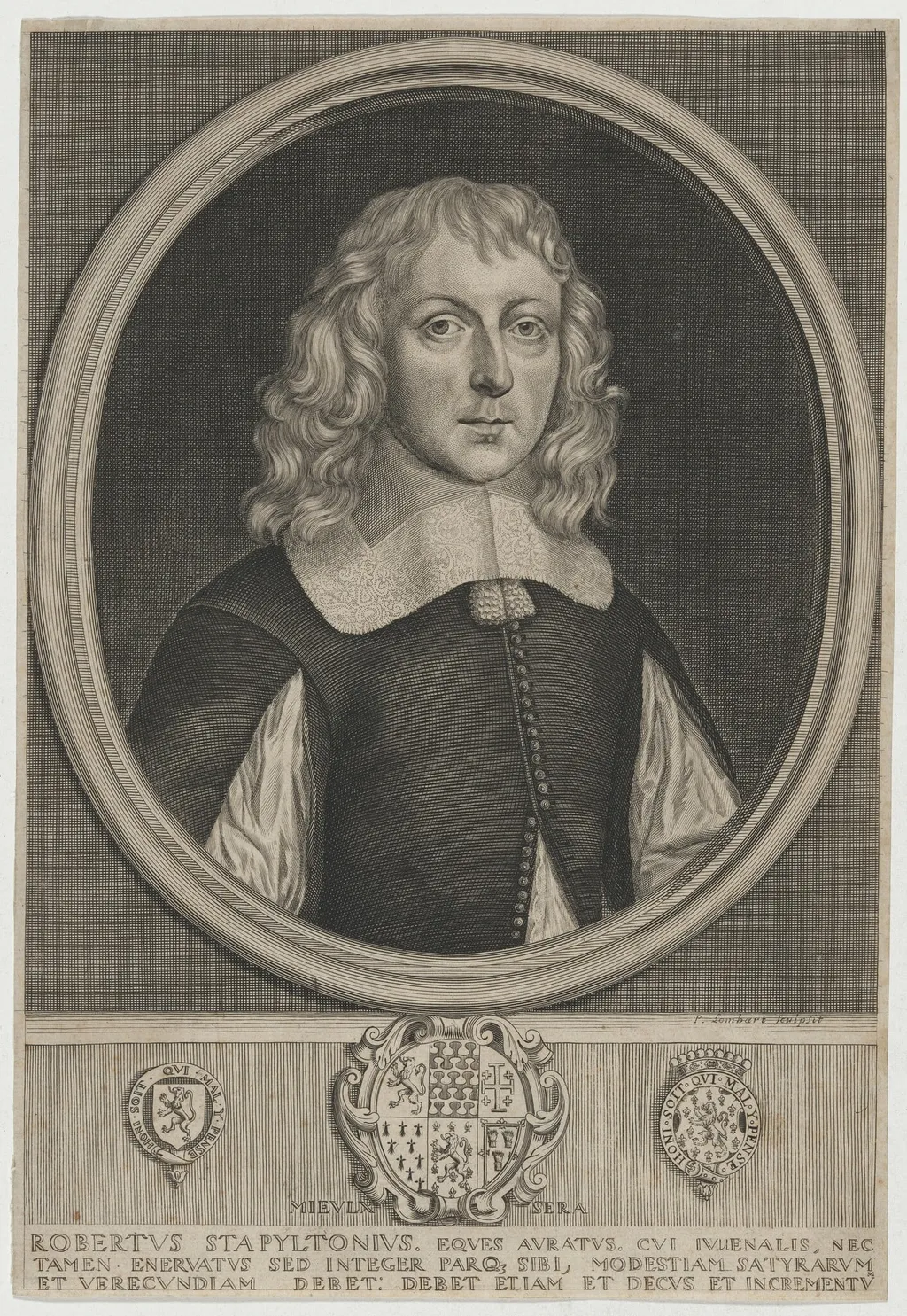
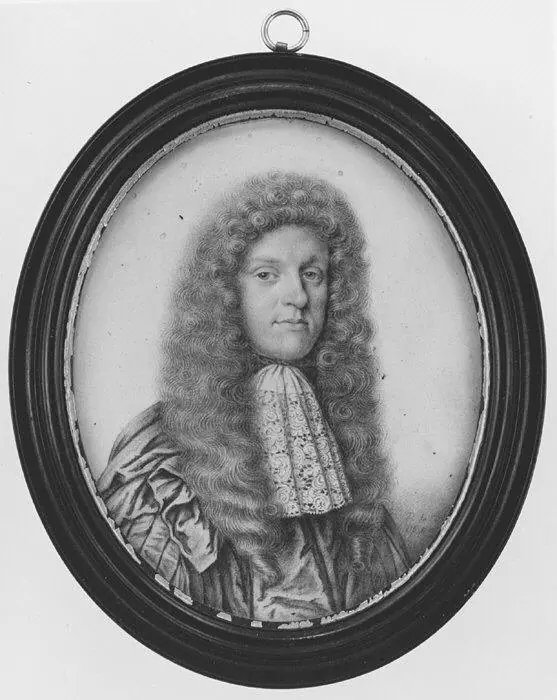
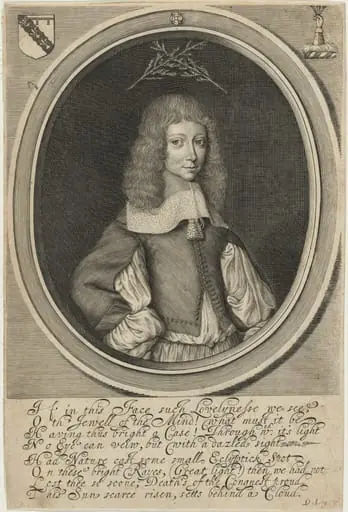
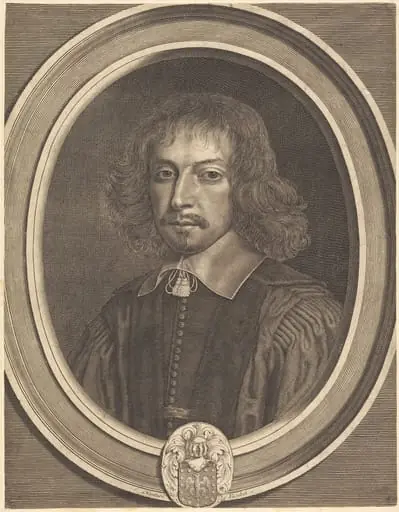
Sir Robert Stapylton, Dramatic Poet and Translator is an ink print by the Baroque artist David Loggan. It dates from 1660 and is held in the collection of the National Gallery of Art.
About this work
Overview
Rendered in monochrome, the portrait presents him in formal attire with a high collar and wide cuffs, his shoulder-length curls framing a composed expression.
This 1660 engraving by David Loggan depicts Sir Robert Stapylton, a 17th-century English dramatist and translator. Rendered in monochrome, the portrait presents him in formal attire with a high collar and wide cuffs, his shoulder-length curls framing a composed expression. The image is accompanied by heraldic symbols and Latin inscriptions, typical of scholarly portraiture of the period. Loggan’s precise line work captures subtle textures in fabric and skin, reflecting the era’s emphasis on detail and status.
Subject & Meaning
Sir Robert Stapylton was known for his translations of classical works and original plays, aligning him with the intellectual circles of Restoration England. The portrait emphasizes his scholarly identity rather than theatrical flair, with the inclusion of a coat of arms underscoring his social standing. His direct gaze and restrained posture convey dignity and intellectual gravitas, reinforcing his role as a cultured man of letters rather than a performer.
Technique & Style
Loggan employed fine, controlled engraving lines to model form and texture, particularly in the folds of Stapylton’s coat and the contours of his face. The absence of color heightens the focus on line and tone, a hallmark of 17th-century print portraiture. Shading is achieved through cross-hatching and delicate stippling, allowing for nuanced rendering of light and volume without relying on wash or tone. This method was standard for producing detailed, reproducible likenesses for elite patrons.
History & Provenance
Created in 1660, the engraving likely served as a commemorative portrait for Stapylton’s literary contributions during the early Restoration period. It may have been distributed among his peers or included in published collections of notable figures. Loggan, known for his portraits of Oxford and Cambridge scholars, often worked for academic and aristocratic patrons, suggesting this piece was commissioned to honor Stapylton’s status within learned circles.
Context
In post-Civil War England, portraiture in print became a tool for affirming social and intellectual identity. Engravings like this one circulated among educated elites, reinforcing cultural hierarchies. Stapylton’s inclusion alongside other scholars reflects a broader trend of visually documenting literary figures. The Latin text and heraldry align with continental traditions of humanist portraiture, signaling Stapylton’s alignment with classical learning and aristocratic values.
Legacy
Loggan’s engraving remains one of the few surviving visual records of Stapylton, preserving his likeness for later generations. While his literary works have faded from mainstream attention, the portrait endures as an example of Restoration-era print culture and the visual language of scholarly prestige. It contributes to the historical record of how intellectual identity was formally represented in 17th-century England.
Artist & collection