Artwork
Christopher Chelys Simpson
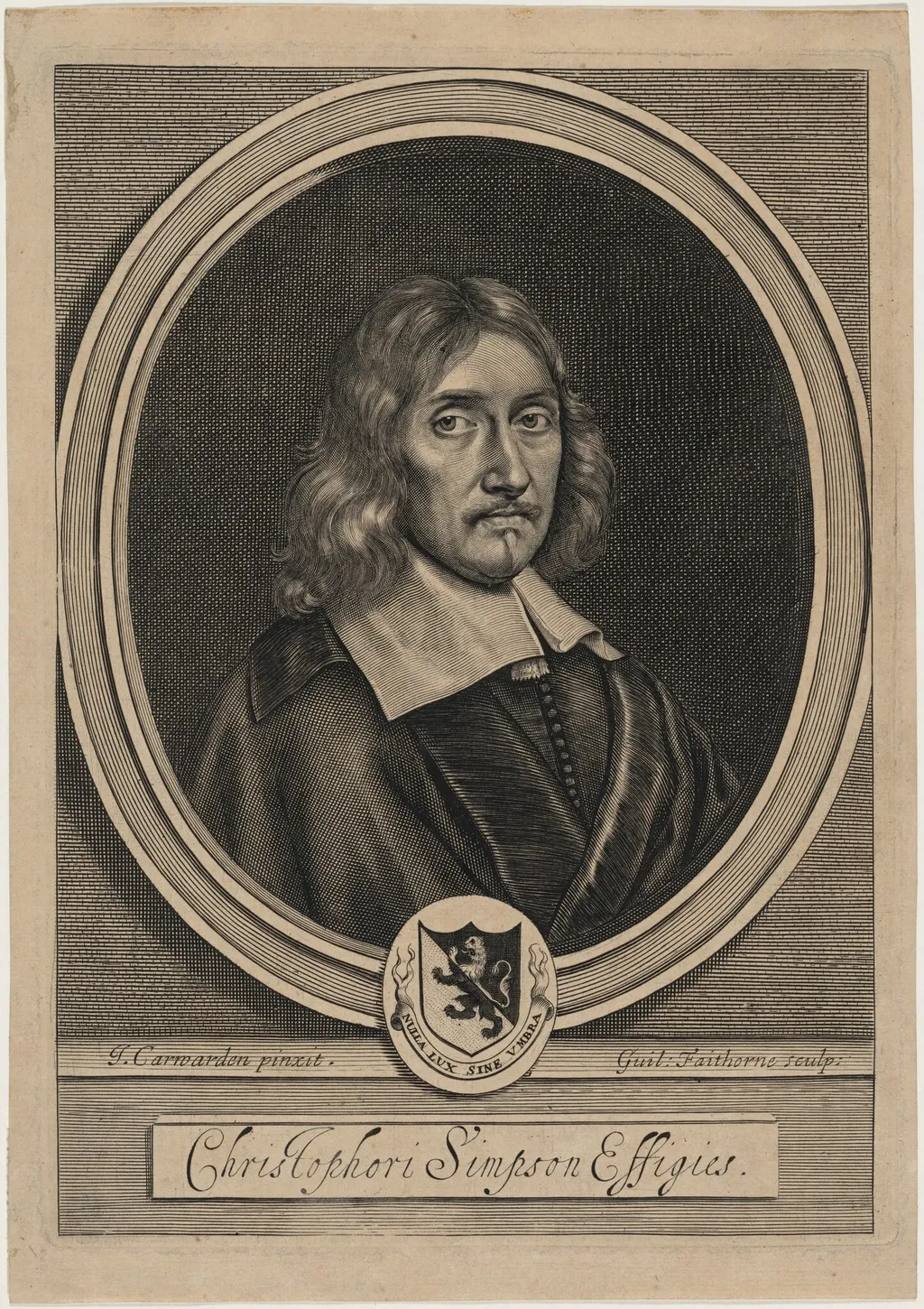
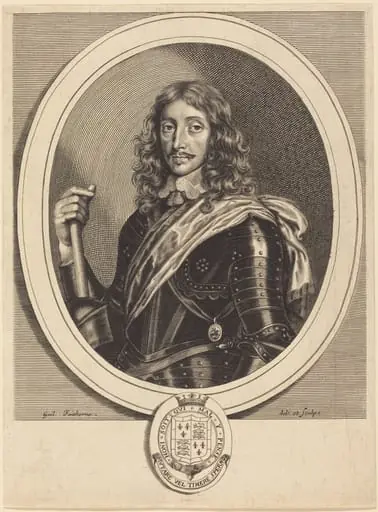
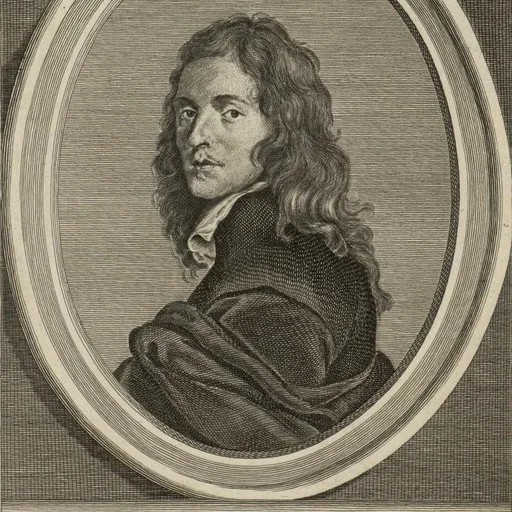
Christopher Chelys Simpson is an ink print by the Baroque artist William Faithorne. It dates from 1659 and is held in the collection of the National Gallery of Art.
About this work
Overview
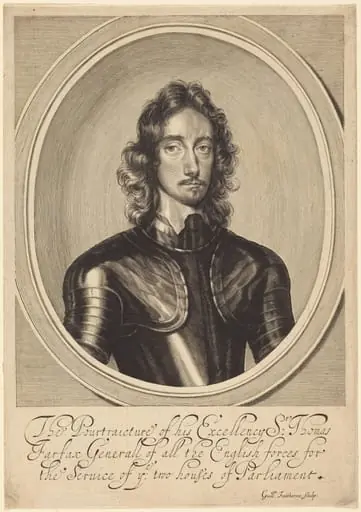
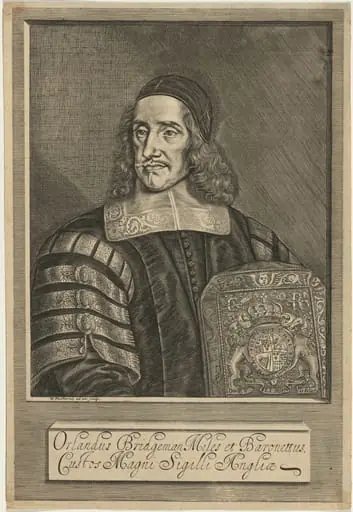
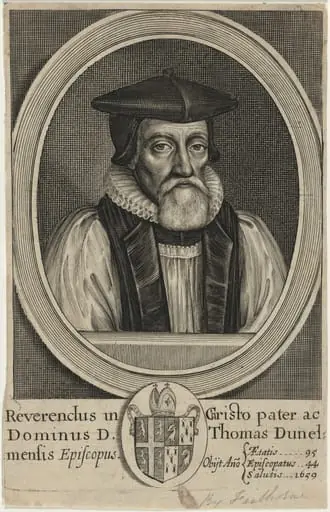
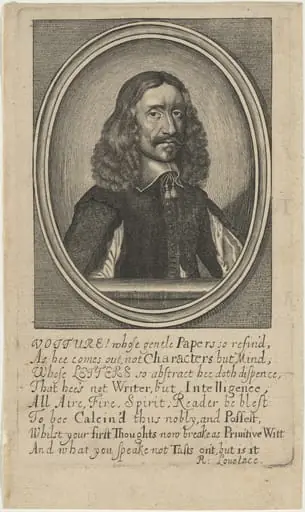
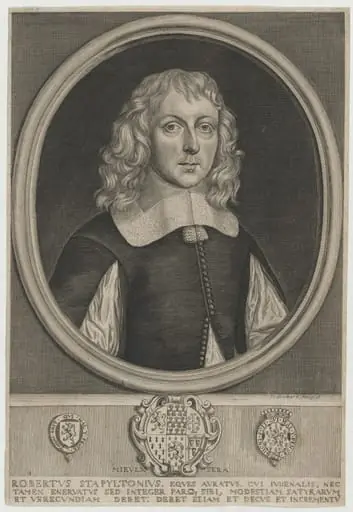
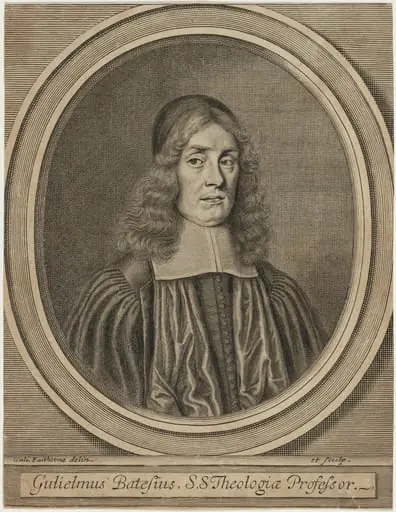
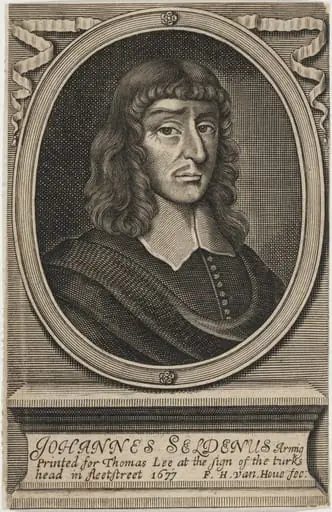
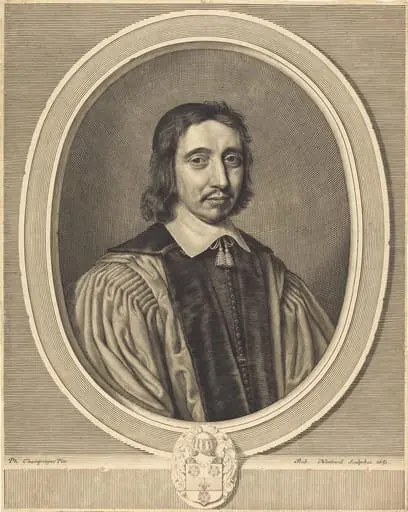
The image is enclosed within a circular border bearing inscriptions, a common framing device for engraved likenesses of cultural figures during the period.
This 1659 engraving by William Faithorne depicts Christopher Chelys Simpson, a musician and composer known for his work with the viol. Rendered in monochrome, the portrait presents a formal, intimate likeness typical of mid-17th-century print portraiture. The image is enclosed within a circular border bearing inscriptions, a common framing device for engraved likenesses of cultural figures during the period.
Subject & Meaning
Christopher Chelys Simpson was a respected English viol player and composer whose writings on performance practice influenced his contemporaries. The portrait emphasizes his status through subtle symbols: the chain suggests academic or professional distinction, while the shield bearing a lion and heraldic letters may reference lineage or institutional affiliation. His direct gaze and restrained expression convey solemnity befitting a scholar-musician.
Technique & Style
Faithorne employed fine, controlled lines typical of stipple and cross-hatching to model form and texture. The curls of Simpson’s hair, the sheen of the collar, and the metallic gleam of the chain are rendered with precision. The circular composition and surrounding text reflect conventions of engraved portrait medals, blending artistic detail with documentary intent. The absence of color underscores the print’s function as a reproducible record.
History & Provenance
Created in 1659, the engraving was likely produced to accompany Simpson’s published treatise on viol playing or to circulate among musical circles in London. Faithorne, a leading portrait engraver of the era, frequently worked with intellectuals and artists. The print’s survival in multiple institutional collections suggests it was widely distributed and valued as a reliable likeness of a notable figure in Restoration-era music.
Context
In post-Civil War England, printed portraits served as tools for preserving the reputations of cultural figures amid political instability. Simpson’s image, like others by Faithorne, reflects a growing interest in documenting the lives of non-noble professionals. The engraving’s format aligns with contemporary practices in music publishing, where visual representation lent authority to scholarly and artistic endeavors.
Legacy
Faithorne’s engraving remains one of the few contemporary visual records of Simpson, whose written works on viol technique are still studied. The print’s clarity and detail have made it a key reference for historians reconstructing 17th-century musical culture. Its enduring presence in archives underscores its role as both a portrait and a historical artifact of early modern English music.
Artist & collection
Artist
William Faithorne (1616–1691) was a British artist, born in Greater London.