Artwork
Alexander, Chaplain to Charles I, Author
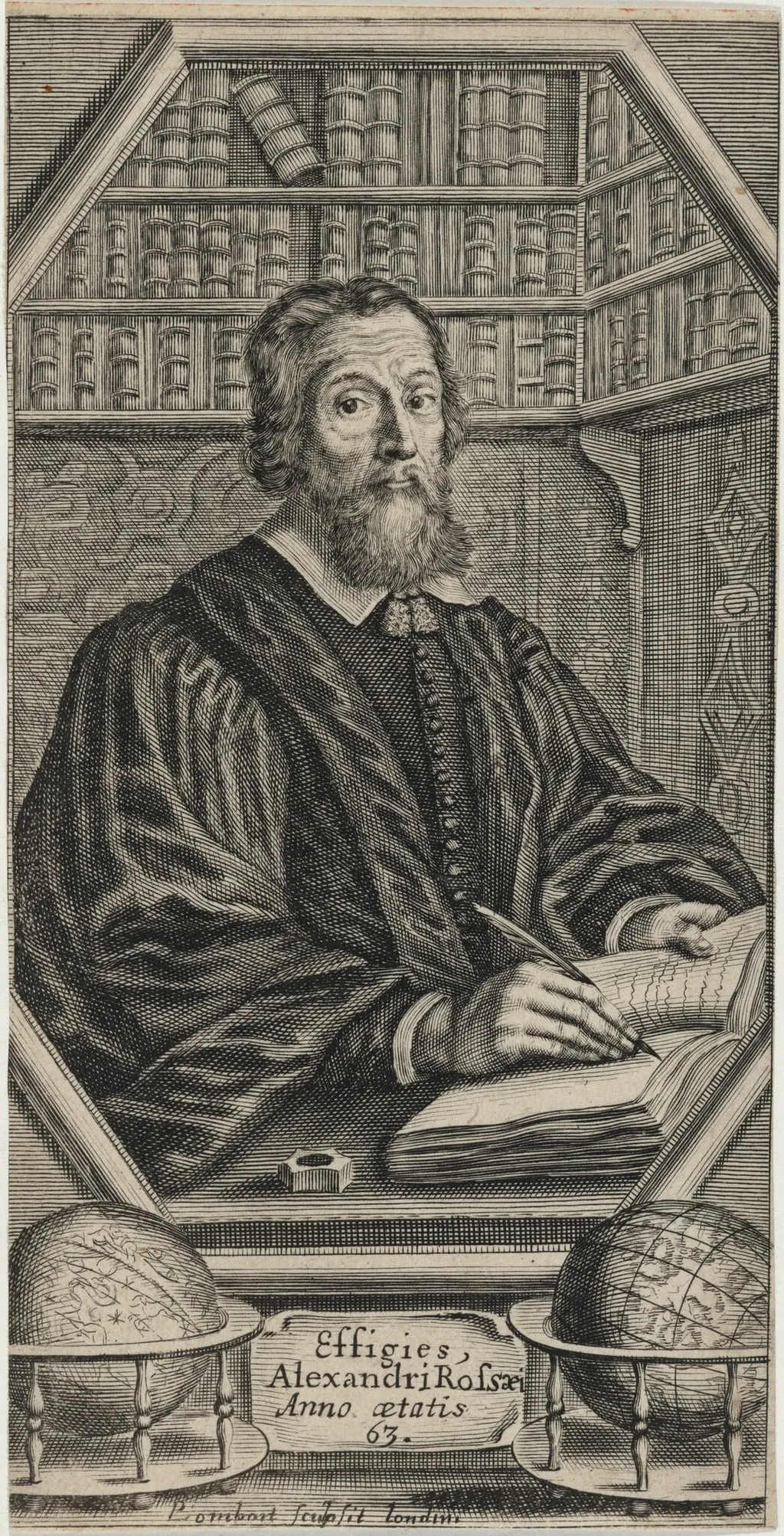
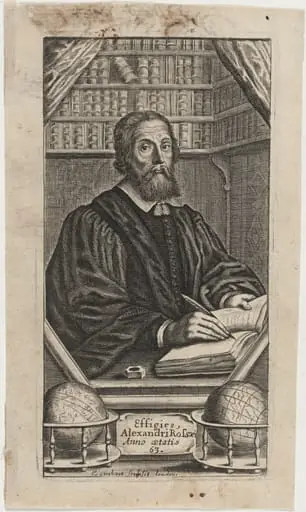
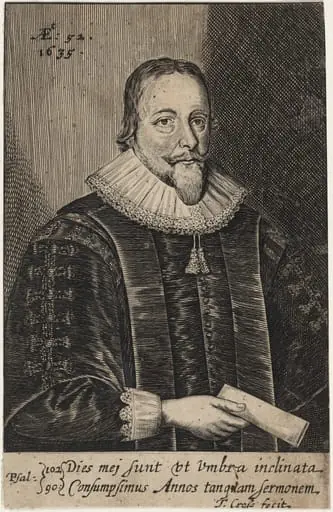
Alexander, Chaplain to Charles I, Author is an ink print by the Baroque artist Pierre Lombard. It dates from 1647 and is held in the collection of the Rosenwald Collection.
About this work
Overview
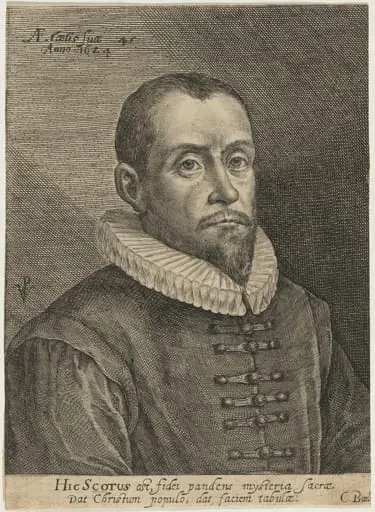
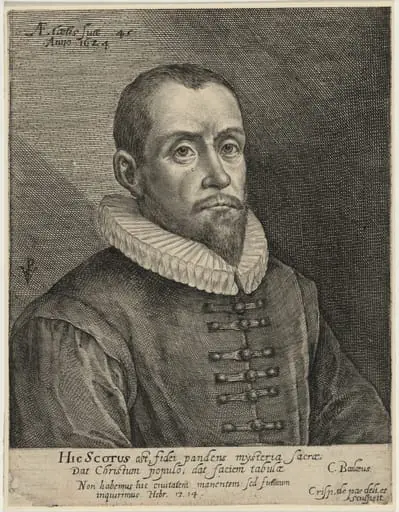
Rendered in monochrome, the portrait captures Ross in a scholarly setting, seated at a desk with writing implements and symbolic objects.
An engraving from 1647 by Pierre Lombard depicts Alexander Ross, chaplain to King Charles I. Rendered in monochrome, the portrait captures Ross in a scholarly setting, seated at a desk with writing implements and symbolic objects. The fine linear detail and tonal shading reflect the precision typical of mid-seventeenth-century printmaking. The inscription 'Effigies Alexandri Rossæ' confirms the subject’s identity and the work’s function as a commemorative portrait.
Subject & Meaning
Alexander Ross, a theologian and royal chaplain, is portrayed mid-writing, suggesting active intellectual engagement. The globe beside him signifies his engagement with global religious and political affairs, while the skull evokes memento mori, a reminder of mortality. Together, these objects frame Ross not merely as a clergyman but as a thinker aware of the transience of earthly pursuits amid the pursuit of divine and scholarly truth.
Technique & Style
Lombard employed fine-line engraving to render texture and depth with precision. The robe’s folds, the grain of the wooden desk, and the spines of books are articulated through delicate cross-hatching and controlled etching. The contrast between the dark robe and the lighter background enhances the figure’s presence. The composition is tightly framed, focusing attention on the subject’s contemplative posture and the symbolic objects on the desk.
History & Provenance
Created in 1647, the engraving likely served to circulate Ross’s image among learned circles during a period of political upheaval in England. As a royalist figure, his portrayal may have carried implicit loyalty to the Crown. The work’s survival suggests it was valued by collectors or institutions interested in ecclesiastical and intellectual portraiture of the era, though its early ownership remains undocumented.
Context
In mid-seventeenth-century England, engraved portraits of clergy and scholars were common tools for preserving reputations amid civil conflict. Ross, known for his polemical writings, was part of a broader network of royalist intellectuals. The inclusion of scholarly symbols aligns with contemporary trends in portraiture that emphasized learning and piety, especially among those aligned with the Stuart monarchy during and after the English Civil War.
Legacy
The engraving endures as a record of Ross’s public persona and the visual language of learned clergy in early modern Britain. While not widely reproduced today, it remains a representative example of how print culture preserved the image of religious figures during a time of ideological fracture. Its quiet symbolism and technical restraint reflect the restrained aesthetic favored in scholarly portraiture of the period.