Artwork
Studies of a Youth Pulling Ropes (recto); Faint Study of a Youth Pulling a Rope (verso)
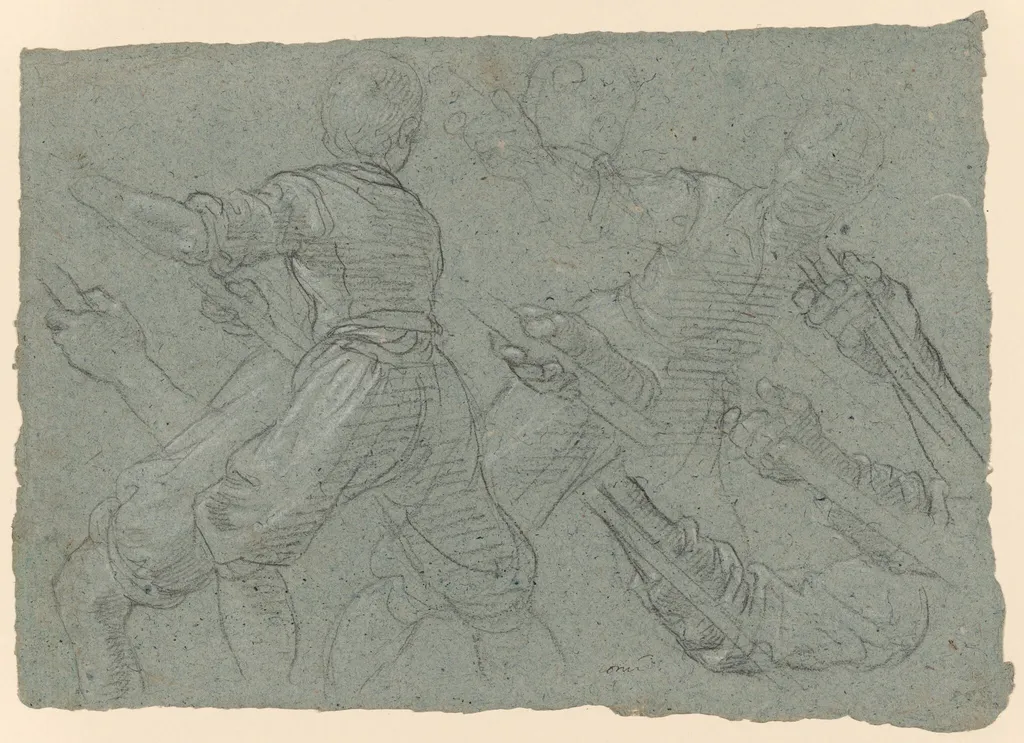
Studies of a Youth Pulling Ropes (recto); Faint Study of a Youth Pulling a Rope (verso) is a chalk drawing by the Baroque artist Aurelio Lomi. It dates from 1614 and is held in the collection of the National Gallery of Art.
About this work
Overview
Executed in black and white chalk on blue laid paper, the recto presents a more developed sketch, while the verso holds a lighter, more tentative version.
Created around 1614, this double-sided drawing by Aurelio Lomi features two related studies of a young male figure engaged in physical exertion. Executed in black and white chalk on blue laid paper, the recto presents a more developed sketch, while the verso holds a lighter, more tentative version. The work reflects the artist’s practice of exploring movement and form through rapid, observational drawing, typical of preparatory studies in early Baroque Florence.
Subject & Meaning
The figure, a youth in loose garments, pulls a thick rope with both hands, his torso twisted and muscles taut under the skin. The pose suggests effort, balance, and controlled force—likely a study of anatomical dynamics rather than a narrative scene. No setting is defined beyond minimal indications of an interior space, emphasizing the body’s tension over context. The subject may relate to training, labor, or the artist’s interest in human motion.
Technique & Style
Lomi employed contrasting chalk tones on a blue paper ground to suggest volume and shadow. The lines are loose and energetic, with visible reworkings and smudges, indicating spontaneous observation. The blue paper, common in Florentine studios, provided a mid-tone base that enhanced the luminosity of the white chalk and the depth of the black. The rough handling and edge marks suggest the sheet was handled frequently during the creative process.
History & Provenance
The drawing has been in the collection of the National Gallery of Art in Washington since its acquisition in the 20th century. Its provenance prior to that is undocumented, though its style and materials align with Florentine workshop practices of the early 1600s. It was likely kept among other studies in Lomi’s studio or passed to a pupil, remaining private until modern institutional collection.
Context
In early 17th-century Tuscany, artists routinely produced figure studies to refine their understanding of anatomy and motion. Lomi, trained in the tradition of the Carracci and influenced by Caravaggio’s naturalism, used such sketches to prepare for larger compositions. This drawing exemplifies the shift from idealized Renaissance forms toward more dynamic, emotionally charged representations characteristic of the Baroque.
Legacy
Though not a finished work, this drawing preserves the immediacy of Lomi’s observational process. It contributes to the broader understanding of how Baroque artists trained and developed their figures through direct study. Its survival offers insight into the private, iterative nature of artistic practice in Florence, where sketches served as vital links between thought and final execution.
Artist & collection
Artist
Aurelio Lomi (29 February 1556 – 1622) was an Italian painter of the late-Renaissance and early-Baroque periods, active mainly in his native town of Pisa, in the Grand Duchy of Tuscany.

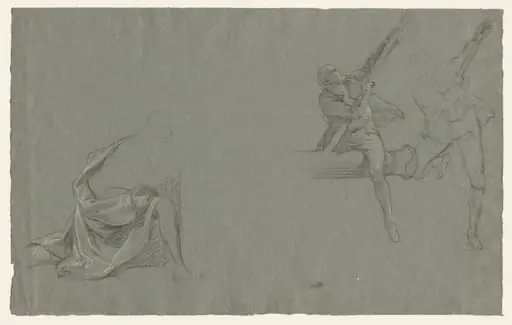 Drapery Study; Two Figures Pulling a Pole
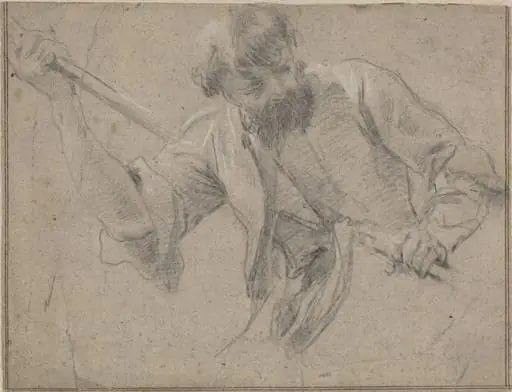 A Bearded Man with a Staff
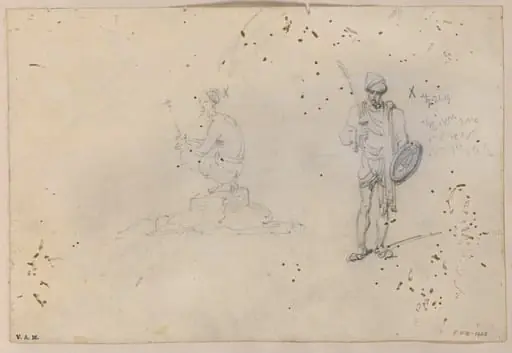 Two drawings of Indian figures
![Figures Deciphering an Inscription, with Two Women Seated [Study for Oeuvres de Bossuet, IV], by Giovanni Battista Piazzetta](https://artifactworldgallery.com/img/giovanni-battista-piazzetta--figures-deciphering-an-inscription-with-two-women-seated-stu--24638de2183fad9c-w320.webp) Figures Deciphering an Inscription, with Two Women Seated [Study for Oeuvres de Bossuet, IV]
Figures Deciphering an Inscription, with Two Women Seated [Study for Oeuvres de Bossuet, IV]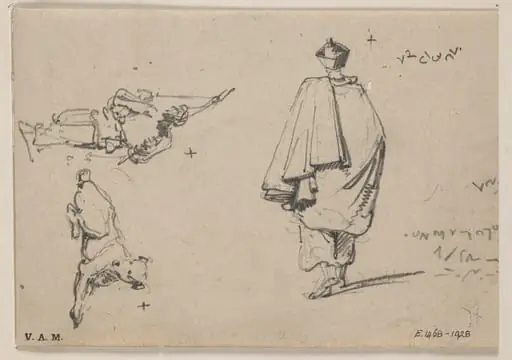 A Chinese porter, a priest and a dog
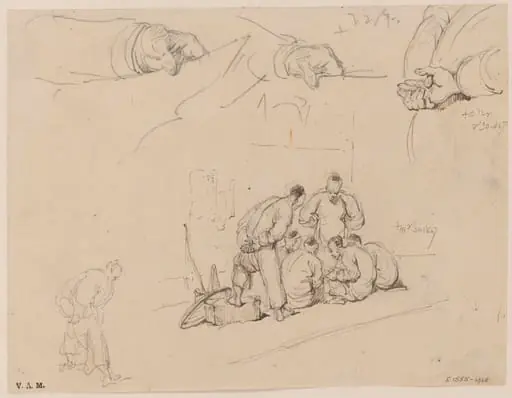 Drawings of a group of Chinese men, clasped hands, and a hand holding paper
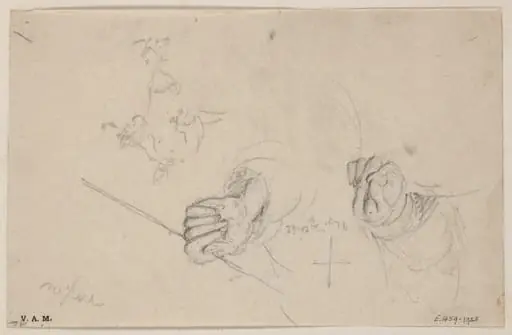 The hands of a Chinese figure holding a line or pipe
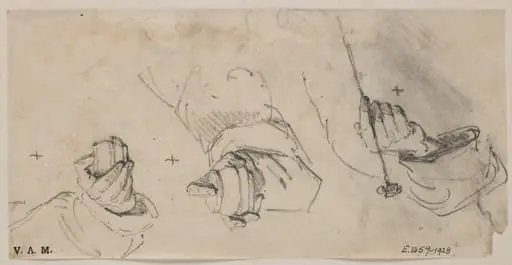 Three drawings of a hand grasping different objects
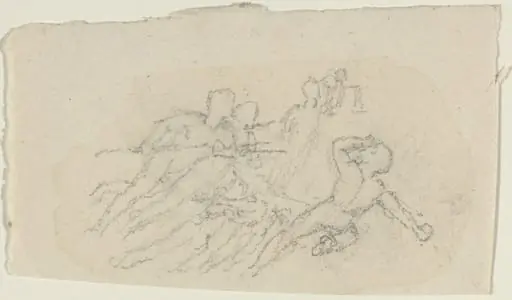 Group of Figures