Artwork
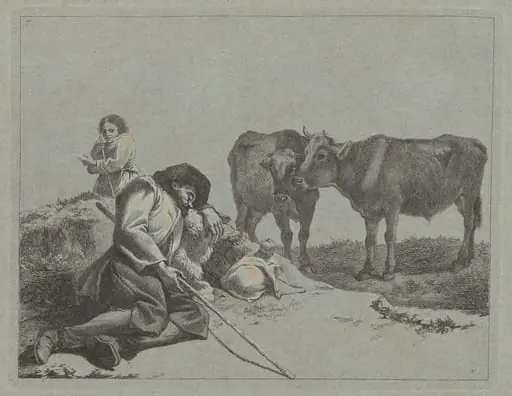
Reclining Shepherd with a Sack
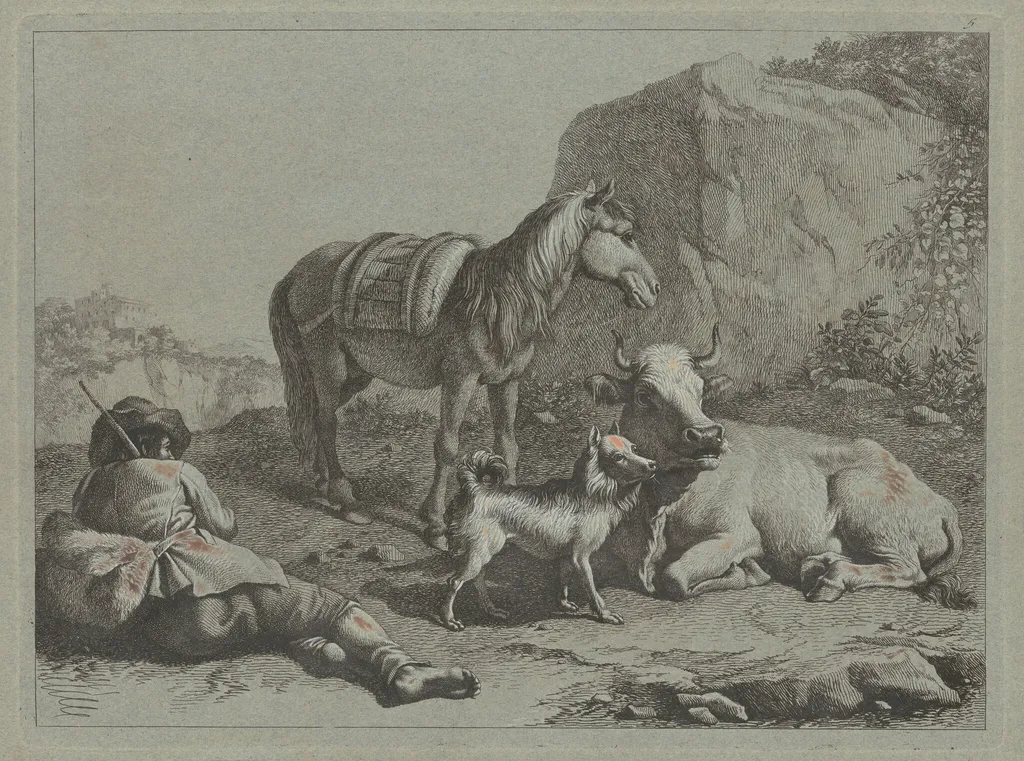
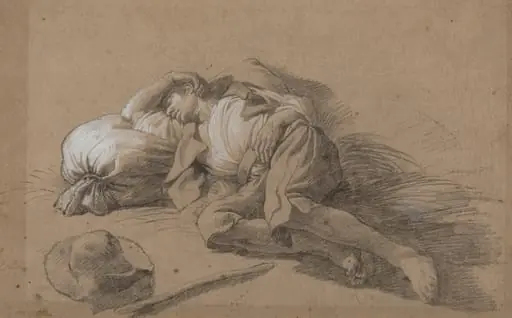
Reclining Shepherd with a Sack is an ink print by the Romanticist artist Francesco Londonio. It dates from 1763 and is held in the collection of the National Gallery of Art.
About this work
Overview
Created around 1763, *Reclining Shepherd with a Sack* is an etching on blue laid paper by Francesco Londonio, an Italian artist active in Milan.
Created around 1763, *Reclining Shepherd with a Sack* is an etching on blue laid paper by Francesco Londonio, an Italian artist active in Milan. The work incorporates white heightening to accentuate form and light, a technique that elevates the modest subject into a refined composition. Londonio, trained in both painting and engraving, specialized in pastoral imagery, and this print exemplifies his skill in translating quiet rural life into delicate graphic form.
Subject & Meaning
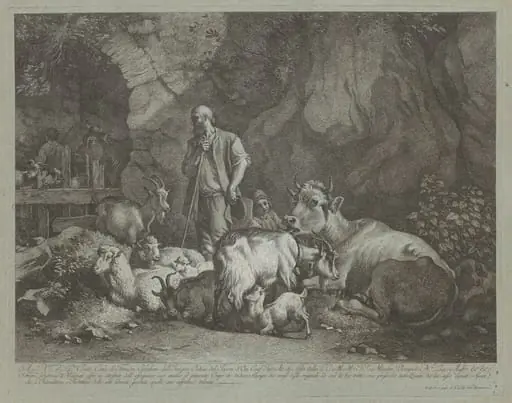
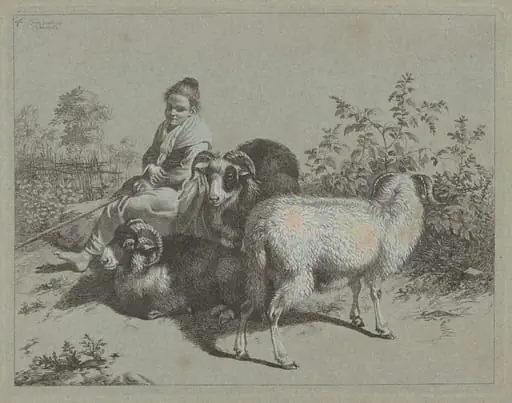
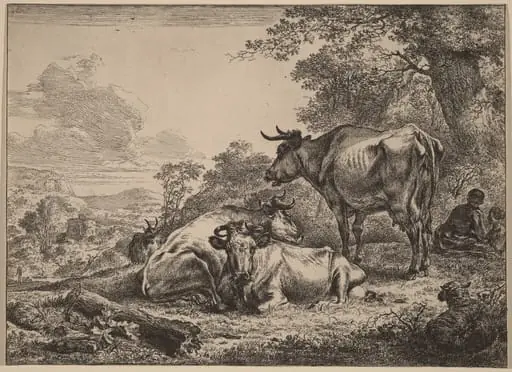
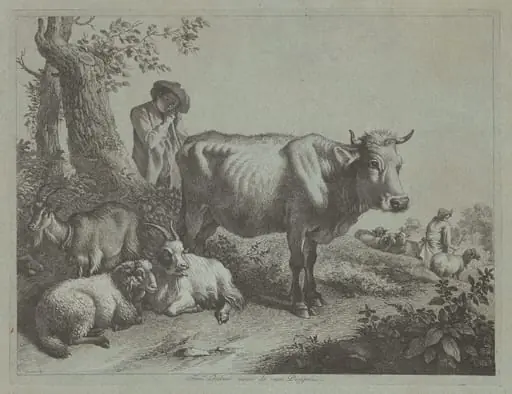
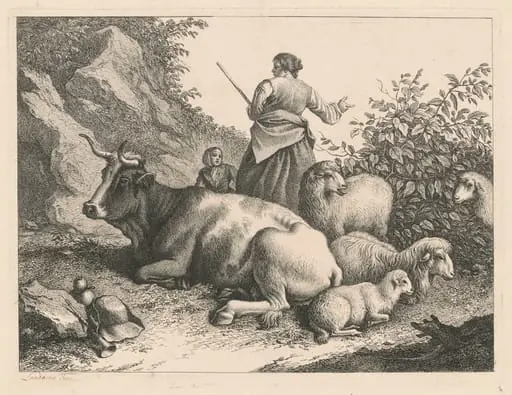
The scene depicts a shepherd at rest, his head supported by a sack, surrounded by a horse, a cow, and a small dog. The figures are arranged in a calm, unhurried grouping, suggesting a moment of pause in daily labor. There is no narrative drama—only stillness and companionship between human and animal. The simplicity of the subject reflects an appreciation for rural tranquility, a theme resonant among Northern Italian collectors of the period.
Technique & Style
Londonio employed etching to define the forms with fine, controlled lines, then added white pigment to highlight edges and surfaces against the blue paper. This method enhanced contrast and gave the image a luminous quality without obscuring the underlying draftsmanship. The blue ground subtly evokes sky or distance, while the white accents draw attention to the shepherd’s posture and the animals’ textures, reinforcing the quiet mood.
History & Provenance
Londonio trained under painters Ferdinando Porta and Giovanni Battista Sassi, and later studied engraving with Benigno Bossi. His travels to Rome and Naples exposed him to classical and contemporary print traditions. While the specific provenance of this print is undocumented, its production aligns with the demand among Milanese and Lombard patrons for elegant, small-scale works depicting pastoral life during the mid-18th century.
Context
In mid-18th century Northern Italy, genre scenes of shepherds and livestock were popular among the urban elite, who viewed them as idealized escapes from city life. Though rooted in realism, such images carried an air of refinement, often commissioned as decorative prints rather than grand historical works. Londonio’s output fits within this trend, balancing observation with aesthetic restraint.
Legacy
Londonio’s prints, including this one, contributed to the continued interest in pastoral themes in Italian graphic arts. While not widely known outside regional circles, his work represents a quiet bridge between Baroque naturalism and the emerging Romantic sensibility toward nature and simplicity. His technique influenced later engravers who sought to capture rural life with elegance rather than sentimentality.
Artist & collection

Artist
Francesco Londonio (1723–1783) was an Italian painter, engraver, and scenographer, active mainly in his native Milan in a late-Baroque or Rococo style.