Artwork
Seated Shepherd with Horse, Dog, Goats and Sheep
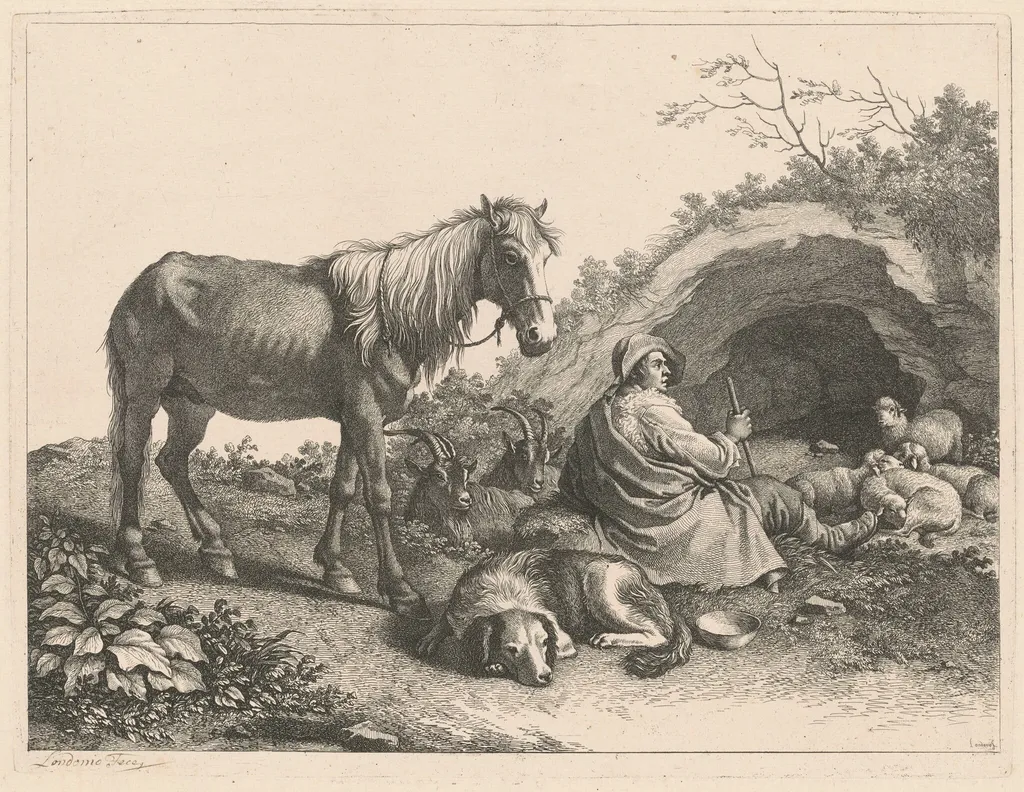
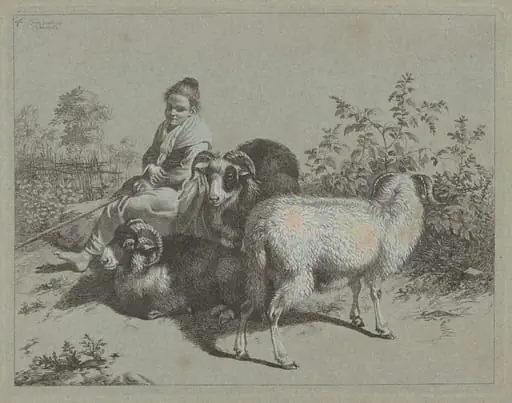
Seated Shepherd with Horse, Dog, Goats and Sheep is an ink print by the Romanticist artist Francesco Londonio. It dates from 1776 and is held in the collection of the National Gallery of Art. Created in 1776, this etching on laid paper portrays a shepherd seated amid his livestock.
About this work
Overview
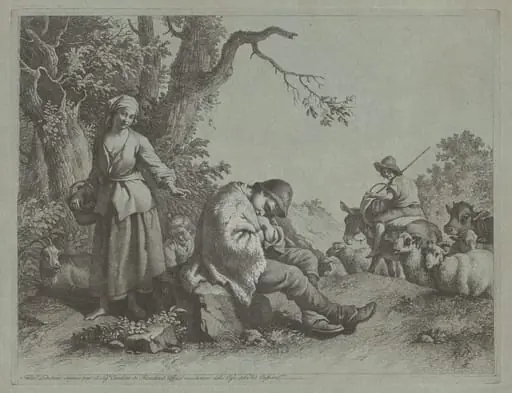
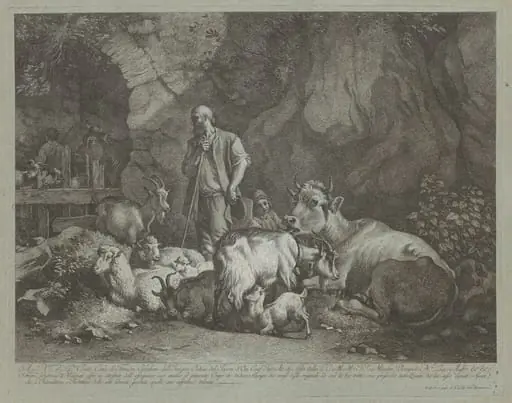
Created in 1776, this etching on laid paper portrays a shepherd seated amid his livestock. The composition includes a horse, a dog, goats and sheep arranged around the figure, set against a modest rural backdrop of trees and shrubbery. The work exemplifies the artist’s focus on everyday pastoral life, rendered with careful line work and attention to animal forms.
Subject & Meaning
The central figure is a shepherd taking a pause, his hat and long robe marking his role, while he holds a staff in his right hand. The surrounding animals—horse, dog, goats, and sheep—are depicted in relaxed poses, suggesting a moment of calm within the daily routine of pastoral labor. The scene conveys a simple, harmonious relationship between human and nature.
Technique & Style
Executed as an etching, the image relies on fine incised lines that define the figures and foliage with clarity. The use of laid paper provides a subtle texture that enhances the tonal variations. The artist’s handling of light and shadow through cross‑hatching creates depth, while the overall composition reflects the late‑Baroque to early Rococo sensibility toward genre scenes.
History & Provenance
The print was produced by Francesco Londonio, an Italian painter and engraver active in Milan. Trained under Ferdinando Porta and Giovanni Battista Sassi, Londonio also studied engraving with Benigno Bossi and traveled to Rome and Naples. His pastoral subjects were popular among affluent patrons in Northern Italy, and this work formed part of that market.
Context
Londonio’s oeuvre frequently featured rustic themes, emphasizing the daily lives of peasants and their animals. This etching aligns with the broader 18th‑century interest in genre scenes that celebrated rural simplicity, a trend that intersected with emerging Romantic ideas about nature’s emotional resonance, though the work remains rooted in the decorative traditions of its period.
Artist & collection

Artist
Francesco Londonio (1723–1783) was an Italian painter, engraver, and scenographer, active mainly in his native Milan in a late-Baroque or Rococo style.

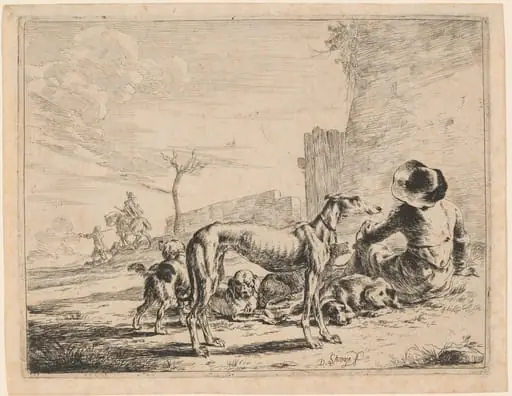 A Seated Man with a Pack of Dogs
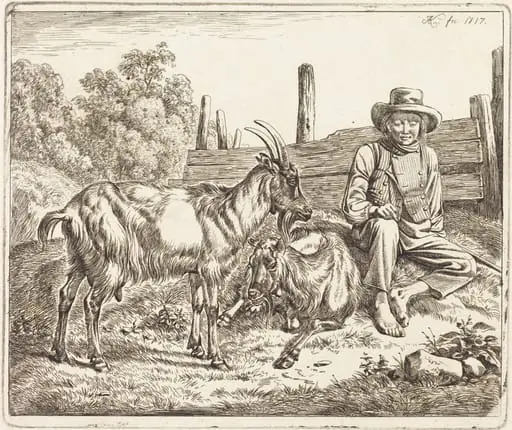 Shepherd Boy with Two Goats
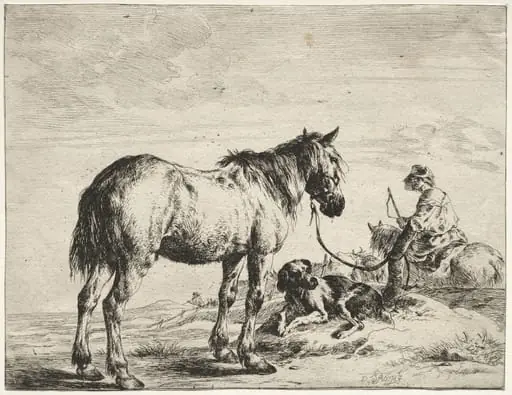 Horse bound to a post
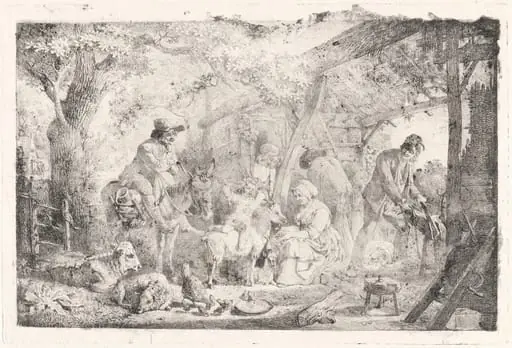 The Little Cavalier (Le Petit Cavalier)
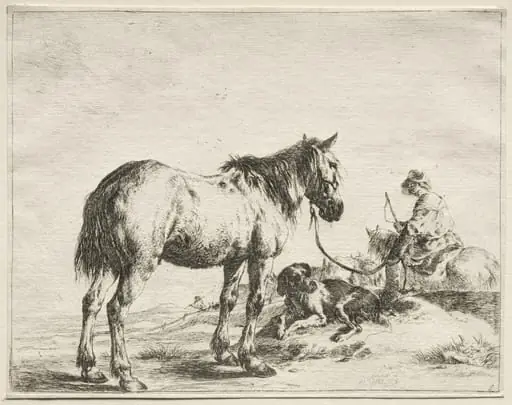 A Horse Fastened to a Stake
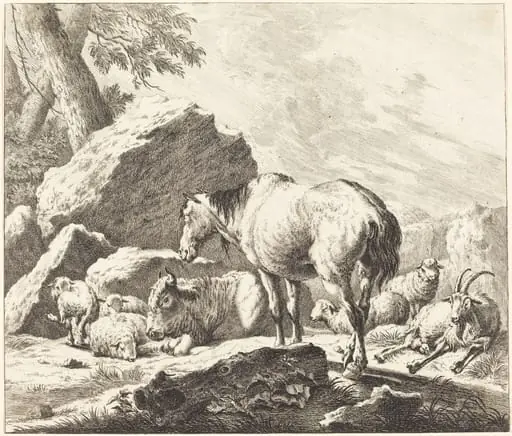 A Horse, Buffalo, Sheep, and Goat in an Italian Landscape
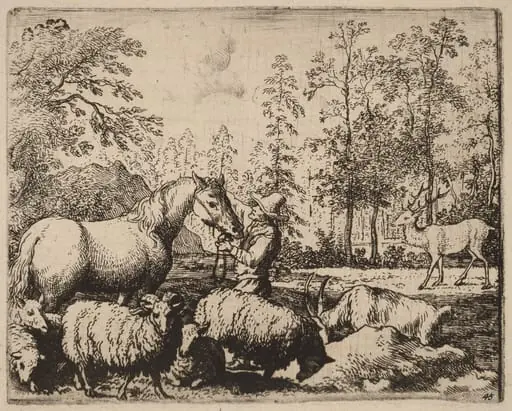 The Horse and the Stag
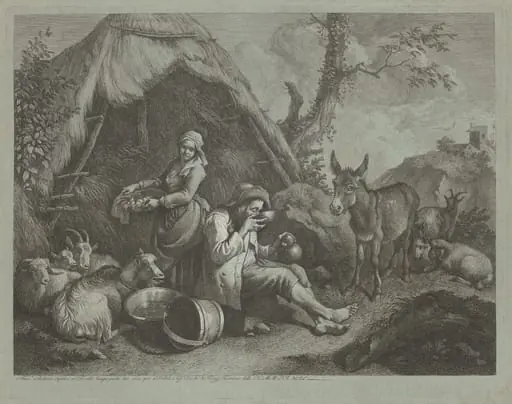 Seated Old Man and Woman with a Basket of Eggs
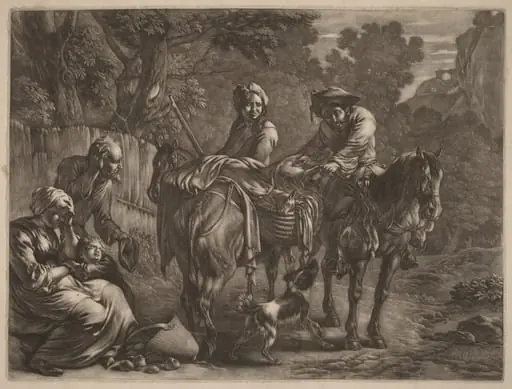 Robbers on Horseback
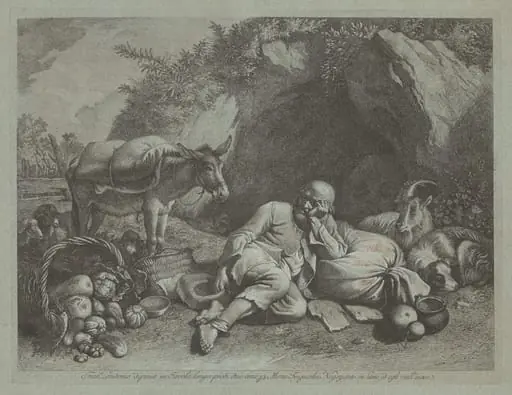 Old Man Leaning against a Sack