Artwork
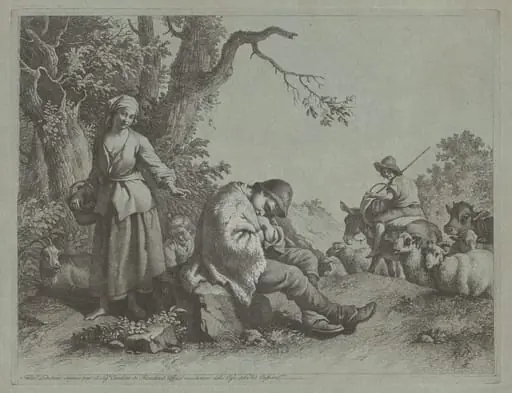
Seated Old Man and Woman with a Basket of Eggs
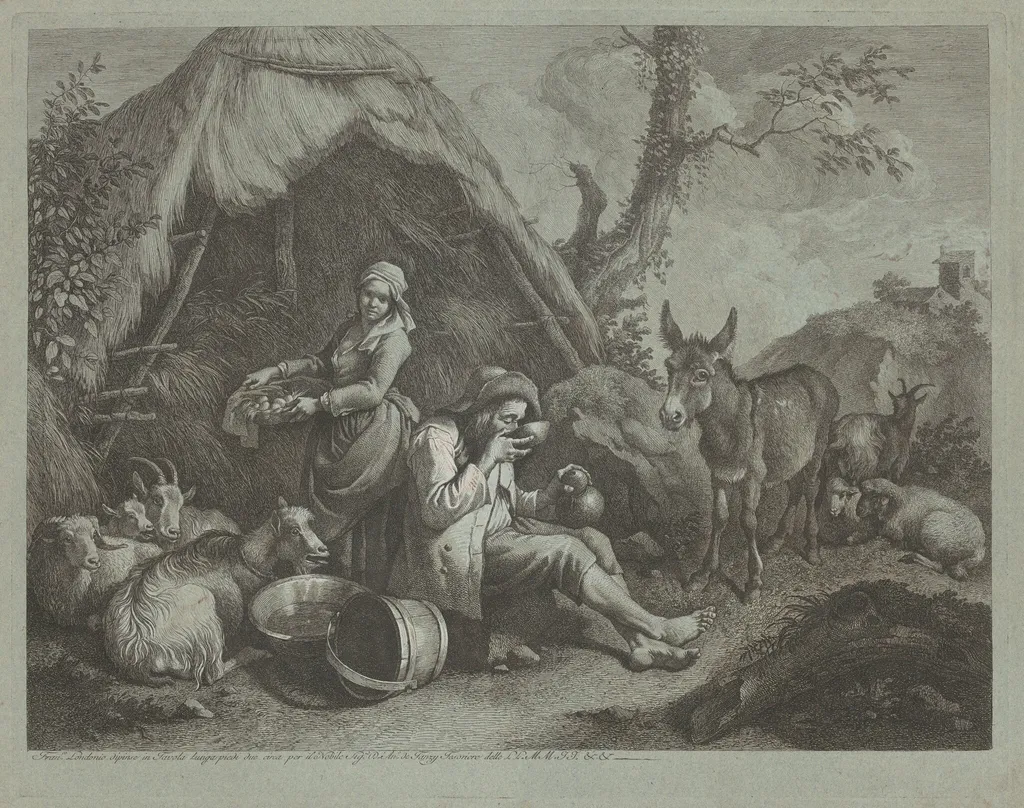
Seated Old Man and Woman with a Basket of Eggs is an ink print by the Romanticist artist Francesco Londonio. It dates from 1770 and is held in the collection of the National Gallery of Art.
About this work
Overview
Created in 1770, this etching by Francesco Londonio depicts a quiet rural moment on blue laid paper, enhanced with white pigment for contrast. The work belongs to a series of genre scenes Londonio produced in Milan, where he was active as a painter and printmaker. His use of blue paper as a ground was uncommon, lending the image a subdued, atmospheric tone that complements its pastoral subject.
Subject & Meaning
The composition avoids idealization, presenting aging figures engaged in unremarkable, daily rituals, suggesting dignity in ordinary life.
An elderly man and woman are shown in a moment of quiet domestic exchange near a modest dwelling. The man, relaxed with a pipe, holds a basket of eggs; the woman, standing, offers him a small object, perhaps a food item. Surrounding livestock—sheep, a donkey, and chickens—anchor the scene in rural labor. The composition avoids idealization, presenting aging figures engaged in unremarkable, daily rituals, suggesting dignity in ordinary life.
Technique & Style
Londonio employed etching to carve fine lines into a metal plate, then printed the image on blue paper and added white chalk highlights to emphasize texture and form. The shading captures the wool of sheep, the grain of wood, and the roughness of bark with subtle precision. The cool blue ground enhances the muted palette, reinforcing the calm, early-day atmosphere and drawing attention to the figures’ gestures and the animals’ presence.
History & Provenance
Londonio trained in Milan under Ferdinando Porta and Giovanni Battista Sassi, later studying engraving in Rome and Naples with Benigno Bossi. His prints, including this one, circulated among Northern Italian collectors who favored depictions of peasant life. While specific ownership records for this print are not widely documented, its survival reflects its appeal to patrons interested in the quiet realism of rural scenes during the late 18th century.
Context
In late-Baroque Milan, interest in genre subjects grew among urban elites seeking respite from aristocratic formality. Londonio’s scenes of peasants and animals aligned with broader European trends, such as those seen in Dutch and Flemish prints, though his approach remained distinctly regional. His work avoided overt moralizing, instead offering observational intimacy that resonated with collectors valuing authenticity over grandeur.
Legacy
Londonio’s prints, including this etching, contributed to the documentation of rural life in Lombardy during a period of social transition. Though not widely known outside Italy, his technique and subject matter influenced regional printmakers who followed. His focus on unidealized figures and careful rendering of textures helped preserve a visual record of everyday existence in 18th-century northern Italy.
Artist & collection

Artist
Francesco Londonio (1723–1783) was an Italian painter, engraver, and scenographer, active mainly in his native Milan in a late-Baroque or Rococo style.

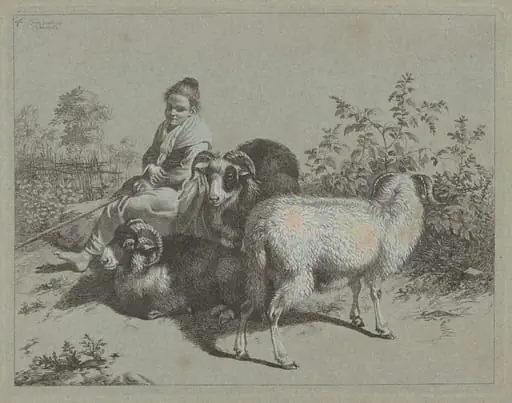
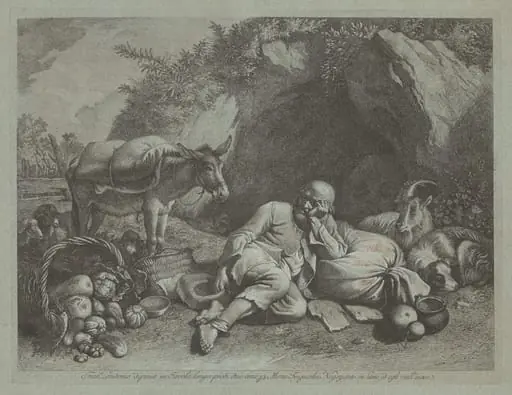 Old Man Leaning against a Sack
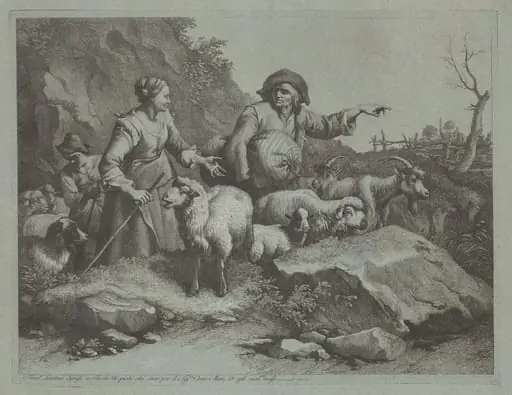 Peasant Man with a Sack and Two Shepherdesses
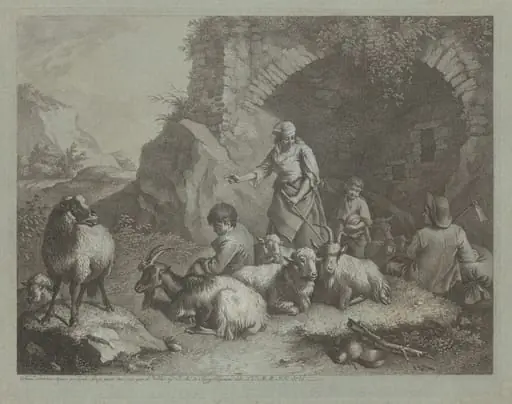 Woman, Shepherd Boys, and Sheep near an Arch
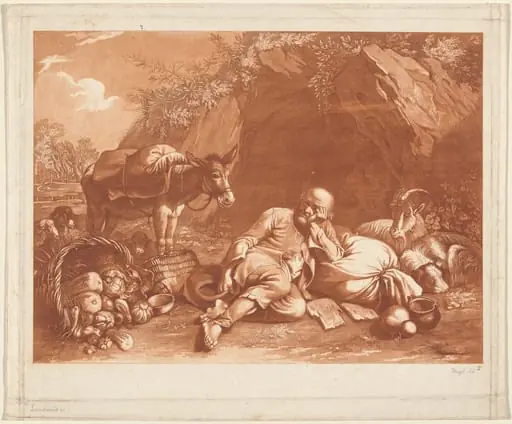 An Old Man Leaning on a Sack
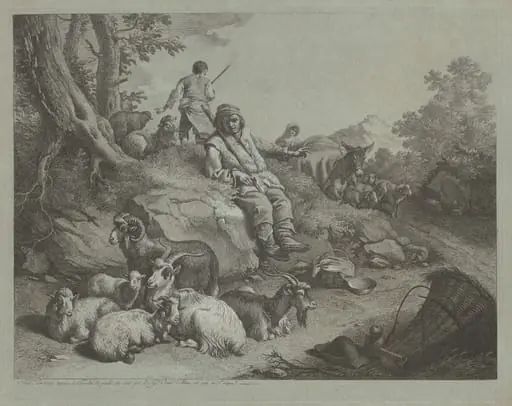 Seated Shepherd before a Flock of Goats
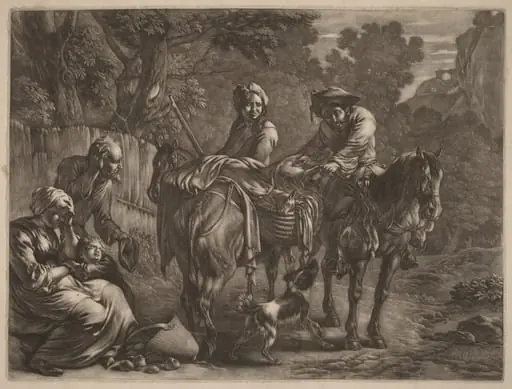 Robbers on Horseback
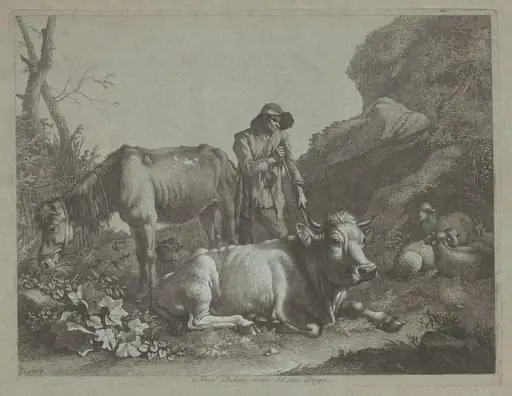 Shepherd Resting on a Walking Stick with an Old Horse and a Reclining Bull
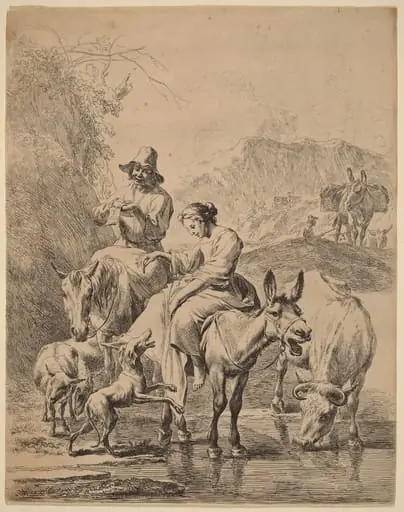 Shepherdess on a Donkey
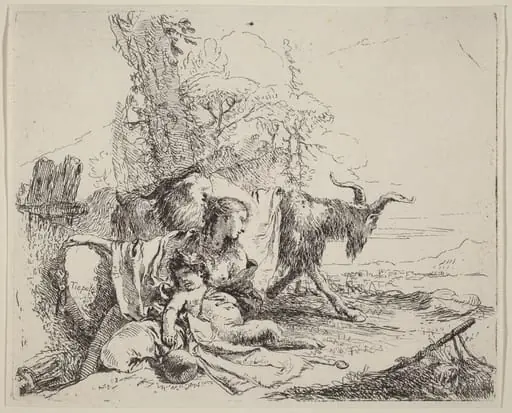 Woman, Satyr Child, and Goat in a Landscape
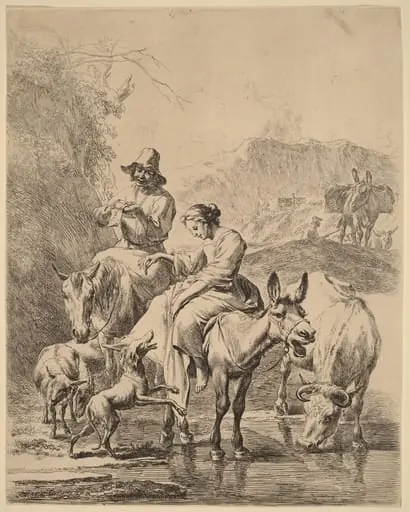 Shepherdess on a Donkey
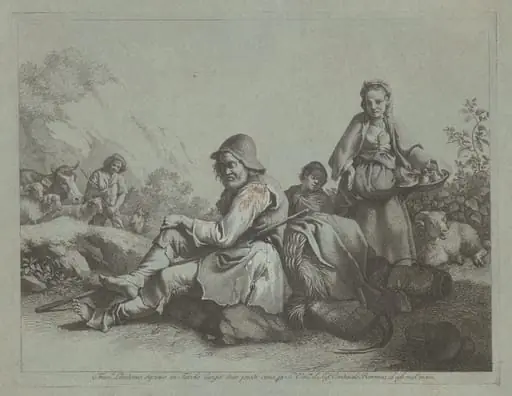 Seated Shepherd and a Peasant Woman with a Basket