Artwork
Old Man Leaning against a Sack
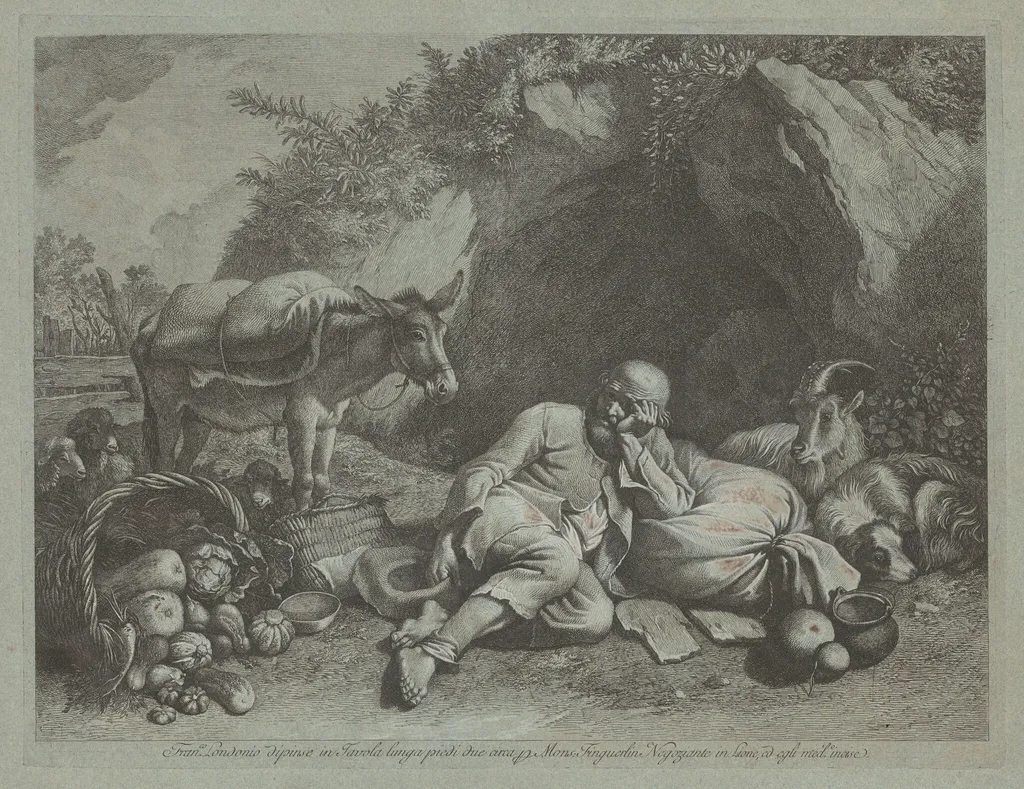
Old Man Leaning against a Sack is an ink print by the Romanticist artist Francesco Londonio. It dates from 1767 and is held in the collection of the National Gallery of Art.
About this work
Overview
Executed on blue laid paper with white heightening, the work belongs to a series of genre scenes Londonio produced during his time in Milan.
Created around 1767, this etching by Francesco Londonio depicts a weary elderly man resting against a large sack in a rural setting. Executed on blue laid paper with white heightening, the work belongs to a series of genre scenes Londonio produced during his time in Milan. His training under Ferdinando Porta and Giovanni Battista Sassi, followed by study with Benigno Bossi in Rome and Naples, informed his precise draftsmanship and sensitivity to everyday life.
Subject & Meaning
The figure, aged and slumped, rests beside a sack and a basket of vegetables, surrounded by a cow and a goat. The quiet stillness of the scene suggests exhaustion after labor, with no overt narrative but a palpable sense of endurance. The animals and produce imply a subsistence lifestyle, grounding the image in the realities of rural existence. Londonio avoids sentimentality, presenting the man’s fatigue with quiet dignity.
Technique & Style
Londonio employed etching with white heightening to enhance contrast and texture on blue paper, a method that lent depth to shadows and softness to forms. Fine lines define the folds of clothing, the texture of the sack, and the animals’ fur, while the blue ground subtly suggests ambient light. The technique allowed for both precision and atmospheric nuance, aligning with the delicate aesthetic favored in Northern Italian printmaking of the period.
History & Provenance
The work emerged from Londonio’s mature period, when he focused on pastoral subjects for affluent collectors in Lombardy and beyond. Though specific early ownership records are scarce, his prints were widely circulated among patrons who appreciated his depictions of rural life. The blue paper and white highlights reflect a refined taste, indicating the work was likely produced for private collections rather than mass distribution.
Context
In mid-18th century Milan, there was growing interest in scenes of peasant life, not as caricature but as dignified observation. Londonio’s work responded to this trend, blending Rococo elegance with the realism of genre painting. His training in scenography may have influenced his compositional balance, while his travels exposed him to southern Italian visual traditions that enriched his depiction of rural figures and animals.
Legacy
Londonio’s prints, including this one, contributed to the documentation of rural Italy during a time of social transition. Though not widely known outside regional circles, his technique and subject matter influenced later generations of printmakers interested in everyday life. His use of colored paper and heightening became a model for artists seeking to elevate printmaking beyond mere reproduction into a refined artistic medium.
Artist & collection

Artist
Francesco Londonio (1723–1783) was an Italian painter, engraver, and scenographer, active mainly in his native Milan in a late-Baroque or Rococo style.

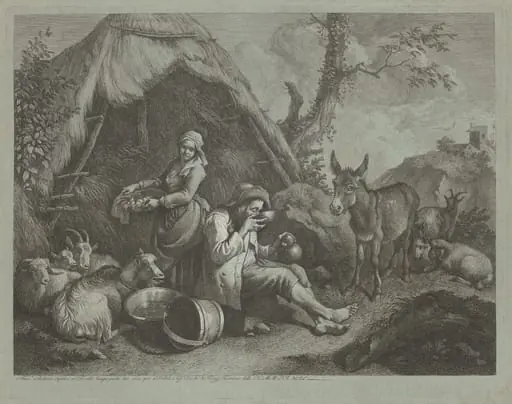 Seated Old Man and Woman with a Basket of Eggs
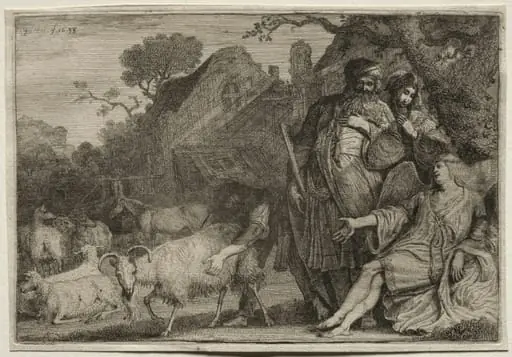 An Angel Foretells the Birth of Abraham's Son
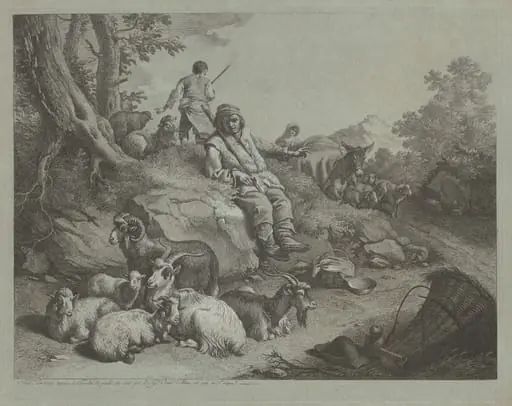 Seated Shepherd before a Flock of Goats
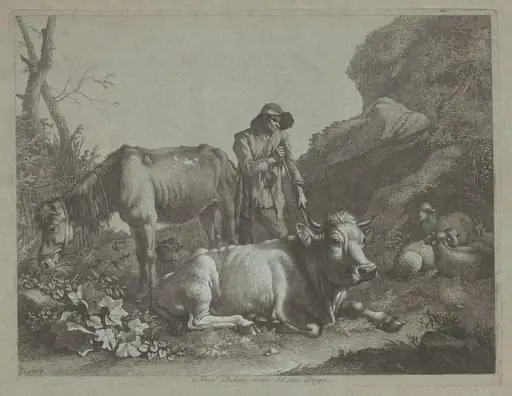 Shepherd Resting on a Walking Stick with an Old Horse and a Reclining Bull
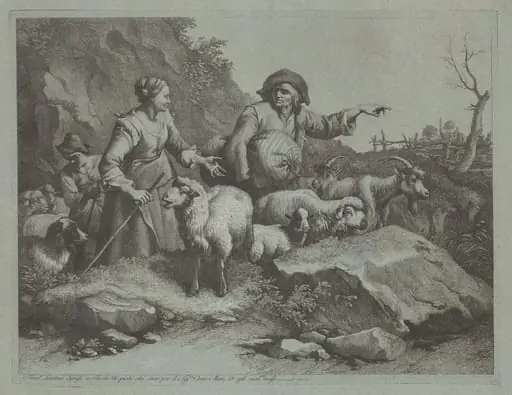 Peasant Man with a Sack and Two Shepherdesses
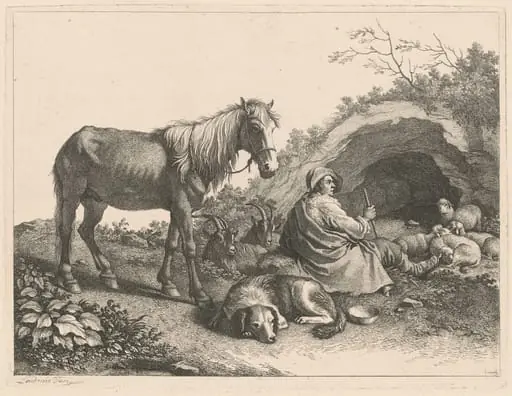 Seated Shepherd with Horse, Dog, Goats and Sheep
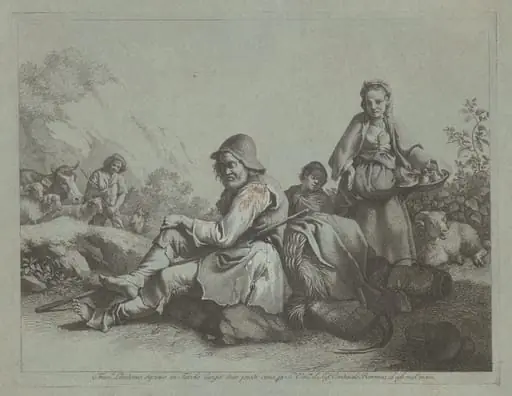 Seated Shepherd and a Peasant Woman with a Basket
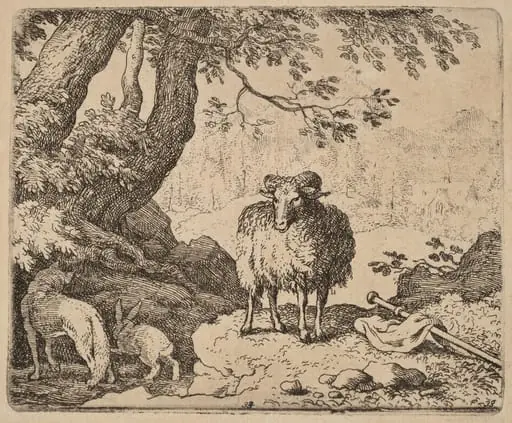 Reynard Returns Home, Accompanied by the Ram and the Rabbit
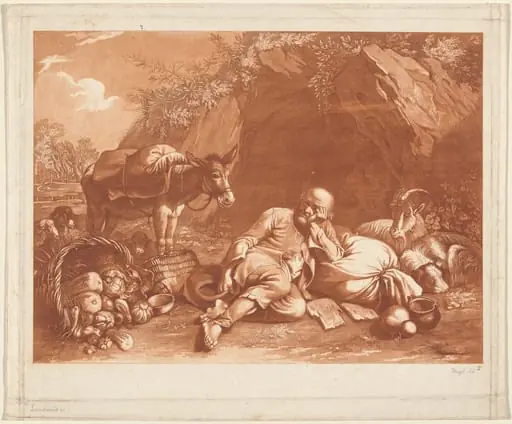 An Old Man Leaning on a Sack
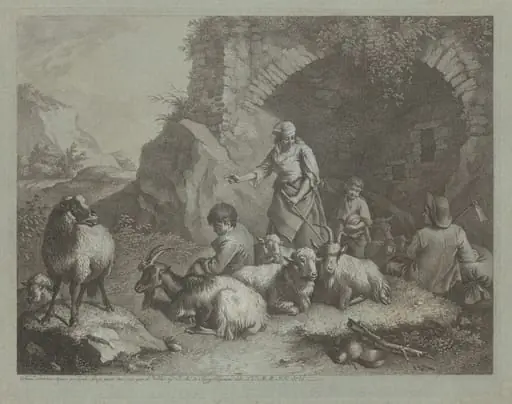 Woman, Shepherd Boys, and Sheep near an Arch