Artwork
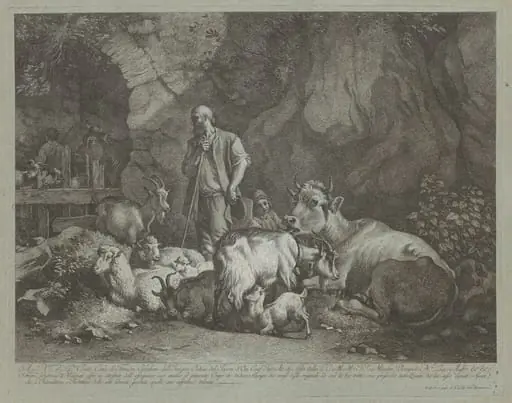
Seated Shepherd before a Flock of Goats
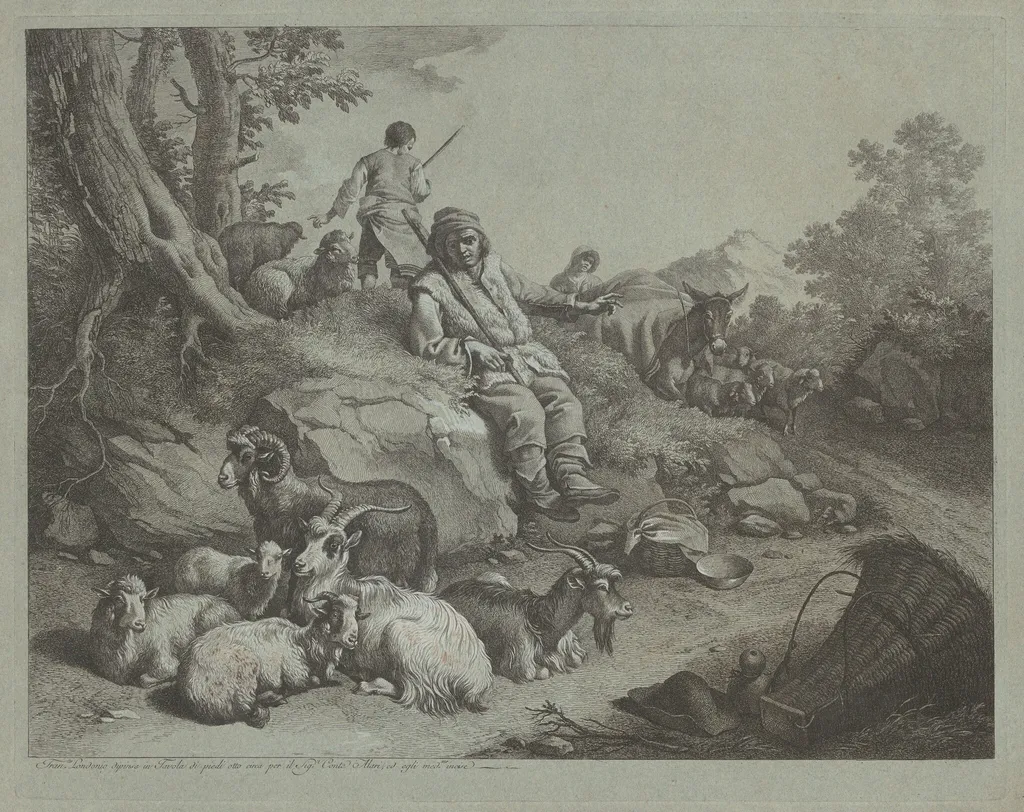
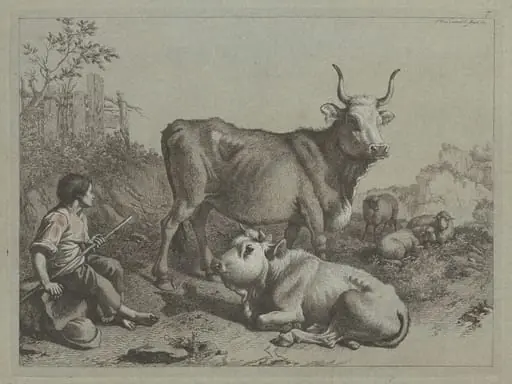
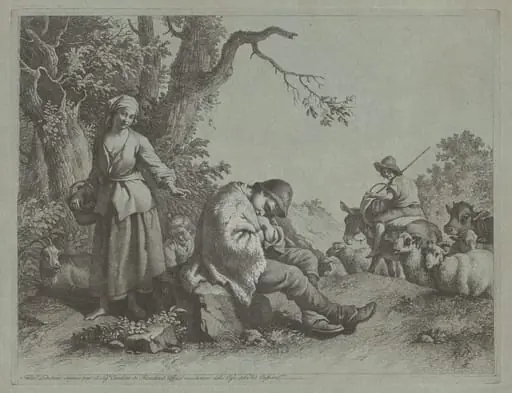
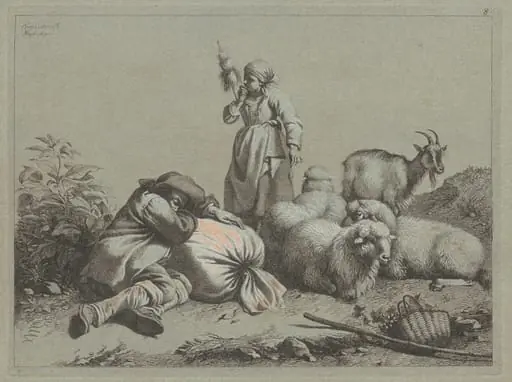
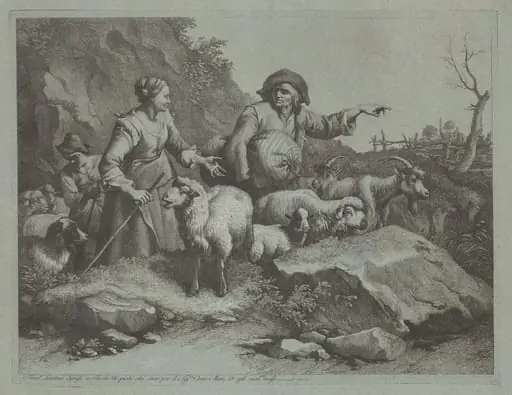
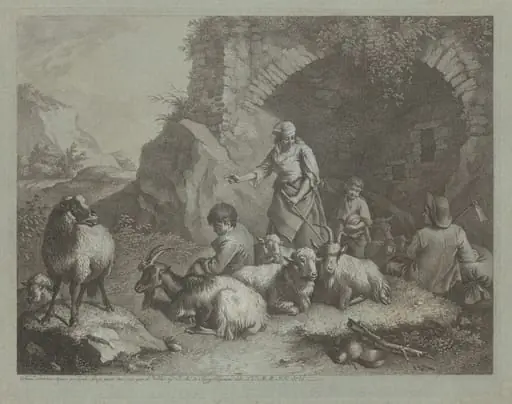
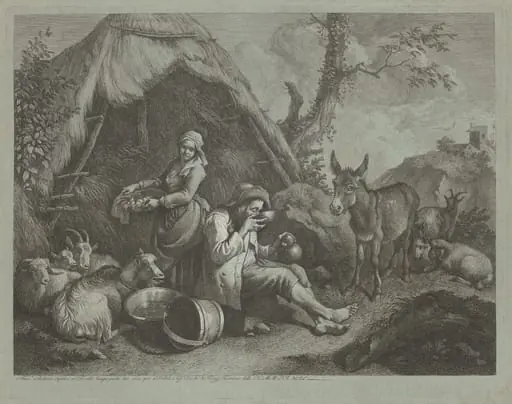
Seated Shepherd before a Flock of Goats is an ink print by the Romanticist artist Francesco Londonio. It dates from 1766 and is held in the collection of the National Gallery of Art.
About this work
Overview
As a printmaker active in Milan during the mid-18th century, Londonio specialized in pastoral subjects, blending observation with decorative refinement.
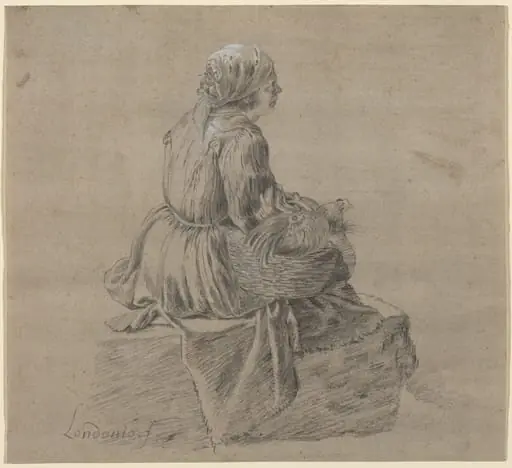
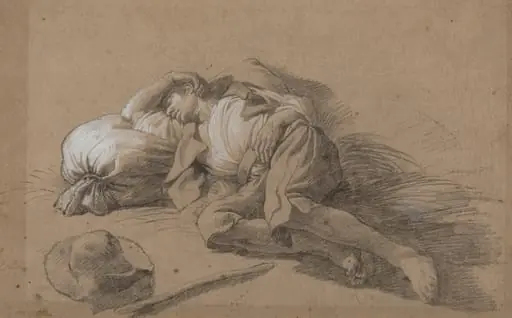
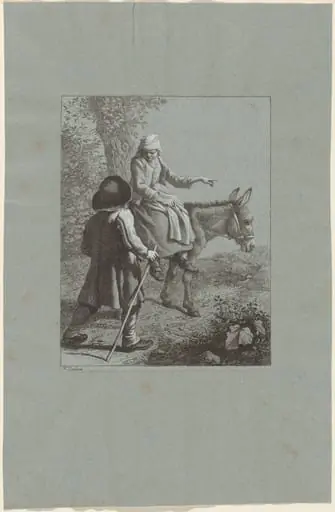
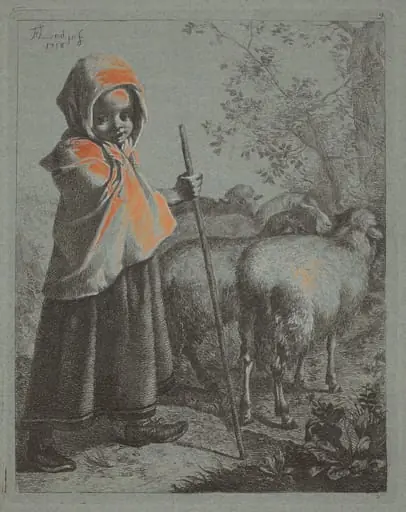
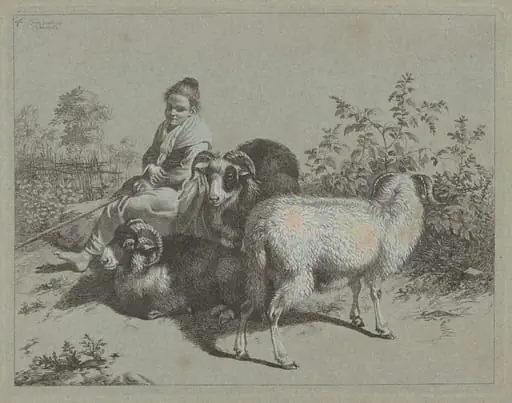
Created in 1766, this etching by Francesco Londonio captures a quiet rural moment on blue laid paper, enhanced with white pigment to accentuate light. As a printmaker active in Milan during the mid-18th century, Londonio specialized in pastoral subjects, blending observation with decorative refinement. The use of blue paper and white heightening was a deliberate choice to evoke atmosphere and texture, distinguishing his work within the Northern Italian print tradition.
Subject & Meaning
The scene portrays a shepherd seated on a rocky outcrop, flanked by a flock of goats and sheep, with a boy holding a staff nearby and a cow being tended in the distance. These figures suggest a routine day in pastoral life, devoid of drama or idealization. The composition emphasizes harmony between humans and animals, reflecting a cultural appreciation for rural labor among Milan’s elite patrons who sought tranquil, authentic depictions of the countryside.
Technique & Style
Londonio employed etching to render fine, controlled lines across the paper, capturing the texture of wool, rock, and foliage. White heightening—applied selectively with opaque pigment—lifts the forms of the animals and shepherd against the blue ground, creating subtle contrast and a sense of volume. The method mimics the effect of light falling on surfaces, enhancing three-dimensionality without obscuring the delicate linework characteristic of his engraving training.
History & Provenance
Londonio trained under Milanese artists Ferdinando Porta and Giovanni Battista Sassi, later studying engraving with Benigno Bossi. His travels to Rome and Naples exposed him to broader Italian artistic currents, which informed his approach to landscape and genre. While the specific early ownership of this print is undocumented, its survival in collections suggests it was valued within regional networks of collectors interested in refined, small-scale rural imagery.
Context
In mid-18th century Lombardy, there was growing interest in pastoral themes among aristocratic and bourgeois patrons seeking alternatives to grand historical or religious subjects. Londonio’s prints catered to this taste, offering intimate, detailed glimpses of agricultural life. His work aligned with a wider European trend of romanticizing rural simplicity, though his focus remained grounded in local observation rather than idealized fantasy.
Legacy
Londonio’s etchings, including this one, contributed to the documentation of rural Northern Italy during a period of social and economic transition. Though not widely known beyond regional circles, his technical precision and sensitivity to natural detail influenced later printmakers interested in genre scenes. His use of colored paper and heightening became a recognizable hallmark in Lombard printmaking of the era.
Artist & collection

Artist
Francesco Londonio (1723–1783) was an Italian painter, engraver, and scenographer, active mainly in his native Milan in a late-Baroque or Rococo style.