Artwork
Shepherd Boy Speaking to a Farm Girl
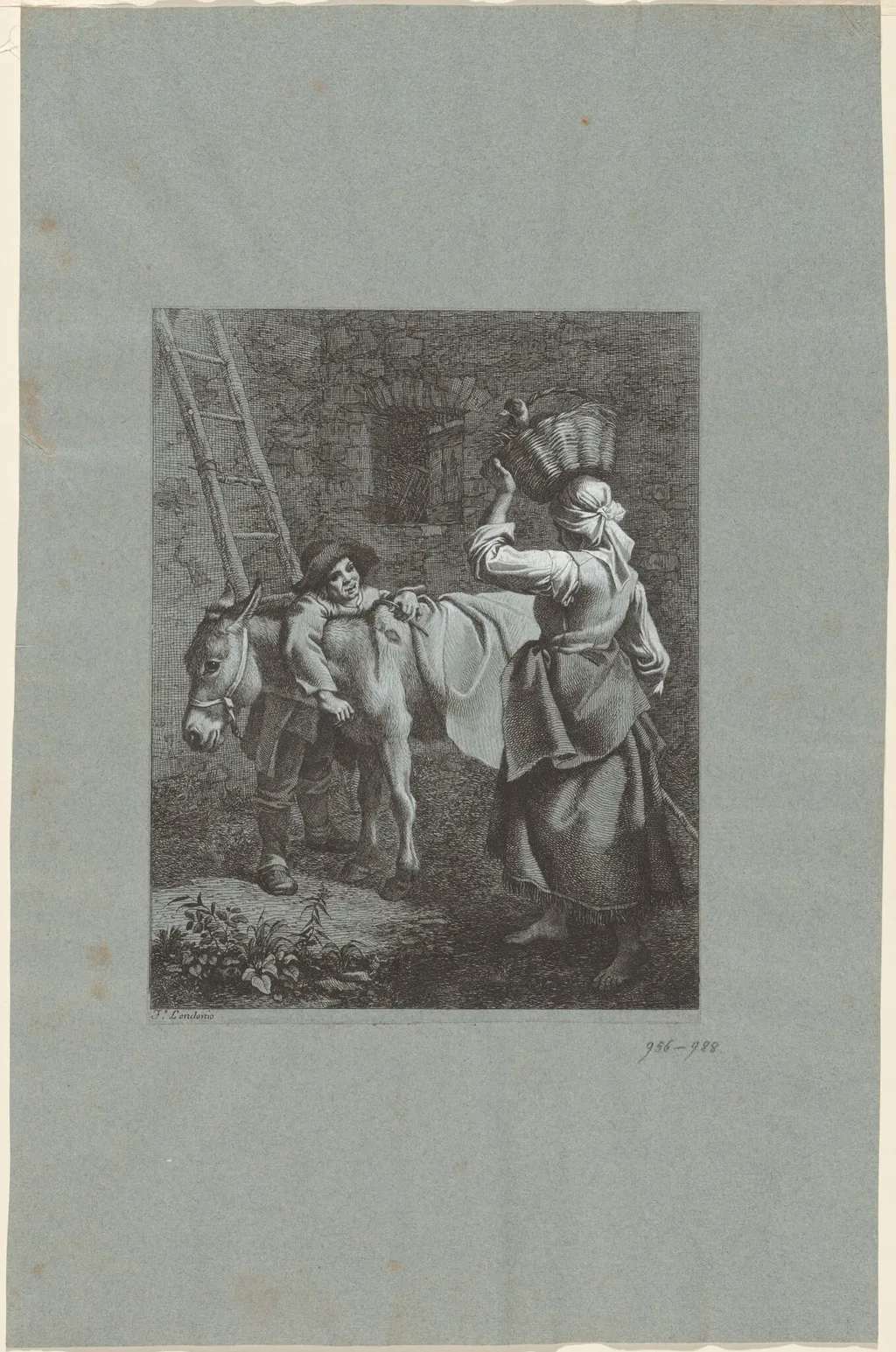
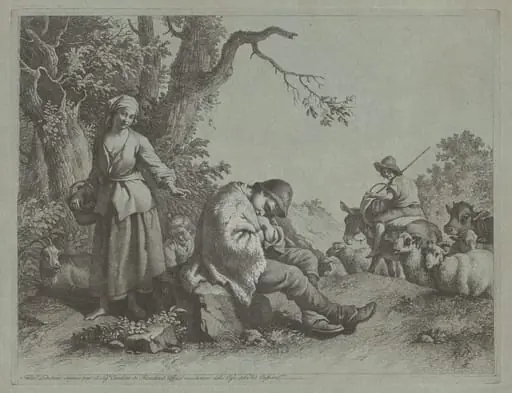
Shepherd Boy Speaking to a Farm Girl is an ink print by the Romanticist artist Francesco Londonio. It dates from 1764 and is held in the collection of the National Gallery of Art. Created in 1764, the work is an etching that has been heightened with white on a blue paper support.
About this work
Overview
Created in 1764, the work is an etching that has been heightened with white on a blue paper support. It presents a quiet rural encounter between a young shepherd and a farm girl, set against a modest architectural backdrop.
Subject & Meaning
The composition shows the shepherd boy, dressed in a hat and tunic, standing beside a donkey, while the girl, wearing a headscarf and apron, balances a basket on her head. Their poised interaction suggests a moment of simple communication within a pastoral setting.
Technique & Style
The print employs traditional etching, with fine lines that render the figures and surrounding stone wall in varying shades of gray. White highlights applied after printing enhance the tonal contrast against the blue paper, emphasizing textures such as the donkey’s fur and the fabric of the clothing.
History & Provenance
The piece was produced by Francesco Londonio, an Italian painter and engraver active in Milan during the late‑Baroque and Rococo eras. Londonio trained under painters Ferdinando Porta and Giovanni Battista Sassi and learned engraving from Benigno Bossi before traveling to Rome and Naples, where he refined his genre‑focused approach.
Context
Londonio’s oeuvre is noted for its focus on rustic life, animals, and peasant figures, themes that appealed to Northern Italian patrons of the period. This etching aligns with his broader interest in everyday pastoral scenes, reflecting the taste for genre subjects in mid‑18th‑century Italy.
Artist & collection

Artist
Francesco Londonio (1723–1783) was an Italian painter, engraver, and scenographer, active mainly in his native Milan in a late-Baroque or Rococo style.

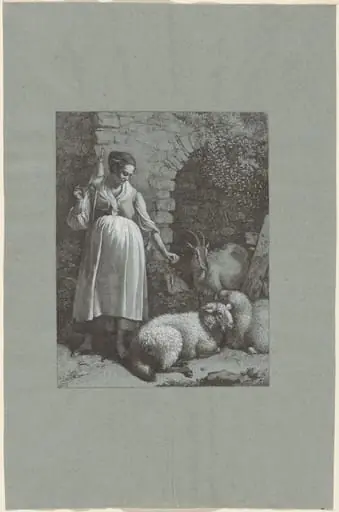 Woman Spinning Yarn by an Arch
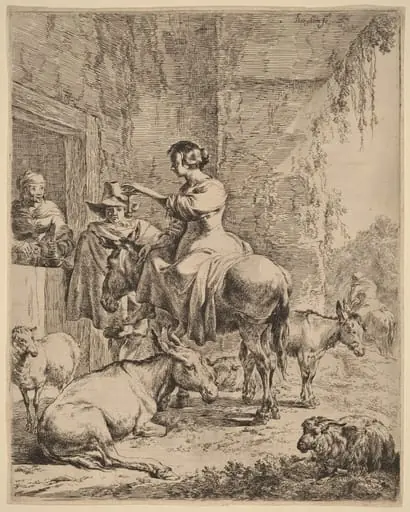 The Rest before the Inn
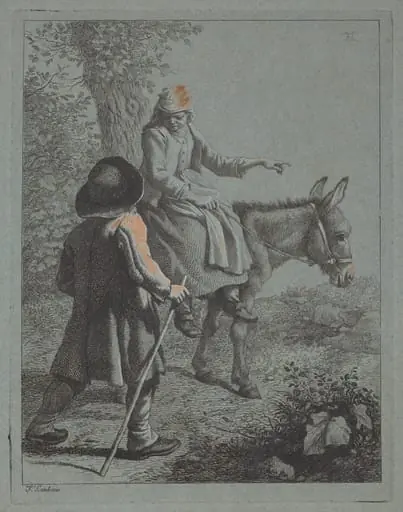 Peasant Woman Seated on a Donkey and a Peasant Man
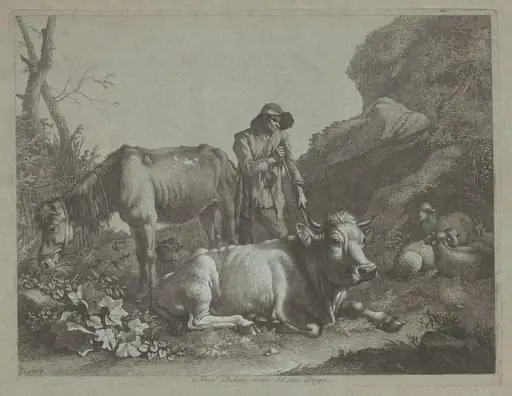 Shepherd Resting on a Walking Stick with an Old Horse and a Reclining Bull
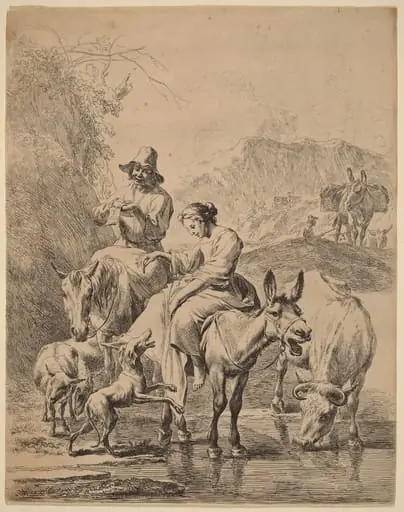 Shepherdess on a Donkey
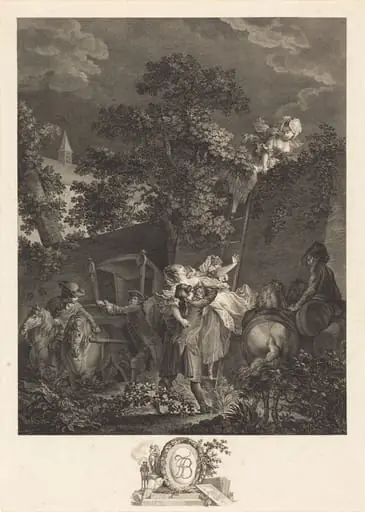 L'enlevement nocturne
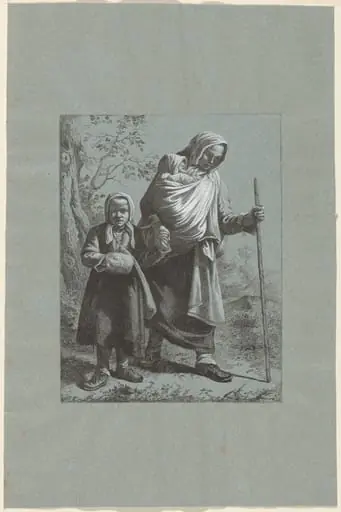 Peasant Woman with Two Children
 L'enlevement nocturne
 Milkmaid of Boulogne, 3rd plate (Laitiere a Boulogne)