Artwork
Portrait of the Surgeon Gian Giacomo Bonamigo with His Son Giovanni Antonio
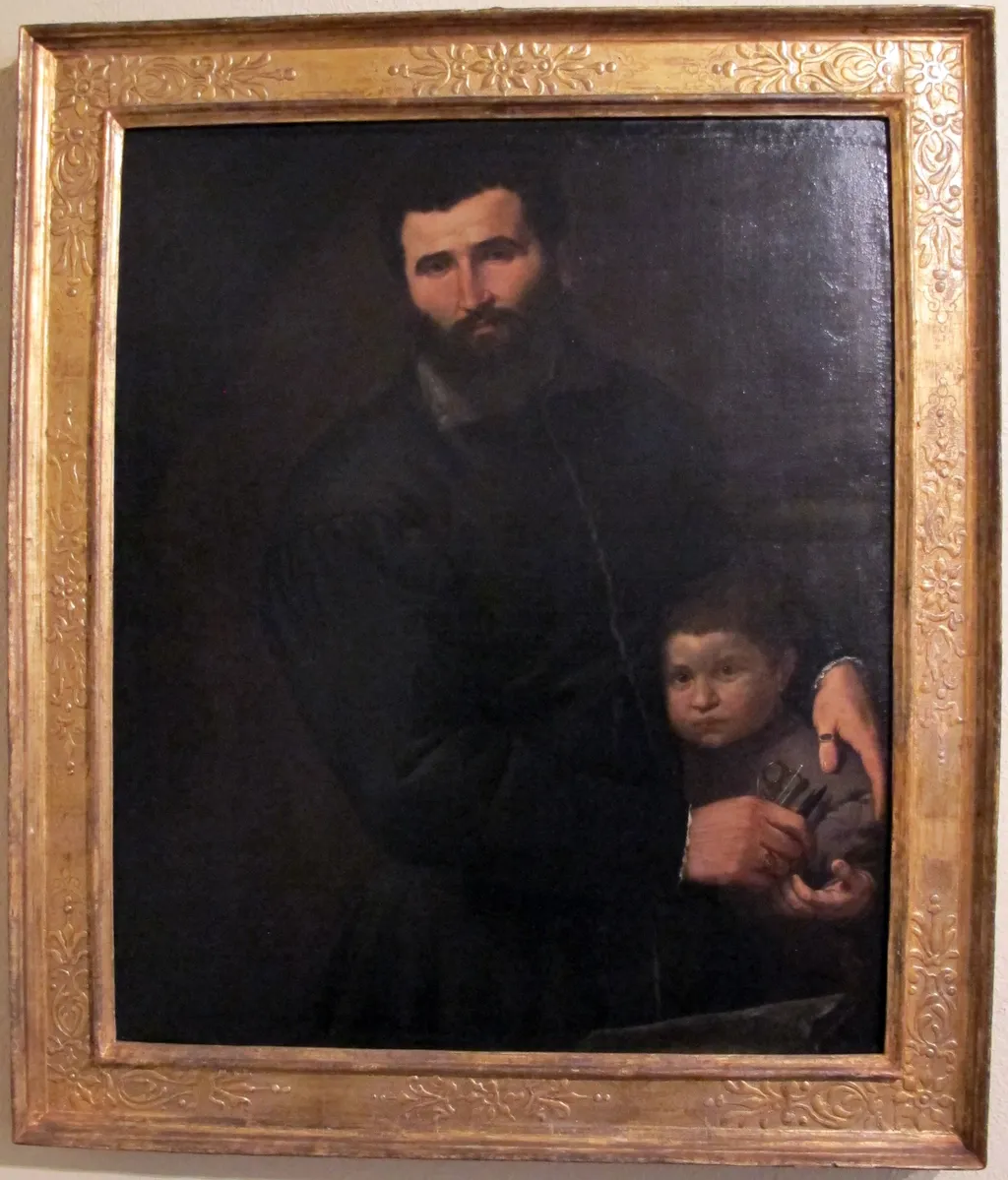
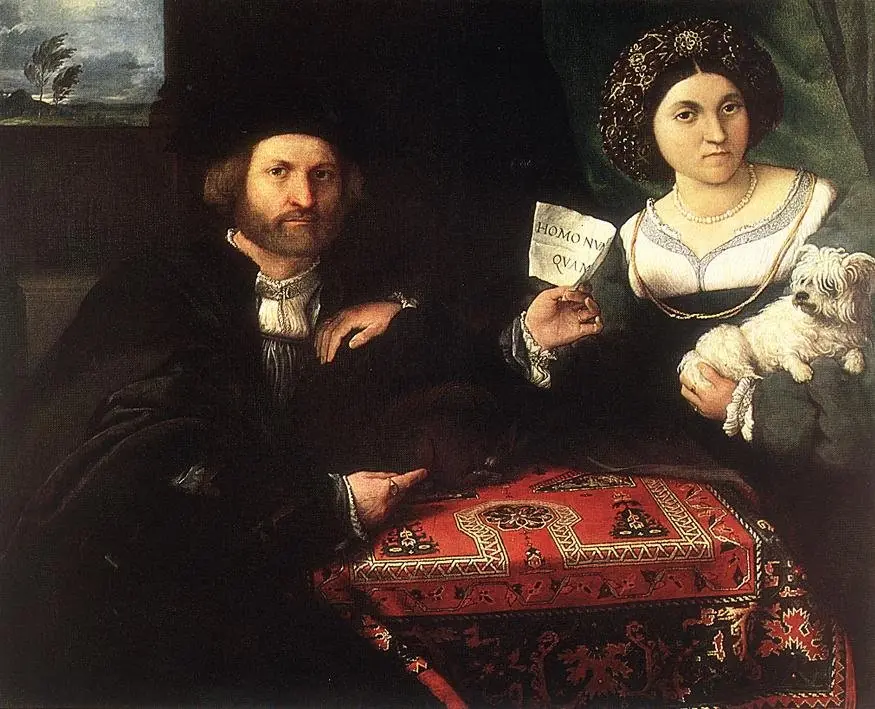
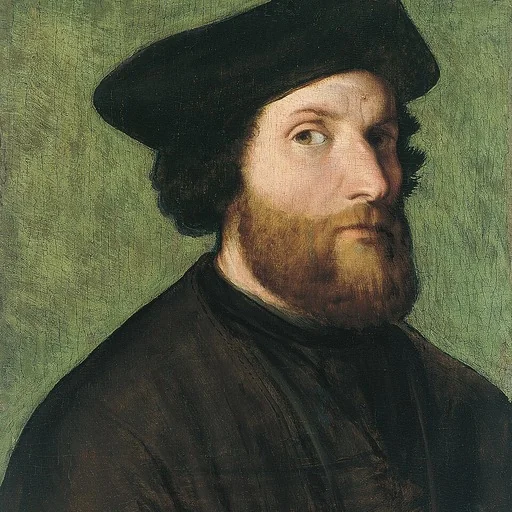
Portrait of the Surgeon Gian Giacomo Bonamigo with His Son Giovanni Antonio is an oil painting by the Mannerist artist Lorenzo Lotto. It dates from 1544 and is held in the collection of the Philadelphia Museum of Art.
About this work
Overview
Painted in 1544 by Lorenzo Lotto, this oil portrait captures Gian Giacomo Bonamigo, a surgeon, alongside his young son Giovanni Antonio.
Painted in 1544 by Lorenzo Lotto, this oil portrait captures Gian Giacomo Bonamigo, a surgeon, alongside his young son Giovanni Antonio. Executed during Lotto’s mature period, the work reflects his distinctive synthesis of High Renaissance structure and the emotional intensity characteristic of early Mannerism. The painting’s intimate scale and stark background emphasize the psychological presence of its subjects, distinguishing it from more ornate contemporary portraiture.
Subject & Meaning
The portrait presents a father and son in a quiet, unadorned setting, suggesting a domestic moment rather than a formal commission. The surgeon’s solemn gaze and the boy’s gesture—holding surgical scissors—hint at the transmission of professional identity across generations. The absence of symbols of wealth or status shifts focus to lineage and vocation, framing the image as a quiet testament to familial duty and medical practice in 16th-century Italy.
Technique & Style
Lotto employs chiaroscuro to model the figures with subtle gradations of light, enhancing their three-dimensionality against the deep black background. The man’s face is softly illuminated, while the boy’s features remain partially shadowed, creating a visual hierarchy that draws attention to the father. Brushwork is precise yet expressive, particularly in the rendering of fabric and beard, revealing Lotto’s sensitivity to texture and human presence.
History & Provenance
Commissioned in 1544, the portrait remained in the Bonamigo family for centuries before entering the Philadelphia Museum of Art’s collection. Its journey through private hands reflects the modest but enduring prestige of its subjects. Unlike many Renaissance portraits tied to noble patrons, this work survived outside major courtly circles, offering a rare glimpse into the visual culture of professional elites beyond Venice.
Context
Lotto worked primarily in northern Italian cities such as Bergamo and Treviso, away from Venice’s dominant artistic centers. His portraits often convey psychological depth uncommon in the region’s more stylized works. This painting aligns with a growing trend among medical professionals to commission images that emphasized expertise and familial continuity, reflecting broader social values in Renaissance Italy’s emerging urban classes.
Legacy
The portrait endures as a quiet example of Lotto’s ability to merge realism with emotional nuance. It stands apart from the grandeur of Venetian portraiture, instead offering an introspective view of professional identity and paternal bond. Its preservation in a major American museum ensures continued study of how non-noble subjects were rendered with dignity during the Renaissance.
Artist & collection
Artist
Lorenzo Lotto (c. 1480 – 1556/57) was an Italian Renaissance painter, draughtsman, and illustrator, traditionally placed in the Venetian school, though much of his career was spent in other north Italian cities. He…