Artwork
Departure for the Fields (Le départ pour les champs)
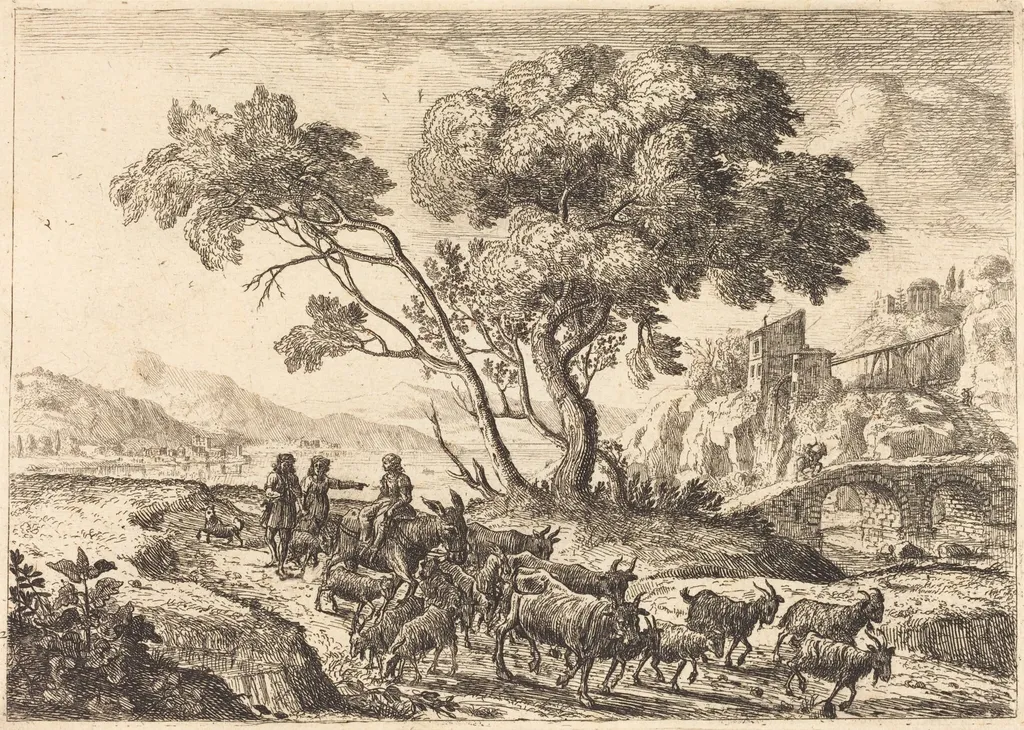
Departure for the Fields (Le départ pour les champs) is an ink print by the Baroque artist Claude Lorrain. It dates from 1640 and is held in the collection of the National Gallery of Art.
About this work
Overview
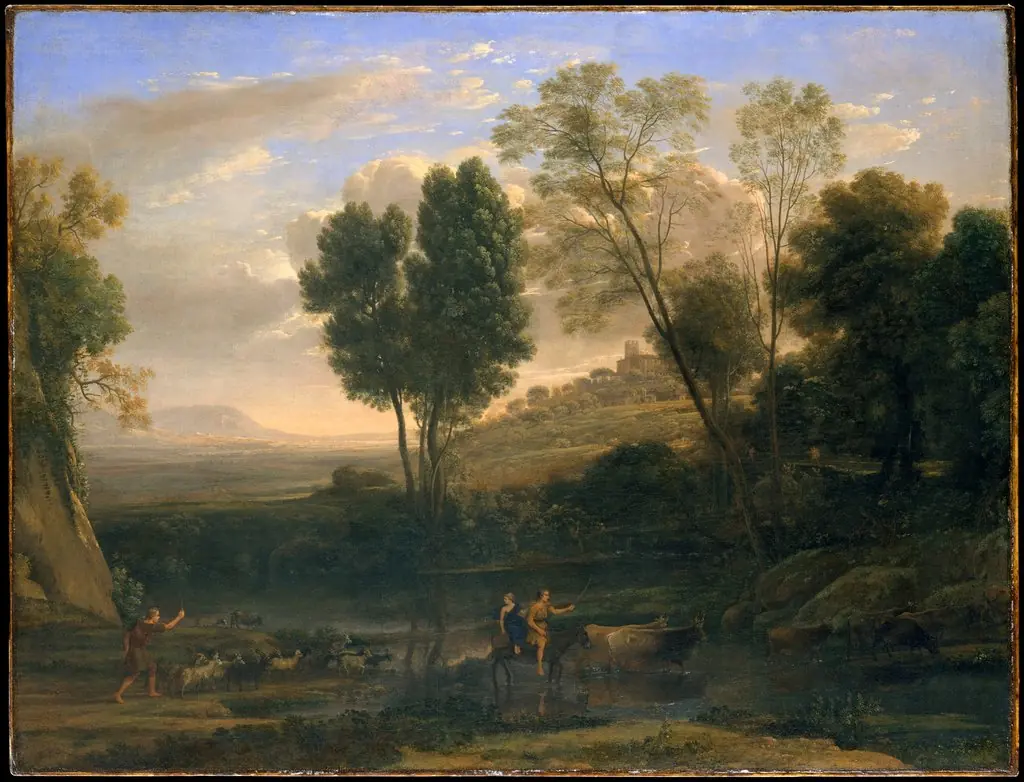
Created circa 1640, *Departure for the Fields* is an etching by Claude Lorrain, a French Baroque artist who spent most of his career in Italy. The print presents a tranquil rural landscape, foregrounded by a shepherd and two assistants moving a flock of sheep along a narrow track, while distant hills reveal a modest village and a church tower.
Subject & Meaning
The composition centers on everyday agrarian activity, yet the inclusion of a solitary tree and the gentle rise of the horizon lend the scene a timeless, almost classical atmosphere. By placing humble figures within an expansive natural setting, Lorrain invites viewers to contemplate the harmony between human labor and the broader landscape.
Technique & Style
Lorrain employed the etching process, incising fine lines into a copper plate to render delicate variations of light and shade. The resulting marks convey a soft gradation of tone, emphasizing atmospheric depth and a calm illumination that characterizes his idealized yet naturalistic treatment of the countryside.
History & Provenance
Although Lorrain is chiefly remembered for his oil landscapes, this early print demonstrates his interest in landscape as an autonomous subject. Produced during his Italian period, the work circulated among collectors of the time and remains a representative example of his printmaking output, illustrating the cross‑medium consistency of his visual language.
Own this work as a print
Artist & collection
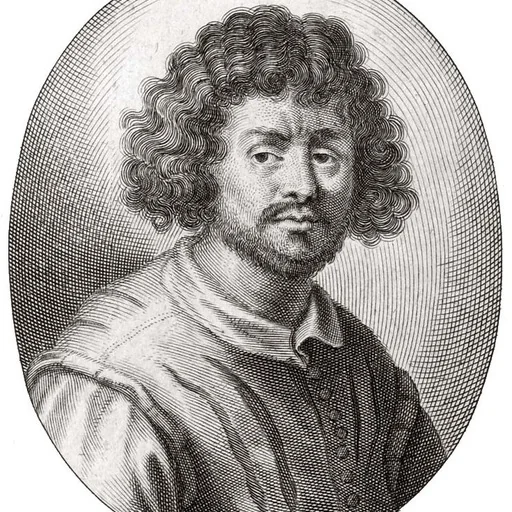
Artist
Claude Lorrain (French: ; born Claude Gellée , called le Lorrain in French; traditionally just Claude in English; c.

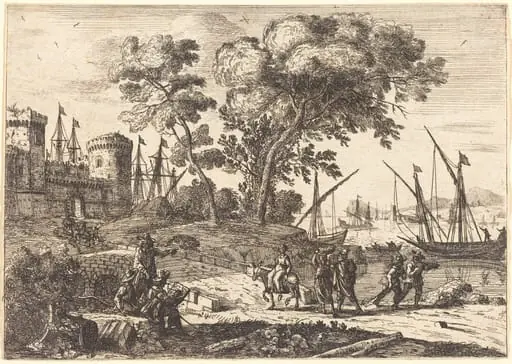 Coast Scene with an Artist (Le dessinateur)
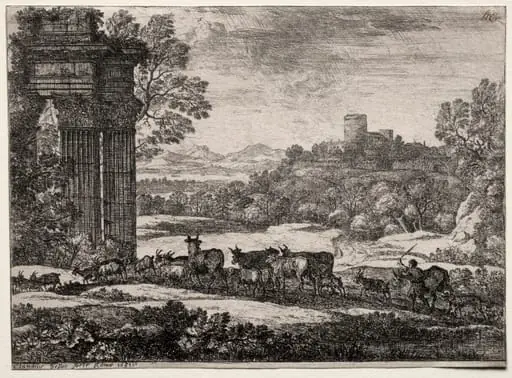 The Herd Returning in Stormy Weather
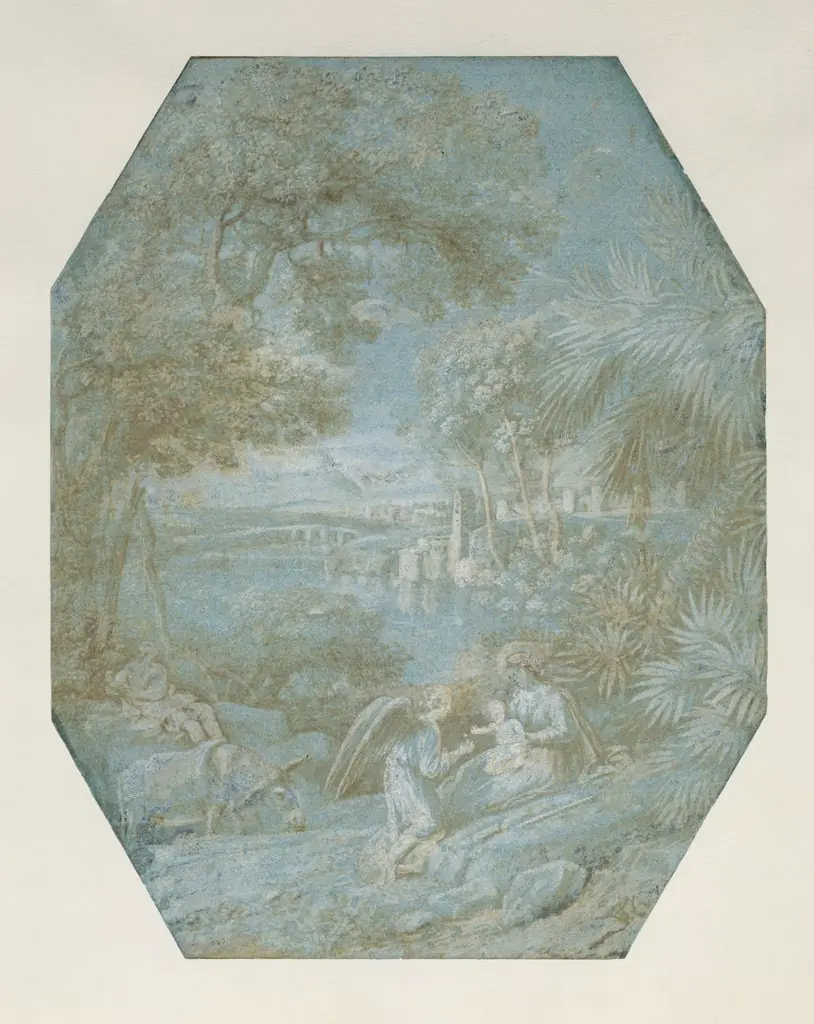
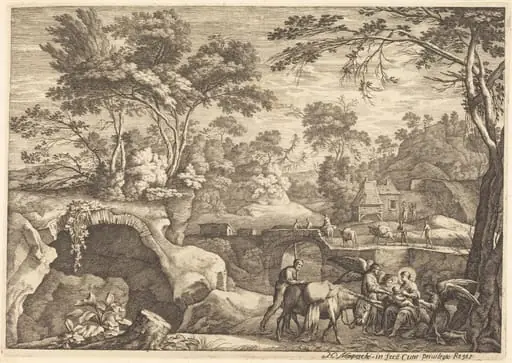 The Flight into Egypt
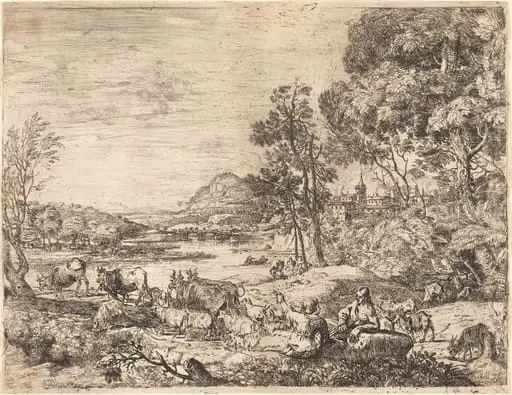 Shepherd and Shepherdess Conversing in a Landscape (Berger et bergère conversant)
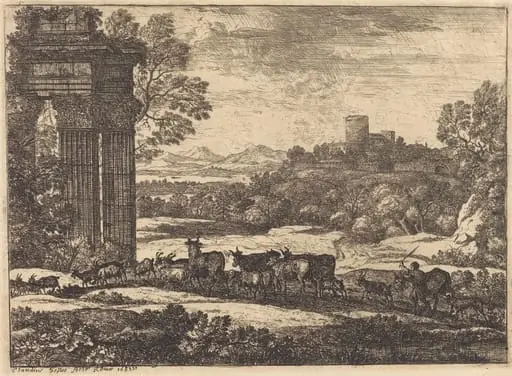 The Herd Returning in Stormy Weather (Le troupeau en marche par un temps orageux)
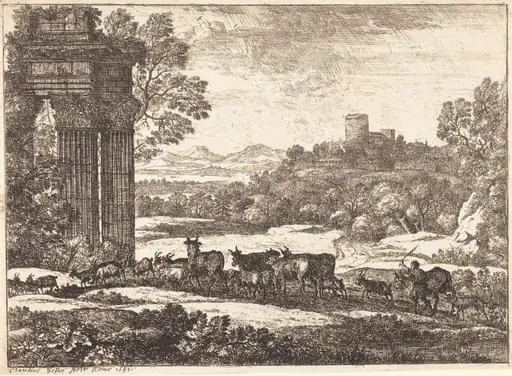 The Herd Returning in Stormy Weather (Le troupeau en marche par un temps orageux)
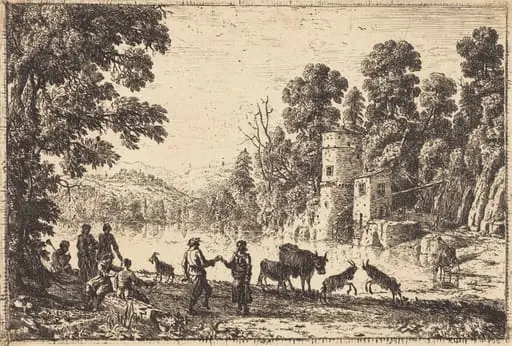 The Dance on the River Bank (La danse au bord de l'eau)
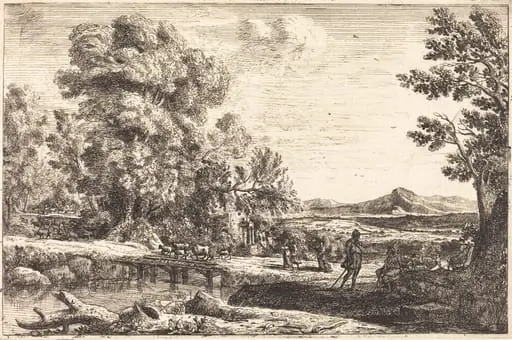 Rebecca and Eliezer (Le pont de bois)
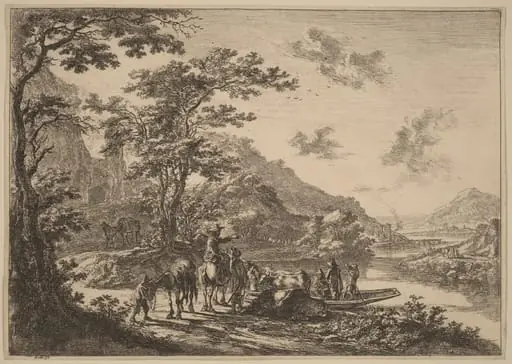 View of the Tiber in the Campagna
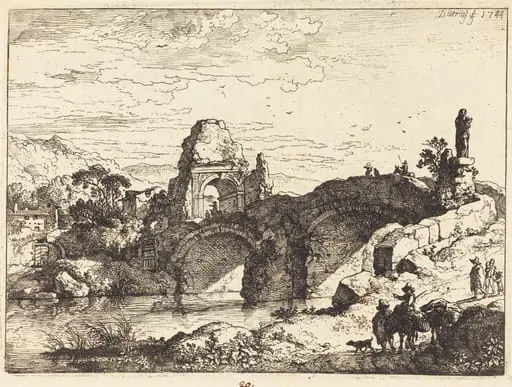 Landscape with a Bridge and Ruined Tower
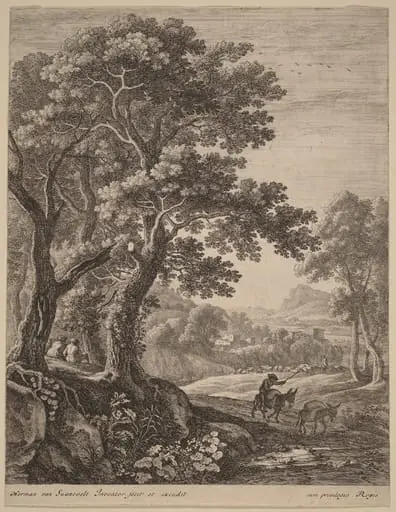 The Mule Driver
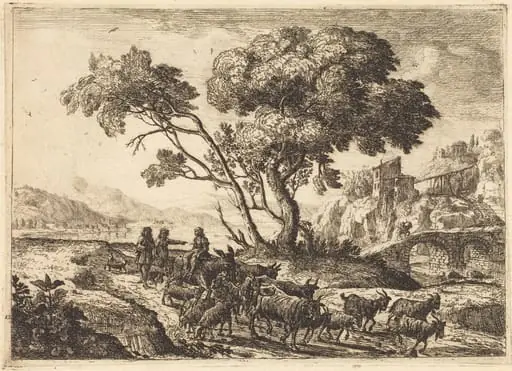 Departure for the Fields