Artwork
The Mule Driver
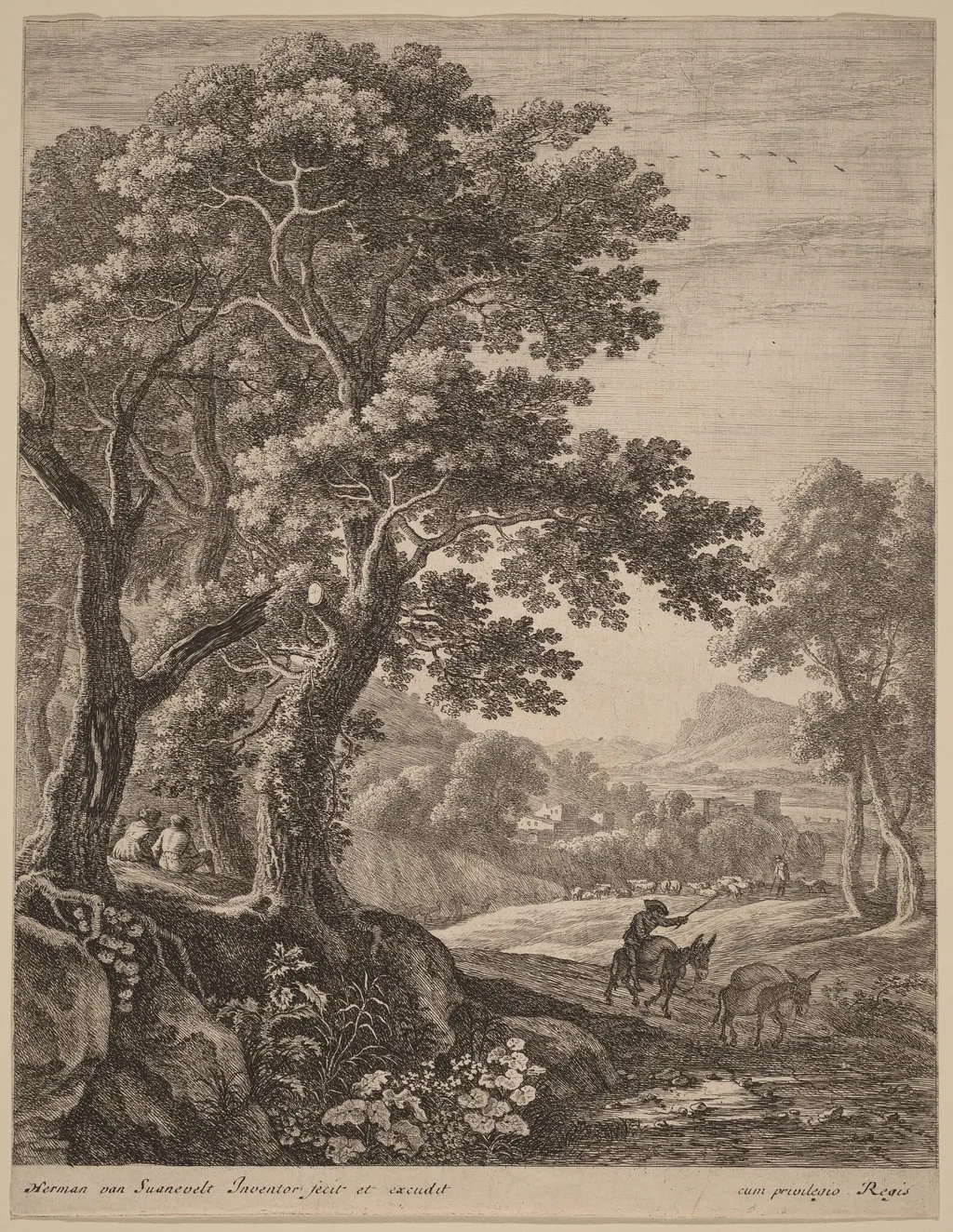
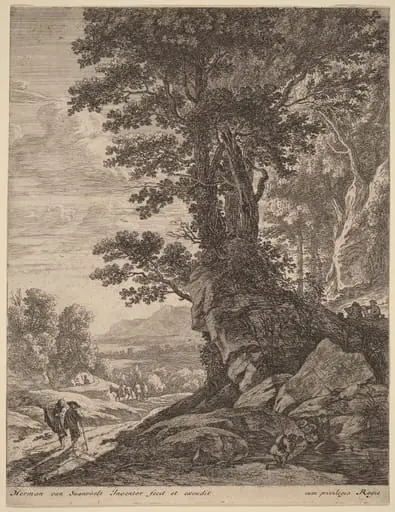
The Mule Driver is an ink print by the Baroque artist Herman van Swanevelt. It dates from 1628 and is held in the collection of the National Gallery of Art.
About this work
Overview
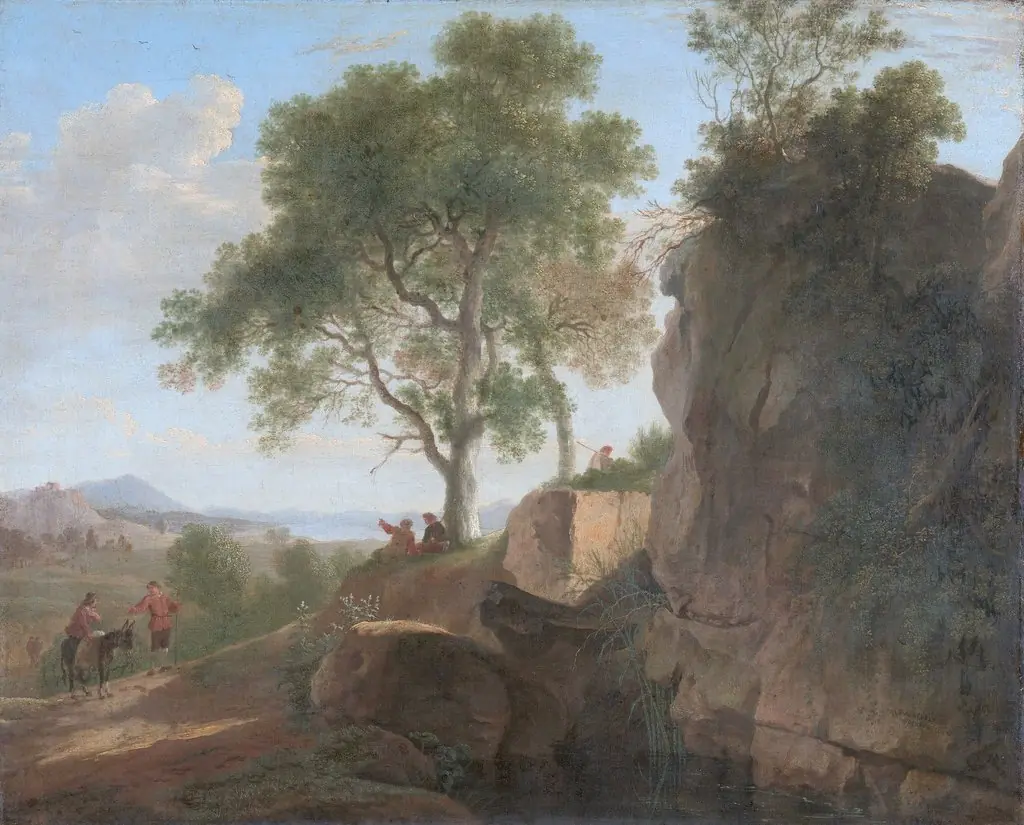
The Mule Driver is an etching executed by Herman van Swanevelt in 1628. Rendered in monochrome, the print depicts a tranquil rural landscape where a man guides two mules along a earthen track beside a river, while other figures pause beneath a prominent tree. Distant village structures rise among gently rolling hills and scattered foliage.
Subject & Meaning
The composition centers on ordinary labor rather than heroic narrative, emphasizing the daily rhythm of countryside life. The driver and his animals occupy the foreground, suggesting a moment of quiet perseverance, while the resting figures and distant settlement reinforce a sense of community embedded within the natural environment.
Technique & Style
Van Swanevelt employed the etching process, incising fine lines into a metal plate to achieve precise detailing. The print’s crisp linear work captures textures such as the mules’ fur and the folds of the driver’s clothing, while tonal variations convey depth and atmospheric perspective across the landscape.
Context
Created during the early Dutch Golden Age, the work reflects a broader artistic interest in genre scenes that document everyday activities. Van Swanevelt’s focus on rural labor aligns with contemporary trends that valued realistic observation of the natural world and the lives of common people.
Own this work as a print
Artist & collection

 A Group of Trees
 Peasant Woman on Horseback with a Child in Her Arms
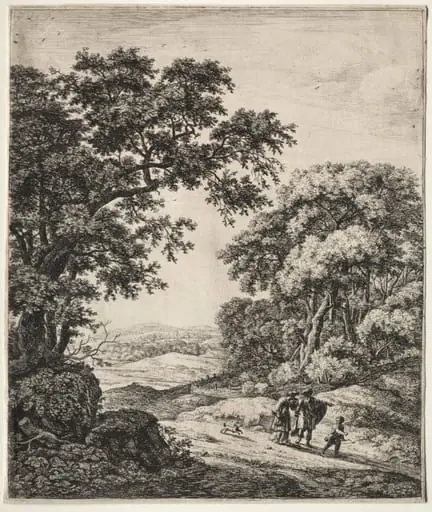 Six large upright landscapes with scenes from the Old Testament: Abraham Dismissing Hagar and Ishmael
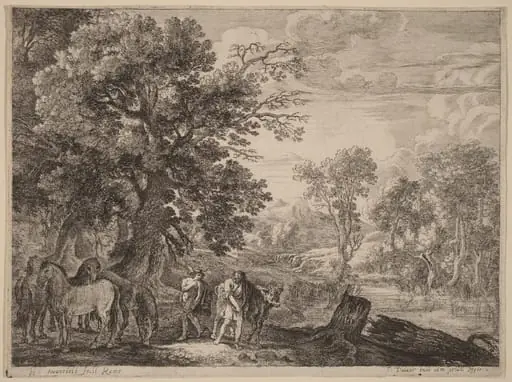 Mercury Silencing Battus
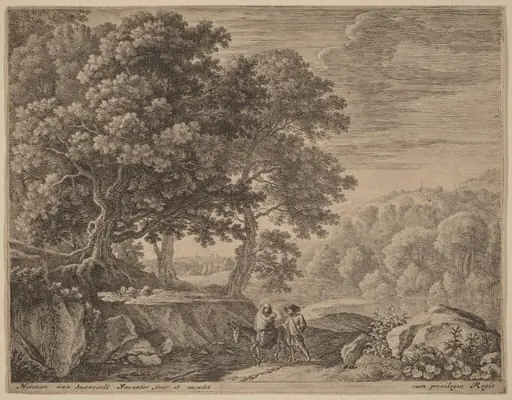 The Little Angels on the Hill
 Mercury Silencing Battus
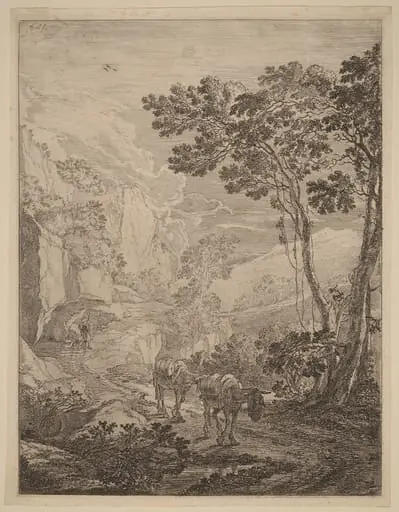 The Two Hinnies
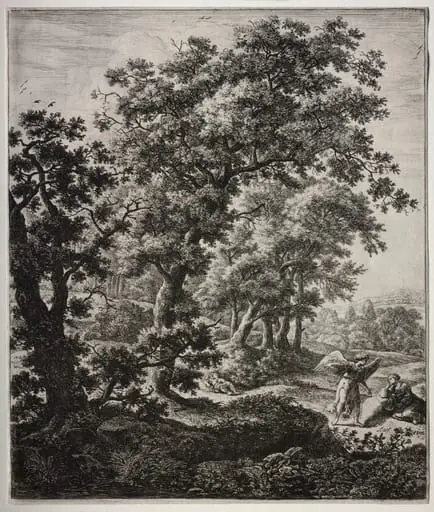 Six large upright landscapes with scenes from the Old Testament: Hagar Comforted by the Angel
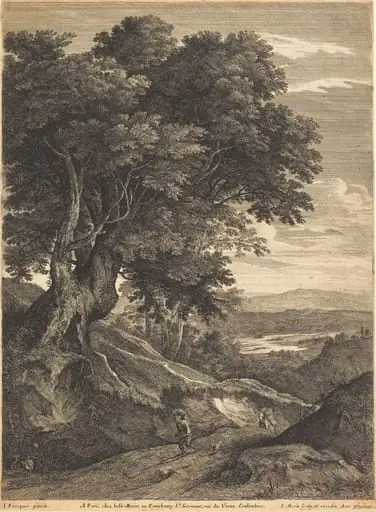 Hilly Landscape with Travelers on Foot
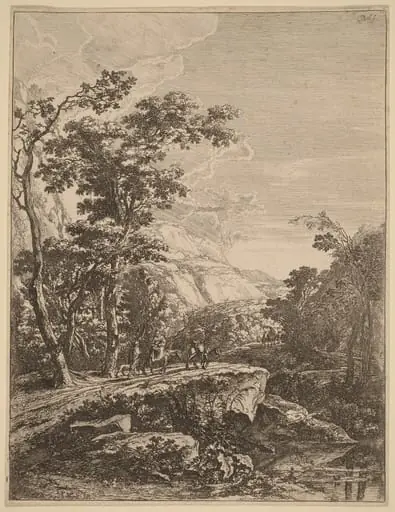 The Woman on the Hinny
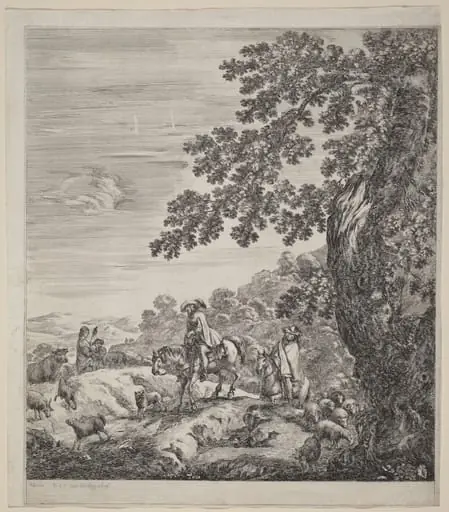 Two Riders Passing Near a Herd of Animals
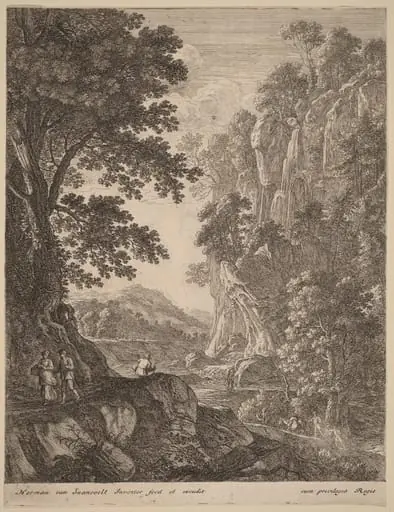 The Large Cascade