Artwork
Egypt and Nubia, Volume I: Statues of Memnon, Thebes
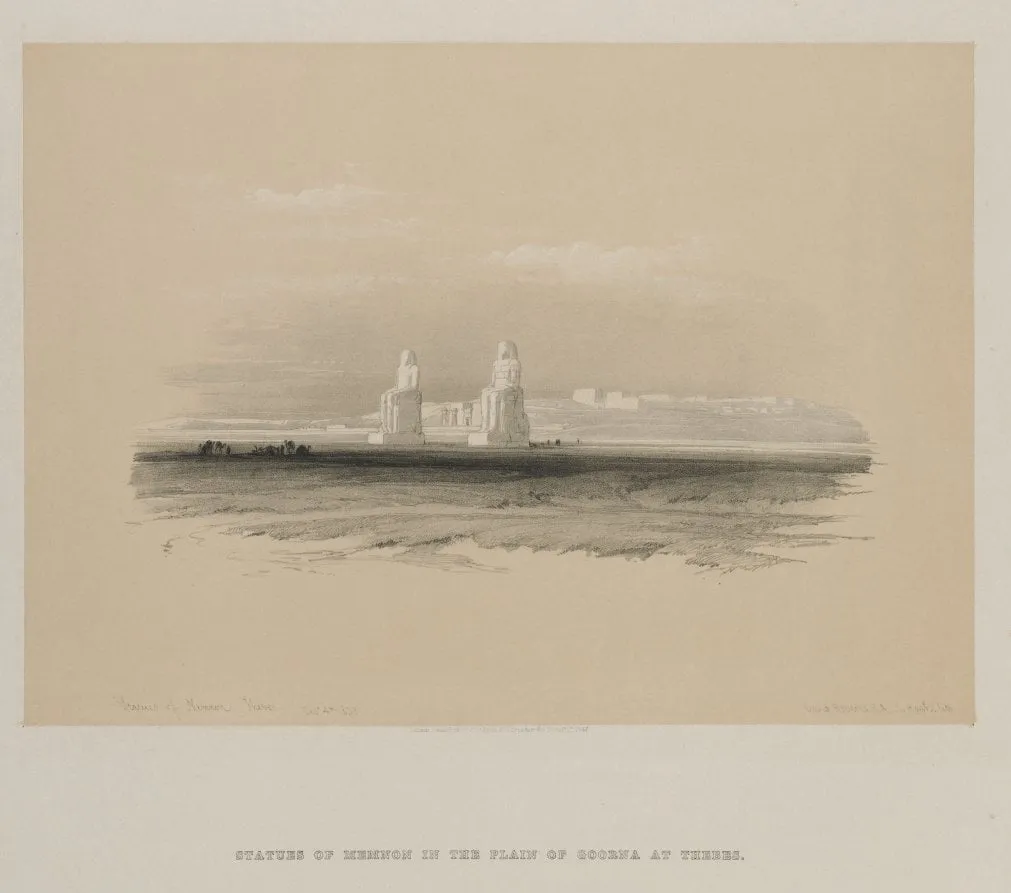
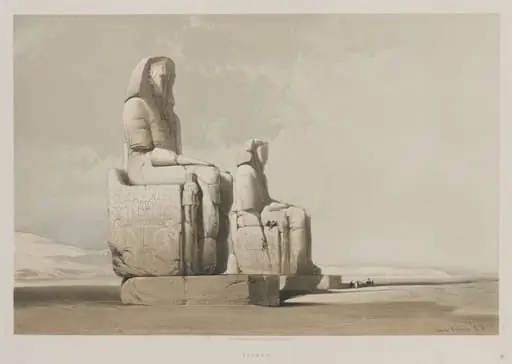
Egypt and Nubia, Volume I: Statues of Memnon, Thebes is a print by the Romanticist artist Louis Haghe. It dates from 1846 and is held in the collection of the Cleveland Museum of Art.
About this work
Overview
Louis Haghe’s 1846 lithograph, part of the first volume of *Egypt and Nubia*, captures two colossal seated statues at Thebes.
Louis Haghe’s 1846 lithograph, part of the first volume of *Egypt and Nubia*, captures two colossal seated statues at Thebes. Published by the London firm Day & Haghe, it belongs to a multi-volume series documenting ancient Egyptian monuments. The print reflects mid-19th-century European interest in Egypt’s antiquities, produced through the emerging technology of lithography, which allowed for detailed, reproducible images of distant archaeological sites.
Subject & Meaning
The two statues represent pharaonic figures, traditionally identified as Amenhotep III, once part of a temple complex along the Nile’s west bank. Their seated posture, hands resting on knees, conveys permanence and authority. Positioned in a barren landscape with distant ruins, they evoke the passage of time and the enduring presence of ancient power, stripped of context but still imposing in scale and stillness.
Technique & Style
Haghe employed lithography to render fine tonal gradations in monochrome, using shades of gray and brown to suggest weathered stone and arid terrain. The composition emphasizes scale and atmosphere over detail, with blurred background structures and a muted sky enhancing the statues’ solitude. The technique prioritizes accuracy in form and texture, aligning with topographical traditions rather than dramatic romanticism.
History & Provenance
Produced by Day & Haghe, a leading British lithographic studio founded in 1830, the print was part of a commercial venture to disseminate images of Egypt to a European audience. Haghe, trained in Belgium and active in England since the 1820s, brought precision to architectural subjects. The work was likely distributed to libraries, collectors, and institutions interested in Egyptology during the height of Victorian antiquarianism.
Context
This print emerged amid a surge of European expeditions to Egypt following Napoleon’s campaign and the decipherment of the Rosetta Stone. While scientific documentation was growing, visual representations like Haghe’s served both scholarly and popular audiences. The focus on monumental ruins, rather than daily life, reflects a preference for grandeur and antiquity in Western perceptions of ancient Egypt.
Legacy
Haghe’s lithograph contributed to the visual archive of Egyptian antiquities, influencing later archaeological illustration and public understanding of Theban monuments. Though superseded by photography, its careful rendering preserved details of statues before later deterioration. It remains a document of how 19th-century artists mediated ancient heritage through emerging reproductive technologies.
Artist & collection
Artist
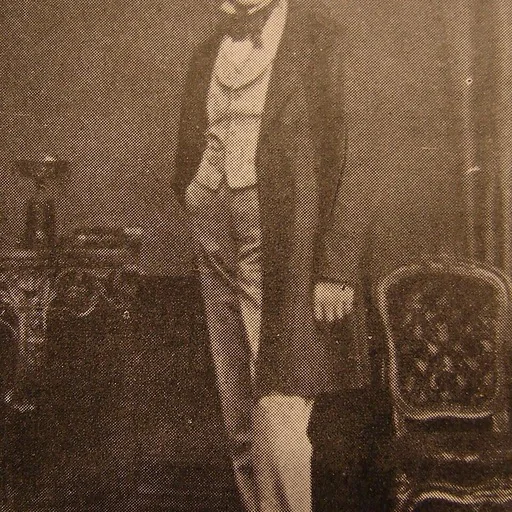
Louis Haghe (17 March 1806 – 9 March 1885) was a lithographer and watercolourist from the Netherlands and then the United Kingdom.

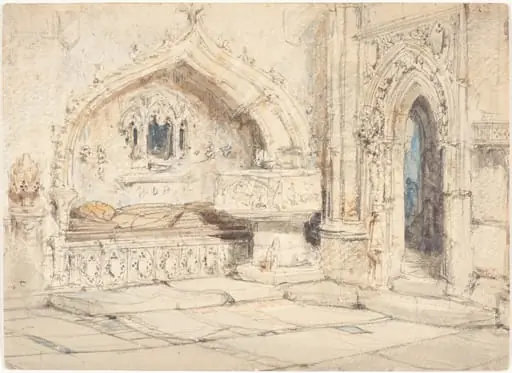 Interior of a Church with a Wall Tomb and Medieval Font
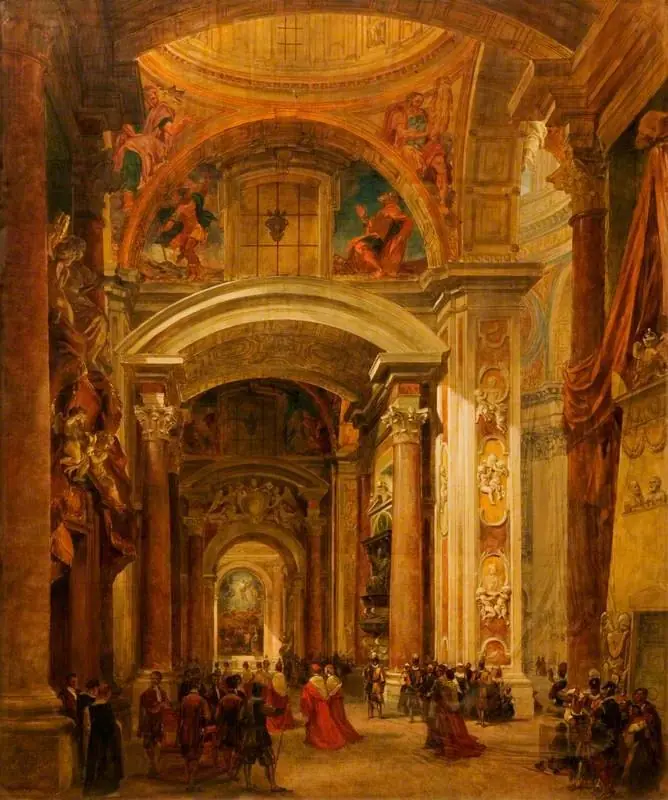 Interior of St Peter's, Rome
 The Corridor, Brewer's Hall, Antwerp
 Monument of the Cardinald D'Amboise in Rouen Cathedral
 The Quay at Suez
 Egypt and Nubia, Volume II: Lateral View of the Temple called The Typhonoeum at Dendera
 Egypt and Nubia, Volume I: Thebes
 Egypt and Nubia, Volume I: Luxor
 Egypt and Nubia, Volume II: Ruins of Memnonium, Thebes
 Egypt and Nubia, Volume III: Tombs of the Memlooks, Cairo
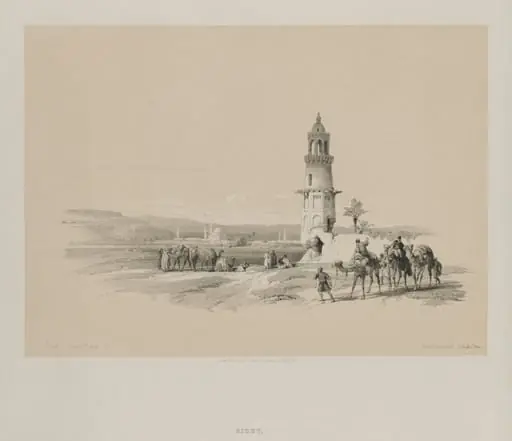 Egypt and Nubia, Volume I: Siout - Upper Egypt
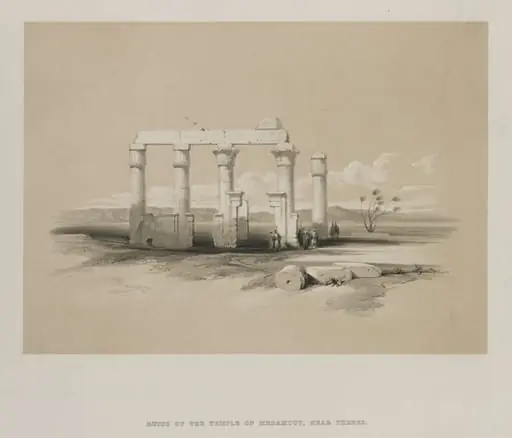 Egypt and Nubia, Volume II: Ruins of the Temple of Madamoud, at Thebes
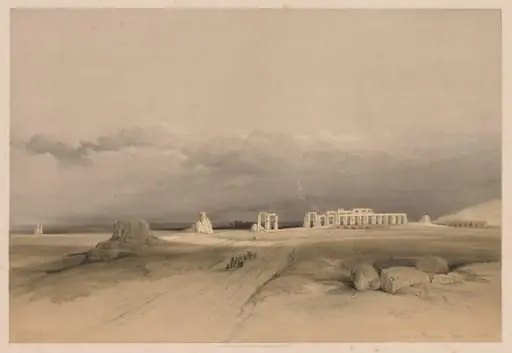 Egypt and Nubia: Volume II - No. 8, Ruins of the Memnonium, Thebes
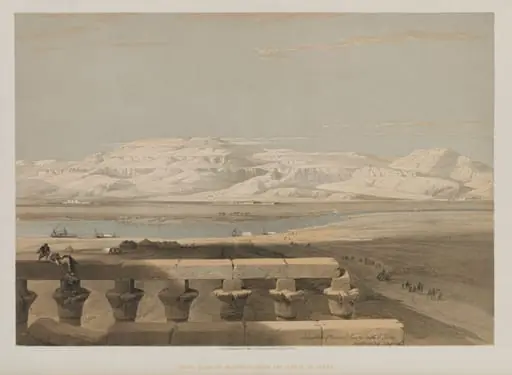 Egypt and Nubia, Volume I: Libyan Chain of Mountains, from the Temple of Luxor
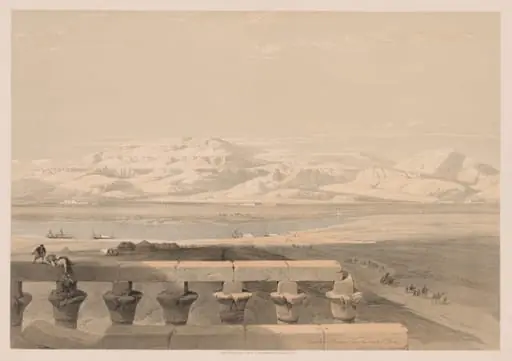 Egypt and Nubia: Volume I - No. 30, Lybian Chain of Mountains from the Temple of Luxor
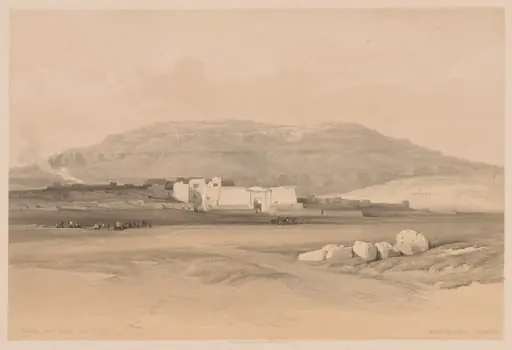 Egypt and Nubia: Volume II - No. 20, Medinet Abou, Thebes
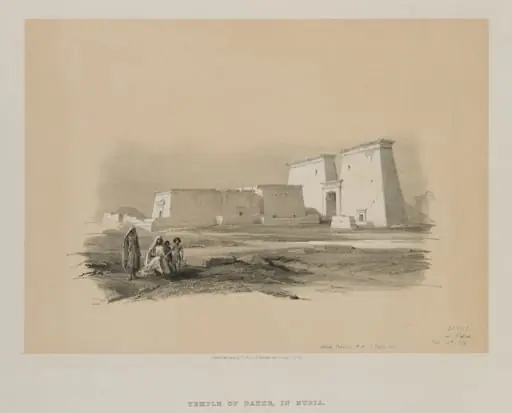 Egypt and Nubia, Volume I: Dakke, in Nubia
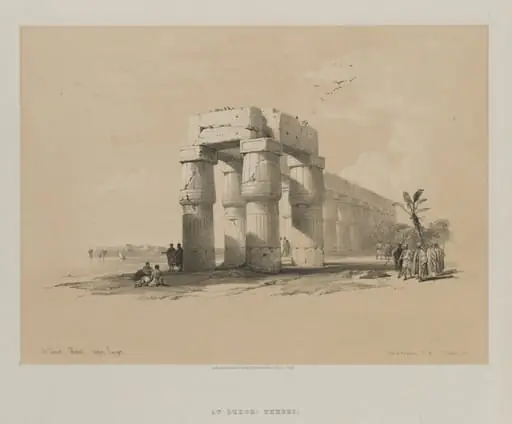 Egypt and Nubia, Volume I: At Luxor, Thebes, Upper Egypt
 Egypt and Nubia, Volume I: Pyramids of Geezeh, from the Nile
 Egypt and Nubia, Volume III: Tombs of the Caliph's, Cairo