Artwork
Egypt and Nubia, Volume III: The Entrance to the Citadel of Cairo
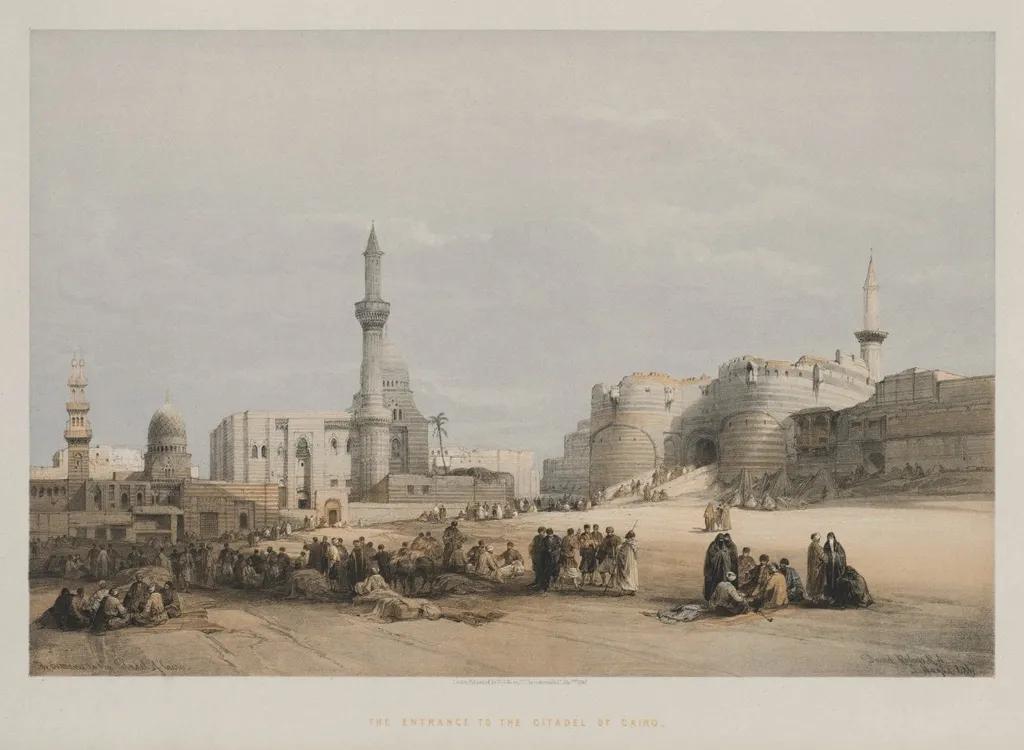
Egypt and Nubia, Volume III: The Entrance to the Citadel of Cairo is a print by the Romanticist artist Louis Haghe. It dates from 1849 and is held in the collection of the Cleveland Museum of Art.
About this work
Overview
The work exemplifies the technical precision and documentary intent characteristic of mid-19th-century lithographic publishing.
Louis Haghe’s 1849 lithograph, part of the third volume of Egypt and Nubia, captures the main gateway to Cairo’s Citadel. Created during a period of heightened European interest in the region, the print was produced through the firm Day & Haghe, which Haghe co-founded after establishing himself in England. The work exemplifies the technical precision and documentary intent characteristic of mid-19th-century lithographic publishing.
Subject & Meaning
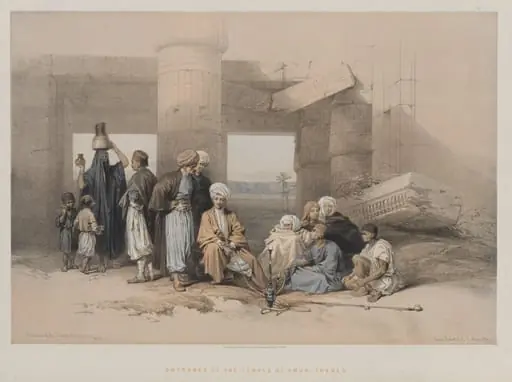
The scene portrays the bustling courtyard before the Citadel’s imposing entrance, with figures engaged in daily activities—sitting, walking, resting. The architecture dominates the composition, suggesting the Citadel as both a military stronghold and a center of public life. The presence of ordinary people amid monumental stone structures reflects a broader 19th-century tendency to document not just landmarks, but the human context surrounding them.
Technique & Style
Haghe employed fine-line lithography to render intricate details: the texture of weathered stone, the folds of clothing, and the subtle gradations of shadow beneath arches. The pale sky and warm tones evoke a sunlit, arid atmosphere. The meticulous attention to spatial depth and individual figures aligns with the observational rigor of topographical printmaking, prioritizing accuracy over dramatic embellishment.
History & Provenance
The print was published as part of a multi-volume illustrated series documenting Egypt and Nubia, likely commissioned for a European audience with growing scholarly and aesthetic interest in the region. Haghe’s firm, Day & Haghe, was among the leading British lithographic studios of the era, known for high-quality reproductions of travel sketches. The work circulated as both art and ethnographic record.
Context
Produced during the height of European colonial exploration, the image reflects a trend of visually cataloging Islamic architecture and North African urban life. While not overtly political, such prints contributed to Western perceptions of the Orient as both exotic and orderly. The inclusion of everyday life alongside grand architecture aligns with Romantic-era interests in blending the sublime with the mundane.
Legacy
Haghe’s lithograph remains a valuable record of Cairo’s Citadel in the mid-19th century, preserving architectural details and social patterns before modernization. It stands as an example of how printmaking served as a bridge between travel literature and visual anthropology. The work continues to be referenced in studies of Orientalist imagery and the history of lithography in Britain.
Artist & collection
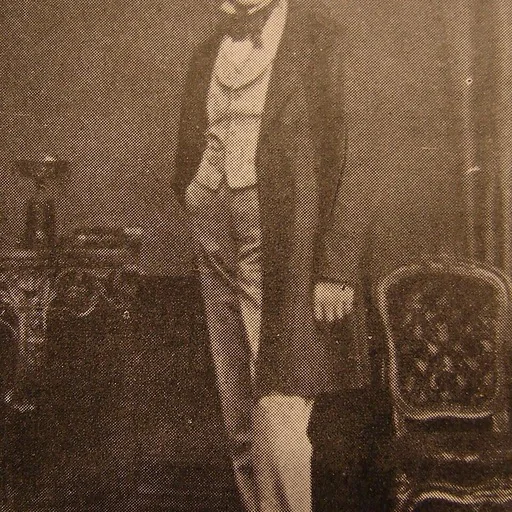
Artist
Louis Haghe (17 March 1806 – 9 March 1885) was a lithographer and watercolourist from the Netherlands and then the United Kingdom.

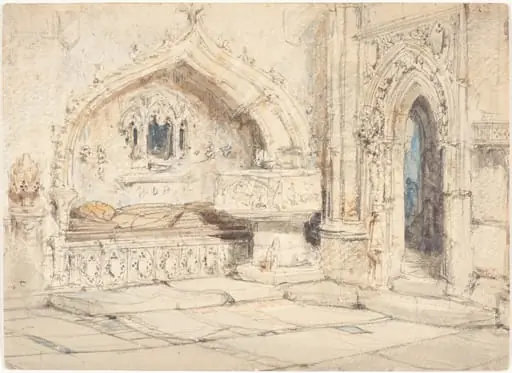 Interior of a Church with a Wall Tomb and Medieval Font
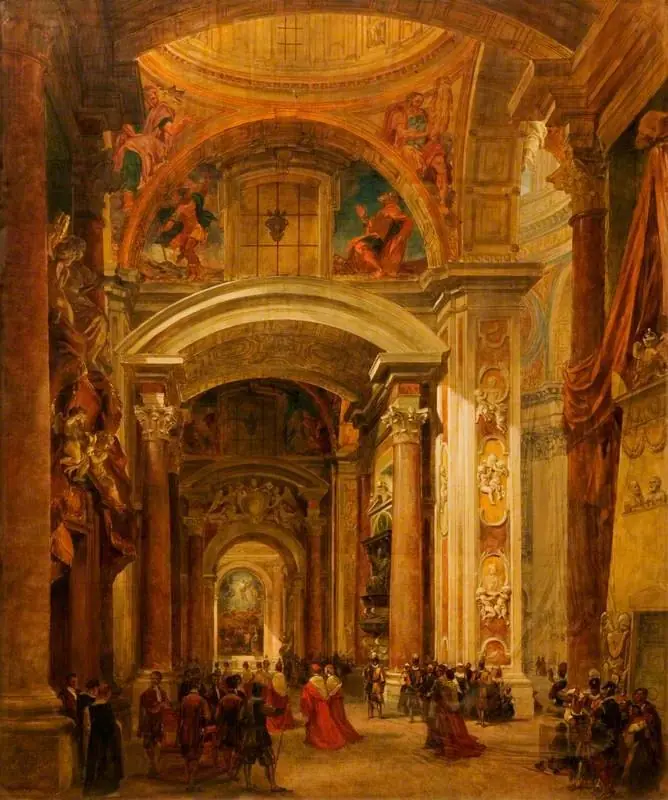 Interior of St Peter's, Rome
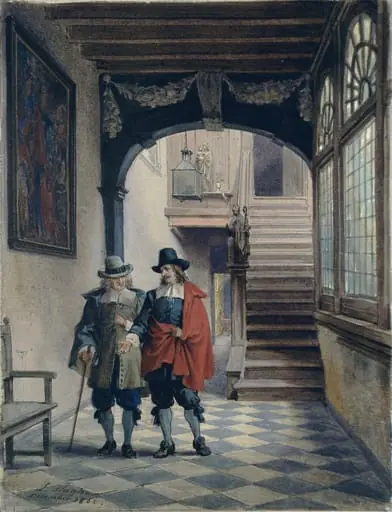 The Corridor, Brewer's Hall, Antwerp
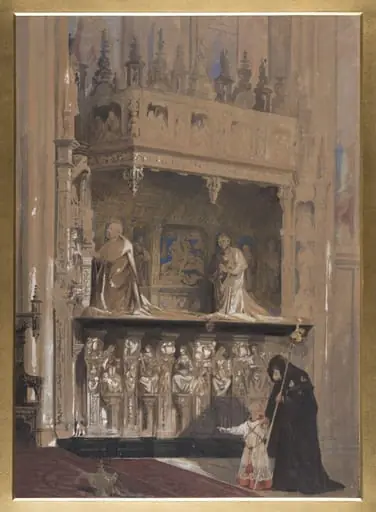 Monument of the Cardinald D'Amboise in Rouen Cathedral
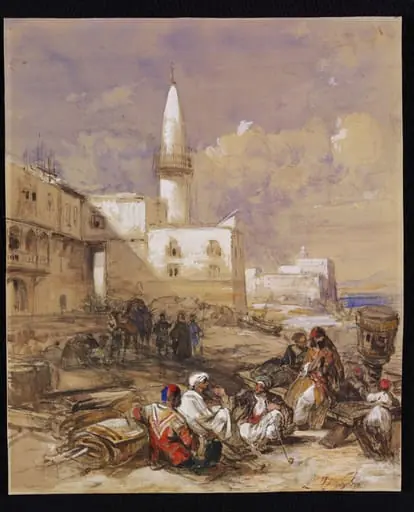 The Quay at Suez
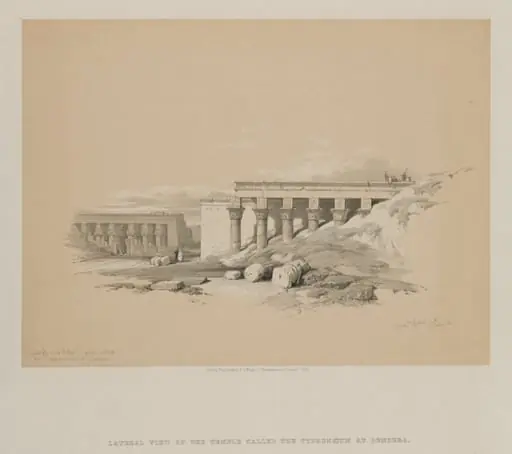 Egypt and Nubia, Volume II: Lateral View of the Temple called The Typhonoeum at Dendera
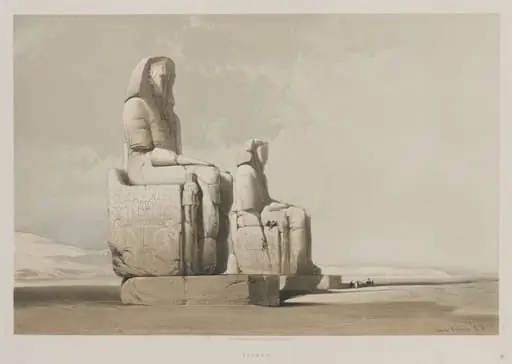 Egypt and Nubia, Volume I: Thebes
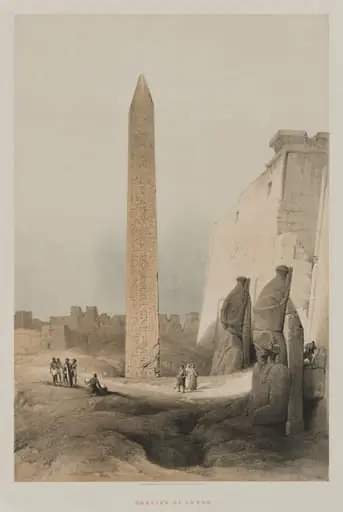 Egypt and Nubia, Volume I: Luxor
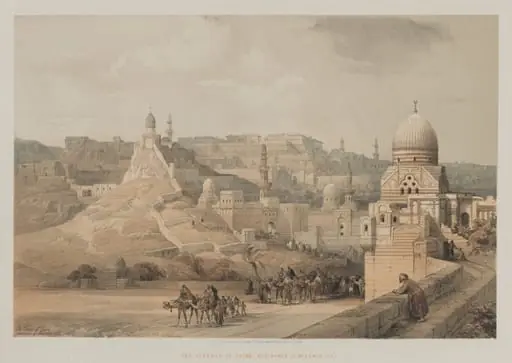 Egypt and Nubia, Volume III: The Citadel of Cairo, Residence of Mehemet Ali
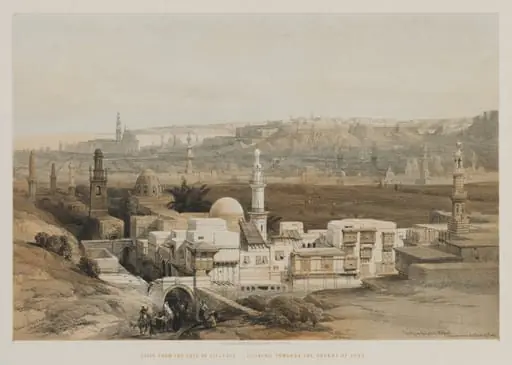 Egypt and Nubia, Volume III: Cairo from the Gate of Citzenib, Looking towards the Desert of Suez
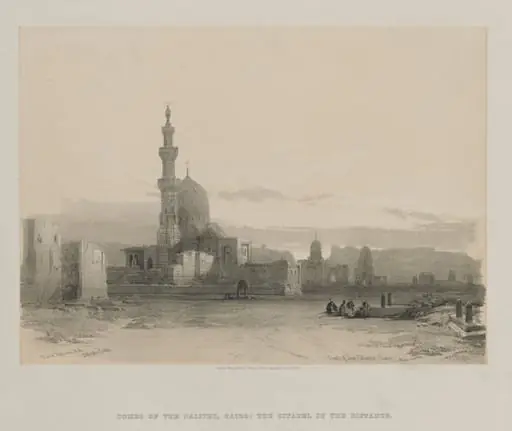 Egypt and Nubia, Volume III: Tombs of the Caliph's, Cairo
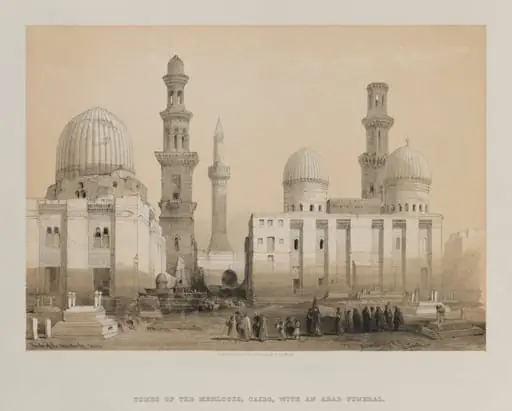 Egypt and Nubia, Volume III: Tomb of the Memlooks, Cairo
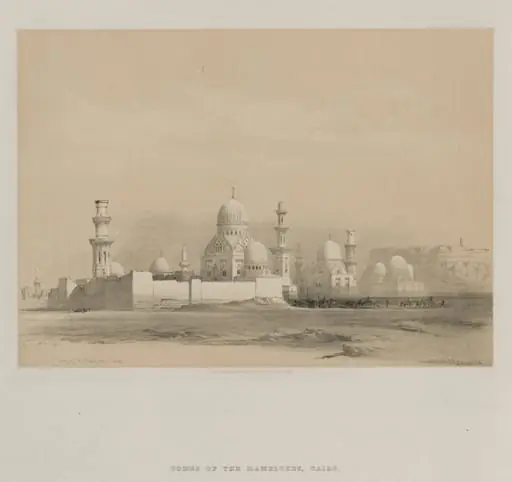 Egypt and Nubia, Volume III: Tombs of the Memlooks, Cairo
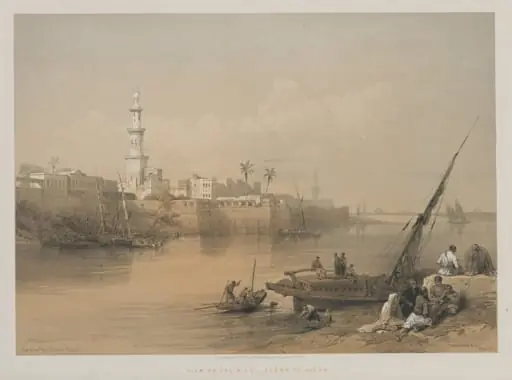 Egypt and Nubia, Volume III: View on the Nile, Ferry to Gizeh
![Egypt and Nubia, Volume III: Tombs of the Caliphs-Cairo. Mosque of Ayed Be[y], by Louis Haghe](https://artifactworldgallery.com/img/louis-haghe--egypt-and-nubia-volume-iii-tombs-of-the-caliphs-cairo-mosque--9062e89e981f8684-w320.webp) Egypt and Nubia, Volume III: Tombs of the Caliphs-Cairo. Mosque of Ayed Be[y]
Egypt and Nubia, Volume III: Tombs of the Caliphs-Cairo. Mosque of Ayed Be[y]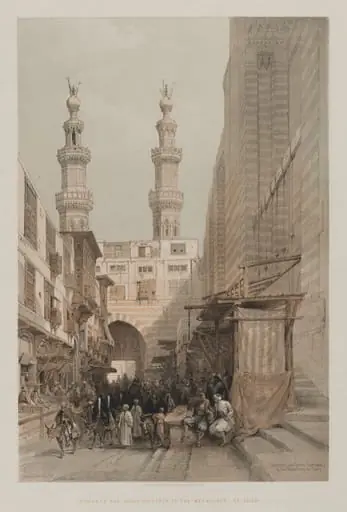 Egypt and Nubia, Volume III: Minarets, and Grand Entrance of the Metwaleys, at Cairo
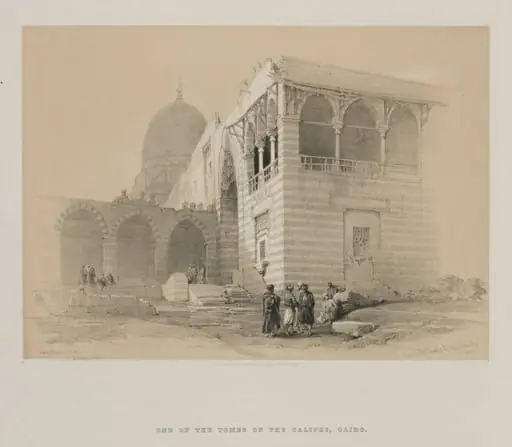 Egypt and Nubia, Volume III: One of the Tombs of the Khalifs, Cairo
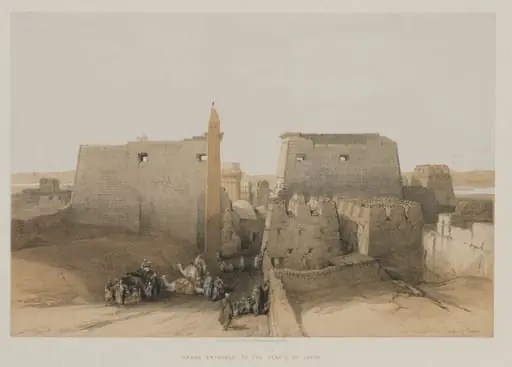 Egypt and Nubia, Volume II: Grand Entrance to the Temple of Luxor
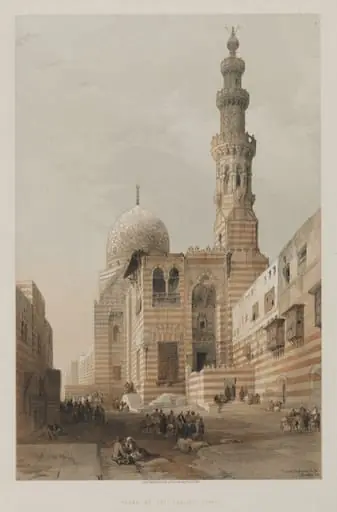 Egypt and Nubia, Volume III: Tombs of the Khalifs, Cairo
 Egypt and Nubia, Volume II: Entrance of the Temple of Amun, Thebes